
General
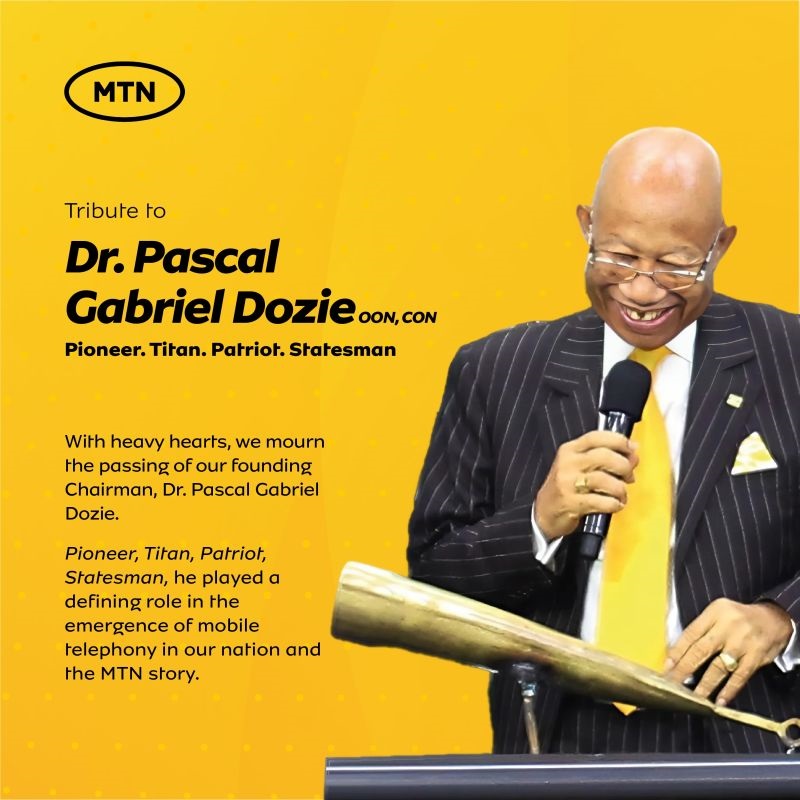
MTN Mourns Pascal Dozie, Lists Landmark Contributions

By Aduragbemi Omiyale
A foremost telecommunications company in Nigeria, MTN Nigeria, has paid a glowing tribute to its founding chairman, Mr Pascal Gabriel Dozie, who died in the early hours of Tuesday, April 8, 2025, a day to his 86th birthday.
In a statement, the firm said it was “deeply saddened by the passing” of Mr Dozie, who founded the defunct Diamond Bank Plc, which merged with Access Bank in April 2019.
MTN Nigeria, which extended its condolences to the deceased’s family, friends, and others, said he “played a pivotal role in the emergence of mobile telephony” in the country.
For 18 years, from 2001 to 2019, he served as chairman of the organisation, leading with strength and conviction.
It was stated that his presence on the board was unifying, championing good governance, corporate responsibility, and long-term value, deeply committed to the greater good, and remained a stabilising force in challenging times.
MTN Nigeria said Mr Dozie brought insight, experience, and leadership at a time when bold vision was essential, and was instrumental in securing the early support and investment that brought the Y’ello dream to life.
On May 16, 2001, he made the first call on the MTN network, a historic moment in Nigeria’s telecommunications journey.
The chief executive of MTN Nigeria, Mr Karl Toriola, said, “His unwavering belief in Nigeria’s potential and his dedication to its development were truly inspiring. His leadership at MTN Nigeria laid the foundation for our success, and his legacy will continue to guide us in the years to come.”
“Dr Dozie was instrumental in MTN Group’s expansion into Nigeria, providing visionary leadership that has left an indelible mark on our company’s history.
“His commitment to excellence and integrity set a standard that we continue to uphold,” the chief executive of MTN Group, Mr Ralph Mupita, noted in the statement.
The company said the memory of Mr Dozie would “remain a guiding light for MTN, Nigeria’s business community, and everyone who shares his unwavering commitment to progress built on integrity and service.”
Listing some of his landmark contributions, the statement said the deceased was instrumental in the incorporation of the MTN Nigeria Foundation in 2004, ensuring that the firm dedicated a percentage of profit after tax to social investments.
He was also involved in the launch of one of Africa’s largest switching centres in 2010, and played a significant role in critical conversations around the regulatory fine and its resolution in 2015.
Also, he supported the introduction of Africa’s first 3G feature phone in 2018, and backed the listing of MTN Nigeria on the premium board of the Nigerian Exchange (NGX) Limited in 2019.





By Modupe Gbadeyanka
The Nigerian Bottling Company (NBC) has reaffirmed its determination to bridge the gap between education and employability in the country by sustaining its flagship Youth Empowered (YE) programme.
This initiative provides hands-on learning, real-world insights, and access to career-shaping opportunities to young Nigerians.
The 2026 edition of the scheme commenced on February 2 at the University of Lagos (UNILAG), with participants mainly young people between the ages of 16 and 35.
A statement from the organisation said this year’s rollout will expand to more tertiary institutions, including the Federal University of Technology, Akure (FUTA). This follows a successful 2025 tour that reached seven cities across the country, including Makurdi, Jos, Benin, Kaduna, Asaba, Akure, and Port Harcourt.
Participants in the 2026 programme will receive training across key modules designed to support personal, professional, and business growth, including Business Life Skills, Adaptability and Resilience, Financial Literacy, Customer Service and Communication, Sales and Negotiation Skills, and Workplace Ethics.
The sessions will also feature breakout workshops on Business Planning, Project Management, and Time Management, alongside the Director’s Grant Pitch Competition, where participants can pitch their ideas for a chance to win business funding.
In addition to skills development, NBC’s People and Culture team will be present throughout the programme to identify outstanding talent for future opportunities within the organisation, further strengthening the connection between learning, employment, and long-term career growth.
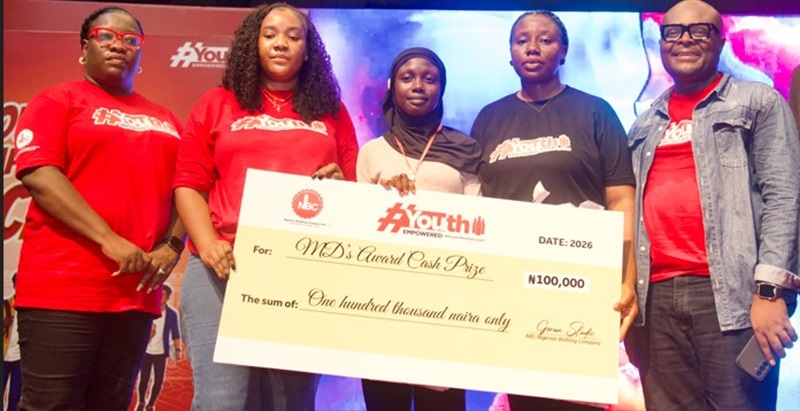
One of the participants at the UNILAG training, Waliat Adedogun, who received a cash grant through the Director’s Grant Pitch Competition to support her small business, said: “Youth Empowered gave me more than training; it gave me clarity and confidence. Winning the grant means I can finally take my business idea from a dream into something real. I now feel prepared to build, grow, and create opportunities not just for myself, but for others too.”
Since its launch in 2017, the scheme has impacted more than 70,000 young Nigerians, equipping participants with practical skills, confidence, and exposure needed to succeed in today’s dynamic workplace and entrepreneurial landscape.
This year’s programme is being delivered in collaboration with Fate Foundation as the implementing partner, with funding support from The Coca-Cola HBC Foundation.
Last year, 10 beneficiaries were selected for six-month paid internships across NBC locations in Lagos, Ibadan, Asejire, and Challawa, gaining direct industry exposure.
Additionally, three outstanding participants received sponsorship for an all-expenses-paid intensive culinary training programme and were awarded N1 million each to support the launch of their businesses.

By Modupe Gbadeyanka
The 2027 presidential and National Assembly elections will take place on Saturday, February 20, the Independent National Electoral Commission (INEC) has revealed.
In a notice for the 2027 general polls issued on Friday, the electoral umpire also disclosed that the governorship and state assembly elections for next year would be on Saturday, March 6.
Speaking at a news briefing in Abuja today, the chairman of INEC, Mr Joash Amupitan, expressed the readiness of the commission to conduct the polls next year, which is 12 months away.
The timetable issued by the organisation for the polls comes when the federal parliament has yet to transmit the amended electoral bill to President Bola Tinubu for assent.
This week, the Senate passed the electoral bill, reducing the notice of elections from 360 days to 180 days, while the transmission of results was mandated with a proviso.
Recall that on February 4, INEC said it was ready to go ahead with preparations for the elections despite the delay in the passage of the amended electoral law of 2022.
By Modupe Gbadeyanka
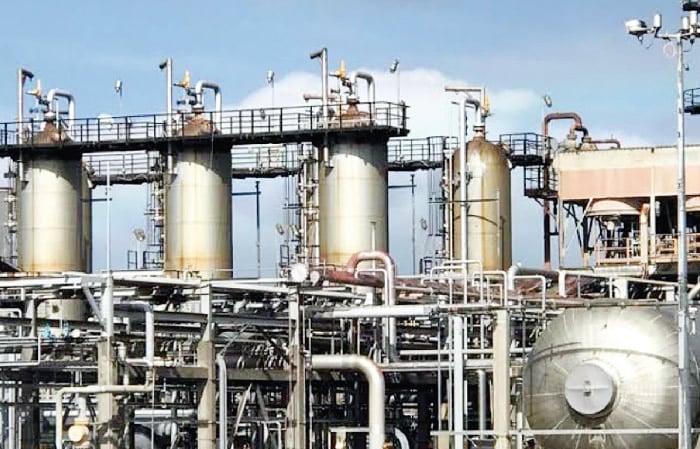
The pipeline network of the NNPC Gas Infrastructure Company Limited (NGIC) will witness a temporary reduction in gas supply for four days.
This information was revealed by the Chief Corporate Communications Officer of the Nigerian National Petroleum Company (NNPC) Limited, Mr Andy Odeh, in a statement on Thursday night.
A key supplier of gas into the NGIC pipeline network is Seplat Energy Plc, a joint venture partner of the state-owned oil agency.
It was disclosed that the facility would undergo routine maintenance from Thursday. February 12 to Sunday, February 15, 2026.
The NNPC stated that, “This planned activity forms part of standard industry safety and asset integrity protocols designed to ensure the continued reliability, efficiency, and safe operation of critical gas infrastructure.”
“Periodic maintenance of this nature is essential to sustain optimal system performance, strengthen operational resilience, and minimise the risk of unplanned outages,” it added.
“During the four-day maintenance period, there will be a temporary reduction in gas supply into the NGIC pipeline network. As a result, some power generation companies reliant on this supply may experience reduced gas availability, which could modestly impact electricity generation levels within the timeframe.
“NNPC Ltd and Seplat Energy are working closely to ensure that the maintenance is executed safely and completed as scheduled. In parallel, NNPC Gas Marketing Limited (NGML) is engaging alternative gas suppliers to mitigate anticipated supply gaps and maintain stability across the network,” the statement further said.
“Upon completion of the maintenance exercise, full gas supply into the NGIC system is expected to resume promptly, enabling affected power generation companies to return to normal operations,” it concluded.









-
 Feature/OPED6 years ago
Davos was Different this year
-
Travel/Tourism10 years ago
Lagos Seals Western Lodge Hotel In Ikorodu
-

 Showbiz3 years ago
Estranged Lover Releases Videos of Empress Njamah Bathing
-
 Banking8 years ago
Sort Codes of GTBank Branches in Nigeria
-

 Economy3 years ago
Subsidy Removal: CNG at N130 Per Litre Cheaper Than Petrol—IPMAN
-

 Banking3 years ago
Sort Codes of UBA Branches in Nigeria
-

 Banking3 years ago
First Bank Announces Planned Downtime
-

 Sports3 years ago
Highest Paid Nigerian Footballer – How Much Do Nigerian Footballers Earn