Connect with us

General

NCSP Strengthens Strategic Investment Cooperation With China

Published

on

trade relations between Nigeria and China

By Adedapo Adesanya

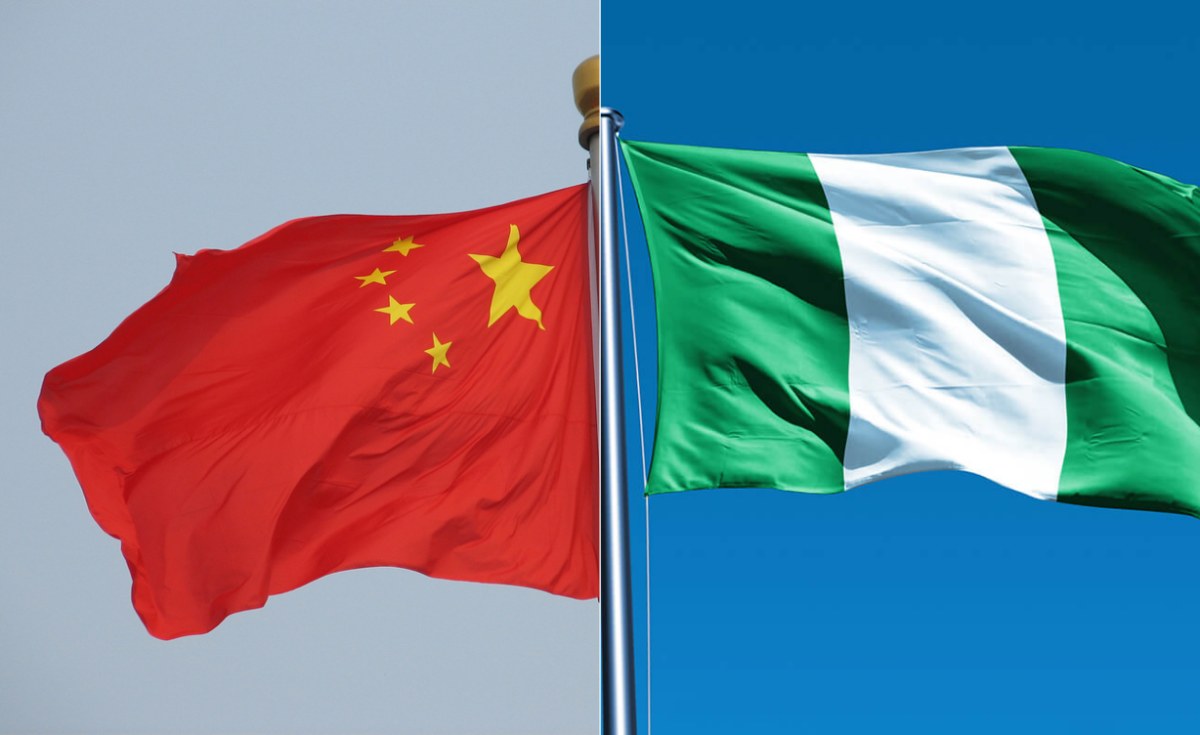
The Nigeria–China Strategic Partnership (NCSP) recently hosted a high-level delegation from Newryton International Industrial Development Company Limited, a leading Chinese investment and industrial development consortium, to advance discussions on deepening bilateral trade, industrial cooperation, and development financing between both countries.

The Newryton delegation, led by Mr David Chen, Assistant Secretary-General of the China Hainan Investment Council, had earlier engaged with the Nigerian Association of Commerce, Industry, Mines and Agriculture (NACCIMA). They were accompanied to the NCSP by Mr Joe Onyuike, Vice-Chairman of NACCIMA’s Agriculture and Livestock Trade Group, who conveyed NACCIMA’s support for the delegation’s engagements.

Discussions centered on the establishment of a Nigeria–China Trade and Investment Platform, including a proposed Promotion Centre in China to support Nigerian products, investors, and state governments.

The consortium also presented opportunities within Hainan Province’s Free Trade Port (FTP), which offers preferential policies that Nigerian businesses can leverage to expand exports and attract new investments.

In his address on behalf of Newryton, Mr Pong outlined plans to collaborate with NCSP in accessing FOCAC-supported financing for strategic investments in agriculture, energy, mining, solid minerals processing, and related sectors. The delegation identified aquaculture as a key area of interest and referenced the forthcoming Global Aquaculture Conference in Hainan Province, encouraging Nigerian stakeholders to participate.

They also expressed readiness to strengthen cooperation in vocational training and employment under the Belt and Road Initiative (BRI).

Welcoming the delegation on behalf of the Director-General, Martins Olajide, NCSP’s Head of Internal Operations, reaffirmed the organisation’s commitment to fostering mutually beneficial partnerships.

He highlighted NCSP’s strong interest in the proposed Nigeria–China Trade and Investment Platform and the development of the Nigerian Oil Palm Industrial Park as a flagship demonstration project.

Also speaking at the meeting, Ms Judy Melifonwu, NCSP’s Head of International Relations, underscored the opportunities presented by China’s zero-tariff policy and the forthcoming NAQS–GACC protocol on the export of Nigerian aquaculture products. She noted that these frameworks would significantly enhance Nigeria’s competitiveness in emerging global markets.

Both parties expressed commitment to advancing discussions toward a structured cooperation framework covering all priority areas.


Adedapo Adesanya is a journalist, polymath, and connoisseur of everything art. When he is not writing, he has his nose buried in one of the many books or articles he has bookmarked or simply listening to good music with a bottle of beer or wine. He supports the greatest club in the world, Manchester United F.C.

General

IPO: Flutterwave Refutes Reports of $75m Nigerian Government Investment

Published

on

Flutterwave Logo

By Adedapo Adesanya

Flutterwave has distanced itself from the widespread reports claiming the Nigerian government has approved a $75 million investment in the company ahead of a highly anticipated public listing.

In a statement released on Tuesday, the payments giant dismissed the reports as “inaccurate,” specifically refuting claims that it is on the verge of a $250 million Initial Public Offering (IPO). The denial follows media reports on Monday, sparked in part by a now-deleted social media post from a special assistant to President Bola Ahmed Tinubu.

The initial reports suggested that President Bola Tinubu had authorised the Ministry of Finance Incorporated (MoFI) to inject $75 million into the startup.

However, Flutterwave’s spokesperson clarified the company’s position, stating, “Flutterwave is not in any way close to an IPO, and they have made no announcements regarding a listing or fundraising tied to an IPO as described.”

The confusion highlights the intense scrutiny surrounding the unicorn, which was valued at over $3 billion during its 2022 funding round. While Flutterwave has long been touted as the torchbearer for African tech on the global public stage, the company appears to have pivoted toward a more conservative timeline.

According to the reports, the fintech company approached the federal government last year to participate in the offer, which has been in motion since it was first touted as far back as 2022.

Flutterwave’s IPO has been delayed by its lack of sustained profitability, earlier governance and misconduct scandals, and unfavourable global market conditions.

Over the years, the company’s chief executive, Mr Olugbenga Agboola, has maintained a consistent narrative of internal consolidation over public ambition.

He emphasised that the firm’s current priority is operational maturity and robust corporate governance rather than a rushed debut on the stock exchange.

In 2o22, Flutterwave raised $250 million in a Series D round that tripled the company’s valuation to over $3 billion after raising $170 million in a Series C round from Tiger Global and Avenir at a valuation of $1 billion in March 2021. It raised a $35 million in Series B in 2020 and a $20 million in Series A in 2018.

At $3 billion, Flutterwave is currently the highest valued African startup, heightening expectations that the next phase would be an IPO. However, the latest dismissal shows that the years-long wait will have to continue before investors can get a piece of the company valued at $3 billion.

Continue Reading

General

Dangote Refinery to Produce Key Detergent Inputs

Published

on

Fifth Crude Cargo Dangote Refinery

By Adedapo Adesanya

African business mogul, Mr Aliko Dangote, plans to expand his refinery by producing key chemicals used in detergents and cleaning products.

Mr Dangote, who is the major stakeholder in the Dangote Petroleum Refinery and Petrochemicals FZE, will use Honeywell International Inc.’s technology to produce 400,000 metric tons a year of linear alkylbenzene (LAB), the US-based industrial conglomerate said in a statement on Monday.

The refinery, which has a capacity to process 650,000 barrels of crude a day, is now targeting another import-dependent Nigerian market and positioning the business as a major player in the global supply chain.

The project will produce Linear Alkyl Benzene (LAB), the chemical used to make the surfactants, the active cleaning agents in soaps and detergents. This is not a consumer detergent, but the raw material that detergent manufacturers rely on.

The plant is expected to be completed within the next 30 months and produce 400,000 tonnes annually, far exceeding Africa’s current capacity.

Mr Dangote had already hinted at the plan during a tour of the refinery with Mr Bayo Ojulari, the Group Chief Executive Officer of the Nigerian National Petroleum Company (NNPC) Limited, in February.

“And that raw material for detergent will be sufficient for the entire African continent. It’s 400,000 tonnes, which we don’t have. The only two are one in Algeria, 100,000 tonnes, and Egypt, 50,000. But we are going 400,000. And we will deliver all this in the next 30 months,” Mr Dangote said at the time.

Africa currently depends heavily on imports of LAB, with only two existing plants on the continent, Algeria (100,000 tonnes) and Egypt (50,000 tonnes).

Dangote’s facility could meet the continent’s entire demand, reduce import dependence, and support local detergent manufacturing.

The LAB project also deepens the conglomerate’s broader petrochemical footprint, complementing its operations in fertiliser, cement, oil refining, agriculture, and industrial manufacturing.

Continue Reading

General

$83m IFC-Backed Funding Boosts Nigeria’s Off-Grid Electricity Drive

Published

on

Off-Grid Electricity

By Adedapo Adesanya

Nigeria has secured $83 million in fresh financing to expand off-grid electricity supply as the country continues to shift towards decentralised power solutions to boost accessibility and alternative solutions.

The funding, backed by the International Finance Corporation (IFC) under the Distributed Access through Renewable Energy Scale-Up programme, is targeted at private developers deploying solar mini-grids and standalone systems in rural and underserved communities.

The agreement was signed during the 2026 Spring Meetings of the World Bank Group and IMF in Washington, marking a transition from small pilot projects to large-scale execution.

This intervention comes at a critical time, when Nigerians are tapping into solar alternatives as petrol prices continue to rise amid current Middle East disruptions.

According to the World Bank, about 85 million Nigerians, roughly 40 per cent of the population, still lack access to electricity. Even among those connected to the grid, supply remains unreliable. National output continues to hover between 4,000 and 5,000 megawatts, a level widely considered inadequate for an economy of Nigeria’s size.

The Head of the Nigeria Electrification Programme, Mr Olufemi Akinyelure, made it clear that the market is evolving beyond experimentation.

“This marks a shift from programme design to execution at scale. Distributed renewable energy in Nigeria is now a bankable market, not a pilot segment,” he said.

The $83 million facility is designed as a revolving debt model, combining concessional and commercial funding to provide long-term capital to developers. This approach reduces risk, improves access to finance, and allows projects to scale across multiple locations without repeated funding bottlenecks.

In practical terms, the first phase will support companies such as Darway Coast, PriVida Power, Prado Power, GVE Projects and StarTimes Smart Energy, while another group of developers is already lined up for the next round. The fund will allow the shortlisted firms to deploy power faster to communities that have waited decades for reliable electricity.

Backed by a $750 million World Bank facility, the initiative aims to reach over 17.5 million Nigerians by 2028 and deliver about 465 megawatts of distributed renewable energy capacity. Current data from the Nigeria Electrification Programme shows that more than 4.1 million people have already benefited, alongside the installation of over 175 mini-grids and 1.1 million solar home systems.

For many rural communities, it will help boost small businesses, healthcare delivery, and education. Traders can extend operating hours, clinics can preserve vaccines, and students can study beyond daylight. In areas where petrol and diesel generators dominate, the shift to solar also cuts fuel costs and reduces exposure to volatile energy prices.

According to the IFC Managing Director, Mr Makhtar Diop, the role of blended finance in unlocking scale helps address long-standing barriers within the energy ecosystem.

Special Adviser to the President on the Economy, Ms Sanyade Okolie, who represented the Minister of Finance and Coordinating Minister of the Economy, Mr Wale Edun, said the federal government sees investment as critical to lifting millions of Nigerians out of poverty.

She added that the focus remains on attracting capital that delivers measurable improvements in living standards.

“For Mr President, the priority is to transform the Nigerian economy in a way that lifts people out of poverty. People must feel the difference,” she said.

On his part, the Minister of Communications, Innovation and Digital Economy, Mr Bosun Tijani, linked the programme to Nigeria’s ambition of building a one trillion-dollar economy, stressing that infrastructure, particularly power and digital systems, will determine how fast that target can be reached.

Continue Reading

Trending