
General
NDDC Uncovers 13,000 Abandoned Projects in Niger Delta

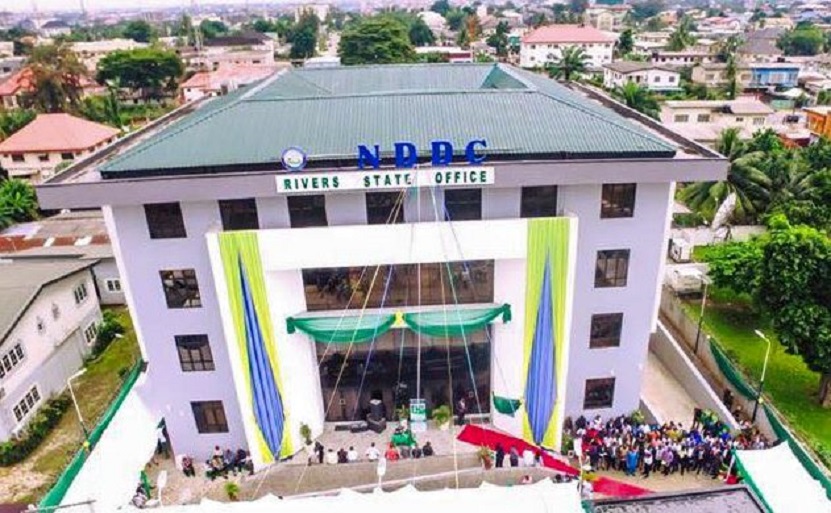
By Adedapo Adesanya
The Niger Delta Development Commission (NDDC) said it has discovered a total of 13,000 abandoned projects in the region.
This was disclosed by the Minister of Niger Delta Affairs, Mr Godswill Akpabio, on Thursday when he submitted the Forensic Audit Report on the South-South part of the country.
Speaking when he handed over the report to President Muhammadu Buhari through the Attorney General of the Federation (AGF) and Minister of Justice, Mr Abubakar Malami (SAN) in Abuja, he said, “The report of the audit committee showed that there are over 13,000 abandoned projects in the Niger Delta and even before the submission of the report, some contractors have returned to site on their own and completed about 77 road projects.
“Although the exercise had a checkered history, I thank Mr President and all those who supported and ensured its success.”
The Minister clarified that the exercise was not done to witch-hunt anyone but to ensure that the huge sums of funds committed to the area yearly were justified.
He lamented that the region had remained backwards since 1958 in spite of successive governments’ efforts through the creation of various interventionist programmes and projects.
On his part, the Lead Forensic Auditor, Mr Kabir Ahmed, in a brief overview of the report, said that the team recommended managerial as well as structural changes, chief of which is the downsizing of the NDDC’s board.
He said to reduce cost, the team recommended that members of the team should henceforth be appointed on a part-time basis.
The appointment of members of the board of the NDDC had been suspended until the release of the audit report.
Mr Ahmed also disclosed that oil companies in the country were still in default of their contributions to the commission.
“We recommended that the government should withdraw the license of any oil company which defaults for a period of three years.
“Also, deduction of 15 per cent ecological fund at source and be paid to the commission because both the federal and state governments have failed to make payments to the commission.
“The team recommended as a measure of effective revenue collections, the Federal Inland Revenue Services (FIRS) should collect funds on behalf of NDDC from oil companies in the country”.


By Adedapo Adesanya
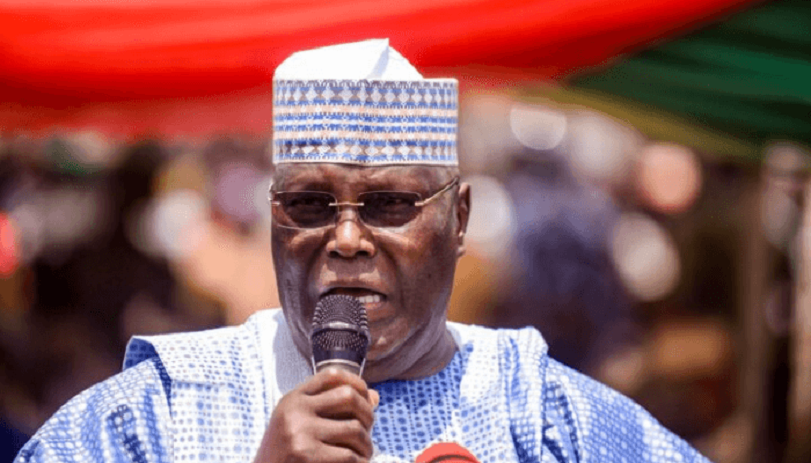
Former Vice-President Atiku Abubakar has hired Von Batten-Montague-York, L.C., a Washington-based lobbying firm, to protect and strengthen his “reputational standing” in the United States for $1.2 million.
According to The Cable, the contract agreement was signed by Mr Karl Von Batten, the managing partner at the firm, and Mr Fabiyi Oladimeji, a Nigerian politician, on March 9 and 10, 2026, respectively.
Based on a document filed with the US Department of Justice, one of the contract’s objectives entails that the firm will “counterbalance” the Nigerian government’s “lobbying narratives” in the US. It comes after the federal government reportedly spent $9 million to strengthen lobbying with the US government earlier this year.
Mr Abubakar, who is eyeing the Nigerian presidency, is currently with the African Democratic Congress (ADC). He will use the firm to “advance understanding” within US policymaking institutions of his “leadership posture and policy vision”.
Based on the contract details, the firm will facilitate and arrange meetings for the former vice-president to engage with US government officials and members of Congress.
Von Batten-Montague-York will also provide the politician with “guidance on policy positioning, reputational considerations, and engagement strategy”.
“These activities include lobbying and government affairs engagement with Members of Congress, congressional staff, and executive branch officials concerning issues related to democratic governance, regional stability, economic development, and U.S. engagement with Nigeria and the broader West African region,” part of the contract details reads.
“The Registrant (lobbying firm) may advocate for policies and perspectives aligned with the foreign principal’s stated positions, including matters relating to governance, economic policy, and bilateral relations with the United States.
“The Registrant also engages in promotion, perception management, and public relations activities designed to enhance understanding among U.S. policymakers and relevant stakeholders of the foreign principal’s policy positions, leadership posture, and strategic priorities.
“This includes the development of messaging strategies, narrative positioning, and reputational advisory services.
“In furtherance of these activities, the Registrant prepares, distributes, and may assist in the dissemination of informational materials, including briefing memoranda, policy papers, talking points, and related communications, intended to inform U.S. government officials and stakeholders.”
The former vice-president is expected to pay the $1.2 million for the 12-month contract in six instalments.

By Dipo Olowookere
The need for Africa to protect itself from many external shocks not of its making has again been emphasised by the African Development Bank (AfDB), the African Union Commission (AUC), the United Nations Development Programme (UNDP), and the UN Economic Commission for Africa (UNECA).
On the margins of the 58th session of the Economic Commission for Africa in Tangier, Morocco, the continent was tasked to strengthen regional integration, accelerate African-led financial solutions, and invest decisively in energy, food, and trade resilience so as to move from vulnerability to preparedness.
The meeting focused on the spikes in energy, food and fertiliser prices caused by the ongoing conflict in the Middle East.
The United States and Israel launched airstrikes on Iran in February 2026, and since then, global oil prices have surged by more than 50 per cent as of late March. Twenty-nine currencies in Africa have weakened, raising the cost of servicing external debt and importing food, fuel, and fertiliser.
Disruptions linked to Gulf energy supplies limit access to ammonia and urea during the critical March–May planting season. This will affect agricultural production, compounding risks of crisis and emergency levels of food insecurity, especially for low‑income households and import‑dependent economies.
To address these issues, the quartet has asked African leaders to, in the short-term, stabilise fuel, food, and fertiliser supply, and execute medium‑term reforms to strengthen energy security, targeted social protection, and regional trade under the African Continental Free Trade Area (AfCFTA).
They also tasked leaders to come up with long‑term structural reforms towards stronger domestic resource mobilisation and African financial safety nets, including accelerated implementation of the African Financing Stability Mechanism.
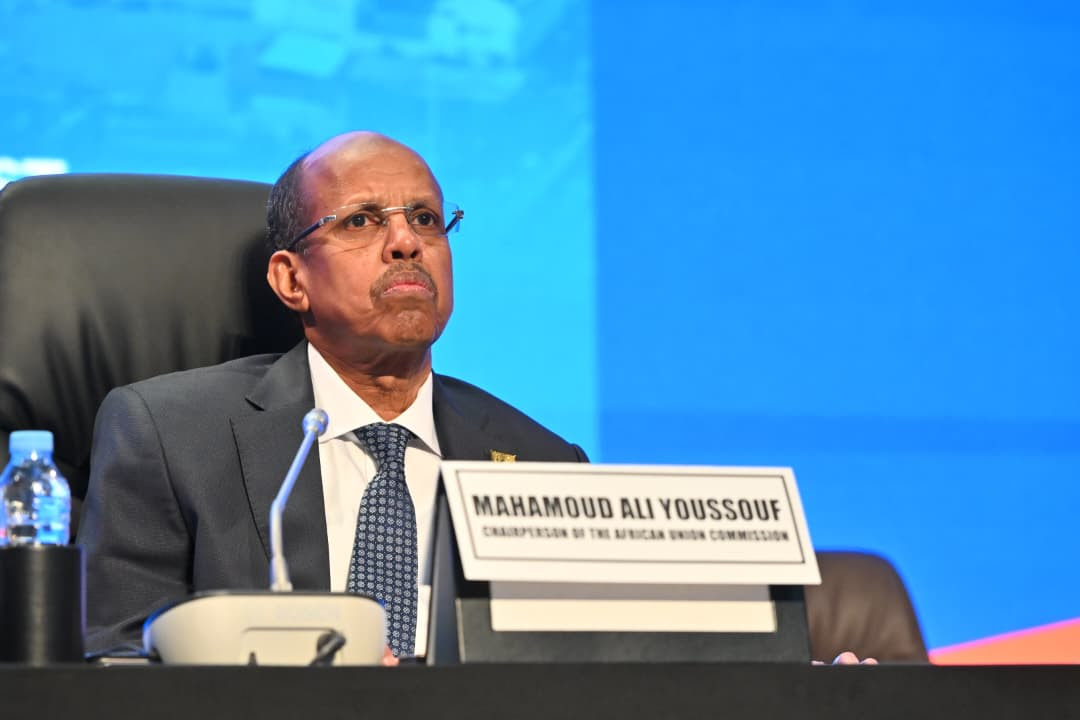
“Continued escalation of the conflict worsens global instability, with serious implications for energy markets, food security, and economic resilience, particularly in Africa, where economic pressures remain acute,” the chairperson of AUC, Mr Mahmoud Ali Youssouf, said.
Also commenting, the UN Under-Secretary-General and Executive Secretary of UNECA, Mr Claver Gatete, said, “Africa has been hit by too many external shocks not of its making. Crises like this reinforce why Africa must finance more of its own future and strengthen regional solutions that build resilience before the next shock hits.”
On her part, the UN Assistant Secretary‑General and Director of UNDP’s Regional Bureau for Africa, Ms Ahunna Eziakonwa, submitted that, “With the right mix of policy choices, financing tools, and political resolve, Africa can weather this shock and emerge more resilient, more self-reliant, and better positioned to shape its own economic future.”
“As global crises multiply, Africa’s response must evolve from managing shocks to fostering resilience. African institutions and development partners need to act swiftly and in concert, leveraging their comparative advantages to cushion short-term shocks while laying the foundations for long-term resilience,” the president of AfDB, Mr Sidi Ould Tah, stated.
By Adedapo Adesanya
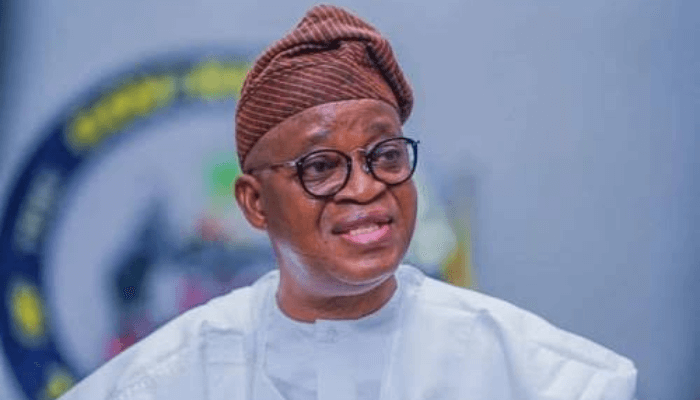
The Minister of Marine and Blue Economy, Mr Adegboyega Oyetola, has issued a strong warning to heads of agencies under the ministry, demanding strict accountability and measurable results.
Mr Oyetola issued the warning during the signing of performance bonds with heads of maritime agencies at the Ministerial Management Retreat, held alongside the 2026 first-quarter stakeholders’ engagement in Lagos on Thursday, where he emphasised the need for performance-driven governance.
“Let me emphasise that all Departments and Agencies under the Ministry must remain firmly focused on delivering tangible results,” he said.
In a statement by Mr Bolaji Akinola, Special Adviser to the Minister, Mr Oyetola noted that performance bonds to be signed during the retreat are binding commitments that will be closely monitored and rigorously evaluated.
“These are not ceremonial documents. They are binding commitments. Accountability will not be optional,” the Minister declared.
Mr Oyetola reiterated the need for data-driven decision-making, robust monitoring and evaluation frameworks, and alignment with the Ministry’s strategic objectives.
“At the institutional level, we must remain disciplined and accountable. Every department and agency must deliver measurable outcomes,” he added.
He explained that the retreat was designed to foster alignment between policy formulation, implementation, and stakeholder expectations.
“The integration of this engagement enables us to listen, reflect, and recalibrate,” he said.
The agencies include the Nigerian Ports Authority (NPA), Nigerian Maritime Administration and Safety Agency (NIMASA), Nigerian Shippers’ Council (NSC), National Inland Waterways Authority (NIWA), Maritime Academy of Nigeria, and the Council for the Regulation of Freight Forwarding in Nigeria.
He also announced a 160 per cent increase in revenue generated by agencies under the ministry, attributing the growth to sweeping reforms and a renewed focus on accountability.
“In 2023, our agencies generated N700.79 billion. By the end of 2025, this figure had risen to approximately N1.83 trillion. This remarkable achievement is the result of deliberate and sustained reforms,” he stated.
The Minister explained that the gains were driven by strengthened regulatory oversight, improved revenue assurance mechanisms, digitalisation of key processes, and a firm commitment to blocking leakages.
“This gathering reflects our commitment to a governance approach that is inclusive, transparent, and results-driven,” he added, noting that the convergence of stakeholders, policymakers, and institutional leaders was designed to align policy with implementation and public expectations.
Mr Oyetola linked the ministry’s improved performance to broader sectoral reforms, including port modernisation, approval for disbursement of the Cabotage Vessel Financing Fund (CVFF), and ongoing efforts to enhance indigenous participation in maritime activities.
-
 Feature/OPED6 years ago
Davos was Different this year
-
Travel/Tourism10 years ago
Lagos Seals Western Lodge Hotel In Ikorodu
-

 Showbiz3 years ago
Estranged Lover Releases Videos of Empress Njamah Bathing
-
 Banking8 years ago
Sort Codes of GTBank Branches in Nigeria
-

 Economy3 years ago
Subsidy Removal: CNG at N130 Per Litre Cheaper Than Petrol—IPMAN
-

 Banking3 years ago
Sort Codes of UBA Branches in Nigeria
-

 Banking3 years ago
First Bank Announces Planned Downtime
-

 Sports3 years ago
Highest Paid Nigerian Footballer – How Much Do Nigerian Footballers Earn