General
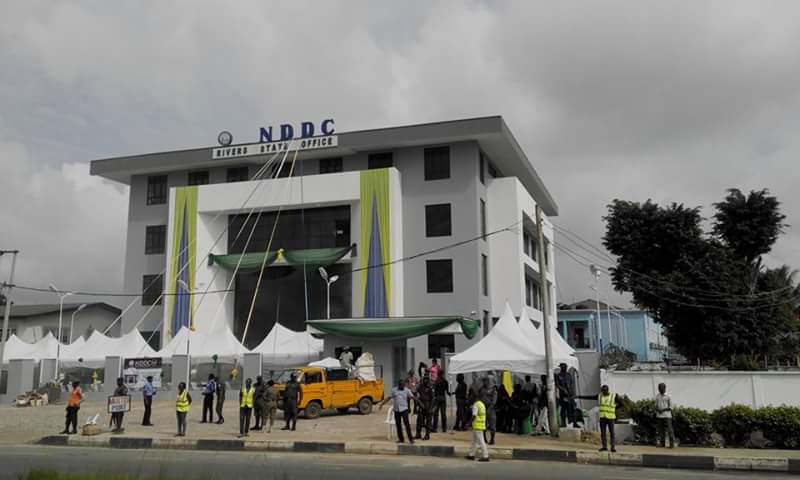
N’Delta Group Cautions EFCC Against Remitting $1.6bn to NDDC
By Adedapo Adesanya
A group known as Niger Delta Peoples’ Assembly For Peace and Development has warned the Economic and Financial Crimes Commission (EFCC) not to release the $1.6 billion statutory remittances made by oil multinationals in its custody to the Niger Delta Development Commission (NDDC).
The call was made following allegations that some political elites have been lobbying for the said funds to be released to the commission.
President of the group, Mr Obarine Ngelale, in a statement, said NDDC was currently being superintended by a sole administrator, which, according to him, was not recognised in the NDDC Act.
Mr Ngelale also charged Governors of the nine oil-producing states to prevail on the EFCC not to release the said funds to the NDDC, while calling on the anti-graft agency to take over the ongoing forensic audit of the agency.
While calling on the federal government to intervene, he explained that the said money belongs to the oil-producing states, hence should be used for the development of the region.
“We frown at the notion that such a huge amount of money would be released to the sole administrator of the NDDC who is mainly answerable to the Minister of Niger Delta Affairs.
“We wish to reiterate what we have been saying and which has been the position of all the stakeholders of the region that the creation of the position of a sole administrator is illegal and runs against the NDDC Act of 2000, from which the commission derives its powers.
“We call on the EFCC not to release the money which is currently being warehoused by the commission to the NDDC and for the EFCC to take over what is obviously an unending forensic audit of the commission.
“The money belongs to the oil-producing states. We call on the Governors of the nine oil-producing states to please rise up and stop the release of this money to the sole administrator.
“We have challenges of insecurity in our region, our youths are getting restive, our environment has been destroyed, and now our commonwealth is going to be released to an unaccountable body, please our dear Governors, don’t allow this to happen.”
General
The Poster That Breathes: Designing Visuals That Feel Alive Even When Still
Have you ever noticed a poster that seemed to move, not actually, but emotionally? Perhaps its colors seemed to pulse or the composition changed with your eyes. That’s the magic of visual rhythm, when static design seems cinematic, living, and breathing.
-
Directional flow: Diagonal or curved lines imply movement.
-
Circular composition: Reeks of energy captured during spin.
-
Gradient play: Gradual color transitions mimic emotional movement.
Emotional pacing: imparting stillness with a heartbeat
-
Blending light and dark areas to replicate pulses of energy and serenity.
-
Employing color temperature changes — to cool, warm — to convey mood shift.
-
Creating layered depth, so that observers feel air and space even on a two-dimensional surface.
Creating a poster that feels cinematic
-
Thoughtful framing — all that leads the viewer in one emotional direction.
-
Atmospheric lighting — the shadows are as full of feeling as highlights.
-
Anticipation — the feeling that the next frame is about to be cut in.
When silence speaks louder
-
One feather drifting across black space can feel like time standing still.
-
A whispery ripple over calm water evokes emotional tension.
-
A texture dissolving into nothing feels like wind blowing through light.
Bringing identity to logos
Giving your poster life with Dreamina
Step 1: Write a text prompt
Step 2: Adjust parameters and generate
Step 3: Customize and download
Editing: the art of breathing room
The final exhale
General
FCCPC Seals Ikeja Electric Headquarters Over Alleged Consumer Rights Violation
By Adedapo Adesanya
The Federal Competition and Consumer Protection Commission (FCCPC) on Thursday sealed the premises of the Ikeja Electric Distribution Company (IKEDC) in the Alausa area of Lagos for alleged violation of consumer rights.
Leading FCCPC official to carry out to closure, the Director of Surveillance and Investigation, Mr Bola Adeyinka, said the move was in line with the Federal Competition and Consumer Protection Act (FCCPA) 2018 after repeated attempts to resolve the matter.
“Sealing this facility is a proportionate enforcement measure taken only after repeated engagement and several opportunities for voluntary compliance,” Mr Adeyinka said in a statement.
“The seal will remain in place until Ikeja Electric complies fully with the directives issued by both NERC and the FCCPC and provides written evidence of that compliance,” he added.
According to the FCCPC, the Nigerian Electricity Regulatory Commission (NERC) issued a binding decision directing Ikeja Electric to unbundle a Maximum Demand account into 20 non-Maximum Demand accounts, to recognise each of the 19 residential units and a service point owned by the complainant as separate customer units, and to provide the required metering and connection.
“Ikeja Electric did not carry out that decision,” the statement read in part. “Because of this failure, the complainant has been without electricity supply for more than two and a half years.
“This was despite paying all charges requested by Ikeja Electric and meeting every obligation. The lack of electricity has prevented the complainant from putting the 19 residential units to use.”
It said the move followed unsuccessful attempts to resolve the issues through warnings and dialogue.
FCCPC listed one of such attempts to include a directive to the company in April 2025 on the steps required and the timelines for compliance.
However, “No action was taken. On 2nd October 2025, the Commission issued a Compliance Notice requiring full compliance within seven business days.
“The company still did not comply,” the commission explained.
As of press time, Ikeja Electric, which supplies electricity to several areas in Lagos, has not yet commented on the matter.
General
What to do to Unlock Africa’s Access to Global Digital Assets—Mumuni
By Aduragbemi Omiyale
The Chief Digital Officer of MTN Nigeria, Ms A’isha Umar Mumuni, has said though Africa has immense cultural capital and talent, the lack of infrastructure, ownership, and platform control prevent creators from benefiting fully.
However, she highlighted some steps that can be taken by the governments, investors, and stakeholders to change the narrative.
Ms Mumuni, while speaking at the Nigerian Entertainment Conference (NECLive) 2025 in Lagos, themed, Powering Africa Through Creative Enterprise, “Africa has the cultural capital, the skills, and the talent. What we do not yet have is global access at scale, and that is the gap we must close. Africa’s talent cannot be ignored.
“Africa is a cultural paradise without global access or control. Africa needs global cultural influence, but we do not control global data, we do not own the platform, and we export to other countries without a consistent home platform. We explore creativity, but we import the system without profiting from it.”
The MTN executive explained that unlocking Africa’s access to global digital assets requires transforming local customs, people, and platforms to ensure creativity can flourish and generate sustainable revenue.
She noted that African content, whether in music, film, fashion, or digital media, must be positioned strategically to compete and succeed on the global stage.
Emphasising the need for Africa to invest in technology and digital skills to drive the creative economy, she said, “Africa has the youngest population on earth, which is a leverage. We must invest in AI, coding, digital skills, and content production. Creativity without a platform cannot sail.”
Ms Mumuni noted that broadband policies, digital copyright protections, and clear monetisation opportunities are critical for African creators to earn from their content and reach global audiences.
She warned Africans that without investment and strategic planning, African innovation risks remaining local, while foreign platforms reap the benefits, urging African creators to ensure their stories are shared globally while retaining cultural identity.
“The world expects good stories. Africa’s stories are rooted in culture, resilience, and spirituality.
“To unlock Africa’s access to global digital assets, we must transform investment, policy, and perception,” she said.
-
Feature/OPED6 years agoDavos was Different this year
-
Travel/Tourism9 years ago
Lagos Seals Western Lodge Hotel In Ikorodu
-
Showbiz3 years agoEstranged Lover Releases Videos of Empress Njamah Bathing
-
Banking7 years agoSort Codes of GTBank Branches in Nigeria
-
Economy3 years agoSubsidy Removal: CNG at N130 Per Litre Cheaper Than Petrol—IPMAN
-
Banking3 years agoFirst Bank Announces Planned Downtime
-
Banking3 years agoSort Codes of UBA Branches in Nigeria
-
Sports3 years agoHighest Paid Nigerian Footballer – How Much Do Nigerian Footballers Earn