General
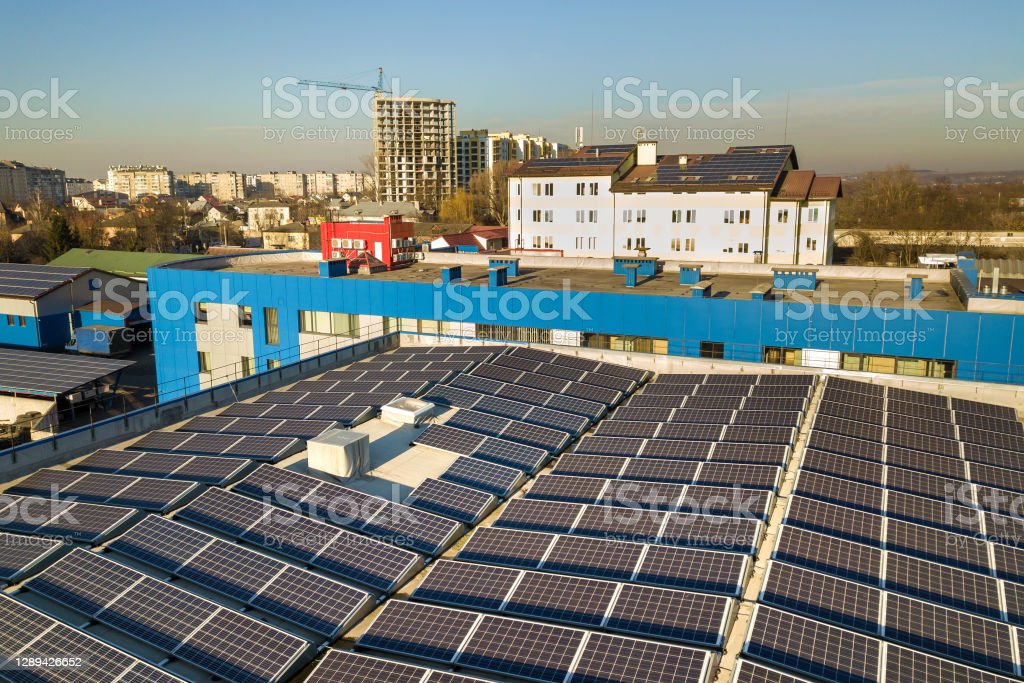
Nigeria Imports 1,721 MW of Solar Panels in 12 Months
By Adedapo Adesanya
Between June 2024 and June 2025, Nigeria overtook Egypt to become the second-largest importer of solar panels in Africa, with 1,721 MW of solar panel imports, according to a new analysis of China’s solar panel exports data from energy think tank, Ember.
The firm said solar panel imports into Africa rose by 60 per cent in the 12 months to June 2025, reaching 15,032 MW from the 9,379 MW imported in the preceding 12 months. This shows the rise happening across Africa is at a scale to impact the electricity systems of many countries.
Recall the the federal government mulled the ban on solar panel imports to buoy local production, but that has not materialised so far.
The last time imports surged was in 2023, when South Africa’s solar imports picked up as the power crisis hit its peak. However, this time is different as much of the pick-up in the last 12 months happened outside of South Africa.
The data showed that Nigeria and 20 countries set a new record for the imports of solar panels in the 12 months to June 2025, while 25 countries imported at least 100 MW, up from 15 countries 12 months before.
While South Africa remained topped and Nigeria followed, Algeria ranked third with 1,199 MW.
Some countries recorded very high growth rates. Algeria’s imports rose 33-fold, Zambia eightfold, Botswana sevenfold, and Sudan sixfold, while Liberia, DRC, Benin, Angola and Ethiopia all more than tripled their imports.
The analysis finds that recent imports could make a major contribution to electricity generation in many African countries. If fully installed, imports in Sierra Leone in the last 12 months could generate electricity equivalent to 61 per cent of reported electricity generation in 2023, while in Chad the figure is 49 per cent. Liberia, Somalia, Eritrea, Togo and Benin could see generation rise by more than 10 per cent of reported 2023 generation. In total, 16 countries could see an increase of over 5 per cent.
The report describes how solar panel imports may actually reduce overall imports. The savings from avoiding diesel can repay the cost of a solar panel within six months in Nigeria, and even less in other countries. In nine of the top ten solar panel importers, the import value of refined petroleum eclipses the import value of solar panels by a factor of between 30 to 107.
Speaking on the data, Mr Muhammad Mustafa Amjad, Program Director at Renewables First, noted this surge is still in its early days and drawing a parallel of Pakistan’ s solar boom in the last two years, said it is important to have data.
“Bottom-up energy transitions fueled by cheap solar are no longer a choice – they’re our future. Tracking these additions is what makes the difference between a messy shift and an organised, accelerated one,” said “When you don’t track, you lose time and opportunities. Pakistan’s experience shows this clearly. Africa’s transition will happen regardless, but with timely data it can be more equitable, planned and inclusive.”
On his part, Mr Dave Jones, Chief Analyst at Ember, said, “The take-off of solar in Africa is a pivotal moment. This report is a call to action, urging stronger research, analysis and reporting on solar’s rise to ensure the world’s cheapest electricity source fulfils its vast potential to transform the African continent.”
General
RMAFC Kicks Off Data Verification for Revenue Allocation Framework
By Modupe Gbadeyanka
A nationwide data verification exercise to review the factors and proxies used in the sharing of revenue among states and local governments has commenced.
The revenue allocation framework initiative is being conducted by the Revenue Mobilisation Allocation and Fiscal Commission (RMAFC).
The goal is to ensure that the distribution of national resources accurately reflects the current socio-economic realities across the federation, a statement signed by the organisation’s Head of Information and Public Relations Unit, Ms Maryam Umar Yusuf, stated.
In the statement issued on Thursday, the chairman of the commission, Mr Mohammed Bello Shehu, was said to have posited that the exercise would strengthen fiscal federalism and enhance national development planning across the country.
According to him, credible and verified data remains the foundation of a fair and sustainable revenue allocation system.
“The commission is committed to ensuring that Nigeria’s revenue allocation framework reflects the realities on the ground. Accurate data is the backbone of fairness, equity, and national cohesion.
“This nationwide exercise represents our determination to build a more transparent and responsive revenue distribution system that serves the interests of all Nigerians,” he noted.
Mr Shehu urged the state governments, local authorities, traditional institutions, civil society organisations, and community leaders to provide full cooperation to the agency’s verification teams, emphasising that the outcomes of the programme will have far-reaching implications for national planning, fiscal management, and balanced regional development across the federation.
As part of its nationwide rollout strategy, it has scheduled region-by-region data verification exercises across all states of the federation and the Federal Capital Territory (FCT), Abuja.
The exercise will involve systematic collection, validation, and reconciliation of critical socio-economic and infrastructural data used in determining revenue allocation indices for horizontal revenue sharing.
It was disclosed that the focus would be on key indicators like education and health provision, internal revenue generation capacity, and infrastructure development across the states and local government areas.
Stakeholder engagement sessions will also be conducted in each state to ensure transparency, build trust, and promote collaborative participation among government agencies and local communities.
Nigeria’s revenue allocation framework relies on specific indices, including those of population, landmass, infrastructure, and socio-economic development indicators, all of which must be periodically reviewed to reflect changing realities.
General
President Tinubu Greets Senator Kalu at 65
By Aduragbemi Omiyale
The Senator representing Abia North Senatorial District in the National Assembly, Mr Orji Uzor Kalu, has been congratulated by President Bola Tinubu on his 65th birthday.
In a statement released by the State House, the former Governor of Abia State was praised for his multifaceted roles and his service to the nation.
Mr Tinubu said his longtime friend and political ally has worked for the growth of Nigeria, having served as the Senate Chief Whip and currently the Chairman of the Senate Committee on the South East Development Commission (SEDC).
The SEDC is one of the regional development commissions established by the administration of President Tinubu to accelerate infrastructure, economic growth, and overall development across the South East geopolitical zone.
The President highlighted the lawmaker’s significant contributions during his tenure as Governor of Abia State from 1999 to 2007, as well as his continued dedication to the progress of the state and the nation at large.
He also acknowledged Mr Kalu’s accomplishments in the private sector, describing him as a media mogul and Chairman of SLOK Holding, who continues to play a vital role in Nigeria’s economic development.
“Senator Orji Uzor Kalu’s vision, resilience, industry and service to the nation and commitment to the progress of Abia are noteworthy,” President Tinubu remarked.
“I wish him long life, greater strength and increased wisdom as he continues his service to the nation,” the President concluded.
General
FCCPC Seals Paradise Estate Over Consumer Rights Violations
By Adedapo Adesanya
The Federal Competition and Consumer Protection Commission (FCCPC) has sealed Paradise Estate in Life Camp Extension, Abuja, following serious allegations of consumer rights violations.
The action was taken due to the estate’s alleged failure to deliver housing units to buyers despite receiving full payment.
The FCCPC also cited multiple public complaints and other offences as grounds for the enforcement.
According to the commission, numerous complaints had been lodged against Paradise Estate, but the management repeatedly failed to comply with regulatory directives.
The non-compliance prompted the FCCPC’s visitation and eventual sealing of the premises.
Speaking to reporters, the FCCPC’s Deputy Director of Surveillance, Marvin Nadah, noted that the developer was given a seven-day window to respond to an official summons but failed to comply.
In its defence, Paradise Homes’ Head of Legal, Mr Aloysius Ezenwa, argued that the transactions were protected under the existing “Contract of Sale.” The company expressed its dissatisfaction with the sealing, maintaining that the dispute is a contractual matter that should be settled before a tribunal.
However, the FCCPC maintained that its actions were lawful and that it had not been served with any court appeal to halt the process.
The commission reiterated its stance on prioritising the rights of Nigerian consumers and ensuring developers are held accountable.
It noted its commitment to protecting consumers from unfair business practices and warned other real estate developers to adhere strictly to contractual obligations and consumer protection laws.
The FCCPC’s involvement in a housing complaint comes after a Federal High Court in Abuja ruled that the organisation has the powers to investigate consumers’ complaints involving banks and other financial institutions.
The banks, the court ruled, are answerable to FCCPC. It dismissed a suit filed by the United Bank for Africa (UBA) and slammed N2 million on it.
The decision has been described as a big win for bank customers.
In a statement signed by its Corporate Affairs Director, Mr Ondaje Ijagwu, FCCPC’s chief executive, Mr Tunji Bello, said, “This is a big victory for bank customers.”
-
Feature/OPED6 years agoDavos was Different this year
-
Travel/Tourism10 years ago
Lagos Seals Western Lodge Hotel In Ikorodu
-
Showbiz3 years agoEstranged Lover Releases Videos of Empress Njamah Bathing
-
Banking8 years agoSort Codes of GTBank Branches in Nigeria
-
Economy3 years agoSubsidy Removal: CNG at N130 Per Litre Cheaper Than Petrol—IPMAN
-
Banking3 years agoSort Codes of UBA Branches in Nigeria
-
Banking3 years agoFirst Bank Announces Planned Downtime
-
Sports3 years agoHighest Paid Nigerian Footballer – How Much Do Nigerian Footballers Earn