General
Nigeria Inaugurates Mini Grids Programme to Expand Clean Energy Access
By Adedapo Adesanya
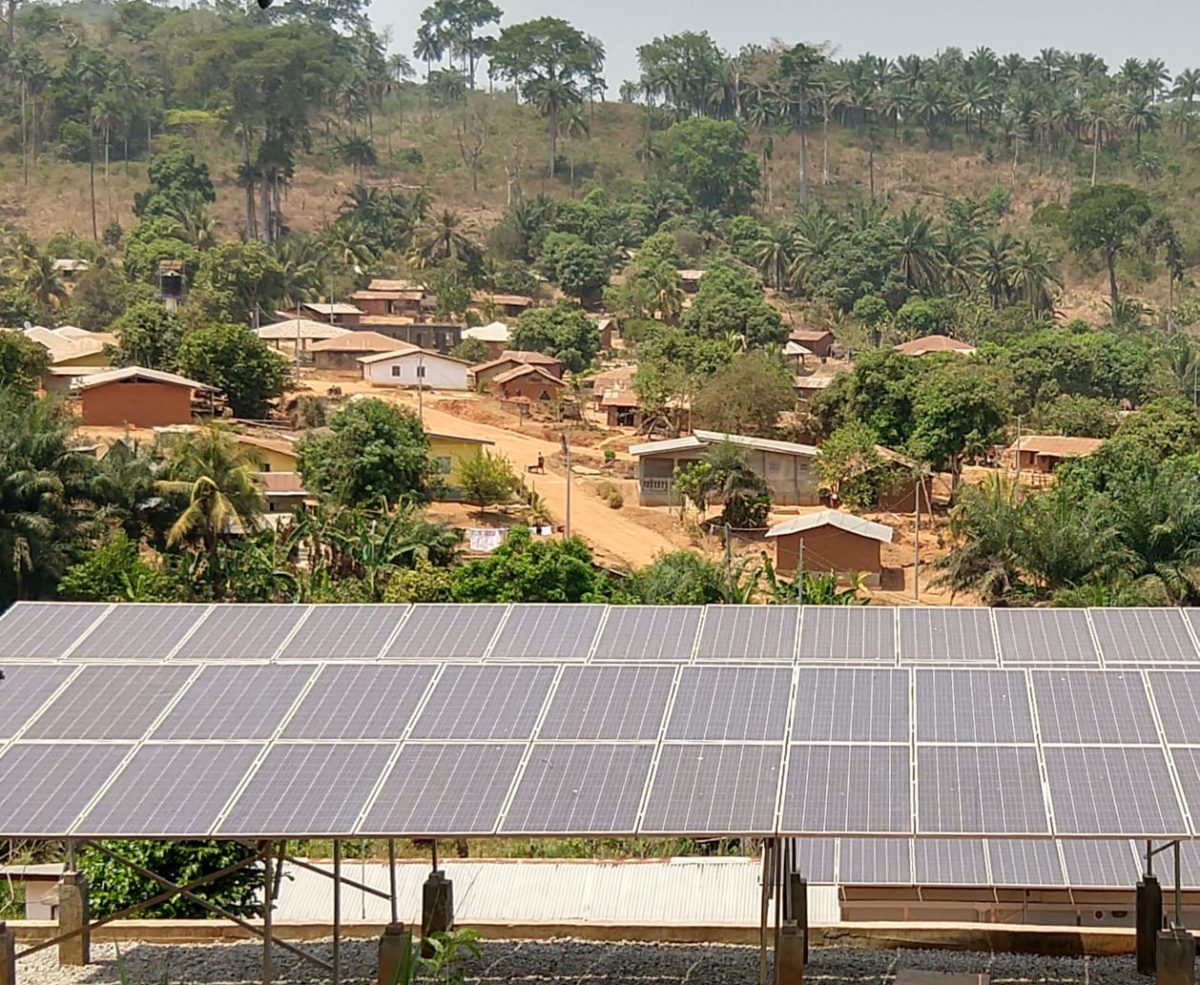
The Rural Electrification Agency (REA) has inaugurated the Africa Mini Grids Programme (AMP) to support access to clean energy in Nigeria.
Mr Ayang Ogbe, the Director of Promotions at REA, said this in a statement in Abuja, noting that the four-year project was being funded by the Global Environment Facility (GEF) and supported by the United Nations Development Programme (UNDP) in Nigeria.
He said that the programme aims to increase the financial viability and promote scaled-up commercial investment in renewable energy mini-grids, focusing on cost-reduction levers and innovative business models.
According to him, the renewable energy mini-grids are with a focus on cost-reduction levers and innovative business models.
“The programme is active in 21 African countries, and the Nigeria national project implemented by the REA is the first to commence implementation following the official inauguration at an inception workshop.
“The workshop was hosted in collaboration with representatives from the UNDP, GEF, Federal Ministries of Power, Environment and Agriculture as well as other key stakeholders in the rural development space,” he said.
Mr Ogbe said that the Africa mini-grids programme in Nigeria was designed as an enabler project of the REA’s Energising Agriculture Programme (EAP).
He said that EAP aims to advance one of REA’s strategic priorities of focusing on the unserved and underserved to increase economic opportunities.
”Through agriculture and productive sectors in rural communities across the country, this objective is in line with the mandate of the REA to catalyse economic growth and improve the quality of life for rural Nigerians.
Speaking on the project, Mr Mohamed Yahya, the UNDP Resident Representative in Nigeria, said that the UNDP was delighted with the inauguration of the Africa mini-grids programme in Nigeria with the REA as the project’s implementing partner.
He said, “access to reliable, sustainable, affordable energy is a catalyst to socio-economic development, and in achieving the Sustainable Development Goals (SDGs).”
“By scaling up solutions such as renewable energy mini-grids, we will be able to close the energy access gap and unlock opportunities for people in Nigeria and across the region,” he said.
On his part, Mr Jonah Stanley, GEF Operational Focal Point at the Federal Ministry of Environment, emphasised the significance of the programme, which he sees as central to issues.
“Such as security, climate change, food production and strengthening economies while protecting ecosystems.”
The statement quoted the Managing Director of the REA, Mr Salihijo Ahmad, “commending the collaborative spirit of the agency’s partners and stakeholders that enabled the activation of the programme.”
Mr Ahmad said that the Africa mini-grids programme would serve as another catalyst for improved access to sustainable energy and equitable and inclusive impact on livelihoods by unlocking agricultural value addition opportunities from electrification.
He said, “this sectoral approach is in line with the agency’s focus on programmes to advance the electrification targets and broader social and economic development objectives of the Federal Government of Nigeria.”
The statement also quoted Mr Sanusi Ohiare, the Executive Director, Rural Electrification Fund (REF) at the REA as saying, “there is the need to enhance the viability of mini-grids and the impact of electrification”.
“To this end, the programme will deploy pilot mini-grids to achieve the electrification of rural communities and agricultural value chain.”
Mr Ohiare said that the project would also establish the most appropriate solutions and business models while amplifying the knowledge gained to catalyse private investment.”
The AMP in Nigeria will contribute to SDG 7, which is (Affordable and Clean Energy), Goal 13 (Climate Action) and Goal 5 (Gender Equality), with an estimate of 70,063 direct project beneficiaries, out of which 34,559 are women.
General
TUC Calls for 60% Oil Windfall Allocation to Cut Petrol Costs
By Adedapo Adesanya
The Trade Union Congress (TUC) of Nigeria has proposed that the federal government deploy at least 60 per cent of excess crude oil revenue above the budget benchmark to subsidise feedstock for local refineries, including the Dangote Refinery.
The President of the group, Mr Festus Osifo, made the proposal in Abuja yesterday, warning that the rising cost of petrol has placed unbearable pressure on households and businesses and that such urgent measures remain necessary to ease economic hardship on Nigerian workers.
Mr Osifo explained that crude oil prices above the budget benchmark of $64.85 per barrel currently generate excess revenue shared among the three tiers of government.
He argued that redirecting a significant portion of this surplus into subsidising crude supply for domestic refining would reduce production costs and translate quickly into lower pump prices for petrol, diesel and aviation fuel.
The labour leader noted that the sharp increase in fuel prices, exacerbated by global supply disruptions linked to geopolitical tensions, has worsened transportation costs and manufacturing expenses, ultimately driving up the prices of goods and services.
According to him, the situation risks reversing the modest decline in inflation recorded in recent months.
He said, “We are seeing that the cost of petroleum is edging towards N2,000 per litre, and Nigerian workers are facing excruciating pain as we speak. What we are saying is that if crude oil prices exceed the budget benchmark, let the government take at least 60 per cent of that excess and use it to subsidise crude supplied to Dangote Refinery and other local refineries.
“When you subsidise production directly, it reduces the cost of feedstock, and that will translate immediately to a reduction in the pump price of petroleum products. When this is done, I can assure you that within one to two weeks, the prices of PMS, AGO, and jet fuel will go down, and Nigerians will begin to feel relief.”
Mr Osifo also stressed the need for immediate relief measures, alongside long-term investments in alternative energy such as compressed natural gas (CNG). While acknowledging government efforts to introduce CNG-powered buses, he said inadequate infrastructure remains a major challenge limiting their impact.
He also expressed concerns over the persistent insecurity across the country, urging the government to prioritise investment in modern security equipment and technology while commending security agencies for their ongoing efforts.
General
NIS Suspends Officers Over Extortion Allegations on Lagos-Seme Corridor
By Adedapo Adesanya
The Nigeria Immigration Service (NIS) has ordered the suspension of senior officers overseeing key commands along the Lagos-Seme corridor following allegations of extortion.
The suspension follows the circulation of online reports accusing immigration personnel at the busy border route of misconduct “bordering on extortion,” prompting immediate intervention from the agency’s leadership.
According to a spokesperson of the border controller, Akinsola Akinlabi, in a statement on Friday, April 10, the NIS Comptroller-General, Mrs Kemi Nandap, had “temporarily relieved the Comptrollers in charge of the affected Commands of their duties” pending the outcome of an ongoing investigation.
The service distanced itself from the alleged conduct, with Mrs Nandap condemning the actions in strong terms, describing the incidents as “unacceptable” and in “direct violation of the core values, ethics, and operational standards of the Service”.
According to the statement, a full-scale probe has been launched to uncover the extent of the нарушения, identify officers involved, and enforce sanctions without delay.
“The investigation will be comprehensive… ensuring appropriate disciplinary measures are applied with immediate effect,” the statement said.
While the probe continues, the Service sought to reassure the public of its commitment to professionalism at Nigeria’s borders.
“The service wishes to reassure the general public that it remains committed to delivering professional, transparent, and efficient services at all points of entry and exit,” it stated.
“It will not condone any act that undermines public trust or tarnishes the integrity of the service.”
The agency also called on Nigerians to report misconduct through its official complaint channels, including social media platforms and its 24-hour contact centre, noting that internal oversight mechanisms are being strengthened.
“The Nigeria Immigration Service remains resolute in its mission to serve with integrity, discipline, and professionalism while facilitating lawful migration,” the statement added.
General
NISO Working to Accelerate Grid Monitoring
By Adedapo Adesanya
The Nigerian Independent System Operator (NISO), the entity established to manage Nigeria’s electricity grid, has said that it was working to accelerate the implementation of the Supervisory Control and Data Acquisition (SCADA) to enhance grid monitoring.
The SCADA is a software and hardware system that enables industrial organisations to remotely monitor, control, and collect real-time data from machines and processes.
The Managing Director of NISO, Mr Abdul-Mohammed Bello, in a statement to outline some of the achievements the organisation recorded within one-year of its establishment, said efforts are being made to ensure completion to enhance the grid monitoring infrastructure, adding that this is in collaboration with the Nigerian Electricity Regulatory Commission (NERC).
”We are doing this to ensure that SCADA, which is a veritable tool for system operation, is completed.
“It is a work in progress, and we have also reached advanced stages in the deployment of the telemetry system across the grid at the electricity trading points,” he said.
Mr Bello said that the telemetry system would enhance the efficiency and effectiveness of the electricity market, thereby enabling settlements in real-time.
“This is very critical for us to have accurate data and management aspects of the system.
“We have also been able to install substantial IoT metering systems on most parts of the generating units and at the interfaces between transmission and generation, and substations,” he said.
Mr Bello said that the IoT application was an ongoing project that NISO was prioritising.
He said that when the project is completed before the end of the year, there would be visibility of the national grid from generation through transmission lines, substations, and distribution.
“We are going to make sure that the approved transmission expansion plan is religiously implemented to add value to the system,” he said.
He also said that the board of NISO had been able to strengthen and execute Institutional development in the electricity regulatory sector.
He said that the system operator had prioritised the building of a strong and credible institution over the past year, and had already established governance and management structures to support independent system operations.
“We have been able to establish governance and management structures to support independent system operations both at the board level and at the management level.
“We have also strengthened institutional coordination across the electricity value chain, from generation to transmission, distribution, and energy cost management. This is to foster a culture of accountability, professionalism and performance throughout the sector value chain,” he said.
-
Feature/OPED6 years agoDavos was Different this year
-
Travel/Tourism10 years ago
Lagos Seals Western Lodge Hotel In Ikorodu
-
Showbiz3 years agoEstranged Lover Releases Videos of Empress Njamah Bathing
-
Banking8 years agoSort Codes of GTBank Branches in Nigeria
-
Economy3 years agoSubsidy Removal: CNG at N130 Per Litre Cheaper Than Petrol—IPMAN
-
Banking3 years agoSort Codes of UBA Branches in Nigeria
-
Banking3 years agoFirst Bank Announces Planned Downtime
-
Sports3 years agoHighest Paid Nigerian Footballer – How Much Do Nigerian Footballers Earn