General
Nigeria Targets 20% From $90bn Deepwater Projects Financing
By Adedapo Adesanya
Nigeria wants to corner 20 per cent of the $90 billion in financing available for deepwater projects around the world in an ambitious move to boost its oil and gas sector.
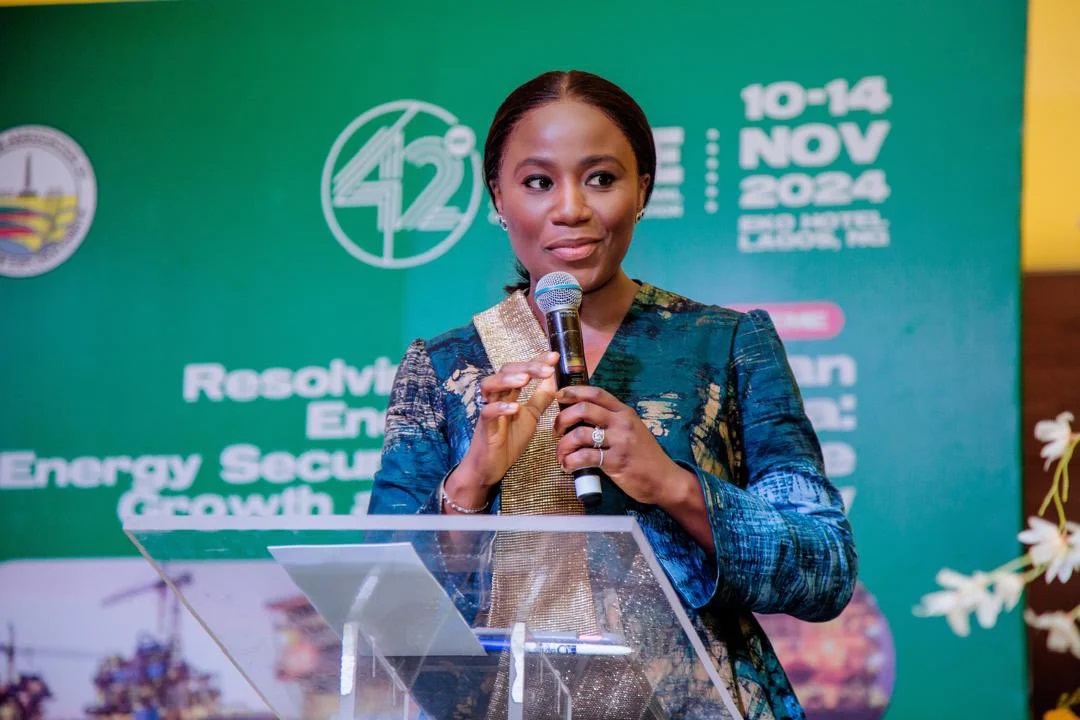
This was disclosed by the Special Adviser to President Bola Tinubu on Energy, Ms Olu Verheijen, in her keynote address at an Executive Session of the Energy Institute and the National Association of Petroleum Explorationists (NAPE).
According to the President’s energy adviser, deepwater oil projects have delivered competitive returns as the country has moved from the bottom quartile of 13 indexed countries to the top three.
“Accessing 20 per cent of this will be more than enough to bring five major deepwater projects on-stream, unlocking 1.3 billion barrels of oil equivalent (boe),” she said.
Ms Verheijen noted that, in deepwater gas, Nigeria has moved from a total absence of a fiscal framework to having one for the first time in history.
According to her, the reforms targeted actual bottlenecks and real projects in the investment pipelines.
“In April this year, FID was reached on the Ubeta Non-Associated Gas project, a half-a-billion dollar project. The Ubeta field was discovered in 1965 and has finally been unlocked to deliver prosperity to multitudes of Nigerian lives and businesses,” she said.
“We are gearing up for our first FID on a greenfield deepwater development since the last one (Egina) in 2013.
“Going into 2025, we expect the investment momentum to quicken, proving beyond any doubt that President Tinubu’s energy reform agenda is truly revolutionary. Our challenges are addressable and fixable,” she explained.
The President’s aide added these new investments will have major implications for the Nigerian economy in terms of foreign exchange inflows which will help with exchange rate management and macroeconomic stability.
She added that local economies will benefit from the increased spending on construction and hiring, and skill-building and technology transfer will take place.
“Importantly, with the industry infrastructure being developed, each new investment will ensure that subsequent projects are possible at lower costs and with the guarantee of greater returns – creating a virtuous cycle of new investments.”
The Special Adviser noted that the session was apt at the time Nigeria needed ever-increasing levels of energy investment to catalyse its economic development.
She added that energy, in its many forms, remains a vital path to higher paying jobs, to industrialisation, to innovation, and to sustained prosperity, for Nigeria and for all of Africa.
Ms Verheijen then called on the stakeholders to be a part of the unfolding energy revolution in the country.
General
Customs Area 11 Command Drives Generates N77bn in April
By Bon Peters
Over N77 billion was generated as revenue in April 2026 by the Nigeria Customs Service (NCS) Area 11 Command in Onne, Port Harcourt, Rivers State.
This landmark feat in the command’s fiscal operations signals a new era of economic prosperity and administrative efficiency.
The revenue generated last month was 70.2 per cent higher than the amount collected in the same month of last year, according to a statement issued by the command’s acting spokesman, Mr Paul Istifanus Gimba, an Assistant Superintendent of Customs I.
This feat was attributed to the strategic and visionary leadership of the command’s area controller, Comptroller Aliyu Mohammed Alkali.
On innovation, the command has integrated modern technologies and cutting-edge logistics management, consolidating and strengthening existing protocols and building upon previous successes to create a sustainable economic environment.
The statement emphasised that, “By embracing these principles, the Area 11 Command has transformed into a critical hub for national revenue optimisation, ensuring that the federal government’s fiscal goals are not only met but consistently surpassed.”
It added that the core pillars of success under Comptroller Alkali, since assuming leadership, were the implementation of a rigorous operational strategy designed to maximise the command’s potential and commitment centred on core areas of Simplification and Trade Facilitation.
The statement further posited that in an effort to foster a business-friendly environment, the command has focused heavily on the simplification of procedures by identifying and removing bureaucratic bottlenecks, noting that the Command has significantly reduced delays in cargo clearance, insisting that such a streamlined approach has not only benefited importers and exporters but also accelerated the “ease of doing business” within the maritime sector.
On performance and target optimisation, the command has moved beyond mere compliance to a culture of excellence and by building on past successes, the administration has ensured that revenue targets were viewed as minimum benchmarks rather than ultimate goals.
It also stated that behind the record-breaking revenue generation lies a workforce characterised by dedication and professionalism, as Comptroller Alkali lauded the officers and men of the command for their commitment to duty, even as the Onne Customs boss emphasised that the achievement of April 2026 was a collective victory, made possible by the integrity and discipline of the personnel stationed at Onne.
He stated that their ability to balance security concerns with the need for rapid trade facilitation remained the cornerstone of the command’s operational philosophy.
General
Billing, Collection Gaps Leave DisCos with N80.49bn Shortfall in February
By Adedapo Adesanya
Latest data from the Nigerian Electricity Regulatory Commission (NERC) showed that Nigeria’s electricity Distribution Companies (DisCos) recorded an N80.49 billion collection shortfall in February 2026.
According to NERC’s February factsheet on DisCos’ commercial performance, the 11 companies received N277.09 billion worth of electricity from the national grid.
The total energy received by the energy distribution firms increased by 17.64 per cent from January’s N235.53 billion. However, the DisCos billed customers N242.29 billion and collected only N196.68 billion.
This reflected a collection efficiency of 81.17 per cent and a billing efficiency of 87.44 per cent. Average recovery efficiency across all DisCos was 80.67 per cent.
The report also detailed a reduction in government subsidies to N24.03 per unit from N38.33 in January, indicating a N14.30 drop, so customers paid an average of N100.27 per unit against an allowed tariff of N124.30.
The commission further highlighted gains in tariff realisation, stating that “the actual average collection per kilowatt-hour increased to N100.27, representing a 16.64 per cent improvement compared to January 2026.”
This, it said, pushed recovery performance upward, noting that “overall revenue recovery efficiency rose to 80.67 per cent, an increase of 11.51 percentage points month-on-month.”
Providing a breakdown across utilities, the Commission stated that “Eko, Kano, and Abuja DisCos recorded the highest billing efficiencies at 97.20 per cent, 99.04 per cent, and 93.70 per cent, respectively.”
Conversely, it noted that “Yola and Kaduna DisCos recorded the lowest billing efficiencies at 66.09 per cent and 72.46 per cent respectively.”
On collections, the report said “Eko DisCo led with 94.12 per cent collection efficiency, followed by Abuja at 89.28 per cent,” while “Kaduna DisCo recorded the lowest collection efficiency at 49.27 per cent.”
In terms of cost recovery, the commission disclosed that “Eko DisCo achieved a recovery efficiency of 100.67 per cent, exceeding the allowed tariff benchmark,” while “Kaduna DisCo recorded the weakest recovery performance at 41.20 per cent.”
An analysis of the figures shows that compared to January, energy received rose by N41.56 billion (17.64 per cent), Billings fell by N25.79 billion (9.66 per cent), and Collections declined by N8.09 billion (3.94 per cent).
This indicates that although DisCos are becoming more efficient operationally, the sector is still grappling with weak demand, collection losses, and customer liquidity constraints.
The commission also disclosed that “reduced ATC&C loss targets averaging 16.64 per cent have been approved for 2026 to reflect the expected impact of DisCo investments made in 2025.”
It added that the February performance “demonstrates gradual improvements in commercial efficiency, though significant gaps remain in revenue realisation across the industry.”
General
Court Judgment: Group Await Details of Ogun, ARISE IIP Deal Within 14 Days
By Modupe Gbadeyanka
A group known as Naija Lives Matter (NLM), established by Mr Ope Banwo, has expressed optimism that the Ogun State government will obey the judgment of Justice Abiodun Adeyemi of the Federal High Court in Abeokuta on the release of the full details of a 45-year Public-Private Partnership (PPP) agreement with ARISE Integrated Industrial Platforms (ARISE IIP).
NLM had approached the court under the Freedom of Information (FOI) Act, 2011, to compel the state government under Governor Dapo Abiodun to release details of the Remo Economic Industrial Cluster project in Sagamu.
The organisation, through Mr Yemi Salman, filed the suit after the state government refused to provide key details of the project.
While delivering the judgment, Justice Adeyemi ordered the Ogun State Government and its key ministries to release critical documents and information relating to the agreement to NLM and Mr Banwo.
Reacting to this, the founder of the group said, “This is about the right of the people to know how a long-term agreement involving public resources was structured.
“We believe the Governor has an opportunity to demonstrate that, despite all the drama about him, he still respects the rule of law by choosing transparency over secrecy; accountability over avoidance; and respect for the rule of law over resistance, because at this point, disobedience of a lawful court order is not just a legal issue—it is a public accountability issue.
“And we at Naija Lives Matter are hopeful that Governor Dapo Abiodun will not add disregard for judicial authority to the list of questions already before the people of Ogun State. We expect all documents regarding the Ogun State–ARISE IIP project within 14 days, as ordered by the court.
“We hope other organisations fighting for transparency and accountability from our governments will be encouraged by this bold ruling to keep up the fight for justice in our nation.”
-
Feature/OPED6 years agoDavos was Different this year
-
Travel/Tourism10 years ago
Lagos Seals Western Lodge Hotel In Ikorodu
-
Showbiz3 years agoEstranged Lover Releases Videos of Empress Njamah Bathing
-
Banking8 years agoSort Codes of GTBank Branches in Nigeria
-
Economy3 years agoSubsidy Removal: CNG at N130 Per Litre Cheaper Than Petrol—IPMAN
-
Banking3 years agoSort Codes of UBA Branches in Nigeria
-
Banking3 years agoFirst Bank Announces Planned Downtime
-
Sports3 years agoHighest Paid Nigerian Footballer – How Much Do Nigerian Footballers Earn