
General
Nigerian Invents Smokeless Cookstove to Tackle Climate Change


By Adedapo Adesanya
A 26-year-old Nigerian is currently making waves for creating a smokeless cook stove. The young inventor, Max Chinnah, alongside his Ghanaian partner, Godwin Attigah, has patented his innovation, which will contribute to tackling climate change in the globe.
Mr Chinnah, a graduate of the Wartburg College in Iowa, United States, hopes that the portable and smokeless cookstove will someday help save lives around the planet.
The smokeless cookstove converts heat into electricity and outputs it through a USB jack to charge a phone or other small electronic device.
Mr Chinnah and his partner and fellow alumnus, Mr Godwin Attigah, founded Terraoak Inc., which is the parent company that will manufacture the stove in large quantities and launch global sales from September.
“We’re on a mission to push back against these global threats in order to ensure a greener future for the next generation!”, the company said on its Facebook page.
“We are deeply committed to making this dream a reality because it’s a big problem and something we’ve experienced personally,” Mr Chinnah said. “For us it’s very real and raw and very personal.”
It was learned that the Nigerian lost his grandmother to respiratory difficulties that resulted from cooking over open fires.
Based on the level of early sales, Terraoak has already reached an arrangement with the World Wide Fund for Nature (WWF) to give away 1,000 stoves to farmers in rural Kenya.
The stove had won a $10,000 innovation prize at Yale University’s Global Health Innovation Conference in 2016, which funded field tests under harsh conditions in Ghana but funds from Red Cedar, a local organization created to help startups and entrepreneurs connect with resources got them off the ground.
A scholarship package helped Mr Chinnah get to Wartburg in 2011, where he studied Computer Science and met his business partner, Godwin Attigah, an international student from Ghana when both of them began to seek funds to secure a utility patent for the stove and prepare it for manufacturing.



By Adedapo Adesanya
The Nigeria Guild of Editors (NGE) and the Socio-Economic Rights and Accountability Project (SERAP) have called on President Bola Tinubu to investigate the alleged threat issued against Channels Television presenter, Mr Seun Okinbaloye, by the Minister of the Federal Capital Territory, Mr Nyesom Wike.
The groups, in a joint statement by NGE President, Mr Eze Anaba, General Secretary, Mr Onuoha Ukeh, and SERAP Deputy Director, Mr Kolawole Oluwadare, on Monday, condemned the remarks and urged the federal government to “promptly, thoroughly, transparently and effectively investigate the threat.”
They also called on the government to ensure the safety of Mr Okinbaloye and other journalists.
“The Tinubu government should urgently take all necessary measures to ensure the safety and security of Mr Okinbaloye and other journalists facing threats to their safety and security solely for peacefully exercising their human rights and carrying out their legitimate journalistic work,” the statement read.
Mr Wike had, during a media chat in Abuja last Friday, reacted to comments made by the broadcaster, surrounded by some media men.
“I was surprised yesterday (Thursday), totally surprised when I was watching Politics Today. Seun, if there was any way to break the screen, I would have shot him,” the Minister said.
Mr Okinbaloye had raised concerns about the 2027 elections, suggesting that the political space appeared to be tilting towards dominance by a single party, referencing internal issues within the African Democratic Congress (ADC).
Reacting, the NGE and SERAP warned that press freedom in Nigeria is under increasing pressure. The groups stressed that public officials must be open to scrutiny and criticism.
“We are seriously concerned that press freedom is in a ‘downward spiral,’ with increasing intimidation, harassment, threats, and attacks against journalists and media freedom across the country.
“Public figures, including politicians, are subject to a higher degree of scrutiny and criticism. The threat against Mr Okinbaloye illustrates the escalating threats to the safety and security of journalists and media freedom in the country,” the statement added.
They further argued that journalists retain their constitutional right to freedom of expression.
“Like every individual, Okinbaloye is entitled to exercise his right to freedom of expression as a fundamental human right, including the right to seek, receive, and impart information of public interest. His role as a journalist does not diminish or deprive him of this right,” they said.
The organisations noted that even though Wike had reportedly clarified his comments, such remarks should not have been made.
“Although Mr Wike has sought to clarify his remarks, the threat should never have been made in the first place. The objective of those who threaten journalists remains the same: to chill public interest reporting by increasing the risks faced by journalists. Such conduct undermines press freedom and democratic accountability. This must stop,” they said.
They also decried what they described as a culture of impunity surrounding attacks on journalists.
“The continuing failure by the Nigerian authorities to uphold press freedom and to effectively investigate and prosecute the growing cases of threats and attacks against journalists has emboldened those who wish to silence them,” the groups stated.
The groups urged the federal government to direct security agencies to investigate the alleged threat and bring perpetrators to justice.
They also called on the Attorney General of the Federation, Mr Lateef Fagbemi, to work with relevant agencies to address threats against journalists since May 29, 2023.

By Modupe Gbadeyanka
On Wednesday, April 8, and Thursday, April 9, 2026, President Bola Tinubu will commission some projects embarked upon by Governor Babajide Sanwo-Olu of Lagos State.
The commissioning would be done during a two-day visit to the nation’s commercial capital, the first official visit to the metropolis by Mr Tinubu.
Though originally from Osun State, Lagos is seen as the home state of President Tinubu, as he governed the aquatic state from 1999 to 2007, and also represented Lagos West senatorial district in the Senate from 1992 to 1993.
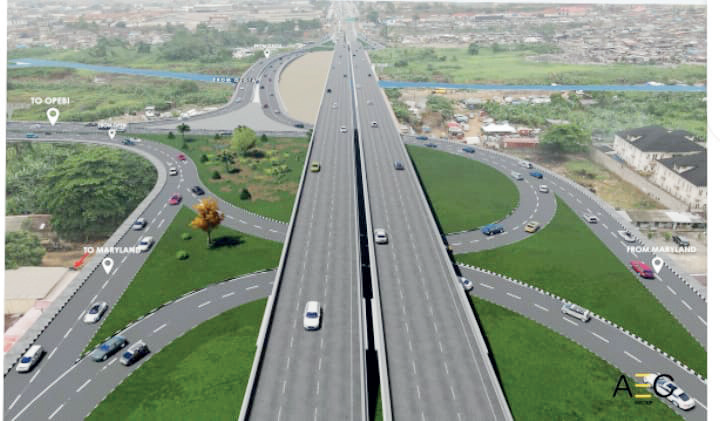
Addressing the media on Monday in Alausa, the Commissioner for Information in Lagos, Mr Gbenga Omotoso, said some of the key legacy projects to be commissioned include the Ojota-Opebi Link Bridge, the Lagos State Geographic Information Service (LAGIS) building, and the Lagos Multi-Agency Building in Alausa.
Others are the Lagos Fresh Food Hub in Abijo Ajah, Tolu Schools Complex in Ajegunle and Maracana Stadium, comprising 19 mini-football pitches, built side by side in Ajegunle.
Mr Omotoso said these projects reflect the Mr Sanwo-Olu administration’s commitment to Lagos development and improved living standards of the residents, stressing that the infrastructure was carefully conceived and executed to address the growing needs of our population, ease mobility, stimulate economic activities, and enhance social welfare.
“The presence of Mr President in Lagos at this auspicious occasion further reinforces the strong partnership between the federal government and Lagos State. The planned project unveiling ceremony highlights the importance of continuity in governance and the value of visionary leadership in driving development.
“We are confident that these projects will not only serve the immediate needs of our people but also stand as enduring legacies for generations to come. All the iconic projects represent progress in action and hope for a better future.
“As we prepare for this historic visit, we assure residents of Lagos that all arrangements have been put in place to ensure a smooth, secure, and successful event. We urge the public to cooperate with the authorities, especially in areas where there may be temporary traffic adjustments or security protocols,” he said.
It was gathered that over 500 personnel of the Lagos State Traffic Management Agency (LASTMA) would be deployed to adequately manage and control traffic during the President’s visit.
The Opebi-Ojota Link Bridge was initiated to address traffic challenges within the Ojota, Maryland, Mende, Opebi, and Allen axes, as the corridor serves as a major route for commuters moving between the mainland and key commercial districts.
The Opebi-Ojota Link Bridge project was originally conceived over two decades by Mr Tinubu when he was the governor of the state. It was revived and officially flagged off in January 2022 by Governor Sanwo-Olu.

By Adedapo Adesanya
The Nigeria Data Protection Commission (NDPC) has launched an investigation into an alleged data breach involving Remita Payment Services Limited, Sterling Bank, and other entities, as part of efforts to safeguard personal data and strengthen compliance within Nigeria’s digital ecosystem.
In a statement issued on Sunday by its Head of Legal, Enforcement and Regulations, Mr Babatunde Bamigboye, the commission said, in line with its procedures, a Notice of Investigation was duly served on April 1, 2026.
The agency noted that relevant parties and individuals have been providing information to support efforts to address the incident, adding that the investigation aims to ensure data subjects are adequately protected through appropriate technical and organisational measures.
“The investigation by NDPC covers, among others, the types of personal data involved, the nature and scope of the alleged breach, the risk to data subjects, and the mitigation measures taken where a breach is confirmed,” the statement said.
Meanwhile, the chief executive of NDPC, Mr Vincent Olatunji, has directed that organisations using digital payment systems without implementing the required technical and organisational safeguards, as mandated under the Nigeria Data Protection Act, 2023, will also be examined.
The organisation said this forms part of a broader effort to ensure the integrity and security of Nigeria’s data protection ecosystem.
Data breaches have risen in the last few years, with a 2025 report from Surfshark, a cybersecurity firm, ranking Nigeria third in Sub-Saharan Africa for total breaches since 2004, with 23.2 million compromised accounts.
In September 2024, a hacker identified as Addka72424 released a dataset containing 3.3 billion email addresses, which included 2,555,642 Nigerian accounts. The hacker described it as a “small” experiment to show how much data is freely available online.
This latest development further exposes how cyberthreats continue to evolve, and attackers are constantly adapting their tactics.
The Nigerian government has now launched a national cyber coordination council towards tackling the rising threat.
-
 Feature/OPED6 years ago
Davos was Different this year
-
Travel/Tourism10 years ago
Lagos Seals Western Lodge Hotel In Ikorodu
-

 Showbiz3 years ago
Estranged Lover Releases Videos of Empress Njamah Bathing
-
 Banking8 years ago
Sort Codes of GTBank Branches in Nigeria
-

 Economy3 years ago
Subsidy Removal: CNG at N130 Per Litre Cheaper Than Petrol—IPMAN
-

 Banking3 years ago
Sort Codes of UBA Branches in Nigeria
-

 Banking3 years ago
First Bank Announces Planned Downtime
-

 Sports3 years ago
Highest Paid Nigerian Footballer – How Much Do Nigerian Footballers Earn