General
Nigerians Turn to Solar Energy as Petrol Prices Bite Harder
By Adedapo Adesanya
Nigerians continue to seek alternative power sources, primarily solar, causing the consumption of Premium Motor Spirit (PMS), also known as petrol, to fall by 16.9 per cent in March 2026.
Prices of the petroleum products have been up since last month as a result of the US-Israel attack on Iran and its blowback.
According to data from the Nigerian Midstream and Downstream Petroleum Regulatory Authority (NMDPRA), daily petrol consumption dropped from 56.9 million litres in February to 47.3 million litres in March, marking one of the steepest month-on-month declines in recent times.
This fall is significant not just for its size, but for what it signals in a country where petrol has long remained the dominant fuel for transport and off-grid electricity generation, which has been epileptic.
The drop of over 9 million litres per day suggests that households, transport operators and small businesses had to adjust their consumption patterns in response to sustained fuel price pressure, which rose to as high as N2,000 in some parts of the country, following the blockade of the Strait of Hormuz.
At the same time, total PMS supply rose marginally from 39.5 million litres per day in February to 40.1 million litres in March, representing a 1.5 per cent increase. This contrast between rising supply and falling demand points to a market that is not constrained by availability but increasingly shaped by affordability and substitution effects.
Prices of petrol in Nigeria typically rise due to global market conditions since the government removed fuel subsidy, which led to changes in the cost of buying the fuel weekly.
Also, Dangote Refinery, which handles a chunk of Nigeria’s domestic supply, relies on international markets to get crude feedstock due to shortages from the Nigerian National Petroleum Company (NNPC) Limited. This comes into play when pricing for the local market.
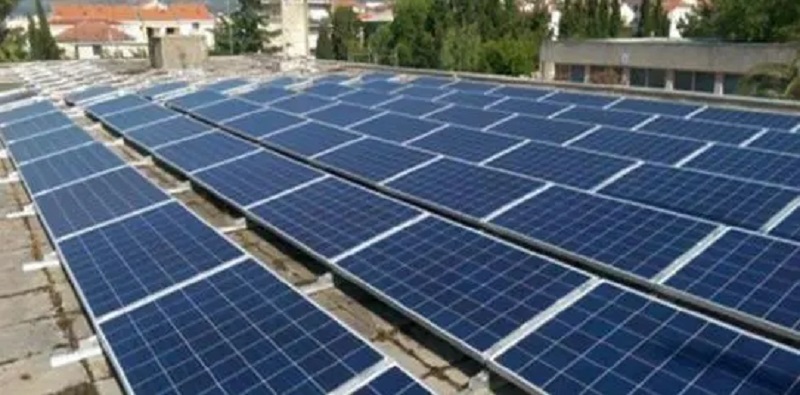
Also, the March figures could suggest rising renewable energy adoption as residential estates, businesses and commercial buildings are gradually expanding, driven largely by the need to escape rising diesel and petrol costs.
However, adoption is slow because of how expensive a solar power setup is, with the cost running into millions of Naira.
Energy experts told Business Post that, beyond cost, there are several factors, such as holding false beliefs as well as a lack of energy management.
Mr Danieel Anomfueme, a Port Harcourt-based solar expert, told this newspaper, “While going solar is a much better alternative to fuel-based generation (napkin maths puts it at ~3 years fuel cost ), most can’t make the move because they lack the upfront money. While there are solar financing companies, the credit cost and options don’t make it attractive.”
“We are wasteful energy-wise because we grew up with it being heavily subsidised electricity, and we don’t bother to know about energy conservation or efficiency of appliances. This is why someone will be spending 400k+ monthly on band A, but expect their “#6m setup” to power all those appliances 24/7 daily,” he added.
For the expert, interested Nigerians can design a solar setup, have an overview of it and get to build it up little by little as the money comes.
“They don’t have to deploy everything at once.”
General
Ogun NSCDC Arrests 210 Suspects for Vandalism, Illegal Mining
By Adedapo Adesanya
The Ogun State Command of the Nigeria Security and Civil Defence Corps (NSCDC) says it arrested 210 suspects for vandalism, fraud, and illegal mining in the last 18 months as part of its anti-vandalism drive.
The Ogun State Commandant, Mrs Remilekun Ekundayo, disclosed this during a courtesy visit to the Nigeria Union of Journalists, NUJ, council in Abeokuta, the state capital.
Mrs Ekundayo said the command had also recovered over N23 million in fraud-related cases for victims and resolved more than 1,700 disputes through alternative dispute resolution mechanisms within the same period.
She added that the command has sustained intelligence-driven operations that have prevented several criminal activities and ensured the protection of pipelines, railway corridors, and power installations across the state.
While stressing that security remains a shared responsibility, Mrs Ekundayo called for stronger collaboration with the media to enhance public awareness and safety in the state.
According to her, the visit was aimed at strengthening cooperation between the corps and the media, describing journalists as critical partners in the state’s security architecture.
“In matters of security, your role becomes even more strategic and impactful,” she said.
“The NSCDC is statutorily empowered to protect critical national assets and infrastructure, prevent vandalism and economic sabotage, and support disaster management and emergency response,” she said.
In his remarks, the Ogun State Chairman of the NUJ, Mr Wale Olanrewaju, assured the commandant of the council’s support and continued partnership through accurate and prompt reporting of security issues.
General
Defence Minister Musa Warns Mali Conflict May Destabilise West Africa
By Adedapo Adesanya
Nigeria’s Minister of Defence, Mr Christopher Musa, says the capture of a key Malian town by rebels poses a threat to West Africa that requires foreign intervention to prevent the insurgency from spreading.
A series of coordinated attacks by militants in late April left Mali’s Defence Minister dead and forced Malian and Russian mercenary forces to withdraw from the northeastern stronghold of Kidal.
Mr Musa, a retired army general, said in an interview with Bloomberg that the international community must come together to deal with the insurgents before they wreak havoc on the region.
The deteriorating situation in Mali may trigger a wider regional crisis, the defence minister said.
His admittance comes as the border region of Nigeria, Benin and Niger on the southern edge of the Sahel region is becoming a new stronghold for jihadists, as militants turn forests and pastoral networks in West Africa into bases for recruitment and international attacks.
“If they allow them to get any foothold in Mali, completely, they are not stopping there,” he warned.
He called for a joint campaign style like that of the United States against the Islamic State in Syria as a way to root out terrorists in West Africa.
General Musa noted that the collapse of states across the region has been the main driver of arms proliferation, with coastal West African states, including Ghana and Togo, becoming increasingly vulnerable.
He cited the fall of former Libyan dictator Muammar Gaddafi in 2011 as a turning point that released vast stockpiles of weapons into circulation, a problem compounded by ongoing instability in Sudan.
The combined crises have created an open corridor across the Sahel, allowing small arms, light weapons and ammunition to flow largely unchecked.
He added that this has worsened due to weak border controls and the ease of movement across the region.
Attacks in Nigeria have also risen, with data from the website of the Armed Conflict Location & Event Data (ACLED), a conflict-monitoring group, affirming that the number of suicide bombings in Nigeria by March already matched the annual average over the past six years.
The Nigerian military has also been dealt a blow to its military bases and senior figures targeted. In April, Brigadier-General Oseni Omoh Braimah was killed when Islamist fighters attacked a base in Borno State.
The minister said disruptions linked to global conflicts, including the war in Ukraine, as well as the ongoing war in Iran, have made it harder to source weapons even when funding is available. To meet its defence goals, Nigeria is stepping up efforts to build domestic arms-manufacturing capacity.
General
N33.8bn Fraud: Court Convicts ex-Power Minister Saleh Mamman
By Modupe Gbadeyanka
A former Minister of Power in Nigeria, Mr Saleh Mamman, has been convicted by a Federal High Court in Abuja over his connection with a N33.8 billion fraud.
He was found guilty of a 12-count charge brought against him by the Economic and Financial Crimes Commission (EFCC).
While delivering his judgment on Thursday, Justice James Omotosho declared that the former government official is guilty of all the charges levied against him by the agency.
In the suit marked FHC/ABJ/CR/273/2024, the EFCC informed the court that the convict, who served under the administration of late President Muhammadu Buhari, conspired with ministry staff to divert about N22 billion meant for the Zungeru and Mambilla Hydro Electric Power projects.
He was removed from office by the late president in 2021 and arrested by the anti-money laundering organisation four months after. He was said to have used embezzled funds of up to N33.8 billion to acquire properties.
At the court today, the judge confirmed that Mr Mamman made a cash payment of $655,700 (equivalent to N200 million) for landed property in Abuja, without recourse to a financial institution.
He was also found guilty of criminal breach of trust in relation to funds released by the federal government for the Mambilla and Zungeru Hydroelectric Power Plant projects.
“The evidence of the prosecution is overwhelming against the scanty and almost absent defence of the defendant.
“The defendant did not offer any credible evidence to rebut the prosecution’s case,” Justice Omotosho held.
“Rather than creating a legacy to tackle the epileptic power supply in the country, the defendant was living large at the expense of ordinary citizens.
“Little wonder that Nigerians have remained in darkness till today,” the judge added.
-
Feature/OPED6 years agoDavos was Different this year
-
Travel/Tourism10 years ago
Lagos Seals Western Lodge Hotel In Ikorodu
-
Showbiz3 years agoEstranged Lover Releases Videos of Empress Njamah Bathing
-
Banking8 years agoSort Codes of GTBank Branches in Nigeria
-
Economy3 years agoSubsidy Removal: CNG at N130 Per Litre Cheaper Than Petrol—IPMAN
-
Banking3 years agoSort Codes of UBA Branches in Nigeria
-
Banking3 years agoFirst Bank Announces Planned Downtime
-
Sports3 years agoHighest Paid Nigerian Footballer – How Much Do Nigerian Footballers Earn

Pingback: $83m IFC-Backed Funding Boosts Nigeria’s Off-Grid Electricity Drive | Business Post Nigeria
Pingback: Nigerians Turn to Solar Energy as Petrol Prices Bite Harder – PRIMA NEWS