General
NNPC, JV Partners Disburse $360m for Ogoniland Clean-Up
By Adedapo Adesanya
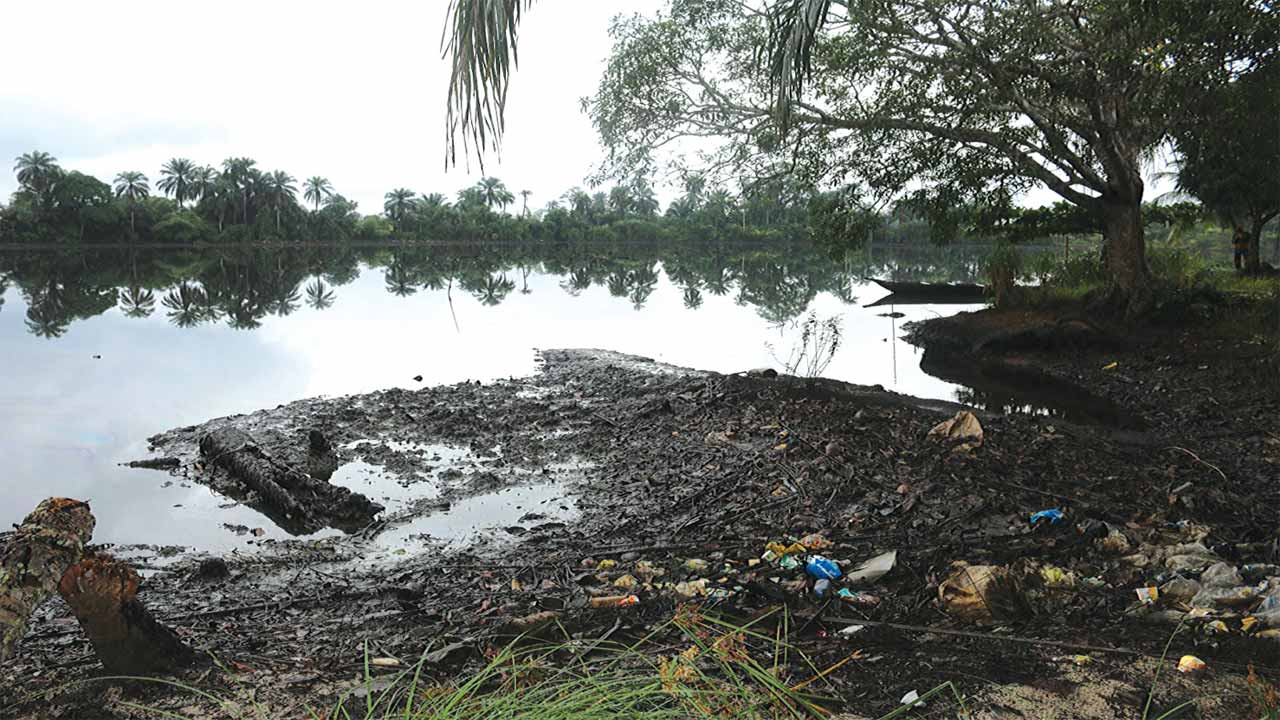
The Nigerian National Petroleum Corporation (NNPC) and its Joint Venture Partners have disbursed $360 million to the Ogoniland Clean-Up project following recommendations made by the United Nations Environment Programme (UNEP).
The Joint Venture (JV) Partners are Shell Petroleum Development Company (SPDC), Total Exploration and Production of Nigeria (TEPNG) and Nigerian Agip Oil Company (NAOC).
In a statement signed by its Acting spokesman, Mr Samson Makoji, in Abuja on Monday, the Group Managing Director of the corporation, Mr Mele Kyari, said during a presentation to the House of Representatives Committee on Environment and Habitat at the National Assembly, where he was represented by the NNPC Chief Operating Officer, Upstream, Mr Roland Ewubare, that the NNPC and its JV partners were up to date in their financial remittance to the clean-up project fund based on the United Nations Environment Programme (UNEP) framework.
“Ogoni clean-up is a massive issue and NNPC and its JV partners are ready to fund the project as prescribed by the UNEP Report.
”We have so far disbursed $360million out of the 900million dollars recommended.
“The disbursement was based on the standards set, which required that we release funds based on the implementation parameters of the clean-up exercise,” Mr Kyari said.
He further clarified that NNPC and its JV partners were not solely responsible for the implementation of the clean-up, and urged all other stakeholders to come together to ensure that the project was carried out successfully.
Mr Kyari added that the implementation of the clean-up was very important as the exercise would enable the restoration of land, water and the economic well-being of the people in the area.
He also warned about the misinformation about the Ogoniland clean-up and urged the Hydrocarbon Pollution Remediation Project (HYPREP) to ensure that the narrative was corrected for the effective implementation of the project.
A member of the House Committee, who was a former Minister of Environment, Mrs Aishatu Jibrin Dukku, applauded the NNPC and its JV partners for their commitment to the Ogoni clean-up project
She urged all other stakeholders to join hands with HYPREP to ensure the successful clean-up of the area.
Also, Chairman of the House of Representatives Committee on Environment and Habitat, Mr Johnson Oghuma, expressed commitment of the current leadership to ensure full implementation of the UNEP Report on Ogoniland for the common good of the people of the area.
General
Nigeria Probes Big Tech Over Anti-Competitive Practices, News Content Use
By Adedapo Adesanya
Nigeria is investigating major technology companies over alleged anti-competitive practices and unauthorised use of news content following a directive from President Bola Tinubu to the Federal Competition and Consumer Protection Commission (FCCPC) on Monday.
The anti-trust commission launched an investigation into major technology companies over allegations of anti-competitive practices, unlawful use of news content and other actions said to be harmful to Nigerian media organisations.
The development was disclosed in a statement issued on Monday by the FCCPC’s Director of Corporate Affairs, Mr Ondaje Ijagwu, following a joint petition submitted to the Presidency by the Nigerian Press Organisation (NPO).
The NPO comprises the Newspaper Proprietors’ Association of Nigeria (NPAN), the Nigeria Union of Journalists (NUJ), the Broadcasting Organisations of Nigeria (BON) and the Guild of Corporate Online Publishers (GOCOP).
The commission will also investigate Generative Artificial Intelligence platforms operating in Nigeria as part of the inquiry.
The federal government conveyed the directive to the FCCPC in a letter signed by the Minister of Information and National Orientation, Mr Mohammed Idris.
The petition centres on concerns by media stakeholders over the growing influence of some digital platforms on the survival of Nigeria’s news industry.
NPO accused major technology firms, including Meta, Alphabet and X, formerly known as Twitter, as well as some Generative AI platforms, of engaging in practices that could weaken fair competition, threaten the financial survival of media organisations and violate the rights of publishers and content creators.
FCCPC Executive Vice Chairman and Chief Executive Officer, Mr Tunji Bello, said the commission would carry out a transparent and evidence-based investigation into the claims.
“We recognise the strategic importance of the media to Nigeria’s democracy and the equally significant role of technology in driving innovation and economic growth. Our responsibility is to objectively determine the facts and ensure that competition within the digital ecosystem remains fair, transparent, and consistent with Nigerian law,” Mr Bello said.
Bello said the inquiry was not based on any assumption of guilt but was aimed at establishing the facts and hearing from all parties involved.
“This inquiry is not directed at any entity by presumption of wrongdoing. Rather, it is an opportunity to carefully examine the facts, hear from all affected parties, and determine whether any conduct has resulted in anti-competitive outcomes or unfair business practices. Every party will be accorded a fair opportunity to present relevant information before any conclusions are reached.”
He said the commission would determine whether the alleged conduct violates the Federal Competition and Consumer Protection Act 2018 or any other relevant law.
The FCCPC had previously investigated Meta and secured a judgment against the company in 2025 over breaches of the FCCPA, including data violations, resulting in a $220 million fine. Meta has appealed the ruling.
According to the commission, the new investigation will focus on allegations of market dominance and possible anti-competitive conduct by the companies involved.
It will also examine claims that copyrighted news articles, broadcast materials and other original journalistic works were extracted, scraped, ingested or commercially used without authorisation for the training and development of Generative AI models.
Another issue under review is the alleged absence of fair commercial arrangements between global technology companies and Nigerian media publishers. At the centre of this is the claim that local media organisations have not been given meaningful opportunities to negotiate compensation or proper commercial terms for the use of their content.
The FCCPC noted that a similar intervention in South Africa led to an agreement under which Google would pay South African news media R688 million, equivalent to about $40 million, every year for a period of three to five years following agitation by media organisations and an investigation by the South African Competition Commission.
France fined Google €500 million in 2021 over failures in negotiations with news publishers and breaches linked in part to the use of publisher content by AI systems. Australia and Canada have also introduced bargaining frameworks that resulted in payment agreements between technology companies and publishers.
General
MTN’s CEO Ralph Mupita Joins Global Commission Shaping AI for Good
By Adedapo Adesanya
The chief executive of MTN Group, Mr Ralph Mupita, has been named as a commissioner on the AI for Good Global Commission, an initiative of the United Nations’ International Telecommunication Union that looks to expand digital access and accelerate the economic impact of responsible AI.
The MTN CEO was named alongside several leaders from government and business as a commissioner of the AI for Good Global Commission.
“It’s an honour to be one of the founding commissioners of the AI for Good Global Commission,” said Mr Mupita.
“At MTN Group, we believe that the developments in AI have the potential to advance health, education, food security and industrial productivity,” he added, noting that AI must be safe, ethical and globally inclusive, and that these perspectives align fully with the work of this global commission.
The commission is made up of over 40 founding members, including leaders from government, business and international organisations.
Other commissioners include Nvidia CEO, Mr Jensen Huang, Microsoft President, Mr Brad Smith and Mr Andy Jassy, their counterpart at Amazon.
The organisation builds on the Broadband Commission for Sustainable Development, which helped shape global priorities for extending digital inclusion and economic development.
The first meeting of the commission, which is co-chaired by Rwandan President Paul Kagame and Salesforce CEO Marc Benioff, will take place in Geneva, Switzerland.
MTN said that strategic priorities are to ‘leverage AI for growth’, targeting R30 billion in value-creation opportunities in the next three to five years.
Mr Mupita joined the board of Dangote Fertiliser in January as the firm prepares to expand and list on the Nigerian Exchange (NGX) Limited.
The South African also spearheaded the listing of MTN Nigeria on the Nigerian bourse in 2019, making it the second most valued company on the Nigerian stock market after BUA Foods Limited.
General
Nigeria Customs Targets N11.07tn Revenue for 2026
By Adedapo Adesanya
The Nigeria Customs Service (NCS) has proposed a revenue target of N11.07 trillion for the 2026 fiscal year, saying it will rely on deeper automation, intelligence-driven enforcement and enhanced trade facilitation to meet the ambitious goal.
The Comptroller-General of Customs, Mr Adewale Adeniyi, disclosed this on Monday while presenting the agency’s 2026 budget proposal before the House of Representatives Committee on Customs and Excise.
According to him, the projected revenue comprises N5.54 trillion from federation accounts, N1.49 trillion from non-federation accounts, N2.27 trillion from import Value Added Tax (VAT), and N1.26 trillion from the four per cent Free-on-Board (FOB) Cost of Collection.
Mr Adeniyi said the agency would deepen automation through the Unified Customs Information System, popularly known as B’Odogwu, strengthen post-clearance audits, expand intelligence-led enforcement and improve trade facilitation to achieve the target.
“The Unified Customs Management System is now up and running very well. We believe it provides the platform for robust revenue collection,” he said.
He added that reforms implemented in collaboration with the International Monetary Fund (IMF) and the World Customs Organisation (WCO) had significantly strengthened post-clearance audit operations.
“Through that, we are able to carry out real-time system audits and continue to recover revenue on a daily basis,” he said.
The customs boss also said the Authorised Economic Operator Programme and the Advance Ruling Programme were now fully operational and expected to improve compliance while facilitating legitimate trade.
Mr Adeniyi, however, acknowledged that recently approved tariff reductions on imported vehicles could moderate revenue growth, even though new excise measures expected under the 2026 fiscal policy may boost collections.
He confirmed that import duty on used vehicles had been reduced from 15 per cent to five per cent, while duty on brand-new vehicles was cut from 20 per cent to 10 per cent.
Responding to lawmakers’ concerns over the likely impact of the policy, Adeniyi said it was too early to assess its effectiveness because implementation only began on May 1, 2026.
“This is a new policy. It takes an average of about 90 days before we begin to see its full effects,” he said.
He stressed that while the Nigeria Customs Service provides technical advice on trade trends and revenue implications, fiscal policy decisions remain the responsibility of the Federal Ministry of Finance.
On expenditure, the Service proposed N421.70 billion for personnel costs, N307.77 billion for overheads and N565.93 billion for capital projects in the 2026 budget.
Mr Adeniyi said the Customs currently has 15,969 personnel, with 3,927 new recruits expected to join before the end of the year. He noted that capital spending would prioritise completion of ongoing projects, acquisition of operational equipment, expansion of ICT infrastructure and execution of existing contractual obligations.
The Customs chief also defended the agency’s 2025 performance, disclosing that it generated N7.28 trillion between January and December 2025, exceeding its annual revenue target of N6.58 trillion by 10.24 per cent, despite government-approved tax waivers and fiscal incentives.
He noted that about N34.54 trillion worth of imports benefited from duty exemptions and waivers during the year, reducing potential revenue collections.
-
Feature/OPED6 years agoDavos was Different this year
-
Travel/Tourism10 years ago
Lagos Seals Western Lodge Hotel In Ikorodu
-
Showbiz4 years agoEstranged Lover Releases Videos of Empress Njamah Bathing
-
Banking8 years agoSort Codes of GTBank Branches in Nigeria
-
Economy3 years agoSubsidy Removal: CNG at N130 Per Litre Cheaper Than Petrol—IPMAN
-
Banking4 years agoSort Codes of UBA Branches in Nigeria
-
Banking3 years agoFirst Bank Announces Planned Downtime
-
Sports3 years agoHighest Paid Nigerian Footballer – How Much Do Nigerian Footballers Earn