Connect with us

General

NPA Boss Raises Concern Over Ageing Ports in West, Central Africa

Published

on

Apapa Port

By Adedapo Adesanya

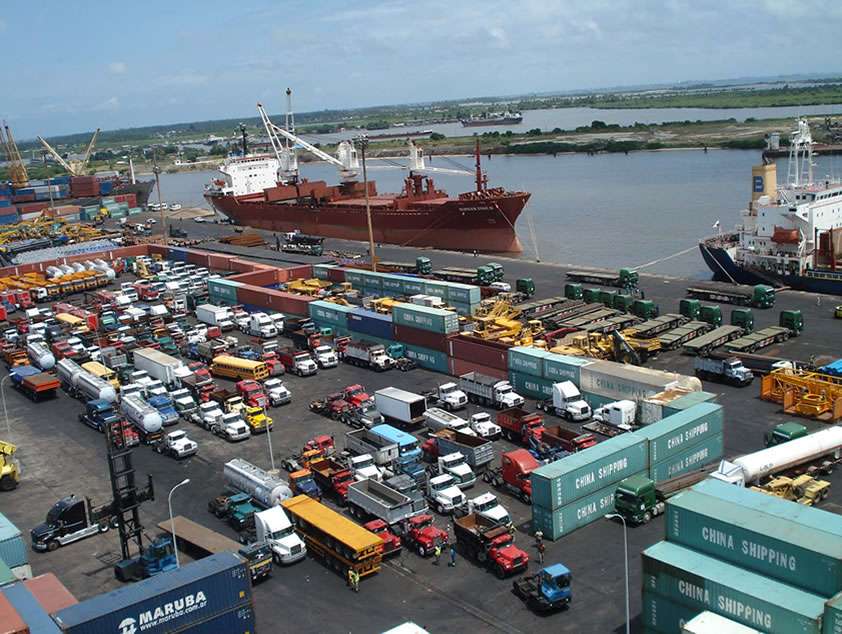
The Managing Director of the Nigerian Ports Authority (NPA), Mr Abubakar Dantsoho, has said that outdated port infrastructure was one of the major challenges hindering efficient port operations across West and Central African countries, which have been in existence for over 50 years.

At a dinner hosted for port managers from West and Central Africa in Lagos, Mr Dantsoho noted that many ports in the region were built decades ago and were no longer suitable for modern shipping demands.

He explained that Apapa Port had been there for over 100 years, Tin Can Island, 50 years, and Port Harcourt Port, 100 years, saying that the old infrastructures were no longer fit for current realities.

The managing director stressed that while ports in the past were designed for vessels measuring about 100 metres in length, the industry now handles ships of between 300 and 400 metres long, requiring deeper channels, larger terminals and improved cargo-handling facilities.

According to the port regulator helmsman, Nigeria’s major ports, including Apapa Port, Tin Can Island Port and Port Harcourt Port, have aged significantly and require urgent modernisation to meet global standards.

Mr Dantsoho noted that global shipping had evolved rapidly, with modern vessels now far larger than what many African ports were originally designed to accommodate.

Drawing an analogy with technological advancement in homes, he said infrastructure must also evolve to remain relevant.

“Fifty years ago, homes were different from what they are today. Now you have flat-screen televisions, DSTV, Netflix and other modern systems. Ports also need infrastructure that can accommodate modern systems.

“When you receive smaller vessels, you receive smaller cargo volumes. But when you receive bigger vessels, you receive larger volumes of containers. That is a key factor in port business today.”

Mr Dantsoho advocated for sustained investment and regional collaboration to modernise port infrastructure and improve competitiveness across African ports.


Adedapo Adesanya is a journalist, polymath, and connoisseur of everything art. When he is not writing, he has his nose buried in one of the many books or articles he has bookmarked or simply listening to good music with a bottle of beer or wine. He supports the greatest club in the world, Manchester United F.C.

General

Presidency Raises Alarm Over Politically Motivated Deepfake Campaigns

Published

on

tinubu VDM

By Adedapo Adesanya

The presidency has raised alarm over what it described as a growing pattern of digitally manipulated content aimed at exploiting religious sentiments for political purposes.

In a public service announcement issued by the Office of Digital Engagement and Strategy, it was disclosed that “deliberate attempts” to mislead Nigerians through deep fake videos and false narratives across online platforms had been identified.

According to the statement, a manipulated video surfaced on Tuesday, featuring altered audio and false attributions designed to portray President Bola Tinubu in a negative light.

It noted that a similar attempt followed shortly after, involving a fabricated video linked to a religious leader, allegedly intended to incite Muslim communities against the President.

The presidency said the recurring pattern suggests a coordinated effort to inflame religious tensions and sow division, particularly as political activities begin to intensify ahead of future elections.

It warned that “desperate actors” are likely to continue deploying misinformation tactics, including distorting religious messages, manipulating context, and spreading provocative content through social media and messaging platforms.

The presidency urged Nigerians to exercise caution before sharing sensitive or inflammatory content, encouraging citizens to question the motives behind such materials and to verify information through credible sources.

Describing the trend as “coordinated manipulation at scale,” it stressed that such actions are neither patriotic nor reflective of genuine political engagement.

The statement further warned that individuals and groups involved in the creation and dissemination of false information would be held accountable under relevant Nigerian laws, including those relating to cybercrime, incitement, and threats to public peace and national security.

It concluded by calling on citizens to remain vigilant and united in safeguarding the country’s social cohesion against digital disinformation.

Continue Reading

General

Tinubu Says Next Phase of Reforms Will Directly Impact Nigerians

Published

on

President Tinubu renewed hope ambassadors

By Adedapo Adesanya

President Bola Tinubu has said his administration plans to prioritise translating ongoing economic reforms into tangible improvements in the daily lives of Nigerians as citizens continue to grapple with the effects of subsidy removal and foreign exchange reforms.

In a nationwide broadcast to mark the third anniversary of his administration, the President acknowledged the hardship caused by the removal of the fuel subsidy and foreign exchange reforms, but insisted that the measures were necessary to stabilise the economy and prevent a deeper national crisis.

He was sworn in on May 29, 2023, and immediately declared the removal of the fuel subsidy — a decision that sent petrol prices up immediately and had an effect on food and transportation.

He promised that the government would continue efforts to keep food prices low, noting that prices had already dropped from their peak levels in 2023 and 2024.

Mr Tinubu also promised lower transportation costs as commercial vehicle operators convert from petrol engines to compressed natural gas and electric vehicles.

The President said when his administration assumed office in 2023, Nigeria was facing severe economic and structural challenges, including mounting fiscal pressures, unsustainable fuel subsidies, declining revenues, exchange-rate distortions, rising debt-servicing costs, insecurity, energy constraints and weakening public confidence in institutions.

President Tinubu said when his administration assumed office in 2023, Nigeria was facing severe economic and structural challenges, including mounting fiscal pressures, unsustainable fuel subsidies, declining revenues, exchange-rate distortions, rising debt-servicing costs, insecurity, energy constraints and weakening public confidence in institutions.

According to him, the country was spending as much as N18.4 billion daily on petrol subsidy payments at the peak of the regime, with over N4 trillion spent on subsidy in 2022 alone.

He also said multiple exchange-rate windows and forex arbitrage led to massive distortions, with the country losing more than N8 trillion within three years to speculative activities and rent-seeking.

“The situation demanded urgent and courageous action. Difficult but necessary decisions had to be taken to stabilise the economy and prevent a deeper national crisis. The easy choices would have been politically convenient. But leadership demands courage, especially when the right decisions are difficult.

“Had we refused to act, our nation would have drifted towards fiscal breakdown, worsening poverty and severe economic uncertainty. Together, we chose reform over ruin and decisiveness over hesitation. We chose long-term national recovery over short-term comfort,” he said.

The President admitted that the reforms triggered a sharp rise in the cost of living and placed enormous pressure on families, workers and businesses, while many young Nigerians seeking jobs became discouraged.

“I remain deeply conscious of those sacrifices, and I assure you: your sacrifice has not been in vain,” he stated.

Continue Reading

General

Nigeria Seals $1.5bn Concession Deal for 460MW Grand Katsina-Ala Hydropower Project

Published

on

Katsina-Ala Hydropower Project

By Adedapo Adesanya

Nigeria has signed a $1.5 billion concession agreement for the Grand Katsina-Ala Hydropower Project in Benue State that will see Maverick Energy Partners as the preferred concessionaire for the development, financing, construction and operation of the 460-megawatt storage hydropower project located on the Katsina-Ala River.

Structured under a 35-year Design, Finance, Build, Operate and Transfer public-private partnership framework, the project will see the Federal Government retain a minimum 10 per cent equity stake through the Ministry of Finance Incorporated. The financial close for the project is expected in 2027.

According to a statement issued by Maverick Energy Partners, the agreement followed years of technical planning, regulatory approvals and institutional coordination involving the Federal Executive Council, the Infrastructure Concession Regulatory Commission and the Transmission Company of Nigeria (TCN).

Beyond electricity generation, the Grand Katsina-Ala project is being positioned as a major economic development platform with the potential to reshape industrial activity, agriculture and regional productivity in Benue State and beyond.

Benue, widely regarded as Nigeria’s food basket, stands to benefit significantly from improved electricity access needed for agro-processing, irrigation systems, cold-chain logistics, manufacturing and supply-chain expansion.

The project is expected to generate about 2,401 gigawatt-hours of electricity annually and inject stable baseload power into Nigeria’s national grid at a time when energy shortages continue to constrain industrial growth and economic competitiveness.

Project promoters said hydropower remains one of the few renewable energy technologies capable of supplying dependable large-scale electricity, making the investment strategically important for Nigeria’s energy transition agenda.

The development is also projected to create thousands of direct and indirect jobs across engineering, construction, logistics, agriculture, plant operations and supporting industries, with expected multiplier effects on local businesses and regional value chains.

Maverick Energy Partners described the project as aligned with President Bola Tinubu’s infrastructure-driven growth strategy, energy security agenda and broader economic diversification goals.

According to the Chairman of Maverick Energy Partners, Mr Johnson Adewumi, the initiative goes beyond building a power plant.

“Grand Katsina-Ala is not simply a power project; it is a platform for economic transformation. Reliable baseload electricity creates the conditions for manufacturing, agro-processing, industry and sustained regional development,” he said.

He added that the project could become a model for delivering strategic infrastructure through well-structured public-private partnerships across Africa.
The consortium behind the project brings deep hydropower experience, with its principals linked to major energy developments including the Zungeru, Mambilla and Gurara hydropower projects.

Strategic advisory and capital mobilisation support for the deal was led by London-based GAN International Ltd and Blackwell Advisors Ltd, focusing on financing strategy, project bankability, investor engagement and sovereign coordination.

On her part, the founder of GAN International and Blackwell Advisors, Ms Brigitte Tilley-Gyado, said the project demonstrates what can happen when government commitment, technical expertise and long-term capital converge around a shared development objective.

“Africa does not suffer from a shortage of capital; it suffers from a shortage of bankable projects,” she said.

Continue Reading

Trending