General
NSC Resolves 19 Complaints, Saves Port Users N348.8m in Q1 2026
By Adedapo Adesanya
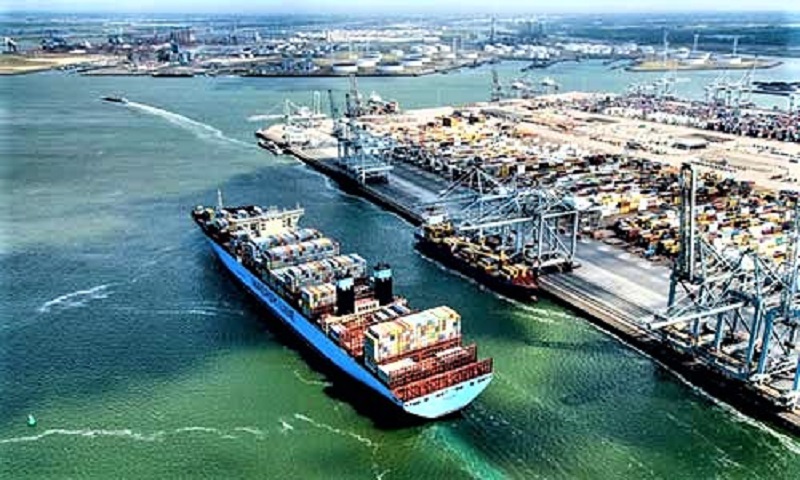
The Nigerian Shippers’ Council (NSC) saved over N348.8 million for port users and resolved 19 complaints in the first quarter of 2026.
According to its sectoral data report from the council’s quarterly newsletter, which covered January to March 2026, the agency’s continued intervention in disputes within the maritime sector is aimed at reducing trade frictions and protecting shippers from unfair practices.
A breakdown of the complaint status shows that, out of 32 cases handled during the period, 19 were successfully resolved, 12 are still ongoing, and one has been closed.
In terms of financial impact, the NSC’s dispute resolution efforts led to a total savings of N348,813,072.06 for stakeholders, particularly importers, exporters, freight forwarders, and shipping agents.
Further analysis of the report indicates that shipping companies and their agents accounted for the highest number of complaints, with 22 cases filed against them.
“Other entities complained against include seaport terminal operators (1), government agencies (3), exporters (1), importers (1), de-consolidators (1), and freight forwarders/clearing agents (3).
“The complaints lodged during the period cut across a wide range of operational and financial issues. Prominent among them were container deposit refund disputes, which recorded the highest frequency with five cases, followed by arbitrary charges (4).
Other issues included unsettled demurrage (2), missing cargo (2), service failure (2), damaged cargo (2), wrong port of discharge (2), and non-release of auction cargo (2).
“Additional complaints involved delays in cargo transfer, breach of trust, invoice cancellation, lack of telex release, delay in releasing export documents, export fraud, waiver-related disputes, demurrage and detention of vessels, breach of contract, and unjustified demurrage charges,” the data report stated.
The data also reveals that the majority of complainants were shippers, including importers and exporters, alongside freight forwarders and shipping agents, reflecting the operational challenges faced by key players in Nigeria’s port value chain.
The NSC, as the port economic regulator, noted that it has consistently leveraged its complaints and dispute resolution mechanism to address grievances and ensure fairness in commercial transactions within the maritime industry.
General
PenCom Directs MDAs to Submit Retirees’ Data for Exit Benefit Scheme
By Adedapo Adesanya
The National Pension Commission (PenCom) has directed treasury-funded Ministries, Departments and Agencies (MDAs) to submit details of employees who retire before December 31, 2026, as part of preparations for the implementation of the federal government’s newly approved Exit Benefit Scheme.
In a circular dated June 16, 2026, PenCom said the information must reach the Commission on or before July 6, 2026, warning that submissions must be complete, accurate and strictly comply with the prescribed template.
The circular, signed by the Acting Head of the Contribution and Bond Redemption Department, Mr Murtala M. Modibbo, was addressed to heads and chief executive officers of treasury-funded federal MDAs.
According to PenCom, the data collection exercise is critical to the smooth rollout of the Exit Benefit Scheme, which was recently approved by the federal government for employees of treasury-funded MDAs.
“The National Pension Commission is pleased to inform you that the Federal Government has approved the implementation of an Exit Benefit Scheme for employees of Treasury-funded Ministries, Departments and Agencies,” the circular stated.
PenCom directed affected MDAs to forward the required information through designated official email addresses before the July 6 deadline. The commission explained that the scheme provides for the payment of 100 per cent of the final total annual emoluments of eligible retiring employees who have served for a minimum of 10 years at the point of exit from service.
The benefit takes effect retrospectively from January 1, 2026.
To support implementation, PenCom said the Head of the Civil Service of the Federation has already issued guidelines outlining eligibility requirements, documentation, payment procedures, budgeting processes and the responsibilities of MDAs under the scheme.
The commission also disclosed that it is upgrading its Contribution and Bond Redemption Application to incorporate a dedicated Exit Benefit Scheme sub-module.
The Exit Benefit Scheme is one of the measures introduced under the provisions of the Pension Reform Act 2014 to provide enhanced financial support for retiring public servants in treasury-funded federal institutions.
Under Nigeria’s Contributory Pension Scheme (CPS), employees and employers make periodic pension contributions into Retirement Savings Accounts managed by Pension Fund Administrators. However, labour groups and retirees have often raised concerns about the adequacy of retirement benefits, particularly amid rising inflation and the increasing cost of living.
The introduction of the Exit Benefit Scheme is expected to provide an additional financial cushion for eligible federal workers at retirement while helping to strengthen social protection for public servants after active service.
General
What is Automation and Why Does It Matter in Process Control?
Process control depends on accuracy, consistency, and quick response across every stage of production. In industrial environments, even small manual delays can affect quality, safety, output, and energy use. Facilities need systems that can monitor conditions, process data, and adjust equipment without constant human intervention.
Understanding automation in process control systems helps businesses see how machines, sensors, controllers, and software work together to improve operational performance. It supports faster decisions, safer workflows, and more predictable results across complex industrial processes.
Let’s look at what automation means and why it matters in process control.
What is Automation in Process Control?
Automation refers to the use of control systems, machines, sensors, and software to perform tasks with limited manual involvement. In process control, it helps monitor operating conditions and adjust equipment based on predefined logic.
For example, an automated system can track temperature, pressure, flow, or speed during production. When the process moves outside the set range, the system can send commands to valves, motors, drives, or alarms.
This makes process control more stable because actions happen quickly and consistently. Instead of depending only on manual checks, automated systems respond to live data. This helps facilities reduce errors, maintain quality, and protect equipment from unsafe operating conditions.
Why Automation Matters in Process Control
Automation matters in process control because industrial systems need accuracy, speed, safety, and repeatability. When processes depend too heavily on manual intervention, performance can vary between operators, shifts, and operating conditions.
- Consistent Monitoring Improves Process Stability
Process control requires continuous monitoring of variables such as temperature, pressure, flow, humidity, and speed. Manual checks can miss sudden changes, especially in fast-moving environments.
Automated systems use sensors and controllers to track these variables in real time. When a process moves outside the set range, the system can trigger an immediate response. This helps maintain stable operating conditions and reduces the chance of quality variation.
- Faster Responses Reduce Operational Delays
Manual intervention often takes time. Operators must detect the issue, understand the cause, and then adjust the system. During this delay, the process may continue moving away from the desired condition.
Automated control reduces this response time. Controllers can compare live data against programmed limits and send commands to valves, drives, motors, or alarms immediately. This helps equipment respond faster to process changes.
- Better Accuracy Supports Quality Control
Product quality often depends on keeping process conditions within a defined range. Inconsistent settings can cause defects, waste, rework, or rejected batches.
Automated systems improve accuracy by applying the same control logic repeatedly. They can regulate speed, pressure, dosage, temperature, and timing with greater consistency than manual operation. This helps businesses maintain uniform output across shifts and production cycles.
- Reduced Manual Dependency Improves Safety
Industrial processes can involve high temperatures, moving machinery, pressure systems, chemicals, and electrical equipment. Manual handling in such areas may expose workers to unnecessary risk.
Automation helps reduce direct human involvement in repetitive or hazardous tasks. Operators can monitor systems from control panels, human-machine interfaces, or supervisory platforms. This improves visibility while keeping teams at a safer distance from potential hazards.
- Data Visibility Supports Smarter Decisions
Modern process control is not limited to switching equipment on or off. It also involves collecting data that helps teams understand performance over time.
Automated systems can provide insights into energy use, equipment behavior, cycle times, alarms, and process deviations. This information helps teams identify inefficiencies, schedule maintenance, and improve control strategies.
Improve Process Reliability with Smarter Automation Planning
Understanding what automation is helps businesses see why it is central to modern process control. It improves stability, reduces manual errors, and supports faster responses across critical industrial operations.
Partnering with a reputable electric brand can help businesses choose dependable control, monitoring, and automation solutions for industrial environments. This becomes important when safety, uptime, and process accuracy are key priorities.
A well-planned automated control setup helps facilities reduce errors, improve productivity, and build stronger process performance for future growth.
General
FG, IFDC Sign MoU to Ease Farmers’ Access to Fertiliser
Adedapo Adesanya
The federal government, through the Ministry of Agriculture and Food Security, has signed a Memorandum of Understanding (MoU) with the International Fertiliser Development Centre (IFDC) to improve farmers’ access to fertiliser.
The agreement seeks to address key challenges limiting the productivity of smallholder farmers, particularly fertiliser affordability, accessibility and timely distribution.
Under the partnership, both parties will work to strengthen fertiliser supply systems, expand soil testing and balanced nutrient management, and promote private-sector-led distribution networks across the country.
Speaking at the signing ceremony in Abuja, the permanent secretary of the ministry, Mr Marcus Olaniyi Ogunbiyi, described fertiliser as a critical input for increasing agricultural productivity and ensuring food security.
Mr Ogunbiyi noted that the MoU would support ongoing efforts to improve fertiliser accessibility, strengthen soil fertility management, promote sustainable agricultural practices and increase food production nationwide.
“Fertiliser remains indispensable for increasing crop yields and improving farm productivity across the agricultural value chain. A farmer may appreciate access to machinery, tools, or financial services; however, the availability and affordability of fertiliser often determine the success or failure of a farming season,” he said.
He said the Memorandum of Understanding will support efforts to improve fertiliser accessibility, strengthen soil fertility management, promote sustainable agricultural practices, and enhance food production nationwide.
He called on IFDC and other stakeholders to maximise the opportunities provided by the partnership to develop impactful programmes capable of boosting agricultural productivity and improving rural livelihoods.
Responding on behalf of IFDC, the organisation’s Executive Director, Mr Ben Lenkcher, pledged continued technical and logistical support to Nigerian farmers in line with the federal government’s agricultural transformation agenda.
Mr Lenkcher said IFDC remains committed to improving fertiliser accessibility, availability and affordability across Nigeria, noting that the partnership would contribute significantly to strengthening the agricultural ecosystem and enhancing food production to meet the needs of the country’s growing population.
-
Feature/OPED6 years agoDavos was Different this year
-
Travel/Tourism10 years ago
Lagos Seals Western Lodge Hotel In Ikorodu
-
Showbiz3 years agoEstranged Lover Releases Videos of Empress Njamah Bathing
-
Banking8 years agoSort Codes of GTBank Branches in Nigeria
-
Economy3 years agoSubsidy Removal: CNG at N130 Per Litre Cheaper Than Petrol—IPMAN
-
Banking3 years agoSort Codes of UBA Branches in Nigeria
-
Banking3 years agoFirst Bank Announces Planned Downtime
-
Sports3 years agoHighest Paid Nigerian Footballer – How Much Do Nigerian Footballers Earn