Connect with us

General

Obaseki Raises Edo Monthly IGR to N2b

Published

on

godwin obaseki edo state

By Modupe Gbadeyanka

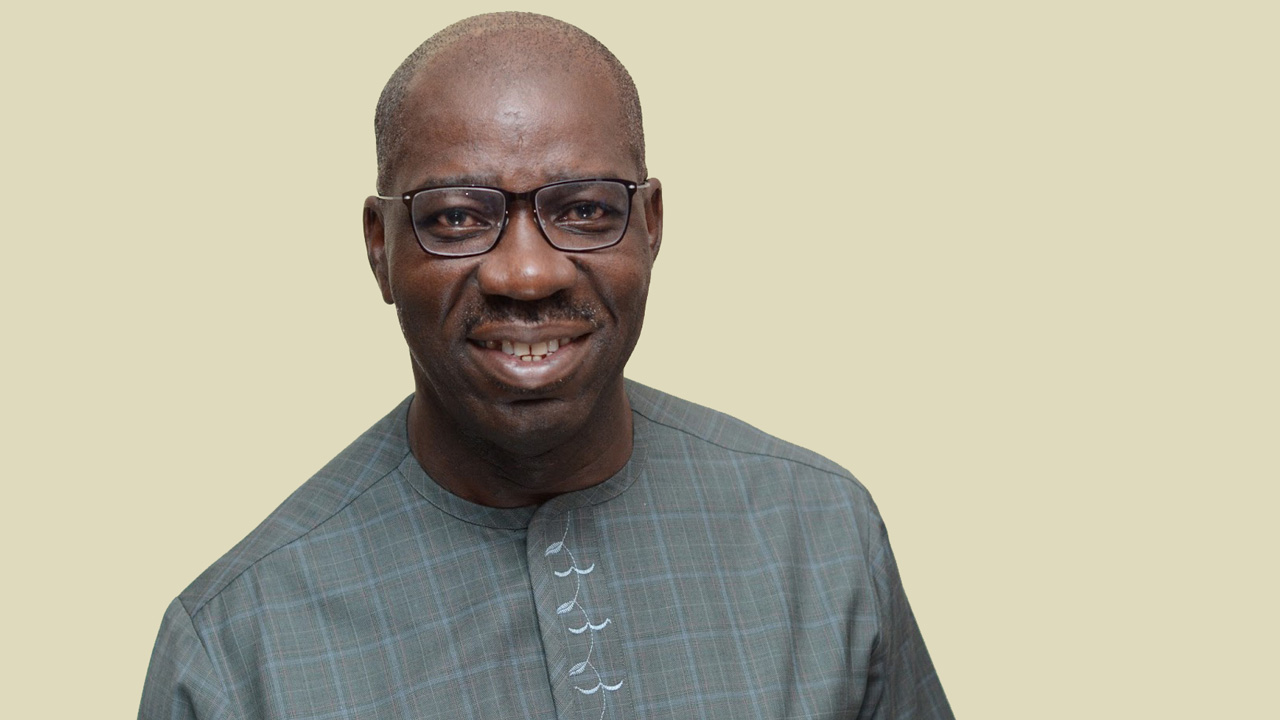
Efforts being made by Governor Godwin Obaseki of Edo State to make the Heartbeat of Nigeria financial strong are already yielding results.

The Mr Obaseki administration has raised the monthly internally generated revenue (IGR) of the state from N1.55 billion in 2016 when he assumed office to N2 billion.

Executive Chairman of Edo Internal Revenue Service (EIRS), Mr Igbinudu Inneh, informed reporters on Monday that the number of verified and unverified persons in the state government tax net has also increased in the period under review from 120,000 in 2016 to 250,000 in 2018.

According to him, the state government expects the IGR to rise in the last quarter of 2018 when the newly developed Edo Revenue Administration System (ERAS) is fully implemented this month.

Mr Inneh noted that the state government developed ERAS to help create jobs and distribute wealth, adding that the policy has mobile revenue collection components that would allow collectors to use revenue scratch cards.

“We started out in trying to develop an Edo Revenue Administration System which relies on technology, but technology on its own will not do it for you, you need human intervention.

“We now want to make sure we know those in the informal sector and know how much they have paid.

“For once, they will have a citizen identity that the government can relate with. The discount on the cards is the wealth that will trickle down, and those collecting money illegally before will have opportunity to buy the cards and sell to make money.

“We have done enumeration in the local government and we have all the buildings and their GPS coordinates.

“Vehicle owners will now be getting alerts on the anniversary of their vehicle renewal, because we have their house address. We can send notices to your house that you need to renew your vehicle so we don’t need to do stop and search because we have the data base.

“Expanding the tax net is some of the features the automation will help us to do. “Each tax payer has a tax profile on the system, so you can ask for a single tax assessment view,” he said.

The EIRS also said that 50 persons were currently undergoing training with a view to sending them out to confirm the status of additional 140,000 people that were biometrically captured within the last two years.

Mr Inneh identified six critical success factors for revenue generation at the inception of his administration. He listed the factors as technology, data, human capital development, stakeholders engagement, public enlightenment and man power development.


Modupe Gbadeyanka is a fast-rising journalist with Business Post Nigeria. Her passion for journalism is amazing. She is willing to learn more with a view to becoming one of the best pen-pushers in Nigeria. Her role models are the duo of CNN's Richard Quest and Christiane Amanpour.

Click to comment

Leave a Reply

Your email address will not be published. Required fields are marked *

General

NUPRC, NNRA Harmonise Processes to Cut Compliance Costs in Oil Sector

Published

on

oil and gas sector

By Adedapo Adesanya

The Nigerian Upstream Petroleum Regulatory Commission (NUPRC) has commenced moves to harmonise regulatory processes with the Nigerian Nuclear Regulatory Authority (NNRA) as part of efforts to strengthen radiological safety in oil and gas operations and reduce the cost of doing business in the upstream petroleum sector.

The initiative emerged from a recent meeting between the Chief Executive of the NUPRC, Mrs Oritsemeyiwa Eyesan, and the Director-General and Chief Executive Officer of the NNRA, Mr Yau Idris, at the commission’s headquarters in Abuja.

According to a statement issued by the Head of Corporate Communications and Media at the NUPRC, Mr Eniola Akinkuotu, on Sunday, the collaboration is expected to address overlapping regulatory requirements, close existing gaps in oversight, and create a more efficient compliance framework for operators in the industry.

The statement read, “The Nigerian Upstream Petroleum Regulatory Commission is partnering with the Nigerian Nuclear Regulatory Authority in order to enforce radiological safety in oil and gas operations and reduce the overall cost of operations.”

The latest partnership comes as the Federal Government intensifies efforts to boost investment in the petroleum sector, increase production, and enhance operational efficiency following the implementation of the Petroleum Industry Act (PIA).

While the NUPRC regulates the technical, commercial, and operational aspects of oil and gas exploration and production, the NNRA is responsible for regulating the possession, use, transportation, and disposal of radioactive materials and radiation-emitting equipment across the country.

Speaking during the meeting, Mrs Eyesan stressed the need for greater collaboration among regulators to eliminate duplication and improve the investment climate in Nigeria’s oil and gas sector.

She noted that excessive regulatory requirements often translate into additional costs for operators, ultimately affecting the competitiveness of the industry.

“The only way we can safeguard investments is to reduce our cost of operations, and when you have a multiplicity of laws, the likelihood is that you will have higher costs because each law normally will come with its own fees and charges,” the NUPRC boss said.

Mrs Eyesan nominated senior officials from the commission who will work closely with the NNRA on the task ahead.

“We have identified critical areas on both sides, and we believe that, as we collaborate, we can close existing gaps,” she said.

On his part, Mr Idris said the cooperation of the NUPRC was crucial because the upstream petroleum industry remains one of the largest users of radioactive sources and radiation-emitting equipment in Nigeria.

According to him, radioactive technologies are widely deployed in well logging, industrial radiography, and nuclear gauging activities that support oil and gas exploration and production.

He explained that the partnership would enable both agencies to share information and simplify compliance procedures for operators.

“The goal is a single-window approach, where both agencies share information rather than requiring operators to submit the same data twice,” he said.

Mr Idris further stated that, since oil and gas extraction often brings Naturally Occurring Radioactive Materials (NORM) to the surface, the NNRA seeks the assistance of the commission to ensure that operators conduct radiological impact assessments as part of their broader Environmental Impact Assessments, while NORM management protocols are incorporated into the NUPRC’s environmental guidelines for the upstream sector.

The two agencies also agreed to deepen collaboration in training, capacity building, and knowledge sharing on radiation protection and safe operational practices.

Continue Reading

General

Nigerian Army Rescues 360 from Boko Haram Captivity

Published

on

army rescue 360

By Adedapo Adesanya

The Nigerian Army on Sunday said the troops of Operation Hadin Kai (OPHK), a joint task force in the North-east, have rescued 360 abducted persons from a Boko Haram camp in the Mandara mountain axis of Gwoza, Borno State.

Recall that Boko Haram insurgents abducted 416 people, including minors, when they invaded Ngoshe in March.

Following the raid, the group released a video filmed inside Ngoshe in which a commander boasted that it would hold the community through Ramadan and observe Eid-el-Fitr prayers at the Ngoshe Central Mosque. It sent a series of other videos in the next couple of weeks after that.

Then, in another video released on April 19, a Boko Haram commander identified as Mallam Abu issued a 72-hour ultimatum demanding a N5 billion ransom and warned against any military rescue attempt.

On May 17, the captives appeared in another video, lamenting their ordeal in the mountainous terrain and pleading for help from government authorities.

In a statement on Sunday, the acting spokesperson for Operation Hadin Kai, Mr Haruna Sani, said the rescue mission was the result of weeks of intelligence gathering, surveillance and operational planning.

According to him, the operation was launched after security agencies received credible intelligence pinpointing the location of the hostages and identifying an insurgent support network sustaining the camp.

He said military intelligence personnel subsequently combined human intelligence, signals intelligence, and surveillance operations using unmanned aerial systems and long-range reconnaissance patrols to map the area, monitor insurgent activities and assess the condition of the captives.

Mr Sani, a lieutenant colonel, said a breakthrough came after intelligence operatives successfully penetrated the terrorist network, providing detailed information on the exact location of the abductees, the disposition of insurgent commanders and planned movement routes.

He added that coordinated information and psychological operations also created confusion within the insurgents’ ranks, weakening their command structure ahead of the assault.

Acting on the intelligence, troops launched a multi-axis operation under the cover of darkness, isolating the objective area and blocking potential escape routes.

“The operation achieved complete tactical surprise, overwhelming the terrorists before an organised response could be mounted,” he said.

The army spokesperson said several insurgents fled into the surrounding mountainous terrain while others surrendered as troops advanced on the enclave.

Following the assault, soldiers secured and evacuated the hostages, who were subjected to medical screening before being moved to safe locations for treatment and humanitarian assistance.

However, Mr Sani disclosed that two infants died from exhaustion caused by the difficult terrain and the harsh conditions they endured during their captivity.

He described the rescue as one of the most significant hostage recovery operations conducted in the North-east in recent times and a major setback for the terrorist group.

Mr Sani said the military high command commended the troops involved in the mission, noting that the success demonstrated the effectiveness of intelligence-led operations and the growing coordination among security agencies.

He added that the high command also assured the public that follow-up clearance operations are ongoing to track down fleeing insurgents, dismantle remaining support networks and prevent future abductions in the region.

Continue Reading

General

Adelabu’s Sister, Twin Nephews Regain Freedom as Police Kill Kidnappers

Published

on

Mrs. Olaide Busayo Adegoke John-Paul

By Dipo Olowookere

The younger sister of the former Minister of Power, Mr Adebayo Adelabu, Mrs Olaide Busayo Adegoke John-Paul, has been rescued by officials of the Nigeria Police Force (NPF).

The woman was freed from her kidnappers along with her twin sons, Peter and Paul, on Saturday evening.

They were abducted on Wednesday morning while the former employee of the Central Bank of Nigeria (CBN) was taking her children to school in Ibadan, Oyo State.

The unfortunate incident reportedly occurred at about 7:30 am on June 3, 2026, throwing residents of the area into panic. The 43-year-old mother was taken from her vehicle by the gunmen and driven away with her 12-year-old twin sons.

This evening, in an operation by security operatives, the victims were rescued, while two of the suspected kidnappers were fatally shot in a gun duel, and two firearms were recovered from the gang.

The police are now combing the area where the rescue operation took place to apprehend some of the fleeing kidnappers, who are believed to have escaped with gunshot wounds.

The news of the rescue of the kidnapped victims has thrown the family of the former Minister into a frenzy.

Continue Reading

Trending