General
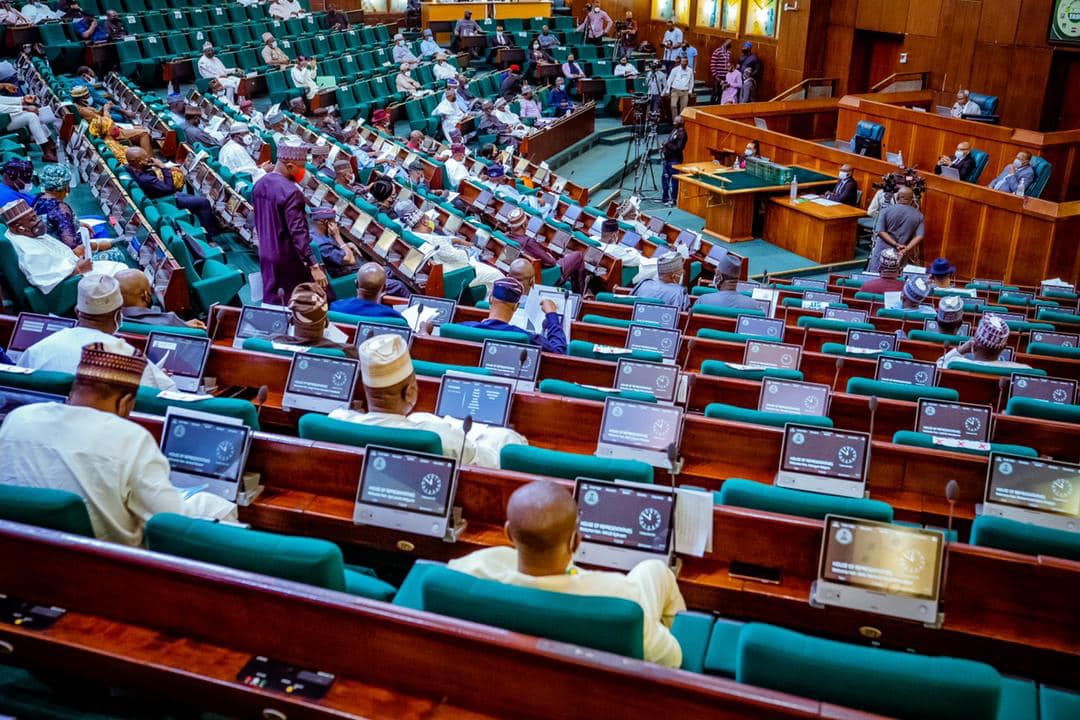
Ogoni: Reps Promise Deeper Collaboration With IOCs, NNPC
By Adedapo Adesanya
The House of Representatives Committee on Host Communities says it will liaise with all stakeholders, including International Oil Companies (IOCs) and the Nigerian National Petroleum Company Limited (NNPC) to ensure that the Ogoni cleanup project is not short of funds.
The Committee’s Chairman, Mr Dumnamene Dekor, made the commitment when he led members of the Committee on an oversight visit to the Hydrocarbon Pollution Restoration Project (HYPREP) sites in Ogoniland on Friday.
Mr Dekor said the Committee will engage with all stakeholders to ensure that funds are provided for the project, noting that the cleanup of Ogoniland is a priority and must be completed to restore the environment and improve the lives of the people.
“The last time I met with the Board of Trustees’ Chairman during the commissioning of the Bomu water project, we tried to look at what is being owed and sources where we can generate more revenue.
“The money that was earmarked for this project was a take-off grant and it’s almost spent and so we are also going to work with all stakeholders to ensure that funds are provided for the project, the IOCs and NNPC Ltd will make provisions for the tranche that belongs to them because it’s what they owe the people.
“We will work with HYPREP and other stakeholders to ensure all funds are released for the project.”
The House of Representatives Committee also commended the renewed vigour in the delivery of the hydrocarbon pollution remediation project in Ogoniland, and emphasised the need for alternative livelihood means for youths, while urging those involved in illegal activities to desist.
“We have gone to some water project sites, Ogoni Specialist Hospital, and some remediation sites. From what we have seen so far, I can say there is a renewed vigour to the delivery of this project to the people of Ogoniland and I must commend the Minister of Environment, the Project Coordinator of HYPREP and his team, having been around this project for a long time now, I can spot the difference.
“The Ogoni people have gone through a lot of deprivation and pollution for God knows how long and I think the least that can be done is what is going on now. The project coordinator has told us every community will have water, and that gladdens my mind,” he stated.
Also, the HYPREP Project Coordinator, Mr Nenibarini Zabbey, assured that the project was doing a lot, with over 130 projects ongoing simultaneously, including water projects, mangrove restoration, livelihood restoration and soil remediation.
Mr Zabbey noted that the project aims to develop a template not just for Ogoni but for the entire Niger Delta.
“We are excited that the House Reps Committee is here and we have taken note of all their concerns and their commendations.
“From day one, we assured Ogoni people and every stakeholder that we will give them the very best because we’re mindful of the fact that we are developing a template not just for Ogoni but for the entire Niger Delta,” he said.
General
NPA Launches Movement Code to Ease Apapa Port Truck Congestion
By Adedapo Adesanya
The Nigerian Ports Authority (NPA) has introduced a movement code to streamline the movement of empty containers into seaport terminals and reduce traffic congestion caused by container trucks along the Apapa and Tin Can Island port corridors.
Under the new policy, the movement code will serve as a unique identifier generated by a holding bay for every empty container uploaded to the Electronic Call-Up (ETO) platform.
The code must correspond with the details captured on the ETO system before trucks are granted access to port terminals.
In a notice issued to stakeholders, the port authority said the movement code had become a mandatory requirement for completing the truck-container matching process. Truck drivers are required to obtain the code from designated holding bays before proceeding to the ports.
According to the NPA, the initiative is designed to ensure that each truck is matched exclusively to its designated empty container, eliminate multiple allocations, improve traffic management and enhance operational efficiency within the port corridor.
The port regulator explained that the new requirement forms part of ongoing efforts to strengthen the electronic call-up system, facilitate the seamless evacuation and return of empty containers, and improve compliance with port access protocols.
“Following our recent engagement with holding bays, we wish to inform all stakeholders of the introduction of the movement code for empty container matching on the ETO platform.
“This update is designed to ensure that trucks are matched only to the specific empty container they are authorised to convey. It will also help prevent the practice of matching trucks to unrelated containers to secure an earlier position, followed by requests for container changes closer to port entry,” the notice reads.
The NPA, in recent years, has been trying to reduce congestion and make accessibility to Nigeria’s busiest ports easier, but many of the solutions have not been fruitful.
General
Court Convicts Man for Unauthorised Forex Transactions in Lagos
By Modupe Gbadeyanka
A man identified as Mr Saheed Zubair Danjuma has been convicted and sentenced to one year’s imprisonment for his involvement in unauthorised foreign exchange transactions in Lagos.
Mr Danjuma was brought before Justice T.A. Aluko of the Federal High Court sitting in Ikoyi, Lagos, by the Economic and Financial Crimes Commission (EFCC) on a one-count charge bordering on illegal forex transactions.
According to the anti-money laundering agency, the convict carried out FX transactions outside the authorised channel.
This action, the EFCC said, was contrary to Section 11(1)(a) and punishable under Section 11(2)(a) of the National Economic Intelligence Committee (Establishment, etc.) Act, 1994.
“That you, Saheed Zubair Danjuma, sometime in 2026, at Lagos within the jurisdiction of this court, engaged in foreign exchange transactions with Usman Muhammad other than through the official foreign exchange market and thereby committed an offence contrary to Section 11(1)(a) of the National Economic Intelligence Committee (Establishment, etc.) Act, 1994 and punishable under Section 11(2)(a) of the same Act,” the charge read.
After this was read to him, Mr Danjuma pleaded guilty. After the guilty plea, the prosecution counsel, U. S. Kyari, urged the court to convict and sentence him accordingly.
In his judgement on Wednesday, July 29, 2026, the judge convicted and sentenced the defendant to 12 months’ imprisonment, with an option of a fine of N100,000.
General
NAFDAC Eyes Crackdown of Manufacturers Violating Sachet Alcohol Ban
By Adedapo Adesanya
The National Agency for Food and Drug Administration and Control (NAFDAC) has decried the violation of the ban on sachet alcohol production by some manufacturers in Nigeria.
The Director-General of the agency, Mrs Mojisola Adeyeye, who stated this during an interview on Channels Television’s Sunrise Daily on Thursday, said that despite several warnings and time given to the producers, they had continued to act in flagrant disregard for regulations.
She, however, warned that it was considering consequences against errant companies and individuals.
Initially, the food and drug control body clarified that the enforcement is not targeted at manufacturers who comply with approved packaging requirements but is focused on removing products packaged in sachets and PET bottles below the approved 200ml threshold, which have been categorised as illegal and unsafe.
Last week, NAFDAC commenced a nationwide enforcement exercise to seize alcoholic beverages packaged in sachets and polyethylene terephthalate (PET) bottles below 200 millilitres.
The operation, which is still being carried out simultaneously across the six geopolitical zones, involves markets, motor parks, retail outlets, bars and other distribution channels to identify, seize and destroy the banned products.
NAFDAC warned that manufacturers, importers, distributors, wholesalers, retailers, hawkers and transporters found producing, stocking or selling the prohibited alcoholic beverages risk regulatory sanctions, seizure of products and possible prosecution.
It advised all stakeholders still in possession of the affected products to voluntarily surrender their remaining stock to the agency, stressing that continued sale or distribution of the banned items is illegal.
According to NAFDAC, the exercise is part of a sustained nationwide enforcement and public awareness campaign designed to eliminate harmful alcohol products, reduce underage drinking and promote responsible alcohol consumption among adults.
The agency said the crackdown is intended to protect public health, particularly by curbing harmful alcohol consumption and substance abuse among children and young people.
NAFDAC clarified that the enforcement is not targeted at manufacturers who comply with approved packaging requirements but is focused on removing products packaged in sachets and PET bottles below the approved 200ml threshold, which have been categorised as illegal and unsafe.