General
Over 30,000 Persons in Acute Need in Nigeria’s Monguno
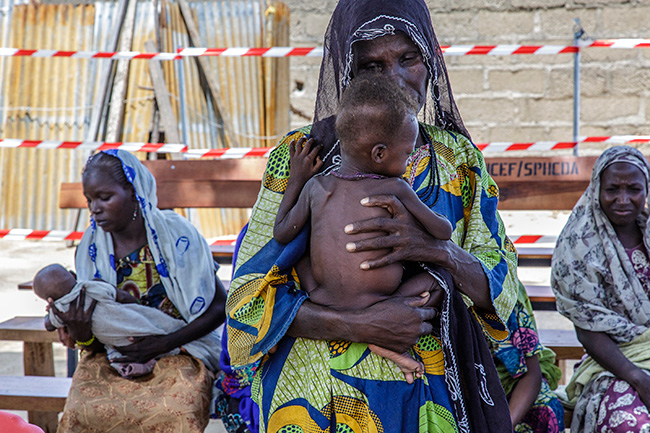
More than 30,000 people who were forced to flee to the town of Monguno following renewed clashes that erupted in Nigeria’s Borno state in late December are in acute need of shelter, water, sanitation, food, protection, medical care and mental health support, warns international humanitarian organisation Médecins Sans Frontières/Doctors Without Borders (MSF).
People’s immediate humanitarian needs are not being adequately addressed, according to MSF, and there is an urgent need for better coordination between the Nigerian government, United Nations and non-governmental organisations in scaling up the aid response in Monguno so as to avoid a catastrophic situation with the onset of the rainy season, expected in May.
For the last ten years, people in Borno state have been caught up in a cycle of violence, displacement, and insecurity. People’s health are at risk due to the dire living conditions. The latest clashes have yet again forced tens of thousands from their homes, fields and livelihoods, and left them struggling to survive.
“People who recently arrived in Monguno fled their homelands leaving everything behind,” says MSF humanitarian affairs officer Musa Baba. “They come from areas where they could farm. Now, they are sleeping on the streets or wherever they can find space, hungry, thirsty and exposed to very high temperatures during the day and low temperatures at night.”
A major problem in Monguno is the lack of land to build shelters for new arrivals. Thousands of recently displaced people have no space to settle and are living and sleeping in the middle of the town’s streets for weeks, even months. MSF, along with some other humanitarian organisations, have built shelters in different camps and have capacity to accommodate more displaced people. MSF teams have set up 100 tents and are ready to put up 700 additional shelters.
“The current situation, with very vulnerable people – women, children and the elderly – living out of doors, rather than in a camp or with the host community, increases the risk of abuses and the need for protection,” says Musa.
Hajja Bukar, aged 35, recently arrived in Monguno, having been displaced a number of times already over recent years due to the conflict. She and her four children have settled in one of the town’s camps for displaced people, in a rudimentary shelter made of sticks and cloth. “We are surviving by doing menial jobs like washing dishes and getting paid for it, while our men sometimes go into the bush to fetch firewood to sell,” says Hajja.
Poor living conditions, with little sanitation and a lack of safe drinking water are putting displaced people in Monguno at risk of pneumonia, diarrhoea and malaria, among other preventable diseases. With few latrines, most people use open defecation areas, which are likely to flood in the rainy season, worsening the health conditions.
MSF is running a 10-bed emergency room for adults in a ministry of health facility in Monguno as well as providing people with mental health support. Following an accidental fire in Stadium camp for displaced people in February, where 850 displaced families are sheltering, MSF distributed 500 kits of essential relief items including mats, tarpaulins, blankets, jerrycans, cooking equipment and hygiene items.
General
Petrol Prices in Nigeria Rise 22.55% in March 2026 on Hormuz Closure
By Adedapo Adesanya
The National Bureau of Statistics (NBS) has said that the average retail price of a litre of Premium Motor Spirit (PMS), otherwise known as petrol, rose by 22.55 per cent or N237.07 per litre to N1,288.54 in March 2026 from N1,051.47 in February.
In the Premium Motor Spirit (Petrol) Price Watch for March released on Tuesday, the NBS said on a year-on-year basis, the average retail price of fuel also increased by 2.13 per cent from N1,261.65 recorded in March 2025.
This surge in fuel prices could be linked to global disruptions brought on by the US-Israel war on Iran, which triggered the closure of the Strait of Hormuz and sent prices of crude oil above $100 per barrel.
While the country was not heavily hit by the impact, it felt the ripple effect of crude prices increasing, particularly as Dangote Refinery imported crude from other markets to cover for local feedstock shortfalls.
The data noted that by state, Anambra recorded the highest average retail price of N1,441.22 per litre, followed by Sokoto at N1,377.55 and Borno at N1,375.16.
However, the price was cheapest in Lagos at N1,162.71, followed by Ogun at N1,169.78 and Kaduna state at N1,193.40.
By zone, it was most expensive in the North East at N1,336.50 last month, while the South-West recorded the lowest at N1,232.46.
A look at the Diesel Price Watch Report for March showed that the average retail price paid by users rose by 16.05 per cent on a month-on-month basis to N1,648.08 per litre from N1,420.17 per litre a month earlier.
“On state profiles analysis, the highest average price of diesel in March was recorded in Ebonyi at N2,262.29 per litre, followed by Akwa Ibom at N1,895.72 and Osun at N1,872.15.
“On the other hand, the lowest price was recorded in Kogi at N1,383.40 per litre, followed by Katsina State at N1,438.25 and Enugu at N1,480.06,” parts of the report said.
General
Datti Baba-Ahmed Dumps Labour Party, Joins PRP
By Modupe Gbadeyanka
The vice-presidential candidate of the Labour Party (LP) in the 2023 general elections, Mr Datti Baba-Ahmed, has left the party to join the Peoples Redemption Party (PRP).
Speaking on Channels Television’s Politics Today, the politician said he’s no longer interested in the way the Labour Party was being run.
He disclosed that there is no more peace in the political party he flew its flag in the last general elections because of greed.
He accused the ruling All Progressives Congress (APC) of destabilising opposition political parties to ensure President Bola Tinubu does not have a credible opponent in the 2027 presidential poll.
“What the Labour Party stood for is not the same now. We have a government of today which is interested in destroying other political parties,” he said.
“I am leaving the Labour Party tomorrow (today) by 12 midnight,” Mr Baba-Ahmed said when asked about his plans for next year.
I am leaving the Labour Party [at] midnight, and I am joining PRP. PRP is the new destination. PRP is the one with a history. It’s about 75 years old,” he further stated.
He further said, “When there was real peace in the Labour Party, someone was redeployed to the Labour Party and because of the antecedents of the person, [I don’t see things getting better].
PRP, a progressive Nigerian political party, was established in 1978 by Mallam Aminu Kano. It is rooted in social democratic principles and populist ideology, often focusing on the empowerment of the talakawa (common people).
Its current National Chairman, according to data obtained from the website of the Independent National Electoral Commission (INEC), is Mr Falalu Bello, while the National Secretary is Mr Babatunde F. Alli.

General
We Prioritised Personal Pension Plan, Others for Robust Pension System— PenCom
By Modupe Gbadeyanka
The Director General of the National Pension Commission (PenCom), Ms Omolola Oloworaran, has highlighted strategies deployed by her organisation to ensure pension coverage is deepened in Nigeria.
Speaking at the ISSA Technical Seminar in Abuja recently, she said the steps taken were to build a more inclusive, transparent, and responsive pension system, where communication serves not just as information, but as a bridge to trust, accessibility, and sustained industry growth.
According to her, the Contributory Pension Scheme (CPS) has, over more than two decades, built a strong institutional foundation, but true inclusion goes beyond coverage to require trust and clear communication.
For this reason, PenCom has prioritised the Personal Pension Plan, strengthened stakeholder engagement, and invested in digital channels that reach contributors in accessible and relatable ways, she stated.
Ms Oloworaran further stressed that, “Effective communication is not a soft complement to regulation; it is a core instrument of coverage expansion, compliance, and public confidence.
“Every circular we issue, every benefit we pay, and every reform we introduce ultimately succeeds or fails on whether our members can understand it and act on it.”
The ISSA Technical Seminar, themed Improving Inclusivity and Accessibility of Social Security Services Through Effective Communication, was organised in collaboration with the International Social Security Association (ISSA).
It brought together key stakeholders across West Africa to advance dialogue on strengthening social security systems through clearer, more inclusive engagement.
-
Feature/OPED6 years agoDavos was Different this year
-
Travel/Tourism10 years ago
Lagos Seals Western Lodge Hotel In Ikorodu
-
Showbiz3 years agoEstranged Lover Releases Videos of Empress Njamah Bathing
-
Banking8 years agoSort Codes of GTBank Branches in Nigeria
-
Economy3 years agoSubsidy Removal: CNG at N130 Per Litre Cheaper Than Petrol—IPMAN
-
Banking3 years agoSort Codes of UBA Branches in Nigeria
-
Banking3 years agoFirst Bank Announces Planned Downtime
-
Sports3 years agoHighest Paid Nigerian Footballer – How Much Do Nigerian Footballers Earn