Connect with us

General

Paris Club Refund: Governors Move to Legally Block $418m Payment

Published

on

Paris Club refund

By Adedapo Adesanya

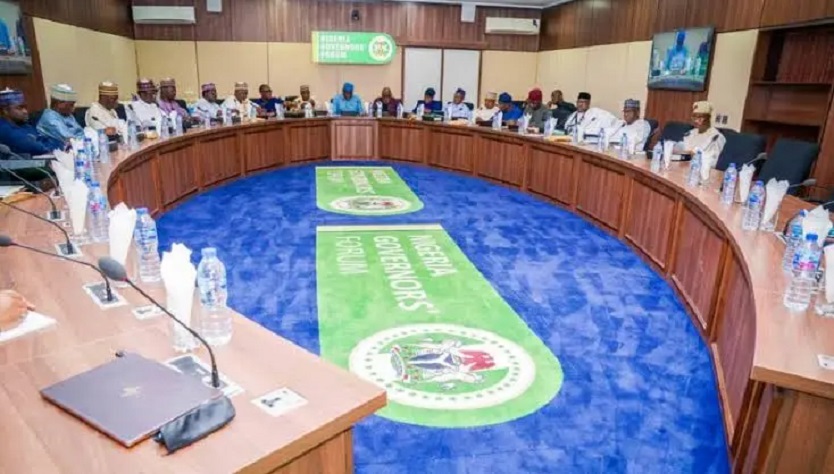
The Nigeria Governors’ Forum (NGF) has said that it will explore all legal options on the disbursement of the $418 million Paris Club refund and promissory notes to ensure resources meant for state governments are not illegally paid to consultants.

The forum disclosed this in a statement issued by its Chairman, Governor Aminu Tambuwal, after the teleconference meeting of the 36 state governors.

“Regarding the $418 million Paris Club Refund and promissory notes issued to consultants by the Federal Ministry of Finance and the Debt Management Office (DMO), the forum remains resolute in exploring all legal channels available to it in ensuring that resources belonging to states are not unjustly or illegally paid to a few in the guise of consultancy,” it said.

The Sokoto state governor said the group had also instructed its lawyers to approach the Federal High Court on the proposed privatisation of 10 National Integrated Power Projects (NIPPs) by the federal government.

“The forum, following its advocacy that the proposed privatisation of 10 NIPPs by the Federal Government should be stopped, instructed its lawyers to approach the Federal High Court, which at present has issued a court order restraining all the parties in the suit from taking any step or action that will make or render the outcome of the motion on notice seeking for interlocutory injunction nugatory.

“The effect of the order of the court is that respondents cannot proceed with the proposed sale of the power plants belonging to the Niger Delta Power Holding Company Limited (NDPHCL) until the hearing and determination of the motion on notice for interlocutory injunction,” he said.

Mr Tambuwal added that sequel to discussions between sub-sovereigns at the recently concluded 2nd African Sub-Sovereign Government Network (AfSNET) Conference, the forum agreed to pursue support for enhanced dialogue, cooperation and collaboration between sub-sovereign governments around intra-African trade, investment, industrialisation, and development.

He said that such would be done through membership in the Forum of Regions of Africa (FORAF) and its partnership with the African Export-Import (AFREXIM) Bank.

The governor said that the forum was also monitoring the flood situation across the country and working with the Federal Government to prepare emergency interventions to ameliorate the impact of the floods on food security.

Mr Tambuwal said that the forum was working with the Federal Government through the National Economic Council (NEC) and in collaboration with the Federal Ministry of Agriculture and Rural Development (FMARD).

Others, according to him, include the Federal Ministry of Humanitarian Affairs, Disaster Management and Social Development (FMHDSD), National Emergency Management Agency (NEMA), Central Bank of Nigeria (CBN), Federal Ministry of Finance, Budget and National Planning (FMFBNP) and the World Bank.


Adedapo Adesanya is a journalist, polymath, and connoisseur of everything art. When he is not writing, he has his nose buried in one of the many books or articles he has bookmarked or simply listening to good music with a bottle of beer or wine. He supports the greatest club in the world, Manchester United F.C.

Click to comment

Leave a Reply

Your email address will not be published. Required fields are marked *

General

FG, Honeywell Explore Sustainable Development Opportunities

Published

on

honeywell group

By Modupe Gbadeyanka

The federal government and the Honeywell Group are strengthening a partnership aimed at achieving sustainable development in Nigeria.

The company on Thursday held a meeting with the Minister of Interior, Mr Olubunmi Tunji-Ojo, in Abuja. Both parties explored ways to promote economic development, reaffirming the importance of public-private sector cooperation in advancing Nigeria’s development agenda and improving service delivery for citizens.

The Senior Adviser to the Honeywell Group, Mrs Oduwaye Nsidi-Sakiri, reaffirmed the organisation’s commitment to supporting national development through constructive engagement and collaboration.

“We commend the remarkable progress that has been made. These achievements are a reflection not only of leadership but also of the dedication and hard work of the entire team within the Ministry,” she said.

She explained that the visit reflected Honeywell Group’s longstanding tradition of maintaining proactive and constructive relationships with government institutions, regulatory agencies, and other key public-sector stakeholders. She further expressed the group’s willingness to explore opportunities for collaboration in support of government initiatives and national development objectives.

Also speaking, Honeywell Group Chief Operating Officer, Mrs Tomi Ayo-Tugbo, commended the Ministry for reforms that are delivering tangible improvements in the lives of Nigerians, reiterating the firm’s commitment to supporting the country’s growth and prosperity.

On his part, Mr Tunji-Ojo praised the company for its longstanding contributions to Nigeria’s economy and acknowledged the critical role of the private sector in driving economic growth, creating jobs, and supporting national development.

He further assured the delegation of the Ministry’s readiness to engage with stakeholders and collaborate with responsible corporate organisations in advancing initiatives that promote economic development, innovation, and improved service delivery.

The Minister emphasised that the reforms being implemented across the Ministry and its agencies are designed not only to improve operational efficiency but also to strengthen national security and enhance public confidence in government institutions.

“Our goal is to build institutions that work efficiently for the people. We are committed to creating systems that are transparent, technology-driven, and capable of delivering services in a manner that reflects the aspirations of a modern Nigeria,” he stated.

“The government cannot achieve sustainable development alone. Strong partnerships between the public and private sectors are essential to building a prosperous nation. We value organisations such as Honeywell Group that have consistently invested in Nigeria and contributed to the country’s growth over several decades,” Mr Tunji-Ojo added.

Continue Reading

General

DisCos Collect N196bn in March, Miss N50bn of Billed Revenue

Published

on

Electricity Subsidy Q1 2024

By Adedapo Adesanya

Nigeria’s electricity distribution companies (DisCos) generated N196.13 billion in revenue in March 2026, despite billing customers a total of N246.43 billion during the month, according to the latest commercial performance report released by the Nigerian Electricity Regulatory Commission (NERC).

The figure represents a slight decline from the N196.68 billion collected in February, highlighting persistent challenges in revenue recovery across the power distribution segment, even as energy supplied to the grid continued to improve.

NERC’s March 2026 fact sheet showed that electricity billing rose by 1.71 per cent from N242.29 billion recorded in February, reflecting increased energy deliveries and customer charges. However, collection efficiency declined to 79.59 per cent from 81.17 per cent in the previous month, indicating that a significant portion of billed revenue remained uncollected.

The regulator disclosed that DisCos received 293.76 million kilowatt-hours of electricity during the review period, representing a 6.02 per cent increase compared to February. The development suggests a modest improvement in power availability across the distribution network.

Despite the increase in energy supplied, revenue recovery remains uneven across the industry. NERC reported that the average approved tariff for March stood at N124.30 per kilowatt-hour, while actual collections averaged ₦100.75 per kilowatt-hour, resulting in an overall revenue recovery efficiency of 81.05 per cent.

Among the eleven DisCos, Ikeja Electric emerged as the strongest performer, posting a revenue recovery efficiency of 99.30 per cent. Eko Electricity Distribution Company followed with 95.73 per cent, while Benin DisCo recorded 85.18 per cent.

At the lower end of the performance table, Kaduna Electric recorded the weakest recovery rate at 35.65 per cent. Jos DisCo and Yola DisCo also struggled, achieving recovery efficiencies of 53.53 per cent and 58.58 per cent, respectively.

Ikeja Electric also led in collection efficiency with 96.38 per cent, ahead of Benin DisCo at 90.97 per cent and Eko DisCo at 87.68 per cent. Kaduna, Jos and Yola remained the poorest performers in this category, underlining the persistent commercial and operational challenges facing power distributors in parts of northern Nigeria.

In terms of billing efficiency, Eko DisCo ranked first with 92.30 per cent, followed by Port Harcourt DisCo at 90.36 per cent and Ikeja Electric at 87.76 per cent. Yola DisCo recorded the lowest billing efficiency at 58.68 per cent.

The latest figures underscore the mixed realities within Nigeria’s power sector. While electricity supply and customer billing continue to improve, revenue collection remains a major obstacle to the financial sustainability of the industry.

Analysts note that stronger metering penetration, improved customer confidence, reduction in energy theft and more efficient collection systems will be critical if DisCos are to close the widening gap between electricity supplied, billed revenue and actual collections.

The March performance report comes as regulators and industry stakeholders intensify efforts to strengthen the commercial viability of the electricity market, attract fresh investment and improve service delivery across the country.

Continue Reading

General

Interswitch Adopts Temenos Platform to Deliver Banking Services to African Lenders

Published

on

Interswitch

By Adedapo Adesanya

Interswitch has entered into a partnership with Geneva-headquartered banking software provider Temenos to offer managed banking services to financial institutions across the continent, deepening its push into banking technology.

The partnership will see Interswitch adopt Temenos’ banking technology across core banking, digital banking, payments, wealth management, and financial crime management.

This will enable the firm to provide cloud-hosted and on-premises managed services to lenders on the continent. The service will initially target Nigeria, Ghana, Côte d’Ivoire, Kenya, and other African markets.

“This is a pivotal moment for Interswitch as we accelerate our expansion beyond payments and reimagine digital banking for Africa,” Mr Jonah Adams, managing director for Digital Infrastructure and Managed Services at Interswitch, said in a statement.

By combining Temenos’ software with its existing footprint across the continent, Interswitch is positioning itself as a technology partner that can help banks upgrade critical systems without having to manage the complexity of large-scale technology deployments.

“By adopting Temenos’ cloud-native, composable platform, Interswitch gains the flexibility and scalability to accelerate its next phase of growth and deliver banking services that meet the needs of African markets,” Mr Adams added.

For Temenos, the deal strengthens its presence in Africa through a partner with deep relationships across the banking sector. It lost one of its banking customers, Sterling Bank, in 2024 after the tier-2 Nigerian bank switched to SEABaaS, a new custom-built core banking application.

“Interswitch is an important new customer and partner for Temenos in Africa,” said Mr William Moroney, Chief Revenue Officer at Temenos. “Interswitch’s strong presence across the continent also extends our reach and further strengthens our ecosystem and partner network.”

Founded in 2002, Interswitch built its reputation as one of Africa’s largest payments companies through products such as Quickteller and Verve, its domestic card scheme.

Continue Reading

Trending