General
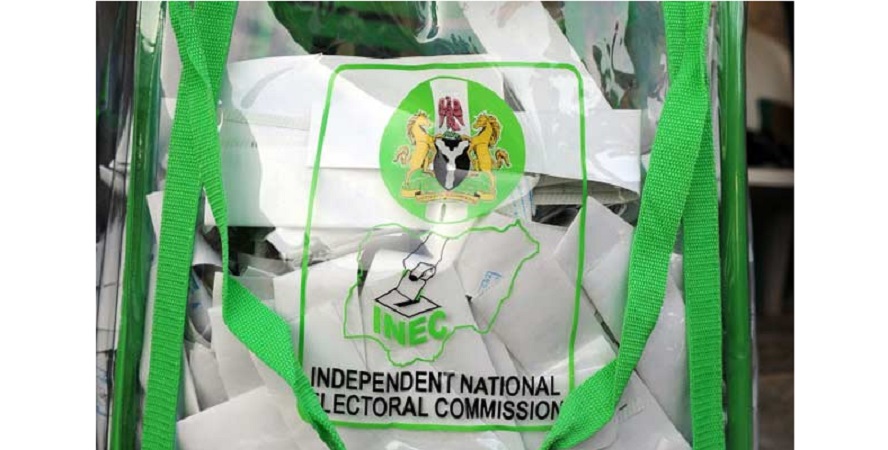
Political Parties Throw Weight Behind Clause 84(12) of Electoral Act
By Modupe Gbadeyanka
The coalition of political parties in Nigeria known as the Conference of Nigeria Political Parties (CNPP) has thrown its full weight behind the controversial Clause 84(12) from the electoral act.
Last Friday, President Muhammadu Buhari finally signed the electoral bill into law after initially asking the National Assembly to work on a clause that made it compulsory for political parties to use the direct primary mode for selecting candidates for elective positions.
When the bill was returned to the parliament after spending 30 days without the President’s assent, the lawmakers inserted a new clause that requires political office holders to resign from office before contesting for positions.
This did not go down well with members of the executive, especially the Governors, who attempted to force the President to refuse to sign the bill into law.
With Civil Society Organisations (CSOs) sensing that Mr Buhari may wait till 30 days before rejecting the bill, they staged a protest last Tuesday and three days later, the President signed the piece of legislation but asked the parliament to delete the clause.
Reacting, CNPP congratulated Nigerians and all active citizens within the civil society bloc for the development, urging well-meaning Nigerians to strongly resist the removal of Clause 84(12) from the electoral act, insisting that the clause actually introduced equity into political party primaries at all levels.
The umbrella body of all registered political parties and political associations in the country, in a statement signed by its Secretary-General, Mr Willy Ezugwu, said that “Mr President is crying more than the bereaved by ordering the immediate removal of the clause that barred political appointees at all level from voting as delegates or be voted for at party conventions or congresses political parties for the purpose of the nomination of candidates for elections.”
According to the CNPP, “Clause 84 (12), which reads no political appointee at any level shall be a voting delegate or be voted for at the Convention or Congress of any political party for the purpose of the nomination of candidates for any election only introduced equity in political party primary elections.
“An appointee of the executive should not, and must not, be a delegate in primary elections while still in office, just as an appointee must not be contesting as a delegate while still in office.
“Such appointees have ended up using their offices to intimidate political opponents of their principals during party primaries in a bid to retain their jobs.
“This is the major reason for electoral violence witnessed at local government and state Congresses of most virile political parties in the country with the attendant loss of lives and property.
“Rather than delete the clause, the National Assembly should amend any provision of the constitution that allows any appointee to be a delegate or be a voter or contest as a delegate at party conventions or congresses the purpose of the nomination of candidates for any election.
“However, the CNPP congratulates Nigerians, especially active citizens in the civil society community for their resilience, doggedness, and for the nonviolent manner, they resisted the attempt to return the bill for the sixth time to the National Assembly by Mr President.
“We equally commend the leadership of the Independent National Electoral Commission (INEC) for fighting on the side of the masses. So, we urge INEC to continue to improve on the electoral processes, even as we urge Nigerians to have faith in the leadership of INEC to deliver free and fair elections in 2023 in view of the provisions of the new Act”, the statement read.
General
Customs Eastern Maritime Command Auctions N26m Seized Petrol, Palm Oil, Others
By Bon Peters
About 29,645 litres of premium motor spirit (PMS), otherwise known as petrol, as well as industrial palm oil, edible palm oil and vegetable oil with a Duty Paid Value (DPV) of N26 million have been auctioned by the Eastern Marine Command of the Nigeria Customs Service (NCS).
The products were seized by the agency from some smugglers and auctioned on Thursday, July 16, 2026, at the Oron Outstation of the Command in Akwa Ibom State, in strict compliance with Section 119 of the Nigeria Customs Service (NCS) Act 2023.
It was gathered that the command auctioned 14,720 litres of petrol and 14,925 litres of industrial palm oil, edible palm oil and vegetable oil, according to a statement issued over the weekend in Port Harcourt, Rivers State, by the command’s spokesman, Mr Joshua Iliya, a Deputy Superintendent of Customs.
It was disclosed that the exercise aligned with the service’s statutory mandate to transparently dispose of seized, forfeited, and abandoned goods after all due legal processes have been completed.
The petrol had a DPV of N11.4 million, 14,200 litres of industrial palm oil with a DPV of N14.1 million, 600 litres of edible palm oil with a DPV of N840,000, and 125 litres of vegetable oil with a DPV of N141,000.
Declaring the auction open, the Acting Comptroller of the Eastern Marine Command, Mr Esien Etim Esiet, stated that the items were intercepted during successful anti-smuggling operations within the command’s jurisdiction, adding that the seizures followed direct violations of the NCS Act and other extant laws governing restricted goods.
“This exercise reflects our unwavering commitment to transparency, accountability, and the prudent management of government assets,” he stated, reiterating that, “Beyond the lawful disposal of goods, this auction serves as a stark reminder that smuggling is an economic crime.”
“It undermines national development, threatens local industries, and deprives the government of critical revenue,” he averred, commending the resilience and professionalism of the command’s officers for securing Nigeria’s maritime borders despite operating in challenging terrains.
The customs officer assured bidders that the process was structured to be fair, open, and legally compliant while offering equal opportunity to all eligible participants.
General
Nigeria Backs Phased Introduction of ECOWAS Single Currency
By Adedapo Adesanya
Nigeria has reaffirmed its support for the gradual implementation of a single West African currency known as the Eco.
The planned single currency has been in motion for years but has been hit with multiple delays; the latest implementation target is set for 2027.
The country also pledged unwavering commitment to regional integration, democratic governance, peace, security and sustainable development across West Africa, at the 69th Ordinary Session of the Authority of Heads of State and Government of the Economic Community of West African States (ECOWAS) held in Sierra Leone.
Representing President Bola Tinubu at the meeting, Vice President Kashim Shettima underscored Nigeria’s continued support for the implementation of the ECOWAS Compact for the Future of Regional Integration.
He described it as a strategic framework for building a more resilient, prosperous, inclusive and people-centred community.
The Vice President commended the government and people of Sierra Leone for hosting the summit and congratulated President Julius Maada Bio on the successful completion of his tenure as Chairman of the ECOWAS Authority of Heads of State and Government.
He also lauded the commissioning of the Julius Maada Bio International Conference Centre, describing it as a significant contribution to regional diplomacy and cooperation.
Nigeria reaffirmed its support for deeper economic integration through expanded intra-regional trade, industrialisation, infrastructure connectivity, investment promotion, food security and the gradual implementation of the Eco single currency.
The Vice President stressed that regional prosperity depends on removing barriers to trade, facilitating the free movement of persons, goods and services, and creating an enabling environment for businesses and investors.
On peace and security, Nigeria reiterated its commitment to constitutional governance, the rule of law and zero tolerance for unconstitutional changes of government.
The Vice President emphasised that sustainable development can only thrive in an atmosphere of peace and stability and reaffirmed Nigeria’s support for strengthening the ECOWAS Standby Force, enhancing intelligence sharing, counter-terrorism cooperation and preventive diplomacy across the region.
He also highlighted the importance of digital transformation, innovation, science and technology in accelerating regional economic growth, while advocating greater investment in women and youth as critical drivers of West Africa’s development.
He further called for stronger ECOWAS institutions founded on transparency, accountability, efficiency and sustainable financing to enhance public confidence and improve the implementation of regional decisions.
Recognising the evolving global geopolitical landscape, Nigeria reaffirmed its commitment to preserving the unity and relevance of ECOWAS through dialogue, solidarity and constructive engagement with all member states.
The Vice President urged regional leaders to remain steadfast in advancing a shared vision of a peaceful, integrated and prosperous West Africa.
General
Favy Wins MasterChef Nigeria N73m Cash Prize
After 13 weeks of unforgettable challenges, bold flavours and inspiring determination, 26-year-old Favour Bessan, better known as Favy, has been crowned the winner of MasterChef Nigeria Season 1, taking home the coveted MasterChef Nigeria trophy and the N73 million cash prize.
The historic finale saw Favy go head-to-head with fierce competitor Fads in a gruelling challenge that drew on every skill they had acquired or honed throughout the competition. Judged by renowned culinary experts, Chef Stone and Chef Eros, this showdown proved to be the ultimate measure of both contestants’ creativity, composure, decision-making and excellence.
For their final assignment, the two home cooks were tasked with creating a three-course menu that reflected their culinary identity. Before cooking began, Chef Stone encouraged them with a simple yet powerful instruction: “Cook from your heart. Put yourself on the plate.”
Favy rose to the occasion with a menu that reflected confidence, technique and imagination. For her starter, she served smoked salmon with potato mash and roasted bell pepper soup. Her carefully curated menu impressed the judges with its balance of flavour, presentation and storytelling, ultimately earning her the title of Nigeria’s first MasterChef.
Favy’s victory marked the culmination of one of the season’s most remarkable journeys. Throughout the competition, she consistently demonstrated resilience, poise under pressure, and an unwavering commitment to growth. She also made history as the first contestant to win the MasterChef Nigeria Immunity Pin, a strategic advantage that proved pivotal in securing her place in the semi-finals.
Speaking after being announced as the winner, an emotional Favy described the moment as “a dream come true” and dedicated the achievement to every aspiring home cook who believes that passion, perseverance and hard work can open extraordinary doors.
Since premiering on 26 April 2026, MasterChef Nigeria has captured the hearts of audiences across the country, celebrating the richness of Nigerian cuisine while showcasing the incredible talent of everyday home cooks. Over 13 weeks, viewers watched contestants transform as they navigated pressure tests, mystery boxes, team cook-offs and eliminations, highlighting the depth and diversity of Nigeria’s culinary landscape.
Reflecting on the success of the inaugural season, Tamara van Eeckhoven, Managing Director of Primedia Africa, the producer of MasterChef Nigeria, thanked the contestants, judges, headline sponsor Power Oil, and all the sponsors and partners, whose invaluable contributions brought the series to life.
The show’s sponsors include headline sponsors Power Oil, Addme, Minimie Chinchin, Indomie, Dano Milk, Malta Guinness, Kellogg’s and Power Pasta, together with supporting sponsors Sonia Tomato Mix, Pretty Lady Rice, Wild Africa, South African Tourism, Lagos Fashion Week, Golden Penny Flour, Golden Penny Sugar, Golden Penny Garri, Golden Penny Semolina, Golden Penny Chocolate Spread, Golden Penny Wheat, Deli and Kola, Simi Teds, and The Alternative Bank.
She also expressed her gratitude to the millions of viewers whose support made MasterChef Nigeria a resounding success.
“MasterChef Nigeria was created to celebrate the nation’s extraordinary culinary talent, and the response to this first season has been truly remarkable. Favy’s journey embodies everything the competition stands for – passion, resilience, creativity and excellence. We congratulate her on making history and celebrate every contestant who inspired audiences throughout this unforgettable season,” van Eeckhoven said.
As the first season draws to a close, MasterChef Nigeria leaves behind more than just a winner. It has sparked a national celebration of food, inspired aspiring culinary talent across the country, and reinforced Nigeria’s standing as one of the world’s most exciting culinary destinations.
For Favy, this victory marks the start of a new chapter. For MasterChef Nigeria, it is the beginning of a legacy that promises to help shape the future of Nigerian cuisine for years to come.