
General
President Buhari’s 2020 New Year Message to Nigerians

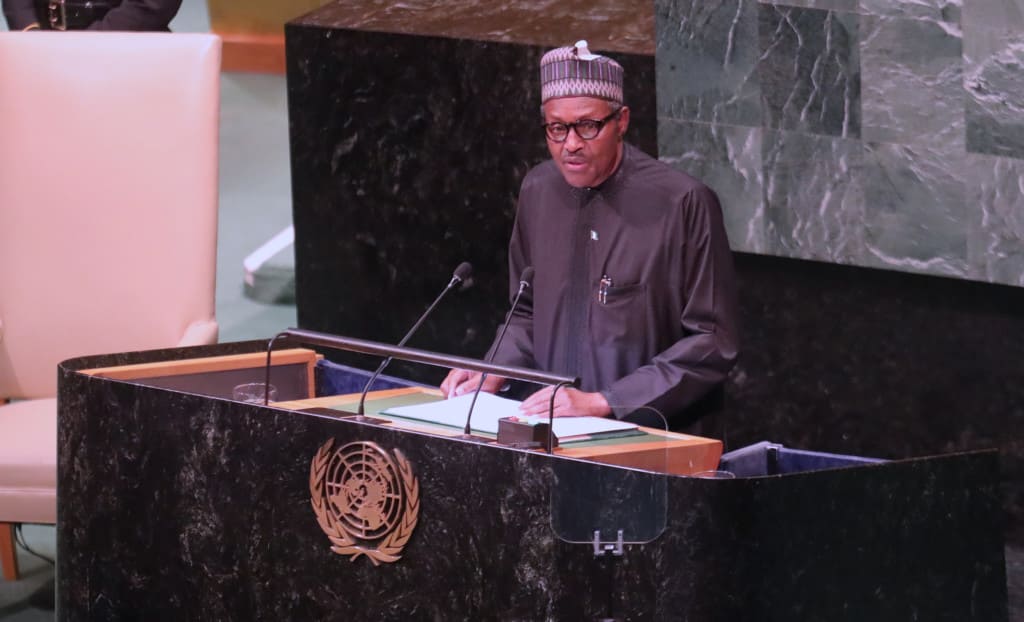
A LETTER FROM THE PRESIDENT AT NEW YEAR
My Dear Compatriots,
NIGERIA’S DECADE
Today marks a new decade. It is a time of hope, optimism and fresh possibilities. We look forward as a nation to the 2020s as the opportunity to build on the foundations we have laid together on security, diversification of our economy and taking on the curse of corruption. These are the pledges on which I have been twice elected President and remain the framework for a stable, sustainable and more prosperous future.
Elections are the cornerstone of our democracy. I salute the commitment of the millions who voted in peace last February and of those leaders who contested for office vigorously but fairly, submitting to the authority of the electorate, the Independent National Electoral Commission and judicial process. I understand very well the frustrations our system has in the past triggered. I will be standing down in 2023 and will not be available in any future elections. But I am determined to help strengthen the electoral process both in Nigeria and across the region, where several ECOWAS members go to the polls this year.
As Commander-in-Chief, my primary concern is the security of the nation and the safety of our citizens. When I assumed office in May 2015 my first task was to rally our neighbours so that we could confront Boko Haram on a coordinated regional basis. Chaos is not a neighbour any of us hope for.
We have been fighting on several fronts: violent extremists, cultists and organised criminal networks. It has not been easy. But as we are winning the war, we also look to the challenge of winning the peace, the reconstruction of lives, communities and markets. The North East Development Commission will work with local and international stakeholders to help create a new beginning for the North East.
The Federal Government will continue to work with State Governors, neighbouring states and our international partners to tackle the root causes of violent extremism and the networks that help finance and organise terror. Our security forces will receive the best training and modern weaponry, and in turn will be held to the highest standards of professionalism, and respect for human rights. We will use all the human and emerging technological resources available to tackle kidnapping, banditry and armed robbery.
The new Ministry of Police Affairs increased recruitment of officers and the security reforms being introduced will build on what we are already delivering. We will work tirelessly at home and with our allies in support of our policies to protect the security of life and property. Our actions at all times will be governed by the rule of law. At the same time, we shall look always to engage with all well-meaning leaders and citizens of goodwill to promote dialogue, partnership and understanding.
We need a democratic government that can guarantee peace and security to realise the full potential of our ingenious, entrepreneurial and hard-working people. Our policies are designed to promote genuine, balanced growth that delivers jobs and rewards industry. Our new Economic Advisory Council brings together respected and independent thinkers to advise me on a strategy that champions inclusive and balanced growth, and above all fight poverty and safeguard national economic interests.
As we have sat down to celebrate with friends and family over this holiday season, for the first time in a generation our food plates have not all been filled with imports of products we know can easily be produced here at home. The revolution in agriculture is already a reality in all corners of the country. New agreements with Morocco, Russia and others will help us access on attractive terms the inputs we need to accelerate the transformation in farming that is taking place.
A good example of commitment to this inclusive growth is the signing of the African Continental Free Trade Area and the creation of the National Action Committee to oversee its implementation and ensure the necessary safeguards are in place to allow us to fully capitalise on regional and continental markets.
The joint land border security exercise currently taking place is meant to safeguard Nigeria’s economy and security. No one can doubt that we have been good neighbours and good citizens. We have been the helpers and shock-absorbers of the sub-region but we cannot allow our well-planned economic regeneration plans to be sabotaged. As soon as we are satisfied that the safeguards are adequate, normal cross-border movements will be resumed.
Already, we are making key infrastructure investments to enhance our ease of doing business. On transportation, we are making significant progress on key roads such as the Second Niger Bridge, Lagos – Ibadan Expressway and the Abuja – Kano highway. 2020 will also see tangible progress on the Lagos to Kano Rail line. Through Executive Order 007, we are also using alternative funding programmes in collaboration with private sector partners to fix strategic roads such as the Apapa-Oworonshoki Express way. Abuja and Port Harcourt have new international airport terminals, as will Kano and Lagos in 2020. When completed, all these projects will positively impact business operations in the country. These projects are not small and do not come without some temporary disruption; we are doing now what should have been done a long time ago. I thank you for your patience and look forward to the dividends that we and future generations will long enjoy.
Power has been a problem for a generation. We know we need to pick up the pace of progress. We have solutions to help separate parts of the value chain to work better together. In the past few months, we have engaged extensively with stakeholders to develop a series of comprehensive solutions to improve the reliability and availability of electricity across the country. These solutions include ensuring fiscal sustainability for the sector, increasing both government and private sector investments in the power transmission and distribution segments, improving payment transparency through the deployment of smart meters and ensuring regulatory actions maximise service delivery.
We have in place a new deal with Siemens, supported by the German government after German Chancellor Angela Merkel visited us in Abuja, to invest in new capacity for generation, transmission and distribution. These projects will be under close scrutiny and transparency – there will be no more extravagant claims that end only in waste, theft and mismanagement.
The next 12 months will witness the gradual implementation of these actions, after which Nigerians can expect to see significant improvement in electricity service supply reliability and delivery. Separately, we have plans to increase domestic gas consumption. In the first quarter of 2020, we will commence work on the AKK gas pipeline, OB3 Gas pipeline and the expansion of the Escravos – Lagos Pipeline.
While we look to create new opportunities in agriculture, manufacturing and other long neglected sectors, in 2020 we will also realise increased value from oil and gas, delivering a more competitive, attractive and profitable industry, operating on commercial principles and free from political interference. Just last week, we were able to approve a fair framework for the USD10 billion expansion of Nigeria Liquefied Natural Gas, which will increase exports by 35 percent, restore our position as a world leader in the sector and create thousands of jobs. The Amendment of the Deep Offshore Act in October signalled our intention to create a modern, forward-looking industry in Nigeria. I am confident that in 2020 we will be able to present a radical programme of reform for oil and gas that will excite investors, improve governance and strengthen protections for host communities and the environment.
We can expect the pace of change in technology only to accelerate in the decade ahead. Coupled with our young and vibrant population, this offers huge opportunities if we are able to harness the most productive trends and tame some of the wilder elements. This is a delicate balance with which many countries are struggling. We are seeking an informed and mature debate that reflects our rights and responsibilities as citizens in shaping the boundaries of how best to allow technology to benefit Nigeria.
During my Democracy Day speech on June 12, 2019, I promised to lay the enduring foundations for taking a hundred million Nigerians out of mass poverty over the next 10 years. Today I restate that commitment. We shall continue reforms in education, health care and water sanitation. I have met international partners such as GAVI, the vaccine alliance, and the Bill & Melinda Gates Foundation who support our social welfare programmes. I will continue to work with State and Local Governments to make sure that these partnerships deliver as they should. Workers will have a living wage and pensioners will be looked after. We are steadily clearing pensions and benefits arrears neglected for so long.
The new Ministry of Humanitarian Affairs, Disaster Management and Social Development will consolidate and build on the social intervention schemes and will enhance the checks and balances necessary for this set of programmes to succeed for the long term.
I am able to report that the journey has already begun with the passage and signing into law of the 2020 Appropriation Act. As the new decade dawns, we are ready to hit the ground running. Let me pay tribute to the Ninth National Assembly who worked uncommonly long hours to make sure that the 2020 budget scrutiny is both thorough and timely. The close harmony between the Executive and Legislature is a sharp contrast to what we have experienced in the recent past, when the Senate kept the previous budget for 7 months without good reason just to score cheap political points thereby disrupting the budgetary processes and overall economic development plans.
Our policies are working and the results will continue to show themselves more clearly by the day. Nigeria is the most tremendous, can-do market, offering extraordinary opportunities and returns. Investors can look forward with confidence not only to an increasing momentum of change but also to specific incentives, including our new visa-on-arrival policy.
They can also be certain of our unshakeable commitment to tackle corruption. As we create an environment that allows initiative, enterprise and hard work to thrive, it is more important than ever to call out those who find the rule of law an inconvenience, or independent regulation an irritation. We are doing our part here in Nigeria. We will continue to press our partners abroad to help with the supply side of corruption and have received some encouragement. We expect more funds stolen in the past to be returned to us and they will be ploughed back into development with all due transparency.
This is a joint initiative. Where our policies have worked best, it has been because of the support of ordinary Nigerians in their millions, numbers that even the most powerful of special interests cannot defy. I thank you for your support. Transition by its very nature carries with it change and some uncertainty along the way. I encourage you to be tolerant, law abiding and peace loving. This is a new year and the beginning of a new decade – the Nigerian Decade of prosperity and promise for Nigeria and for Africa.
To recapitulate, some of the projects Nigerians should expect to come upstream from 2020 include:
47 road projects scheduled for completion in 2020/21, including roads leading to ports;
Major bridges including substantial work on the Second Niger Bridge;
Completion of 13 housing estates under the National Housing Project Plan;
Lagos, Kano, Maiduguri and Enugu international airports to be commissioned in 2020;
Launching of an agricultural rural mechanisation scheme that will cover 700 local governments over a period of three years;
Launching of the Livestock Development Project Grazing Model in Gombe State where 200,000 hectares of land has been identified;
Training of 50,000 workers to complement the country’s 7,000 extension workers;
Commissioning of the Lagos – Ibadan and Itakpe – Warri rail lines in the first quarter;
Commencement of the Ibadan – Abuja and Kano – Kaduna rail lines also in the first quarter;
Further liberalisation of the power sector to allow businesses to generate and sell power;
Commencement of the construction of the Mambilla Power project by the first half of 2020; and
Commencement of the construction of the AKK gas pipeline, OB3 gas pipeline and the expansion of the Escravos – Lagos pipeline in the first quarter of 2020.
Thank you very much!
President Muhammadu Buhari
State House,
Abuja.
1st January, 2020




By Adedapo Adesanya
The Nigeria Data Protection Commission (NDPC) has launched an investigation into an alleged data breach involving Remita Payment Services Limited, Sterling Bank, and other entities, as part of efforts to safeguard personal data and strengthen compliance within Nigeria’s digital ecosystem.
In a statement issued on Sunday by its Head of Legal, Enforcement and Regulations, Mr Babatunde Bamigboye, the commission said, in line with its procedures, a Notice of Investigation was duly served on April 1, 2026.
The agency noted that relevant parties and individuals have been providing information to support efforts to address the incident, adding that the investigation aims to ensure data subjects are adequately protected through appropriate technical and organisational measures.
“The investigation by NDPC covers, among others, the types of personal data involved, the nature and scope of the alleged breach, the risk to data subjects, and the mitigation measures taken where a breach is confirmed,” the statement said.
Meanwhile, the chief executive of NDPC, Mr Vincent Olatunji, has directed that organisations using digital payment systems without implementing the required technical and organisational safeguards, as mandated under the Nigeria Data Protection Act, 2023, will also be examined.
The organisation said this forms part of a broader effort to ensure the integrity and security of Nigeria’s data protection ecosystem.
Data breaches have risen in the last few years, with a 2025 report from Surfshark, a cybersecurity firm, ranking Nigeria third in Sub-Saharan Africa for total breaches since 2004, with 23.2 million compromised accounts.
In September 2024, a hacker identified as Addka72424 released a dataset containing 3.3 billion email addresses, which included 2,555,642 Nigerian accounts. The hacker described it as a “small” experiment to show how much data is freely available online.
This latest development further exposes how cyberthreats continue to evolve, and attackers are constantly adapting their tactics.
The Nigerian government has now launched a national cyber coordination council towards tackling the rising threat.

By Modupe Gbadeyanka
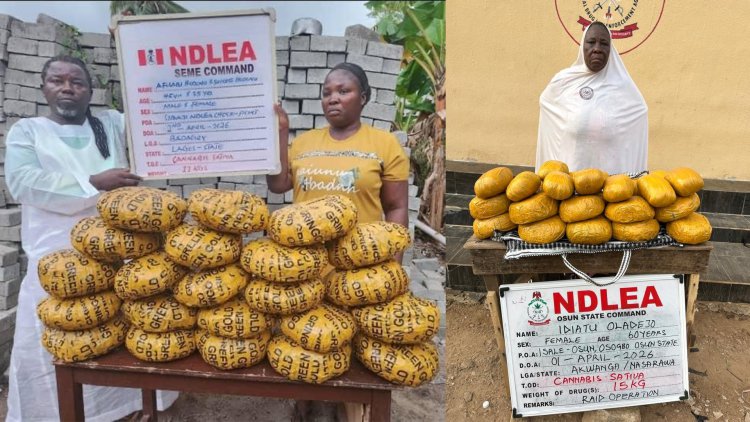
The pastor in charge of the Celestial Church of Christ at Agonvi Sea Beach in the Sakpo area of Seme border, Badagry, Lagos State, Mr Afolabi Hodonu, has been arrested by operatives of the National Drug Law Enforcement Agency (NDLEA).
The 45-year-old cleric was apprehended on Thursday, April 2, 2026, alongside his 35-year-old wife, Mrs Success Hodonu, with blocks of skunk weighing about 11kg.
A statement issued on Sunday by the spokesman of the NDLEA, Mr Femi Babafemi, disclosed that the couple were stopped at the Gbaji checkpoint, and a search of their Honda Pilot SUV led to the recovery of the drugs concealed in hidden parts of their vehicle.
Their arrest followed the apprehension of a fake security agent, Mr Sunday Samuel, 35, at the same checkpoint on Monday, March 30, while conveying 24.5kg of skunk from the Seme border to Lagos.
The statement further disclosed that NDLEA operatives also successfully dismantled a drug trafficking syndicate in high stakes intelligence led operations that lasted three weeks during which cocaine consignments concealed in tins of palm kernel extract heading to the United Kingdom were intercepted and the warehouse where the shipments are packaged raided, while all three layers of the group were unravelled, leading to the arrest of the kingpin.
The breakthrough began on Wednesday, March 11, 2026, when NDLEA officers of the Murtala Muhammed International Airport (MMIA) Strategic Command, Ikeja, Lagos, intercepted 3.10 kilograms of cocaine at the export shed of the airport. The illicit substance was meticulously hidden inside tins of palm kernel extract intended for shipment to the UK.
Two suspects handling the shipment, Idris Olayiwola Amoo and Akinlami Akinsoji Adedoyin, were promptly arrested.
To unravel the sender and the arrowhead of the drug syndicate, a well-coordinated sting operation was carried out on Thursday, April 2, leading to the arrest of Ezemuwo Joel, who operates under a fake identity as Ajayi.
His arrest provided the link to the syndicate’s head, 52-year-old King Arinze, who was flushed out of a hideout in the Isolo area of Lagos.
He was thereafter taken to his warehouse at 11, Ola Ifa Street, Bucknor, Isolo, where NDLEA operatives recovered 886 tins of palm kernel extract prepared for drug concealment; industrial tools, including a sealing machine, tin openers, paint sprays, 52 grams of cannabis sativa and a pack of hand gloves. Arinze has since confessed to personally draining the oil from the tins to conceal the cocaine.
In a separate operation in Borno state, NDLEA operatives on Wednesday, April 1, intercepted a female drug supplier to bandit groups operating between the North East and Chad, 28-year-old Aisha Adamu. She was arrested along the Gamboru Ngala road in possession of 4.3 kilograms of Colorado, a potent synthetic strain of cannabis.
In Adamawa State, NDLEA officers on patrol along Namtari road, Yola South, on Monday, March 30, intercepted a trailer marked RUW 947 XA transporting 48,000 pills of tramadol. The truck driver, Abdulaziz Ismail Korede, was arrested while a follow-up operation led to the arrest of the recipient, Idris Adamu.
While 60-year-old Idiatu Oladejo was arrested with 15kg of skunk in Isale Osun, Osogbo, Osun state, on Wednesday, April 1, NDLEA operatives, acting on credible intelligence, raided the Itaogbolu forest, Akure, Ondo State, where they recovered 351 kilograms of skunk and its seeds. No fewer than 28,600 capsules of tramadol were seized from a 66-year-old Aminu Usman Gembu when he was arrested at Aliade, Benue state, on Wednesday, April 1.
In Edo State, a suspect, Roland Owie, 37, was arrested on Monday, March 30, following the raid of his warehouse at Egbanke community, Orhionmwon LGA, where 1,378 kilograms of skunk were recovered.
A notorious drug dealer, 40-year-old Ayantola Omodunmomi (a.k.a Iya Elle) was on Wednesday, April 1, arrested at Eleta area of Ibadan, the Oyo State capital. Her arrest follows intelligence and surveillance on how she uses her 11-year-old daughter, Anjola, to deliver illicit drugs to her customers. At the time of her arrest, a 45.6kg skunk was recovered from her warehouse.

By Abba Dukawa
A chieftain of the ruling All Progressives Congress (APC), Mr Abdullahi Mahmud Gaya, reaffirmed his commitment to purposeful leadership, declaring he is not given to making empty promises to the electorate.
The politician, who intends to represent the Ajingi, Gaya, and Albasu Federal Constituency in the National Assembly in the 2027 general elections, stressed that his record of performance over two consecutive terms stands as clear evidence of his capacity and credibility, noting that his tenure has consistently delivered beyond expectations.
According to him, governance should be measured by tangible results rather than rhetoric, and his track record reflects a sustained dedication to the welfare and development of his constituency.
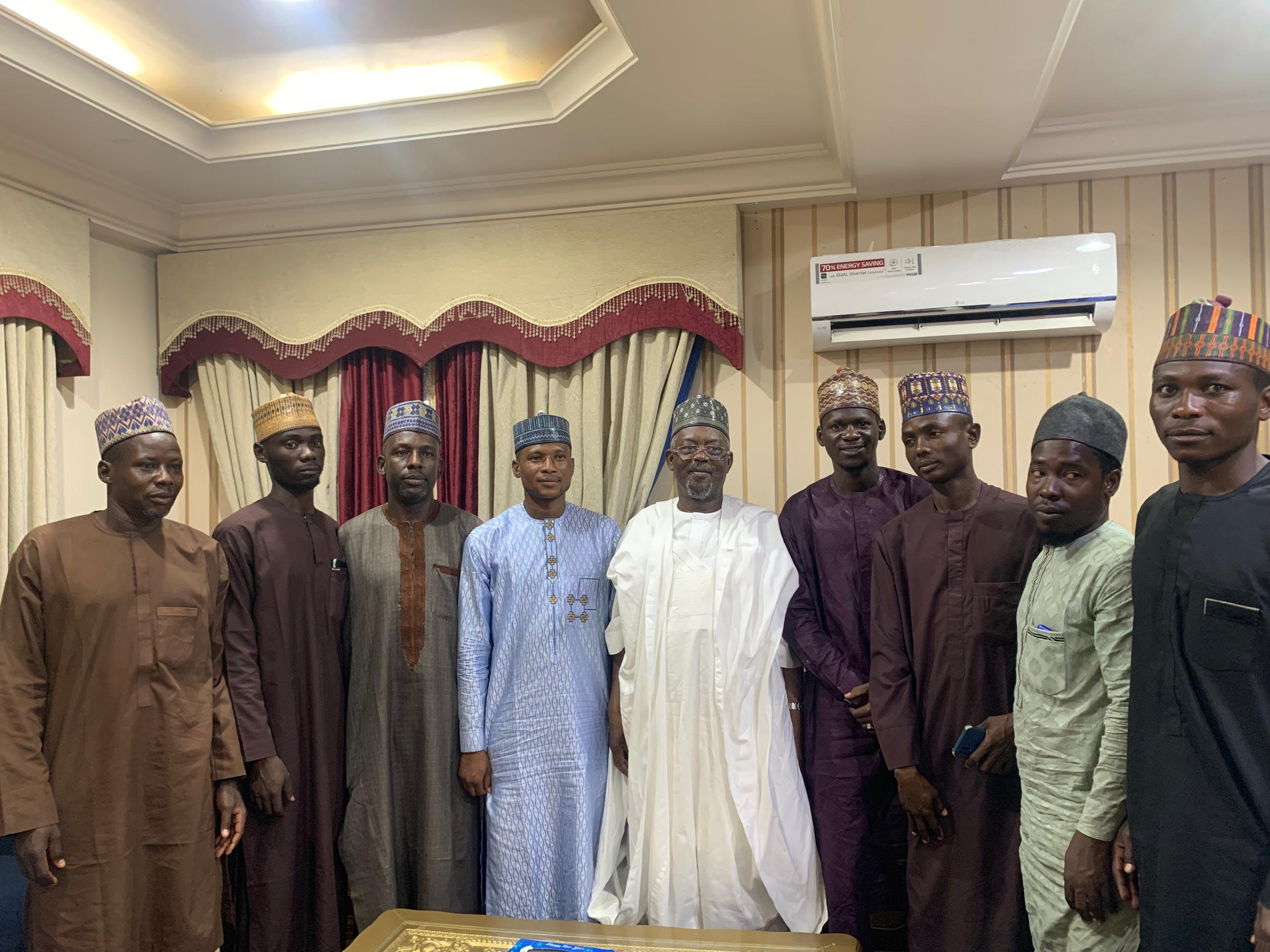
Speaking on Sunday while receiving various support groups at his residence in Kano, Mr Gaya reiterated his resolve to consolidate on past achievements and continue championing policies that will advance the collective interests of his people.
He urged them to return to their respective wards, villages, and towns to enlighten the electorate on the visible developmental strides recorded across the constituency over the past three years under his leadership, emphasising the need for voters to clearly distinguish these achievements from previous representations.
Mr Gaya further stated that there is no retreat in his resolve to contest the seat, stressing that the election is not about personal ambition, but about the collective well-being and continued progress of the people across the three local government areas.
He also urged them to take note that the Electoral Act 2026 outlines two methods through which political parties can nominate candidates, adding that these methods are direct primaries and consensus. Direct primaries involve all registered party members voting to choose their candidates, while the consensus method requires aspirants to voluntarily agree on a single flag bearer.
Speaking on behalf of various support groups, Mr Ismaila Ado, who has benefited from a monthly allowance as a volunteer teacher in one of the schools constructed during his tenure, stated that in addition to the allowance, the politician also facilitated his permanent appointment in the Kano State Ministry of Education.
Also speaking, an elder of the APC in Gaya Local Government Area, Mr Iliyasu Muhammad Gamoji, noted that prior to 2015, the communities of Ajingi, Gaya, and Albasu suffered from years of neglect and slow development.
He explained that when Mr Gaya represented the constituency in the House of Representatives, he did so with a strong commitment and a clear sense of responsibility.
He added that, over time, the lawmaker’s efforts brought tangible progress that positively impacted many lives, noting that roads were constructed, schools were improved, and the communities began to receive renewed attention and meaningful government support during his tenure.
-
 Feature/OPED6 years ago
Davos was Different this year
-
Travel/Tourism10 years ago
Lagos Seals Western Lodge Hotel In Ikorodu
-

 Showbiz3 years ago
Estranged Lover Releases Videos of Empress Njamah Bathing
-
 Banking8 years ago
Sort Codes of GTBank Branches in Nigeria
-

 Economy3 years ago
Subsidy Removal: CNG at N130 Per Litre Cheaper Than Petrol—IPMAN
-

 Banking3 years ago
Sort Codes of UBA Branches in Nigeria
-

 Banking3 years ago
First Bank Announces Planned Downtime
-

 Sports3 years ago
Highest Paid Nigerian Footballer – How Much Do Nigerian Footballers Earn