

General
SERAP Sues Tinubu Over Suspension of Fubara, Rivers Lawmakers

By Adedapo Adesanya
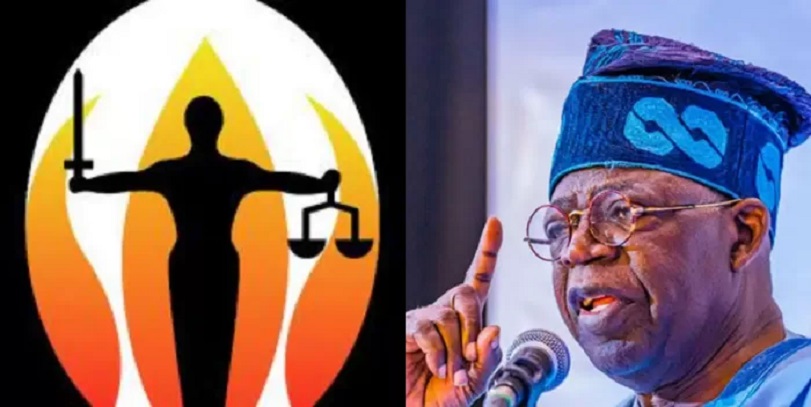
The Socio-Economic Rights and Accountability Project (SERAP) has sued President Bola Tinubu over the suspension of the Rivers State Governor, Mr Siminalayi Fubara; his deputy, Mrs Ngozi Odu; and the State House of Assembly members.
Recall that last Tuesday, President Tinubu declared a state of emergency in the oil-rich state and suspended the governor and other elected officials for an initial period of six months, citing the violence in the state in the last 24 hours, including explosions and vandalisation of petroleum pipelines, linked to the political crises in the state.
SERAP regarded the move as an “illegal suspension.”
The President had relied on Section 305 of the 1999 Nigerian Constitution in his decision that has been greeted with criticisms from several interest groups, including the People’s Democratic Party (PDP), the Nigerian Bar Association (NBA), opposition leaders and erudite lawyers.
In a statement on Sunday, SERAP argued that the decision violates constitutional provisions and undermines democratic governance, revealing it filed a suit at the Federal High Court in Abuja on Friday via three members of its Volunteers’ Lawyers Network (SVLN) in Rivers State—Mr Yirabari Israel Nulog, Mr Nengim Ikpoemugh Royal, and Mrs Gracious Eyoh-Sifumbukho.
“The rule of law would be a mere figure of speech if the people’s right to participation can be arbitrarily suspended or violated,” SERAP Deputy Director, Mr Kolawole Oluwadare, said.
“Democracy is an inherent element of the rule of law. Nigeria’s democracy ought to have as its foundation respect for human rights and the rule of law,” the statement read.
To the group, the suspension contradicts both the Nigerian Constitution and international legal obligations, citing the African Charter on Human and Peoples’ Rights and the African Charter on Democracy, Elections, and Governance.
“The combined provisions of Sections 1(2), 14(1)(c), 176(1)(2), and 305(1) of the Nigerian Constitution create a delicate balance of rights and responsibilities, ensuring that the exercise of presidential power does not override the people’s right to participate in their own governance,” it said.


