
General
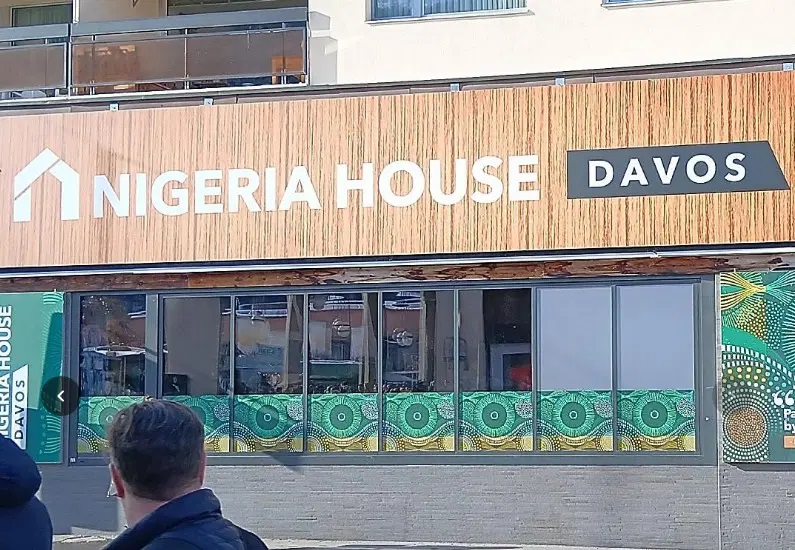
Shettima Commissions Nigeria House in Davos

By Adedapo Adesanya
Vice President Kashim Shettima has formally opened the Nigeria House in Davos as the 2026 World Economic Forum kicks off in Switzerland.
The unveiling, which took place on the sidelines of the World Economic Forum, marks the first time Nigeria is establishing a House in Davos.
The Nigeria House is designed to serve as a strategic hub for engaging global investors and promoting key sectors of the Nigerian economy.
The facility will provide a platform for investment discussions, partnerships and policy engagements aimed at attracting foreign direct investment into the country.
Members of the Nigerian delegation, alongside foreign partners and stakeholders, were present at the official opening of the Nigeria House.
Speaking on the initiative, the Minister of Industry, Trade and Investment, Mrs Jumoke Oduwole, said Nigeria is showcasing four major investment areas at the forum—solid minerals, sustainable agriculture, the creative industry and the digital economy.
The country said it will use this year’s Davos forum to press its case as a stable, reforming economy at a time when global investors are pulling back from emerging markets and geopolitical tensions are reshaping capital flows.
The forum’s theme, The Spirit of Dialogue, aligns with Nigeria’s strategy of pairing macroeconomic reforms with sustained engagement with investors, development partners, and global policymakers.
“At a time of heightened uncertainty, the world is looking to Nigeria as a pillar of economic stability in Africa — not only because of its size, but because of the reform choices it has made,” according to the Ministry of Finance.
“This positioning places Nigeria firmly within the global dialogue on how emerging markets can navigate volatility while sustaining reform momentum.”
According to the ministry, Nigeria’s message in Davos is straightforward: the country intends to stay the course on market-oriented reforms, maintain macroeconomic discipline, and protect institutional credibility, including the operational independence of the Central Bank of Nigeria, as a foundation for price stability and investor confidence.
Meetings in Davos will focus on deepening dialogue with global investors, development finance institutions, credit ratings agencies, and multinational companies.
The aim, according to the ministry, is to address lingering concerns around policy consistency, foreign-exchange stability, inflation, and fiscal sustainability, while reinforcing Nigeria’s ambition to act as a reform anchor in Africa’s largest economy.



By Adedapo Adesanya
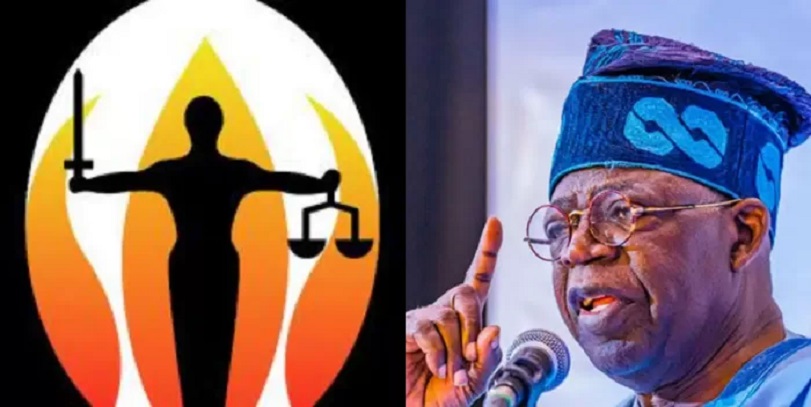
President Bola Tinubu has been tasked to ensure that an alleged missing N2.9 billion of public funds from the Nigerian Communications Satellite Limited (NIGCOMSAT) and the Nigerian Nuclear Regulatory Authority (NNRA) is accounted for.
In a statement on Sunday, the Socio-Economic Rights and Accountability Project (SERAP) said the President must ask the Minister of Communications, Innovation and Digital Economy, Mr Bosun Tijani, to explain what happened to the money, as the two agencies are under his supervision.
The group said the Attorney General of the Federation and Minister of Justice, Mr Lateef Fagbemi (SAN), should investigate the missing funds or any other diverted funds from the agencies documented in the previous annual reports by the Auditor-General.
According to the statement, the allegations were documented in the latest annual report published by the Auditor-General on September 9, 2025.
SERAP argued that these allegations, involving critical public institutions, represent a grave violation of the public trust and a fundamental breach of Nigeria’s anti-corruption laws and international obligations.
“We’ve urged President Bola Tinubu to direct @bosuntijani, Minister of Communications, Innovation and Digital Economy, and the Management of both the Nigerian Communications Satellite Ltd (NIGCOMSAT) and the Nigerian Nuclear Regulatory Authority (NNRA) to account for and explain the whereabouts of the alleged missing or diverted N2.9 billion of public funds from NIGCOMSAT and NNRA.
“We also urged him to direct Mr Lateef Fagbemi, SAN, the Attorney General of the Federation and Minister of Justice and anti-corruption agencies to investigate the alleged missing or diverted funds, and any other diverted public funds from the two agencies documented in previous annual reports by the Auditor-General,” the organisation said.
The rights group stressed that anyone found responsible should be prosecuted where sufficient admissible evidence exists, adding that any missing or diverted public funds must be fully recovered and returned to the treasury.
“Anyone suspected to be responsible should face prosecution as appropriate, if there is sufficient admissible evidence, and any missing or diverted public funds should be fully recovered and remitted to the treasury,” the statement added.
“Accountability in NIGCOMSAT and NNRA is critical given their strategic roles in Nigeria’s digital economy and national safety systems. Mismanagement in these agencies not only wastes scarce public resources but also threatens national development, technological progress, and public safety,” it concluded.

By Dipo Olowookere
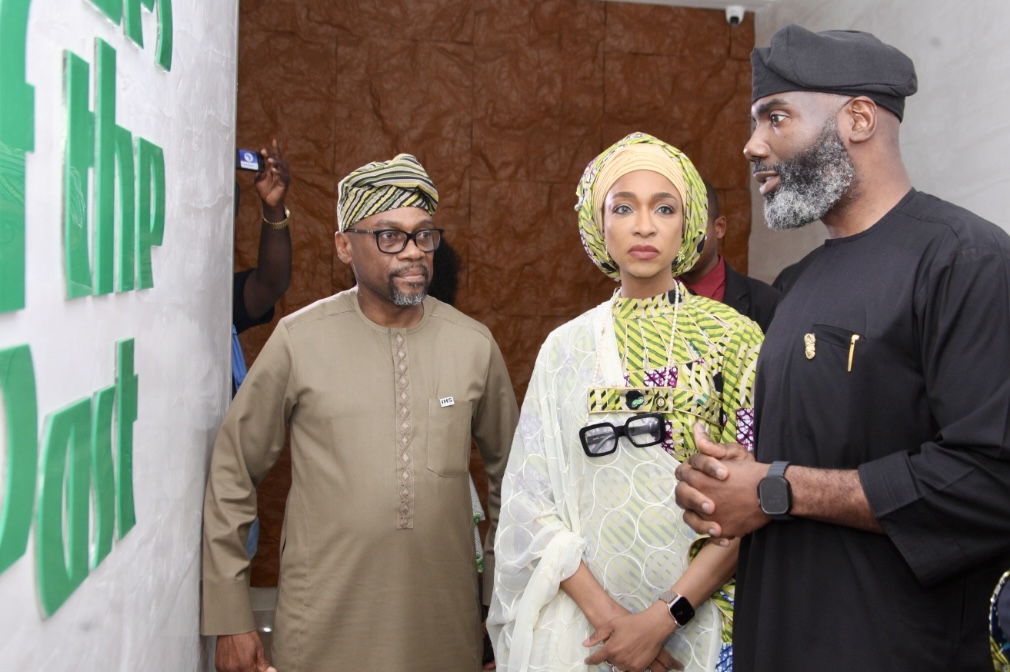
The National Museum in Lagos is wearing a new look, thanks to IHS Nigeria, a member of the IHS Holding Limited, which bankrolled the renovation of the facility.
The company, one of the largest independent owners, operators, and developers of shared communications infrastructure in the world by tower count, also ensured facilities at the museum were upgraded for the use of members of the public.
IHS Nigeria collaborated with the National Commission for Museums and Monuments to give the facility a facelift.
The overall aesthetic appeal of the museum site was improved, with an extensive restoration of the main gallery, which incorporates the installation of modern display and lighting systems, air‑conditioning units, a solar inverter system to enhance energy efficiency, and surveillance cameras to aid safety, security and operational performance across the facility.
The Minister of Art, Culture, Tourism and the Creative Economy, Ms Hannatu Musawa, at the commissioning, praised the organisation for supporting the long-term preservation of Nigeria’s cultural assets and heritage.
The Director General of the National Commission for Museums and Monuments, Mr Olugbile Holloway, also thanked IHS Nigeria for the renovation, saying the gesture goes far beyond bricks and mortar, as it is a profound commitment to preserving the soul of the nation.
“The National Museum Lagos is home to some of Nigeria’s most treasured antiquities, from the ancient terracotta of the Nok civilisation to the magnificent bronzes of the Benin Kingdom and the classical works of Ife.
“To restore this institution is to restore our collective memory. We thank HIS Nigeria for choosing to renew not just infrastructure, but the heritage, identity, and hope of our people.
“Their support ensures that generations of Nigerians yet unborn will walk through these halls and encounter the full greatness of who we are and where we come from,” Mr Holloway said.
In his remarks, the chief executive of IHS Nigeria, Mr Mohamad Darwish, said, “Having seen the rich historical and cultural heritage housed in this national museum complex, we believed it was important to go a step further after supporting the development of the digital museum, to also improve the aesthetics, security and structural integrity of the main physical complex.
“This aligns with our broader commitment to sustainable infrastructure development and the preservation of Nigeria’s history. I am proud of these renovations and that visitors, including tourists, researchers and art enthusiasts, can visit the museum to be immersed in Nigeria’s rich history in an environment that is safe, beautiful and welcoming.
“The artefacts can also now be better preserved, protected and presented in a way that celebrates the history they represent. I thank the National Commission for Museums and Monuments for this ongoing partnership, which continues to exemplify the power of a collaborative effort in driving innovation, fostering national pride, and enhancing the creative economy.”
By Adedapo Adesanya
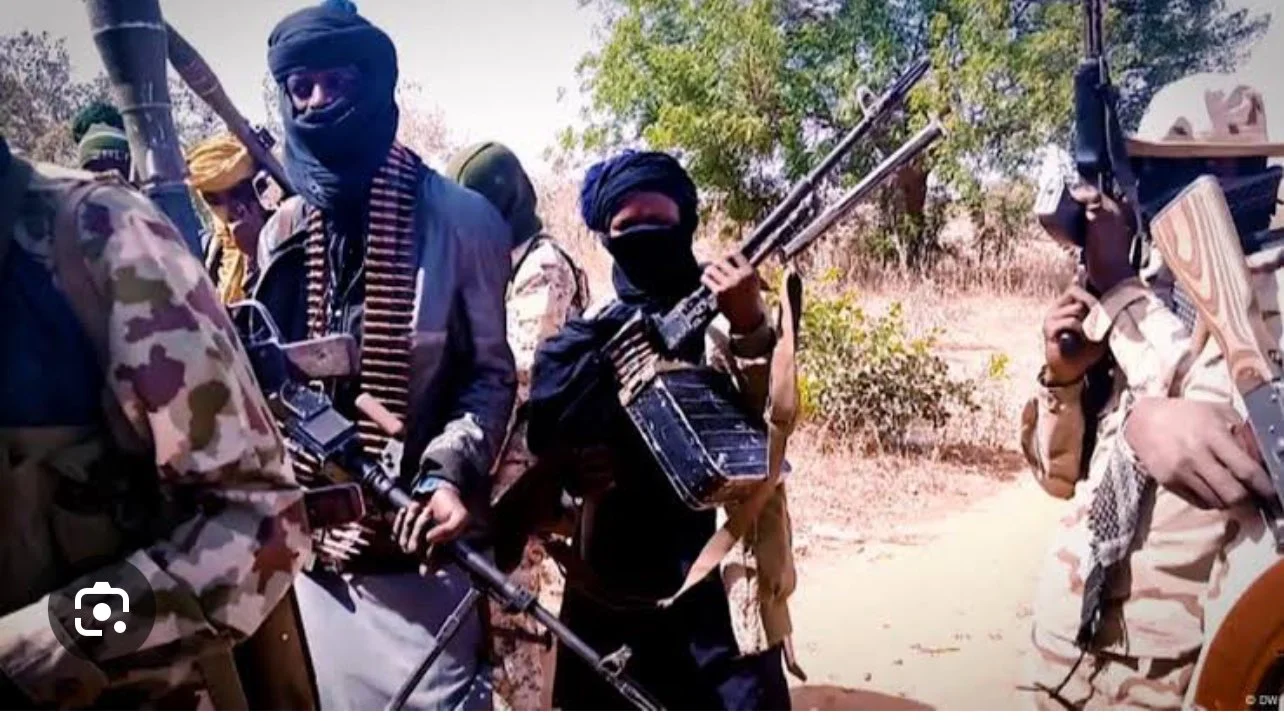
The Kebbi State Police Command says 44 people were killed following a coordinated attack on eight communities in Shanga Local Government Area of the North-Western state.
The affected villages include Gebe, Kalkami, Kawara, Kasoshi, Awaye, Tungar Rini, Binuwa, and Dabe.
In a statement issued on Friday, the Kebbi Police Command Public Relations Officer, Mr Bashir Usman, said it launched a statewide clearance operation.
Mr Usman said the operation followed the directive of the Inspector-General of Police (IGP) Olatunji Disu, aimed at preventing further banditry and violent crimes across the state.
The police stated that massive deployments of police personnel and other security agencies have been made to the affected communities, leading to the return of relative calm.
The command added that discreet investigations have commenced into the attack.
The ongoing clearance operation, according to the police, is targeting high-risk areas such as farmlands, forests, border communities, and remote settlements.
It also includes coordinated patrols, intelligence-led stop-and-search operations, and joint actions with other security agencies.
As part of the operation, the police said two AK-47 rifles were recovered along the Illo-Kamba axis, describing it as evidence of the effectiveness of intelligence-led policing.
The Commissioner of Police in the state, Mr Umar Hadejia, called on residents to remain vigilant and cooperate with security agencies by providing timely and credible information.
Mr Hadejia also urged traditional rulers, community leaders, religious bodies, and youth groups to support ongoing efforts to restore peace and strengthen security across the state.
Residents had reportedly appealed to President Bola Tinubu and Kebbi State Governor Nasir Idris to take decisive action to restore security in the area and enable displaced residents to safely return to their homes.
-
 Feature/OPED6 years ago
Davos was Different this year
-
Travel/Tourism10 years ago
Lagos Seals Western Lodge Hotel In Ikorodu
-

 Showbiz3 years ago
Estranged Lover Releases Videos of Empress Njamah Bathing
-
 Banking8 years ago
Sort Codes of GTBank Branches in Nigeria
-

 Economy3 years ago
Subsidy Removal: CNG at N130 Per Litre Cheaper Than Petrol—IPMAN
-

 Banking3 years ago
Sort Codes of UBA Branches in Nigeria
-

 Banking3 years ago
First Bank Announces Planned Downtime
-

 Sports3 years ago
Highest Paid Nigerian Footballer – How Much Do Nigerian Footballers Earn