General
Silence Laboratories Raises $4.1m for Privacy-Preserving Computing
By Adedapo Adesanya
Silence Laboratories has announced securing $4.1 million in funding to enable privacy-preserving collaborative computing led by Pi Ventures and Anurag Arjun, along with several prominent angel investors.
In a statement shared with Business Post, the company said with the market for privacy-enhancing technologies (PETs) growing globally at a compound annual growth rate of 26.6 per cent, there is growing demand.
In recognition of this, Silence Laboratories is offering to provide mathematical guarantees for techno-legal expectations as part of a mission to create infrastructure to enable complex data collaborations between enterprises and entities, without any sensitive information being exposed to the other engaging parties.
This would allow companies to work together on processing data, without needing to share data with the other party – allowing more sectors to benefit from new technology, with less risk.
The funding will be used to scale the company’s tech and business teams and enrich the company’s robust research and development (R&D) pipeline.
In the modern age, large companies are wrestling to leverage their customers’ data to provide ever-better AI-enhanced experiences but a key barrier to leveraging this opportunity is mounting public concern around data privacy, as ever-greater data processing poses risks of data leaks by hackers and malicious insiders.
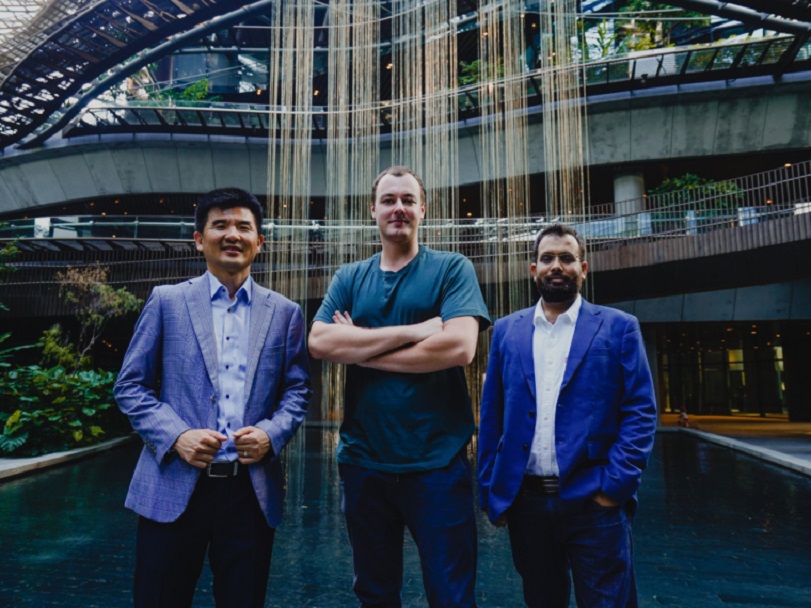
Founded in 2021 by Dr Jay Prakash (CEO), Dr Andrei Bytes (CTO), and Dr Tony Quek, the firm has also recently been expanding its global leadership team across cryptography, infrastructure business, and engineering.
Leveraging modern cryptography, the company already has one of the fastest distributed signature (authorization) libraries in production (Silent Shard), which has been audited by some of the best security auditing companies like Trail of Bits.
These libraries have led to the establishment of strong partnerships with leading digital asset infrastructure and protocol companies like BitGo, MetaMask, EigenLayer, Biconomy, and EasyCrypto.
These products on offer by the company use multi-party computation (MPC) as its core cryptographic primitives.
Commenting on the announcement, Mr Prakash said, “In today’s digital ecosystem, trust, and privacy are not merely options but imperatives for sustainable growth.
“With this new injection of funds, Silence Laboratories is poised to redefine privacy by enabling businesses to fully embrace the power of AI while rigorously protecting their most vital asset – customer trust.
“Our privacy-enhancing technologies assure that collaboration and innovation can flourish in an environment where the confidentiality and integrity of data are uncompromised.”
On his part, the Managing Director of Pi Ventures, Mr Mr Shubham Sandeep, said, “Secure data collaboration to enable privacy-preserving compute is an ever-growing problem, especially in highly regulated domains such as finance and healthcare. This requires solutions based on zero-trust cryptographic guarantees instead of relying on third-party data vendors who are prone to security breaches.
“The MPC infrastructure developed by the world-class team at Silence Laboratories is the fastest in the world, easily configurable, application agnostic, and provides full control to the user.
“We are excited to double down on our investment as we have seen the fantastic progress of the company over the last 18 months.”
“The Silence team is an amazing team with deep cryptography expertise and is working on a set of groundbreaking products in privacy and authentication infrastructure and I am really excited to support their journey.
“Privacy-preserving infrastructure combined with blockchain and fintech rails is going to be huge!” added MrAnurag Arjun from Kira Studio and former co-founder of Polygon.
General
Finding a Way Forward Through Life’s Challenges
Life is full of unexpected moments that test our patience, strength, and perspective. Everyone experiences setbacks, disappointments, and periods of uncertainty. While these moments can feel overwhelming, they also provide opportunities for personal growth and self-discovery.
One of the most valuable lessons we learn is that difficult situations rarely last forever. Time, reflection, and a willingness to adapt often help us move beyond even the toughest circumstances. Maintaining a positive outlook and focusing on practical solutions can make a significant difference.
Relationships also play an important role in overcoming hardships. Support from family, friends, or mentors reminds us that we are not alone. At the same time, learning to let go of anger and resentment can free us from emotional burdens that prevent us from moving forward.
The only way out of the labyrinth of suffering is to forgive. It is nothing to die. It is frightful not to live. Everything was beautiful and nothing hurt.
Personal growth is not about avoiding challenges but about responding to them with resilience and wisdom. Every experience, whether positive or negative, contributes to the person we become. By embracing change and practicing gratitude, we can create a more meaningful and fulfilling life.
In the end, moving forward requires courage, forgiveness, and hope. When we choose to focus on what we can control instead of dwelling on the past, we open ourselves to new opportunities and a brighter future.
General
Tinubu Okays Four New Army Divisions, Recruitment of 28,000 Personnel
By Modupe Gbadeyanka
The establishment of four new army divisions has been approved by President Bola Tinubu, bringing the total to 12.
In a statement on Thursday by the Special Adviser to the President on Information and Strategy, Mr Bayo Onanuga, it was stated that the President also authorised the recruitment of 28,000 additional personnel to strengthen national security.
The new divisions created include 5 Division, with the headquarters in Makurdi covering Benue, Nasarawa and Kogi States; 9 Division, with the headquarters in Ilorin covering Kwara and Niger States; 10 Division, with the headquarters in Jalingo covering Taraba and Adamawa States; and 83 Division, with the headquarters in Benin City covering Edo, Delta and Bayelsa States.
It was disclosed that the establishment of the new Divisions in Makurdi, Ilorin, Jalingo and Benin City will significantly improve command and control, decentralise operational decision-making, strengthen border security, enhance the protection of critical national infrastructure, improve counter-insurgency and internal security operations, and ensure faster military response to emerging threats nationwide.
Implementation of the new force structure will be done in two phases. The first phase, covering the establishment of the 5, 9, and 10 Divisions and the reorganisation of existing formations, will be completed by September 2026. The second phase, involving the establishment of the 83 Division and further reorganisation, is expected to be completed by December 2026.
The statement said the expansion of the Nigerian Army’s structure from eight to twelve divisions will improve the operational effectiveness of the security agency and strengthen national defence capabilities further.
Before now, the Nigerian Army operated 1 Division, with the headquarters in Kaduna covering Kaduna, Kano, Katsina and Jigawa States; 2 Division, with the headquarters in Ibadan covering Oyo, Osun, Ekiti and Ondo States; 3 Division, with the headquarters in Jos covering Plateau, Bauchi and Gombe States; 6 Division, with the headquarters in Port Harcourt covering Rivers, Akwa Ibom and Cross River States; 7 Division, with the headquarters in Maiduguri covering Borno and Yobe States; 8 Division, with the headquarters in Sokoto covering Sokoto, Kebbi and Zamfara States; 81 Division, with the headquarters in Lagos covering Lagos and Ogun States; and 82 Division, with the headquarters in Enugu covering Enugu, Anambra, Abia, Ebonyi and Imo States.
Mr Tinubu reaffirmed his administration’s determination to continue investing in the Armed Forces, ensuring they remain adequately equipped, highly motivated, and fully capable of protecting the nation and guaranteeing the safety and security of all Nigerians.
He lauded the Chief of Army Staff, Lieutenant General Waidi Ibrahim Shuaibu, and all officers and soldiers of the Nigerian Army for their dedication, professionalism, and steadfast commitment to defending Nigeria’s sovereignty and territorial integrity.
General
Sahara Group Triggers New Thinking on Energy, Investment, Journalism at Asharami Square 3.0
By Dipo Olowookere
The need for new thinking on energy transition, infrastructure financing and energy journalism has been emphasised by a leading energy company, Sahara Group.
The organisation, at the 2026 Asharami Square held in Lagos on Wednesday, July 22, stressed the need for solution-based journalism for better results.
At the event themed Energising Africa’s Future: Legacy, Impact and Transformation, the Director of Governance and Sustainability at Sahara Group, Ms Ejiro Gray, in her opening remarks, noted that Africa’s energy future must be shaped by local realities, calling for more balanced, evidence-based journalism capable of interrogating the complexities of energy transition, development and sustainability.
“Effective journalism should not only tell us what happened; it should help us understand why it matters, whose interests are affected and what perspectives are missing from the conversation,” she posited.
The Special Adviser to the President on Power Infrastructure, Mr Sadiq Wanka, in his keynote address, highlighted the opportunities emerging within Nigeria’s electricity sector as reforms continue to open new pathways for investment.
He stated that reforms across the sector were creating opportunities in embedded generation, mini-grids, renewable energy, transmission infrastructure and industrial power solutions, while urging journalists to delve deeper into policy reforms, investment opportunities and implementation outcomes.
“The issue is no longer technology. The real challenge is mobilising capital at scale, structuring bankable opportunities and creating an ecosystem that attracts long-term financing,” Mr Wanka said.
At a panel session featuring the Director of Institute of Continuing Education of the University of Lagos, Prof. Abigail Ogwezzy-Ndisika; the chief executive of the Lagos State Electricity Regulatory Commission (LASERC), Ms Temitope George; and the Managing Director of Chapel Hill Denham, Ms Kemi Awodein, it was echoed that Africa possesses significant pools of capital capable of supporting infrastructure development, but that unlocking investment requires stronger governance, investor confidence and better project preparation.
“Energy reporting must go beyond headline events and announcements. Journalists need to ask deeper questions, examine the evidence and connect policy decisions to their impact on communities and everyday lives,” Prof Ogwezzy-Ndisika stated at the panel moderated by the Associate Editor for Africa at Argus Media, Mr Adebiyi Olusolape.
Ms Awodein, during the panel which explored the question: Who is financing Africa’s energy future? Pointed out that “Nigeria has demonstrated that domestic capital can finance transformational infrastructure at scale. The real differentiator is governance, transparency and a clear pathway to value creation.”
Business Post reports that one of the major highlights of the programme was the unveiling of the Asharami Square Energy Reporting Fellowship, which the Head of Corporate Communications at Sahara Group, Mr Bethel Obioma, said was designed to deepen journalists’ understanding of the technical, commercial, environmental and policy issues shaping the energy sector.
He disclosed that this aligns with Sahara Group’s Beyond XXX vision of investing in people and platforms that will help shape Africa’s future, adding that Prof Ogwezzy-Ndisika will serve as the lead assessor for the programme.
“Through the Asharami Square Energy Reporting Fellowship, we are investing in the capacity of journalists to tell more solutions and evidence-based stories that reflect the realities, opportunities and challenges of Africa’s energy transition,” he stated.
Since its launch in 2024, Asharami Square has continued to advance informed dialogue, strategic partnerships and practical solutions that support Africa’s evolving energy landscape and reinforce Sahara Group’s commitment to delivering impact beyond its first three decades.