
General
Tenants to Pay 6% Stamp Duty on Tenancy, Lease Agreements

By Adedapo Adesanya
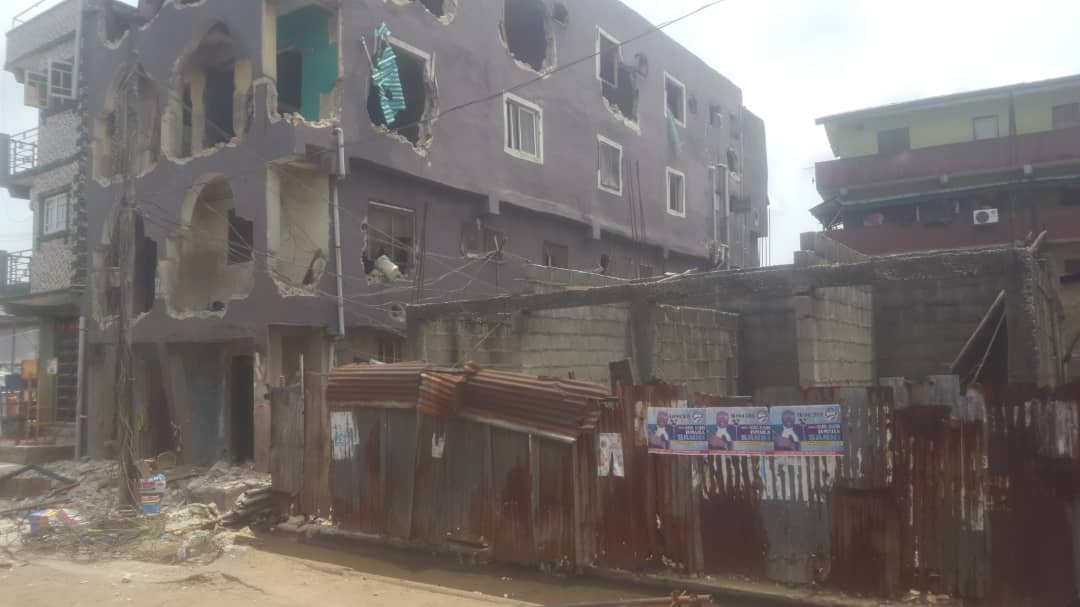
In line with the latest directive by the Federal Inland Revenue Service (FIRS), tenants will now have to pay six per cent stamp duty on all tenancy and lease agreements.
In a notice to landlords and property agents signed by the tax agency’s Director of Communications and Liaison Department, Mr Abdullahi Ahmad, on Wednesday, it said the funds are expected to be remitted by landlords in order not to run afoul of the Stamp Duty Act.
This simply means that the responsibility of collection and remittance falls on the landlord or agent in charge of the property for lease or rent, while the payment is the duty of the tenants.
“Property-related transactions like tenancy or lease agreement fall under the Ad Valorem category of the stamp duty which attracts six per cent duty payable in percentage of the total value or sum of the tenancy or lease.
“The burden of payment of the six per cent lies on the beneficiary of the tenancy or lease agreement, whom the Stamp Duty Act identified as the tenant or renter.
“The responsibility of collection and remittance fall on the landlord or agent in charge of the property for lease or rent,” Mr Ahmad said.
He added that, “The party making the payment shall have the obligation to account for the applicable stamp duties,” indicating that the tenant shall be the one whose name will reflect as the payer of the stamp duty.
Business Post had reported earlier that the FIRS said that stamp duty will be paid on house rent and Certificate of Occupancy (C of O), in line with its new adhesive duty.
Other Stamp Duty types and their rates include Appraisement or Valuation of Property, 5 per cent; Certificate of Occupancy and Partnership, N1,000 flat rate; Gift of Land, 1.5 per cent and Legal Mortgage, 0.375 per cent.
Others include; Legal Mortgage (Upstamping), 0.375 per cent; Deed of Conveyance or Transfer on Sale of Property, 1.5 per cent; Memorandum of Understanding (Related to Land, Sales, Joint Venture, Surrender, Subdivision Agreements, 1.5 per cent; Power of Attorney (Irrevocable/Land Related), 1.5 per cent and Sales Agreement, 1.5 per cent.
The Stamp Duties payment is backed by the Stamp Duties Act (SDA) 1939 as amended by numerous Acts and various resolutions contained in the Laws of the Federation of Nigeria. The SDA also provides a list of documents in its schedule and the duty payable on each.


By Adedapo Adesanya
The Federal Competition and Consumer Protection Commission (FCCPC) says it has expanded its market surveillance and product testing to electrical and electronic products to ensure strict regulatory compliance.
The organisation also said it was extending market surveillance to cables and other building materials due to significant product safety issues regarding collapsed buildings.
According to the Director of the Surveillance and Investigations Department at FCCPC, Mrs Boladale Adeyinka, there are products that did not meet basic safety and quality standards in circulation.
She noted that where business conduct raises concerns about consumer safety, such matters would be investigated.
Mrs Adeyinka said the commission was coordinating with various sector regulators to address weaknesses that permitted unsafe products to enter or remain in the market.
”When a product presents a risk, the law requires prompt collective action, including product withdrawal, product recall, and proper notice to the consumer.
“If you are producing products in Nigeria and you discover there is a safety concern or likely to be a safety concern with respect to products that you have rolled out in the market, you have an obligation to withdraw and recall them.
“You also give notice to consumers who have purchased those products to be able to make the remedial actions, particularly with products that may significantly affect the lives of consumers of those products.”
“These are not optional expectations but legal requirements under our law. They are statutory duties to ensure product safety and consumer welfare in Nigeria.
“Failure to act responsibly by recalling, withdrawing, and issuing consumer notice will attract strict and stiff regulatory response from the commission,” she added.
The official noted that, “Compliance is not a favour to the regulator,” she stated.
Mrs Adeyinka also said FCCPC, headed by Mr Tunji Bello, remained committed to effectively monitoring and enforcing compliance across the market.

By Aduragbemi Omiyale
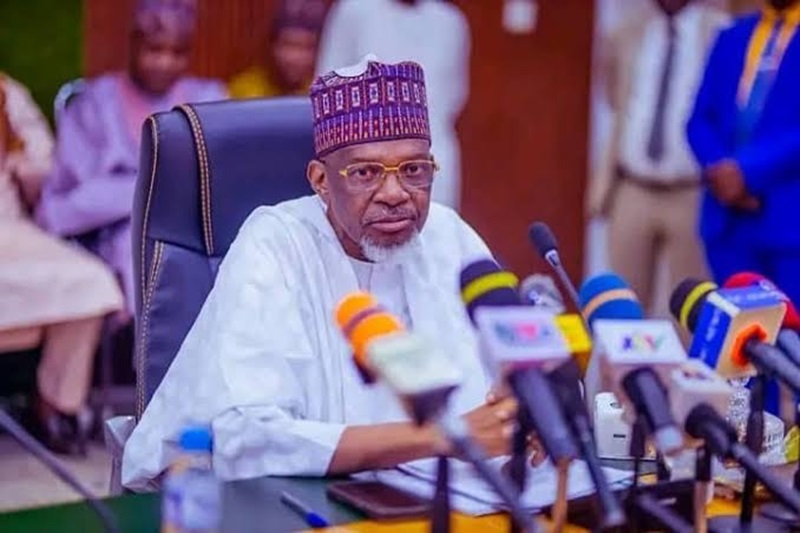
The Speaker of the Kebbi State House of Assembly, Mr Muhammad Usman Zuru, has died in an Egyptian hospital.
He was said to have breathed his last on Monday night at the North African healthcare facility.
Details surrounding his death last night have yet to be made public, but the Special Adviser to Governor Nasir Idris on Communication and Strategy, Mr Idris Zuru, said, “We are still gathering full details surrounding his passing. The government will make an official statement and announce burial arrangements in consultation with the family.”
“The death of the Speaker, Muhammad Usman Zuru, came to us as a rude shock. It is a painful loss not only to Kebbi State but to the entire nation,” the media aide further stated.
It was gathered that the late Speaker travelled to Egypt to receive treatment for an undisclosed illness.
Before his passing, the lawmaker represented Zuru Constituency in the Kebbi State House of Assembly.

By Adedapo Adesanya
The Nigeria Guild of Editors (NGE) and the Socio-Economic Rights and Accountability Project (SERAP) have called on President Bola Tinubu to investigate the alleged threat issued against Channels Television presenter, Mr Seun Okinbaloye, by the Minister of the Federal Capital Territory, Mr Nyesom Wike.
The groups, in a joint statement by NGE President, Mr Eze Anaba, General Secretary, Mr Onuoha Ukeh, and SERAP Deputy Director, Mr Kolawole Oluwadare, on Monday, condemned the remarks and urged the federal government to “promptly, thoroughly, transparently and effectively investigate the threat.”
They also called on the government to ensure the safety of Mr Okinbaloye and other journalists.
“The Tinubu government should urgently take all necessary measures to ensure the safety and security of Mr Okinbaloye and other journalists facing threats to their safety and security solely for peacefully exercising their human rights and carrying out their legitimate journalistic work,” the statement read.
Mr Wike had, during a media chat in Abuja last Friday, reacted to comments made by the broadcaster, surrounded by some media men.
“I was surprised yesterday (Thursday), totally surprised when I was watching Politics Today. Seun, if there was any way to break the screen, I would have shot him,” the Minister said.
Mr Okinbaloye had raised concerns about the 2027 elections, suggesting that the political space appeared to be tilting towards dominance by a single party, referencing internal issues within the African Democratic Congress (ADC).
Reacting, the NGE and SERAP warned that press freedom in Nigeria is under increasing pressure. The groups stressed that public officials must be open to scrutiny and criticism.
“We are seriously concerned that press freedom is in a ‘downward spiral,’ with increasing intimidation, harassment, threats, and attacks against journalists and media freedom across the country.
“Public figures, including politicians, are subject to a higher degree of scrutiny and criticism. The threat against Mr Okinbaloye illustrates the escalating threats to the safety and security of journalists and media freedom in the country,” the statement added.
They further argued that journalists retain their constitutional right to freedom of expression.
“Like every individual, Okinbaloye is entitled to exercise his right to freedom of expression as a fundamental human right, including the right to seek, receive, and impart information of public interest. His role as a journalist does not diminish or deprive him of this right,” they said.
The organisations noted that even though Wike had reportedly clarified his comments, such remarks should not have been made.
“Although Mr Wike has sought to clarify his remarks, the threat should never have been made in the first place. The objective of those who threaten journalists remains the same: to chill public interest reporting by increasing the risks faced by journalists. Such conduct undermines press freedom and democratic accountability. This must stop,” they said.
They also decried what they described as a culture of impunity surrounding attacks on journalists.
“The continuing failure by the Nigerian authorities to uphold press freedom and to effectively investigate and prosecute the growing cases of threats and attacks against journalists has emboldened those who wish to silence them,” the groups stated.
The groups urged the federal government to direct security agencies to investigate the alleged threat and bring perpetrators to justice.
They also called on the Attorney General of the Federation, Mr Lateef Fagbemi, to work with relevant agencies to address threats against journalists since May 29, 2023.
-
 Feature/OPED6 years ago
Davos was Different this year
-
Travel/Tourism10 years ago
Lagos Seals Western Lodge Hotel In Ikorodu
-

 Showbiz3 years ago
Estranged Lover Releases Videos of Empress Njamah Bathing
-
 Banking8 years ago
Sort Codes of GTBank Branches in Nigeria
-

 Economy3 years ago
Subsidy Removal: CNG at N130 Per Litre Cheaper Than Petrol—IPMAN
-

 Banking3 years ago
Sort Codes of UBA Branches in Nigeria
-

 Banking3 years ago
First Bank Announces Planned Downtime
-

 Sports3 years ago
Highest Paid Nigerian Footballer – How Much Do Nigerian Footballers Earn