General
The New Rules of Diversification: Nigerian Portfolios Going Global with Real Assets
For decades, Nigerian investors have navigated economic uncertainty by leaning into familiar instruments—government bonds, blue-chip equities, fixed deposits, and, when necessary, cash-heavy real estate holdings in urban centres like Lagos and Abuja. But as persistent naira depreciation, foreign exchange restrictions, and inflation continue to erode the value of localized wealth, a structural recalibration is taking place.
High-net-worth individuals and savvy middle-class earners are increasingly broadening their investment mandates—both geographically and tactically—as diversification becomes central to wealth preservation. With Nigeria absent from recent rankings of the safest countries for foreign investment, investors are reevaluating their asset geography in pursuit of long-term resilience. While domestic assets remain foundational, there’s a rising preference for tangible, globally situated real estate as a diversification hedge against currency instability and policy unpredictability at home.
The Lagos Baseline: Holding the Fort at Home
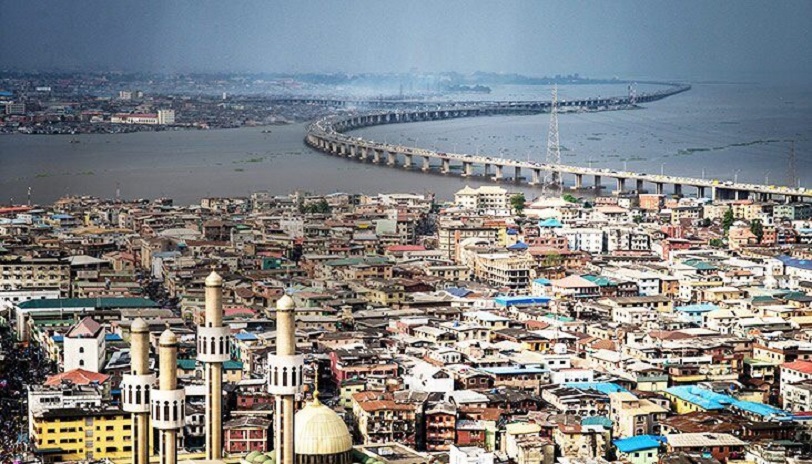
For many, Lagos remains a primary node in their portfolio matrix. The commercial capital’s mix of residential estates, commercial high-rises, and industrial land makes it a flexible yet familiar terrain. More importantly, it serves a strategic purpose: anchoring wealth in a city whose property market, though cyclical, is backed by population momentum and urban expansion.
Emerging neighbourhoods such as Ibeju-Lekki, Sangotedo, and parts of Ikeja are drawing interest from investors seeking land banking opportunities or rental yields driven by demand for mixed-use developments. Lagos real estate listings highlight the breadth of available options, ranging from high-rise condos to gated duplexes—each representing a physical hedge in an increasingly intangible economy.
Dollarization via Miami: Strategic International Real Assets
Yet for investors with greater liquidity and international access, the pivot isn’t just away from Nigeria—it’s toward the dollar. Miami, with its dual appeal as both a financial hub and a lifestyle destination, is proving magnetic.
What makes Miami compelling isn’t just its luxury condos or beachfront appeal. It’s that U.S. real estate offers a dollar-denominated refuge from the naira’s fluctuations—serving as a practical vehicle for international diversification. Additionally, for families contemplating eventual relocation, education abroad, or second citizenship programmes, these purchases function as both lifestyle enablers and capital stabilizers.
According to trends tracked across urban housing markets, buyers from emerging economies—including Nigeria—are concentrating their purchases in areas with strong rental potential and limited inventory, ensuring asset appreciation over the medium term.
Beyond the Coasts: Asset Preservation in Middle America
Interestingly, a subset of Nigerian investors is eschewing high-profile cities altogether in favour of quieter, more affordable locations that offer consistent returns. Cities across the American Midwest, such as those in Iowa, have come under the radar—not because they are flashy, but because they are stable.
In North Iowa, for example, property values remain accessible, rental demand is steady due to regional employment centres, and ownership costs are comparatively low. For Nigerian investors seeking capital preservation over speculative upside, realty options in North Iowa are offering a compelling entry point into the U.S. housing market with reduced exposure to volatility.
What’s more, ownership in such secondary markets often comes with fewer regulatory frictions, easier financing structures, and lower ongoing tax burdens—all attractive attributes when managing foreign assets from afar.
Toronto’s Pipeline Approach: Building Equity into the Future
Canada, too, has found favour among Nigerian investors—but for a different reason. In Toronto, the appeal lies not just in what exists, but in what’s coming. The city’s pre-construction ecosystem allows investors to “reserve” property in future towers or communities years in advance, often with staggered payments and no immediate mortgage burden.
This model resonates with Nigerian buyers looking to hedge against inflation over the long term. By securing a property today at a fixed price—even if delivery is 3 to 5 years out—they effectively lock in value before inflationary pressure takes its toll.
Several upcoming residential projects in Toronto are offering buyers phased payment plans and forward-booking incentives—early-access investment opportunities that align with broader diversification strategies among Nigerians planning long-term capital deployment abroad.
Additionally, as Nigeria tightens capital controls, the gradual payment model allows capital to be moved abroad legally and incrementally, avoiding the shock of a lump-sum transfer or FX squeeze.
Strategic Asset Dispersion: Beyond Bricks and Mortar
This shift toward physical international assets isn’t merely about building wealth—it’s about preserving sovereignty over it. As trust in local financial systems ebbs and inflation eats into fixed-income earnings, the desire to hold assets in politically and economically stable jurisdictions has grown stronger.
Real estate, unlike equities or mutual funds, also offers non-financial benefits: immigration pathways, educational positioning, or even strategic relocation plans. These auxiliary gains are becoming part of the investment rationale, especially for Nigerians anticipating longer-term life transitions.
Conclusion: Real Estate as the New Reserve
In many ways, today’s Nigerian investor is not just seeking yield. They’re seeking resilience. They are de-risking against monetary policy shifts, diversifying across currency zones, and positioning assets in globally relevant geographies.
Domestic holdings in Lagos will likely remain foundational. But increasingly, they are being complemented—sometimes outweighed—by targeted investments in North America’s most resilient housing corridors. Whether through speculative future builds in Toronto, turnkey units in Miami, or quiet equity compounds in North Iowa, real estate is proving itself a globally portable store of value.
In a landscape where the rules of wealth preservation are being rewritten, owning a piece of the world—literally—may be the most strategic move of all.
General
Abuja Disco Transitions to Holdco Structure, Forms Two New Subsidiaries
By Adedapo Adesanya
Abuja Electricity Distribution Plc has announced its transition into a Holding Company structure, effectively breaking into two subsidiaries.
This is part of moves aimed at strengthening its capacity to operate effectively within Nigeria’s evolving electricity market and the newly decentralised regulatory environment.
In a statement, the Holdco said restructuring followed the enactment of the Electricity Act of 2023, which empowers state governments to establish independent electricity markets and regulatory commissions.
AEDC said it had realigned its corporate structure to enhance operational agility, improve governance, and support efficient service delivery across its franchise areas.
As part of the transformation, AEDC incorporated two new subsidiary companies — Niger Electricity Distribution Company and Kogi Electricity Distribution Company.
Prior to the new development, AEDC distributes electricity to the Federal Capital Territory (FCT) and parts of Niger, Kogi, and Nasarawa states.
As a result, the new subsidiaries will operate under the Niger State Electricity Regulatory Commission and the Kogi State Electricity Regulatory Commission, respectively, while remaining integral members of the wider AEDC Group.
It added that plans were underway to commence operations in Nasarawa State, with the transition process expected to begin soon.
The company also announced key executive appointments, naming Mr Sam Odekina as Chief Business Officer and Acting Managing Director of Niger Electricity Distribution Company, and Mr Desmond Eboh as Chief Business Officer and Acting Managing Director of Kogi Electricity Distribution Company.
The Managing Director/Chief Executive Officer of AEDC, Mr Chijioke Okwuokenye, said the HoldCo structure positions the company to respond to state-specific regulatory requirements while preserving the Group’s unified identity, shared values, and commitment to operational excellence and customer service.
According to him, all subsidiaries will operate as one integrated AEDC family, with uniform Conditions of Service for employees to ensure workforce stability and fairness.
“The HoldCo structure aligns perfectly with our goal to enhance operational efficiency and adapt to Nigeria’s evolving energy landscape while exploring new opportunities, driving growth, and contributing to Nigeria’s energy sector development,” Mr Okwuokenye said.
“We are committed to maintaining our high standards of service, innovation, and customer focus, even as we evolve into a new structure,” he added.
The company also noted that the recently executed Conditions of Service apply uniformly to all employees across the parent company and its subsidiaries, underscoring its commitment to workforce stability, fairness, and alignment during the transition.
AEDC also reaffirmed its commitment to supporting the development of sustainable, state-regulated electricity markets and setting benchmarks for efficiency, reliability, and customer experience across its operations.
General
FG Dismisses Northern Elders Claim of State-Owned Gold Refinery in Lagos
By Adedapo Adesanya
The federal government has dismissed claims by the Northern Elders Forum (NEF) that it violated the principle of federal character by siting a gold refinery in Lagos.
This was contained in a statement signed by Mr Segun Tomori, the Special Adviser on Media to the Minister of Solid Minerals Development, Mr Dele Alake, in Abuja.
The statement clarified that the refinery is a wholly private-sector initiative and not a federal government project, describing the allegation as entirely false and based on a misrepresentation of facts.
According to the statement, the proposed gold refinery is the initiative of Kian Smith, a 100 per cent privately owned mining company established to promote the development of Nigeria’s local gold industry through innovative practices.
The statement stressed that at no time did the Minister of Solid Minerals Development. announced the establishment or ownership of any gold refinery by the federal government in Lagos or any other part of the country.
It added that the minister was clear that the refinery is privately owned, noting that more gold refineries are also being developed in other parts of Nigeria by private investors.
It congratulated the founder and managing director of Kian Smith, Mrs Nere Emiko, describing the project as the result of years of perseverance, enterprise, and leadership.
The statement explained that the refinery aligns with the federal government’s value-addition policy, which discourages the export of raw minerals and promotes local processing and manufacturing.
It noted that the policy has attracted major investments, including lithium and rare-earth processing plants in Nasarawa State and Abuja, generating foreign capital inflow and thousands of jobs for Nigerians.
It expressed concern over what it described as a decline in the quality of the group’s interventions on national issues, questioning how the federal government can compel a private company to locate its business in any particular part of the country, noting that such decisions are based on operational and marketing strategies.
The statement reaffirmed the government’s commitment to creating an enabling environment for private-sector investment in the mining sector and called on the Northern Elders Forum to support national economic development efforts.
General
SERAP Sues Governors, Wike Over Security Votes Spending
By Adedapo Adesanya
The Socio-Economic Rights and Accountability Project (SERAP) has filed a lawsuit against Nigeria’s governors and the Minister of the Federal Capital Territory, Abuja (FCT), Mr Nyesom Wike, over their failure to account for security votes spending since May 29, 2023.
According to the organisation, the suit followed reports of the Benue massacre and well-documented ongoing cases of insecurity in several states and FCT, despite the over N400 billion budgeted yearly as ‘security votes.’ 10 governors reportedly budgeted about N140 billion as security votes in 2026.
In the suit number FHC/ABJ/CS/95/2026 filed last Friday at the Federal High Court in Abuja, SERAP is asking the court to “direct and compel the governors and Mr Wike to disclose the details of the spending of security votes by them since 29 May 2023 to date, which are intended to ensure the security of life and property of Nigerians.”
It asked the court to compel the governors and Mr Wike to provide detailed reports on the allocation and spending of security votes by their states and the FCT, including the information on implementation status and completion reports, and the plans, if any, for improving the security infrastructure in the states and FCT.
In the suit, SERAP is arguing that, “Nigerians ought to know in what manner public funds including security votes meant to ensure the security of life and property of Nigerians, are spent by the governors and FCT minister.”
It noted that escalating insecurity in several states and FCT is taking a devastating toll on socially and economically vulnerable Nigerians, driving up extreme poverty, intensifying hunger and leading to other grave human rights violations.
SERAP also noted that, “Citizens’ right to know promotes openness, transparency, and accountability that is in turn crucial for the country’s democratic order.”
The suit filed on behalf of SERAP by its lawyers Ms Oluwakemi Agunbiade, Mr Andrew Nwankwo, and Ms Valentina Adegoke, read in part: “There is a significant risk of embezzlement, misappropriation or diversion of public funds collected by the states and FCT as security votes.
“Despite the billions of naira yearly budgeted as security votes, many governors and FCT ministers are grossly failing to guarantee and ensure the security and welfare of the Nigerian people, contrary to section 14(2)(b) of the Nigerian Constitution.
“Directing the governors and FCT minister to account for security votes spending would serve to engage Nigerians in an honest conversation about the security problems and what the governors and minister are doing to respond to them.”
No date has been fixed for the hearing of the suit.
-
Feature/OPED6 years agoDavos was Different this year
-
Travel/Tourism9 years ago
Lagos Seals Western Lodge Hotel In Ikorodu
-
Showbiz3 years agoEstranged Lover Releases Videos of Empress Njamah Bathing
-
Banking8 years agoSort Codes of GTBank Branches in Nigeria
-
Economy3 years agoSubsidy Removal: CNG at N130 Per Litre Cheaper Than Petrol—IPMAN
-
Banking3 years agoFirst Bank Announces Planned Downtime
-
Banking3 years agoSort Codes of UBA Branches in Nigeria
-
Sports3 years agoHighest Paid Nigerian Footballer – How Much Do Nigerian Footballers Earn