Connect with us

General

UK Opens Africa’s Largest Visa Application Centre in Lagos

Published

on

UK Visa Application Centre Lagos

By Adedapo Adesanya

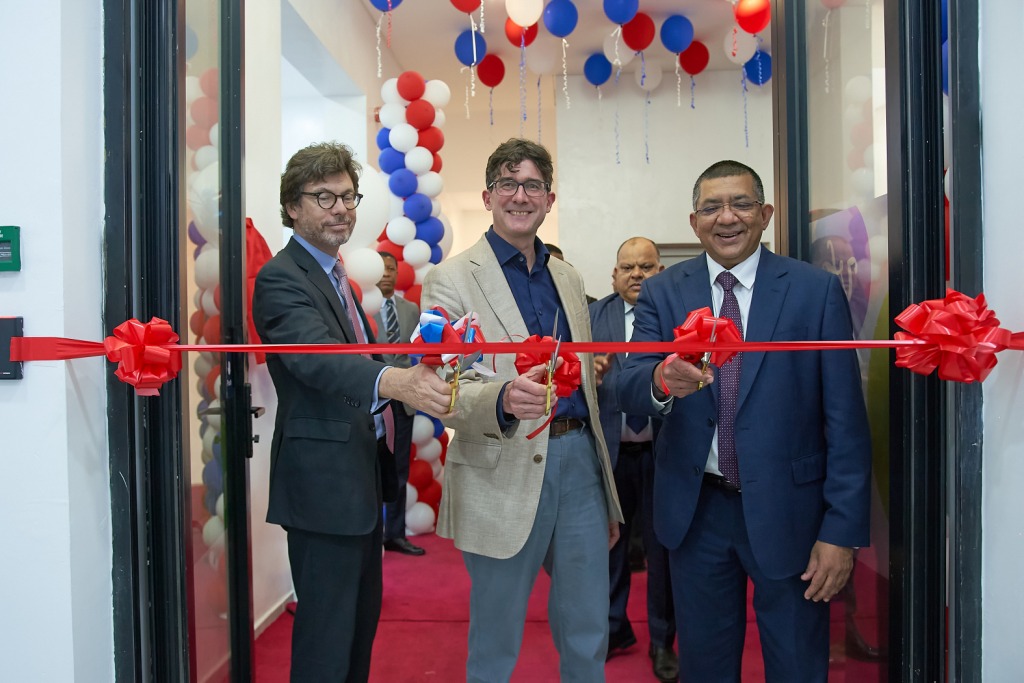
The United Kingdom has opened the biggest visa application centre in Africa in Lagos, Nigeria through the UK’s new commercial partner, VFS Global to ease the often burdensome process.

According to a statement by the UK Foreign, Commonwealth & Development Office (FCDO), residents of Nigeria travelling to the UK can now book appointments to submit their visa applications through VFS Global’s new state-of-the-art Visa Application Centres (VAC) located in Abuja, Ikeja (Lagos) and Victoria Island (Lagos) which have commenced operations since November 19.

The UK is a popular destination for travellers across Africa, with Nigeria being among the highest nationalities by volume for UK visit visas, accounting for 5 per cent of the global total. In the African region, VFS Global will provide Visa Application Centres for the UK in 31 countries.

Commenting at the launch of the new UK Visa Application Centre which is situated in Ikeja, Lagos, the British Deputy High Commissioner, Mr Jonny Baxter, said, “I am delighted to witness the opening of this, the largest visa application centre in Africa. Nigeria remains one of the UK’s most important partners, and we hope that VFS deliver ever-improving services for those applying for visas to the UK.”

The Director of Visa, Status and Information Services at UK Visas and Immigration (UKVI), Mr Marc Owen, said, “The opening of our new VAC in Ikeja marks an exciting milestone for UKVI and VFS Global in the provision of a world-class UK visa service here in Nigeria and elsewhere across Africa.

“In the year to June 2024, we processed more than 225k UK visas for Nigerian nationals across all categories and this new partnership demonstrates our continued commitment to ensuring our visa services are accessible, efficient and meet the needs of all applicants.”

Adding his input, the Head-Sub-Saharan Africa, VFS Global, Mr Alok Singhal added that, “We are excited to embark on this new journey with UK Visas and Immigration here in Nigeria. We have enjoyed a long-standing partnership with UK Visas and Immigration since 2003 and look forward to now bringing travellers from Nigeria our best-in-class services.”

According to the statement, UK visa customers can choose from optional services offered by VFS Global, to provide enhanced comfort and convenience. These include document upload assistance, Prime Time for application submission outside of business hours, SMS notifications, document checking service, and courier return of the passport once a decision has been made.

VFS Global’s Keep My Passport While Applying service allows customers to keep their passports once their application is submitted and biometrics have been enrolled. Customer will only need to re-submit their passport when a decision is reached.

Customers in Abuja can also submit their UK visa applications from the comfort and safety of their home, office, or any other preferred location with its On Demand Mobile Visa service.

In addition, their Premium Lounge service offers a personalised submission experience with dedicated staff members.

The UK government added a caveat that these services are completely optional and have no bearing on the processing timeline and outcomes of visa applications.

As a partner to UK Visas and Immigration since 2003, VFS Global offered visa services in 58 countries before the new contract and has now been awarded the contract to provide UK visa services in 142 countries worldwide.


Adedapo Adesanya is a journalist, polymath, and connoisseur of everything art. When he is not writing, he has his nose buried in one of the many books or articles he has bookmarked or simply listening to good music with a bottle of beer or wine. He supports the greatest club in the world, Manchester United F.C.

Click to comment

Leave a Reply

Your email address will not be published. Required fields are marked *

General

Senate Passes State Police Bill

Published

on

Senate Petroleum Industry Bill

By Aduragbemi Omiyale

The bill seeking to establish state police in Nigeria was on Wednesday, June 24, 2026, passed by the Senate during a plenary presided over by the Senate President, Mr Godswill Akpabio.

The piece of legislation was passed today after more than two-thirds of the lawmakers in the red chamber of the National Assembly voted in support via a manual voting process involving the raising of hands.

Before the passage at the plenary, the chairman of the Senate Committee on the Review of the Constitution, Mr Barau Jibrin, presented the panel’s report to his colleagues.

According to him, the bill will transform policing in the country and boost security, as it allows the sub-nationals to create their own policing system.

The bill provides for the Federal Police Service to be headed by the Inspector-General of Police, while the State Police Service will be led by a Commissioner of Police, who will be appointed by the governor of the state, subject to confirmation by the state’s House of Assembly.

To prevent the misuse of state police against political opponents or critics, ensuring that any action taken against such individuals or groups complies with due process and existing laws, the bill prohibits the Commissioner of Police of a state from arresting, detaining, investigating, or deploying force against any critic of the state governor, except in accordance with the law.

After the clauses of the bill were considered at the Committee of the Whole, the bill was passed and will be transmitted to the President for assent into law.

Continue Reading

General

Daystar Power Expands Nestlé Solar Partnership Across West Africa

Published

on

Daystar Power

By Adedapo Adesanya

Daystar Power Group has expanded its renewable energy partnership with Nestlé in West Africa, commissioning solar power systems with a combined capacity of 6.884 megawatts across four manufacturing facilities in Côte d’Ivoire, Ghana, and Senegal.

According to a statement, the deployments bring the total installed capacity across Nestlé’s sites to 6,884 kWp, nearly 7 megawatts, making it one of the largest commercial and industrial solar partnerships in the region.

The four sites, two in Abidjan, one in Tema, and one in Dakar, are all fully operational, with each system designed around the specific grid and operational profile of its location.

“Nearly 7 megawatts across four Nestlé facilities is a number we are proud of, but what it represents matters more than the figure itself. It means that one of the world’s most demanding manufacturers has tested our model, trusted it, and come back. Our job now is to keep earning that, across every market where industry needs energy it can count on,” Mr Yischai Beinisch, CEO, Daystar Power Group said in a statement.

The partnership began with a single commissioning and expanded to span three countries and four facilities. In Côte d’Ivoire, Daystar Power has delivered 3,447 kWp across two Abidjan sites. In Ghana, a 2,547 kWp system powers Nestlé’s Tema factory. In Senegal, an 890 kWp installation operates at the Dakar facility.

The company said each system is sized and configured to deliver measurable environmental and social impact, including reduced greenhouse gas emissions and improved energy resilience. The design is tailored to the operational and grid conditions at each location, ensuring reliable, clean energy access while supporting local development and aligning with Nestlé’s publicly stated net-zero commitments.

Adding his input, Mr Samer Chedid, CEO, Nestlé Central and West Africa Region, said the investment reflects its commitment to building a business that not only grows but does so responsibly.

“By advancing solar energy projects in Ghana, Côte d’Ivoire, and Senegal, we are embedding sustainability into our growth, reinforcing our role as a force for good, creating long-term value for communities, and ensuring that our footprint actively contributes to a cleaner, more resilient future,” he said.

Continue Reading

General

Nigeria Adopts New Security Framework to Safeguard Oil Assets

Published

on

oil assets

By Adedapo Adesanya

Nigerian Upstream Petroleum Regulatory Commission (NUPRC) and the Federal Ministry of Defence have agreed to deepen collaboration on the protection of critical oil and gas infrastructure through a new non-kinetic security framework designed to curb threats, strengthen community relations and sustain rising output.

The initiative comes as Nigeria recorded crude oil production of nearly 1.8 million barrels per day, one of the highest production levels in recent years, amid intensified efforts to combat crude oil theft, pipeline vandalism and other security challenges across the Niger Delta.

Speaking during a courtesy visit by a delegation from the Ministry of Defence to the Commission’s headquarters in Abuja, the chief executive of NUPRC, Mrs Oritsemeyiwa Eyesan, said the country’s recent production gains were directly linked to coordinated interventions involving security agencies and industry stakeholders.

“Today, we are benefiting from those efforts. Last month, we recorded production of nearly 1.8 million barrels per day throughout the month,” Mrs Eyesan said.

She noted that sustained investments in security operations, technology deployment and human capacity development had significantly improved production stability and operational efficiency in the upstream petroleum sector.

According to her, maintaining and expanding the gains has become critical as Nigeria seeks to increase crude oil output, attract fresh investments and maximise revenue generation from the petroleum industry.

“As we look to the future, we desire to grow production and must have assurances that security threats can be effectively managed. We can only achieve this through stronger collaboration with security agencies and industry stakeholders,” she stated.

Mrs Eyesan stressed that safeguarding oil and gas assets remains central to Nigeria’s energy security strategy and economic growth objectives, noting that production assurance has become a key requirement for investors considering new upstream projects.

She disclosed that the Commission was exploring wider deployment of advanced technologies, including drone surveillance systems, to improve monitoring of the country’s vast oil and gas infrastructure network and detect threats before they escalate into operational disruptions.

The NUPRC boss further revealed that the Commission would work closely with operators to refine and implement a new security framework, while providing leadership in stakeholder engagement and governance structures needed to ensure long-term sustainability.

The Minister of Defence, Mr Christopher Gwabin Musa, said the Ministry was introducing a non-kinetic security intervention model aimed at addressing the underlying causes of insecurity in oil-producing communities.

Rather than relying solely on military operations, he explained that the strategy would focus on community engagement, youth empowerment and social inclusion programmes to build lasting peace around critical energy infrastructure.

“One of the best ways to engage youths in oil-producing areas is through sports-based interventions,” Mr Musa stated.

He explained that the initiative would utilise sports development programmes to channel youthful energy into productive activities, reduce vulnerability to criminal networks and strengthen community ownership of critical national assets.

The Defence Minister, who was represented by one of his aides, added that the intervention would also include structured programmes for persons living with disabilities, creating broader opportunities for participation and economic inclusion in host communities.

According to him, the initiative aligns with the Host Community Development provisions of the Petroleum Industry Act (PIA) and is expected to strengthen relationships between operators and host communities while promoting sustainable development.

Continue Reading

Trending