Connect with us

General

UK Parliament Invites Danjuma to Speak on Killings in Nigeria

Published

on

By Dipo Olowookere

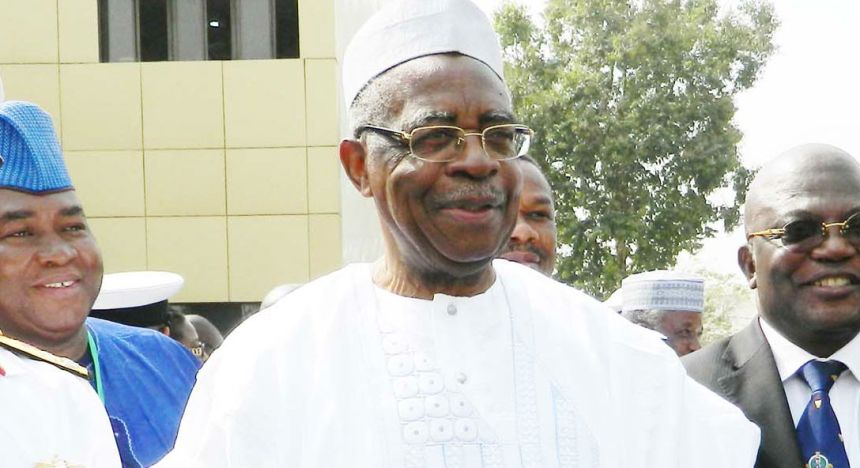
Come January 2019, former Minister of Defence, General Theophilus Danjuma (rtd), will be in the United Kingdom to honour an invitation to speak at the country’s parliament.

Mr Danjuma will address the UK parliament on the incessant killings in north-central part of Nigeria, especially between herdsmen and farmers.

Reports say the retired army general earlier scheduled to speak to select leaders of the British House of Lords on September 5, 2018 at the instance of two high ranking members of the parliament; David Alton and Caroline Cox, both life peers from Liverpool and Queensbury.

However, ThisDay said this was scuttled by foreign lobbyist allegedly hired by the Nigerian government, who felt rattled by the obvious stance of Mr Danjuma on the herdsmen/farmer clashes in the country.

But that Danjuma, with the help of some international organisations and former President Olusegun Obasanjo reignited their lobby, and would now be speaking to the entire members of the House of Lords next January.

It was revealed that the scope of Mr Danjuma’s address will no longer be limited to the herdsmen and farmers clashes, but expanded to include issues of gross human rights violations and targeted attacks of Christian minorities in the Northern region of the country.

Killings along communal and religious fault lines have become recurring decimal in Plateau and Benue states.

In March 24, 2018, Mr Danjuma said during the maiden convocation of the Taraba State University in Jalingo, that the Nigerian Army and the police are complicit in the deadly violence.

“The armed forces are not neutral. They collude with the armed bandits to kill people, kill Nigerians,” the retired General said. The military, however, denied the allegations but set up an investigative panel to look into the claims.

After nearly a month of investigations, the military said there was no truth in the allegations.

Some Nigerians had criticized the retired general for making such weighty allegations against the military without providing any shred of evidence.

According to reports, the Danjuma group, the Westminster Institute, Open Doors USA and other prominent leaders from North-central Nigeria have increased their lobby for action on the situation in the country.

Also billed to speak alongside the former Nigerian army chief was the Anglican Archbishop of Jos, Ben Kwashi.

The pressure on the House of Lords may have finally led to the rescheduling of the hearing on the insecurity in Africa’s largest democracy.

A spokesperson for Christian Solidarity Worldwide (CSW), which coordinated the event and circulated invitations for the postponed event had told a newspaper that the “event was postponed, which is why there have been no reports about it and no record of the event appears on the UK Parliament website.”


Dipo Olowookere is a journalist based in Nigeria that has passion for reporting business news stories. At his leisure time, he watches football and supports 3SC of Ibadan. Mr Olowookere can be reached via [email protected]

Click to comment

Leave a Reply

Your email address will not be published. Required fields are marked *

General

NAFDAC, NEPZA Deepen Collaboration on Pharmaceutical Regulation in Free Zones

Published

on

NAFDAC

By Adedapo Adesanya

The Nigeria Export Processing Zones Authority (NEPZA) and the National Agency for Food and Drug Administration and Control (NAFDAC) are strengthening joint oversight within Nigeria’s free trade zones.

The collaboration focuses on pharmaceutical and consumable products manufactured by enterprises operating in the zones.

The Director-General of NAFDAC, Mrs Mojisola Adeyeye, disclosed this during a visit to the Managing Director of NEPZA, Mr Olufemi Ogunyemi, at the authority’s headquarters in Abuja.

Mr Adeyeye said the visit was aimed at deepening collaboration and partnerships that would enable NAFDAC to effectively discharge its regulatory responsibilities within the free trade zones nationwide.

According to her, the agency remains committed to monitoring the importation, exportation, production, and distribution of pharmaceuticals, food products, cosmetics, and other regulated consumables within the zones.

“We must view this meeting as a responsibility we have to the country to protect citizens from fake drugs and consumables infiltrating our markets from known and unknown destinations,” she said.

The NAFDAC boss said the agency had consistently insisted on strict testing procedures and compliance with approved standards to guarantee quality control across regulated manufacturing and export industries.

She emphasised the strategic importance of the free trade zone scheme to Nigeria’s industrialisation drive and broader economic growth objectives, particularly in manufacturing and export promotion activities.

However, Mr Adeyeye said stronger monitoring mechanisms were necessary to ensure the safety, efficacy, and quality of products entering Nigeria’s customs territory from the free trade zones.

“NEPZA and NAFDAC can fix this misalignment by jointly insisting on compliance. We can close this gap through excellent facility management and improved inspection across production lines,” she said.

On his part, Mr Ogunyemi welcomed the collaboration, describing it as critical to addressing alleged irregularities associated with medical supplies and consumable products originating from enterprises operating within the free trade zones.

According to him, the free trade zone scheme, comprising 63 zones and more than 900 enterprises, remains a major gateway for industrial growth, investment attraction, and national economic development.

The NEPZA managing director, however, acknowledged that regulating operations within the zones still presented significant challenges requiring stronger inter-agency collaboration and improved enforcement mechanisms.

“We need a joint effort to address some of the irregularities. We will allow NAFDAC to perform its regulatory functions because the public’s health depends on it,” he said.

Mr Ogunyemi added that NEPZA remained committed to ensuring that free trade zones were not used as safe havens for illicit activities or the circulation of substandard products.

“We fully endorse this partnership and collaboration, which has the potential to enhance the scheme’s global compliance across all production and export activities for the benefit of the country,” he said.

The meeting also featured the confirmation of an eight-member technical committee to examine challenges affecting seamless regulatory operations between both agencies within the nation’s free trade zones.

Continue Reading

General

Court Upholds $100m Judgment Against Chinese Oil Firm in OPL 471 Dispute

Published

on

China National Petroleum Corporation

By Adedapo Adesanya

A Federal High Court sitting in Port Harcourt has reaffirmed a $100 million judgment against China National Petroleum Corporation (CNPC) in favour of Nigerian indigenous firm, Cutra International Limited, over a disputed Oil Prospecting Licence (OPL) 471.

In a judgment delivered on April 24, 2026, the court dismissed CNPC’s application seeking to overturn an earlier judgment entered on May 23, 2025, in Suit No. FHC/PH/CS/136/2022 between Cutra International Limited and CNPC.

The Chinese oil giant filed the application on October 28, 2025, asking the court to set aside the judgment, but the court held that there was no legal basis to revisit the matter.

The dispute arose from the ownership structure and equity participation in OPL 471, which was awarded by the federal government to CNPC and its Nigerian partner, Cutra International Limited, in 2006/2007.

Under the arrangement, Cutra held a 10 per cent equity interest in the oil block. However, the company alleged that CNPC unilaterally returned the licence to the Federal Government without consulting or obtaining its consent.

Aggrieved by the action, Cutra approached the court, seeking compensation for the loss of benefits and entitlements tied to the asset.

In its earlier judgment, the court ruled in favour of Cutra after finding that evidence presented by the Nigerian firm on the estimated value of the oil block was not challenged by CNPC.

The court noted that Cutra’s claim that the minimum yield from the OPL was valued at $5 billion remained uncontroverted during proceedings.

Relying on the evidence before it, the court awarded damages of $100 million against CNPC.

Dismissing CNPC’s attempt to reopen the case, the court held that it had become functus officio after delivering judgment on the matter.

According to the court, “when a Court takes a position on a matter in controversy before it, that Court becomes functus officio with respect to that matter in controversy, and the Court stands and remains bound by the decision.”

“It is equally the position of the law that where a trial Court in the course of the proceedings in a matter before it decides on a particular issue or question, it becomes functus officio to revisit that issue or question,” the court added.

The ruling is seen as a major legal victory for Cutra International Limited and a significant development in Nigeria’s commercial dispute resolution landscape involving foreign corporate entities.

Legal and industry observers say attention may now shift to the enforcement phase of the judgment, given the international dimensions of the dispute and the substantial financial implications of the court’s decision.

Continue Reading

General

Tegbe Denies Promising to Fix Nigeria’s Power Grid in Three Months

Published

on

Tegbe Senate screening

By Modupe Gbadeyanka

The Minister of Power designate, Mr Joseph Tegbe, has refuted reports making the rounds that he promised to resolve Nigeria’s power grid within three months.

It was claimed that Mr Tegbe gave this assurance when he appeared before the Senate for screening this week after his nomination by President Bola Tinubu.

In a statement on Friday by his spokesperson, Adeola A. Adelabu, the Minister-designate emphasised that he never promised to fix the national grid issue in 90 days.

One of the major challenges facing the country’s electricity sector is the frequent collapse of the grid. The country, blessed with more than 220 million people, generates less than 5,000MW of electricity.

The power grid has had to break down frequently, especially while Mr Tegbe’s predecessor, Mr Adebayo Adelabu, was in charge.

In the statement today, the new person chosen by the President to lead the power sector reform noted that his remarks at the upper chamber of the National Assembly were misrepresented.

It was stressed that at his Senate screening on May 6, 2026, Mr Tegbe made no such commitment, but stated unequivocally that the timelines were still being worked on and subject to diagnostics and stakeholder engagements.

While assuring that initial grid stabilisation efforts would commence within the first 100 days, he made clear that structural reforms, particularly in sector credibility, gas supply, and metering, might take about a year.

“My promise to this chamber and to Nigeria is that Nigerians will see visible improvement in the sector,” Mr Tegbe said, pledging to stabilise the national grid, modernise infrastructure, enhance commercial frameworks, and enforce accountability across the entire electricity value chain.

On tariff reforms, he promised to protect vulnerable households while balancing sustainability, investor confidence, and broader sector efficiency.

The Minister-designate said he remains open to constructive media engagement and welcomes requests for clarification where necessary, recognising the role of the media as partners in nation-building, especially in fostering accurate public understanding of the imminent reforms in the power sector.

Continue Reading

Trending