Connect with us

General

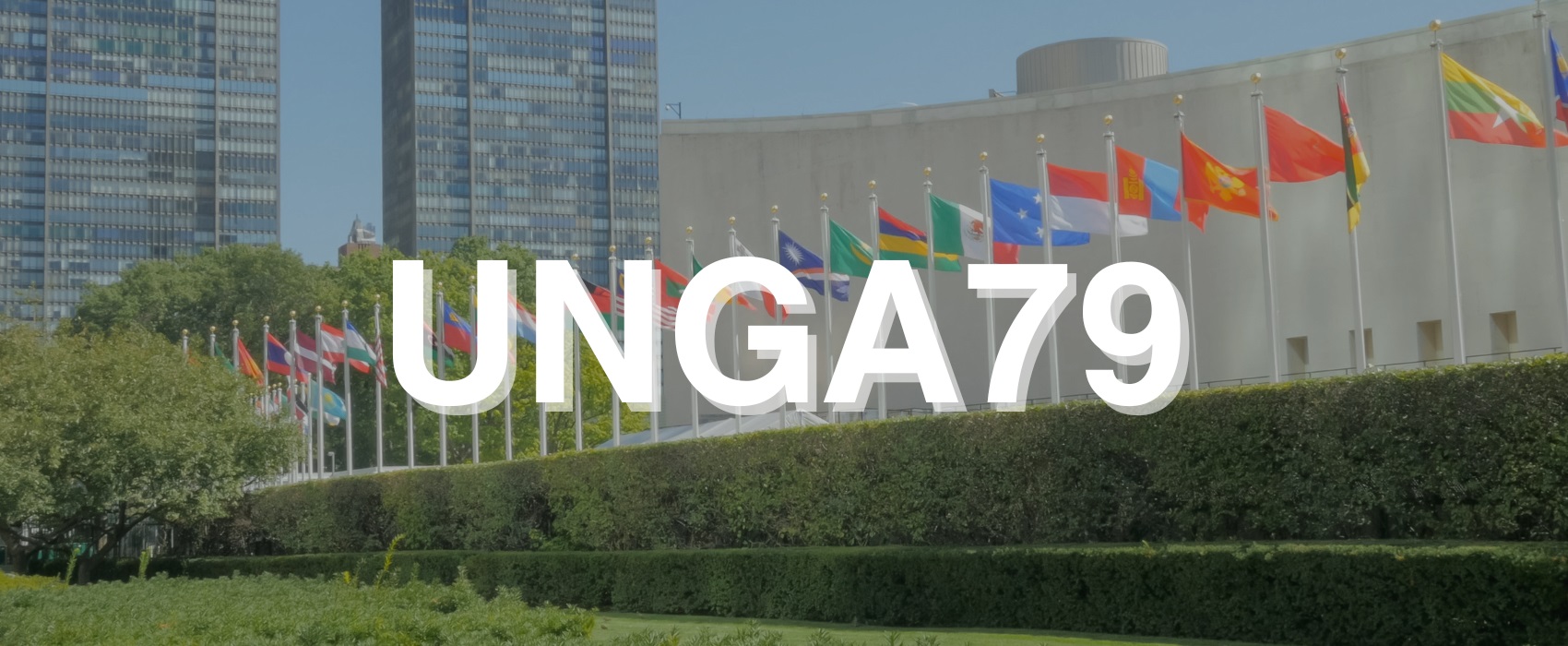
UNGA 79: Nigeria Seeks Debt Forgiveness

Published

on

UNGA 79 Debt Forgiveness

By Adedapo Adesanya

Nigeria is seeking debt forgiveness from creditors and multilateral financial institutions for herself and other developing countries.

This was the call put forward by the Vice President, Mr Kashim Shettima, representing his principal President Bola Tinubu at the ongoing 79th Session of the United Nations General Assembly (UNGA) at the UN headquarters in New York, United States.

He asked the United Nations to prioritise the swelling debt hampering development for developing countries.

The Vice President asked for debt relief to enable developing countries to focus on developmental projects for their citizens.

“We must ensure that any reform of the international financial system includes comprehensive debt relief measures, to enable sustainable financing for development. Countries of the global South cannot make meaningful economic progress without special concessions and a review of their current debt burden,” he said in a statement signed by the Senior Special Assistant to The President on Media & Communications (Office of The Vice President), Mr Stanley Nkwocha.

He called on world leaders to recommit themselves to multilateralism by deepening relations among member states of the UN in line with the principles of inclusivity, equality and cooperation.

He said this is the surest guarantee of global action against existential challenges faced by the international community.

Mr Shettima decried the steep descent to singularity and nationalism which, according to him, are undermining the quest for peaceful and collective resolution of global challenges such as terrorism, climate change, poverty, food crises, hyper-inflation, nuclear proliferation and grinding debt burden, among others.

He reminded the world leaders that the United Nations stands for multilateralism which represents inclusiveness, anchored on the tripod of peace, sustainable development and human rights.

The VP also expressed worry about the main objectives of the UN and how it could sustain the global body’s relevance and resilience, noting that the pillars of the organisation are at risk of being broken against the principles of inclusivity, equality and cooperation which it stands for.

“Today, these pillars of our organisation are threatened. They risk being broken by the relentless pursuit of individual national priorities rather than the collective needs of the nations that are assembled here today.

“While commitment to multilateralism offers us the surest guarantee of global action to address the existential challenges we face, singularity and nationalism are undermining the aspirations towards the peaceful and collective resolution of such challenges.

“From last year’s summit, and indeed from previous years, we have carried over the numerous challenges of terrorism, armed conflict, inequality, poverty, racial discrimination, human rights abuses, food crises, hunger, irregular migration, piracy, global pandemics, hyper-inflation, nuclear proliferation, grinding debt burden, climate change, and a host of other vexations.

“The continued manifestation of these challenges testifies to our failings rather than to any lofty achievements on our part. Billions of dollars are being committed to the prosecution of wars and the fanning of the embers of conflict.”

Echoing President Tinubu, he also lamented what he described as the return of unconstitutional changes of government and forceful military coups in some African countries.

He said these coups attest to how fragile democracy could become when it is not supported by economic development and sustained peace and security.

This, he said, should be of utmost concern in deliberations at the high-level segments of the 79th Session of the UN General Assembly, as the forceful changes of government have led to “the impatience in cities and villages at the sometimes slow and grinding turn of the wheel of democracy.

“Our people need employment. They need decent livelihoods. They desire good and affordable education and healthcare for their children and families. They need to live in healthy, safe and secure environments. They need hope and they need opportunity,” he added.


Adedapo Adesanya is a journalist, polymath, and connoisseur of everything art. When he is not writing, he has his nose buried in one of the many books or articles he has bookmarked or simply listening to good music with a bottle of beer or wine. He supports the greatest club in the world, Manchester United F.C.

Click to comment

Leave a Reply

Your email address will not be published. Required fields are marked *

General

2027 Lagos Guber: Sanwo-Olu Endorses Deputy Obafemi Hamzat

Published

on

sanwo olu hamzat

By Adedapo Adesanya

The Governor of Lagos State, Mr Babajide Sanwo-Olu, has endorsed his deputy, Mr Obafemi Hamzat, as his preferred candidate for the 2027 governorship election, under the banner of the All Progressives Congress (APC).

Mr Hamzat on Monday declared his intention to run for governor during a closed-door meeting at Lagos House, Marina, attended by members of the State Executive Council, party leaders and members of the Governor’s Advisory Council.

Among those present were former Minister of State for Defence, Mr Musiliu Obanikoro, and former senator, Mr Ganiyu Solomon.

Mr Sanwo-Olu described the endorsement as a consensus decision reached by stakeholders, saying his deputy possesses the experience and competence to lead the state.

“We just received Mr Deputy, who had come with a very powerful delegation of our leaders in the state to inform us of his intention to contest for the seat of the governorship position of the state,” the governor said.

“It was unanimous with all of us to say that Mr Deputy Governor is a man who is fit and well-prepared for this job. He is a man who knows where all the rooms in the house are,” he added.

The governor cited Mr Hamzat’s record in office and their working relationship over the past seven years as reasons for his support, describing him as loyal, committed and prepared for leadership.

“This is a deputy governor that is worth a governor from day one; this is a man that has been built for this job, and we believe that he deserves to be given a chance to go and run this state,” he emphasised.

Mr Sanwo-Olu also linked the political development to President Bola Tinubu’s longstanding influence in Lagos politics.

“We thank our father, our leader, Mr President, who saw the vision… that long run is what is already being manifested here today,” he noted.

He characterised the meeting as a family-style consultation involving party stakeholders and government officials, saying there was broad agreement in support of Mr Hamzat’s aspiration.

“It’s been a very warm family meeting, and at the end of the day, it was unanimous that Mr Deputy Governor is fit, ready, well baked… for this job,” he added.

The endorsement comes more than a year before party primaries are expected. However, political analysts say it suggests early alignment for the ruling party in the commercial capital.

Mr Hamzat is a former Commissioner for Works and Infrastructure in the state and a two-term deputy governor.

Continue Reading

General

NECA Urges Stakeholders to Strengthen Psychosocial Work Environments for Sustainable Growth

Published

on

Adewale Oyerinde

By Modupe Gbadeyanka

Employers, policymakers, and other key stakeholders have been urged to intensify efforts toward developing and sustaining healthy psychosocial work environments as a critical pathway to improved productivity, employee well-being, and organisational resilience.

This call was made by the Nigeria Employers’ Consultative Association (NECA) in commemoration of the 2026 World Day for Safety and Health at Work, themed Good Psychosocial Working Environments: A Pathway to Thriving Workers and Strong Organisations.

The Director General of NECA, Mr Adewale-Smatt Oyerinde, noted that this year’s theme highlights the growing importance of mental and emotional well-being in the workplace and reinforces the need for a more holistic approach to occupational safety and health.

He further stated that while progress has been made in improving workplace practices, there is a need for sustained and collective action to further strengthen psychosocial conditions in line with evolving global standards, including guidance from the International Labour Organisation (ILO).

“Across sectors, there is increasing recognition that workplace wellbeing extends beyond physical safety. A healthy psychosocial work environment where employees feel valued, supported, and able to perform optimally is essential for organisational effectiveness and long-term sustainability,” the DG said.

He emphasised that psychosocial wellbeing is influenced by how work is structured, managed, and experienced, and encouraged stakeholders to adopt intentional strategies that promote positive work environments. These include clear job roles, manageable workloads, supportive leadership, open communication, and policies that promote work-life balance and inclusion.

“Creating healthy psychosocial work environments requires deliberate and continuous effort. Employers, in particular, play a pivotal role by embedding supportive systems and fostering workplace cultures rooted in trust, respect, and fairness,” he added.

Mr Oyerinde also underscored the importance of strengthening institutional frameworks and workplace practices that support employee well-being, including access to counselling services, employee engagement mechanisms, and transparent organisational policies.

He further referenced the NSITF–NECA Safe Workplace Intervention Project (SWIP) as a practical demonstration of NECA’s commitment to advancing workplace safety through proactive and preventive approaches. The initiative, implemented in collaboration with the Nigeria Social Insurance Trust Fund (NSITF), evolved from the Employees’ Compensation Scheme.

“While the Employees’ Compensation Scheme provides support in cases of workplace incidents, NECA continues to emphasise prevention as the most effective approach to workplace safety. This includes expanding the scope of safety initiatives to address psychosocial risks alongside physical hazards,” he stated.

Through SWIP, NECA, and NSITF, the organisations have supported organisations in strengthening occupational safety and health systems, conducted risk assessments, facilitated stakeholder engagement, and recognised organisations demonstrating strong commitment to safety standards.

Looking ahead, NECA urged all stakeholders to integrate psychosocial risk management into existing workplace safety frameworks, ensuring a more comprehensive and sustainable approach to employee well-being.

As part of activities marking this year’s commemoration, NECA will host a Knowledge Sharing Session on April 30, 2026, themed: “From Compliance to Commitment: Building Sustainable Safety Cultures at Work.” The session will provide a platform for stakeholders to share insights, exchange best practices, and reinforce collective commitment to safer and healthier workplaces.

NECA therefore calls on Employers, Government Institutions, and Social Partners to continue working collaboratively to build work environments that not only drive productivity but also support the dignity, well-being, and full potential of every worker.

Continue Reading

General

Nigeria Targets Housing Gap with Technology-Led China Partnership

Published

on

housing gap

By Adedapo Adesanya

The federal government is advancing a partnership with China aimed at accelerating affordable housing delivery and closing Nigeria’s widening housing gap through technology-driven and scalable solutions.

This followed a technical study tour to Guangzhou led by the director general and global liaison of the Nigeria-China Strategic Partnership, Mr Joseph Tegbe, alongside a delegation from Family Homes Funds Limited, the office stated in a statement on Monday.

According to the agency, the delegation included the managing director, Mr Abdul Mutallab Mukhtar, and the executive director of Operations, Mr Emeka Henry Inegbu.

The engagement focused on unlocking strategic partnerships to integrate modular and prefabricated housing technologies into Nigeria’s construction ecosystem—an approach expected to significantly reduce building costs, shorten delivery timelines, and improve quality at scale.

With Nigeria’s housing deficit estimated in the millions, the federal government is increasingly prioritising industrialised construction methods and international collaboration to drive sustainable housing delivery.

Discussions also explored potential partnerships with leading engineering, procurement, and construction (EPC) firms to strengthen execution capacity for large-scale social housing projects.

The delegation also engaged prospective financing partners to mobilise long-term capital required to fund affordable housing initiatives and expand access for low- and middle-income earners.

The agency said the meetings were facilitated by Joerno Conceptions Limited and the E-Link Group in China. The engagements were further strengthened through the cooperation of Zou Gang, the executive deputy director of the China-Africa Economic and Trade Enterprises Working Committee, underscoring the depth of institutional collaboration supporting the initiative.

The firm noted that the move signals a shift toward results-oriented bilateral engagement, where technical expertise, capital mobilisation, and policy alignment converge to deliver measurable outcomes.

“By leveraging China’s advanced construction capabilities to meet Nigeria’s urgent housing needs, the partnership is positioned not only to expand access to affordable homes but also to stimulate job creation, strengthen local value chains, and enhance urban resilience,” it said.

Continue Reading

Trending