General
VIO Permanently Banned from Lagos Roads—Ambode

By Modupe Gbadeyanka
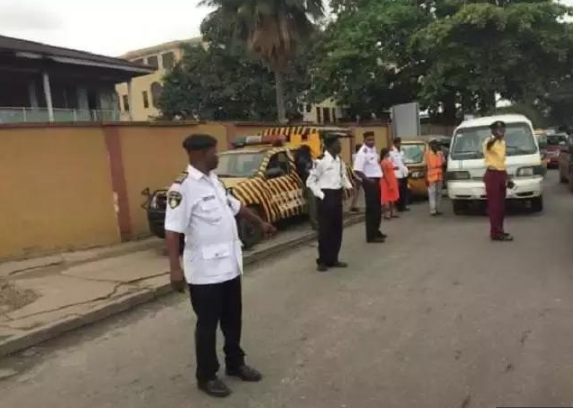
Governor Akinwunmi Ambode of Lagos State on Tuesday said his administration has permanently banned Vehicle Inspection Officers (VIO) from roads in the state.
Mr Ambode explained that his decision to ban the agency was in line with his administration’s resolve to ensure free flow of traffic across the state, noting that activities of VIO were contributing to traffic congestion on Lagos roads.
Speaking at the commissioning of pedestrian bridges, laybys and slip road at Ojodu Berger, the “Distinguished ladies and gentlemen, let me use this opportunity to reiterate that Vehicle Inspection Officers (VIO) have been asked to stay off our roads permanently,” he said.
The Governor disclosed that in the alternative, the state government would employ technology to track and monitor vehicle registration and MOT certifications and de-emphasise impoundment of vehicles on the roads.
Speaking on the interventions in Ojodu Berger, Governor Ambode said his administration at inception, identified the axis as one of the major traffic flashpoints that required urgent attention, adding that the decision was informed by the strategic importance of this axis being a major gateway into the state.
“What we set out to achieve with this project was to ensure smooth flow of traffic along the express, safeguard the lives of our people who had to run across the express and project the image of a truly global city to our visitors.
“Today, we are delighted that we have not only succeeded in transforming the landscape of this axis but with the slip road, lay bys and pedestrian bridge, we have given a new and pleasant experience to all entering and exiting our State.
“This project is the product of our innovative team of engineers, architects and town planners who have worked hard to create an innovative solution to tackle the challenges of this axis. I say a big thank you to the staff of the Lagos State Ministry of Works and the contractors – CCECC Nigeria Limited for a job well done,” he said.
To improve on the project, Governor Ambode said a food court would be built where people can relax before climbing the pedestrian bridge, as well as an interstate bus terminal within the Ojodu Berger axis for buses coming from outside Lagos to drop and load passengers, while intercity transportation system would move commuters within the city.
Besides, the Governor assured that his traffic interventions would not only stop at the Ojodu Berger axis, but would be an ongoing process to create solutions to traffic congestion in every part of the State.
“If your neighbourhood or community is experiencing traffic challenges, be rest assured that we will soon be there. We will always ensure that promises made are promises kept. We will continue to rely on the support of all segments of the population for regular tax payments, obeying the rule of law and protection of public infrastructure. That is the only way we can progress and achieve our goal of being one of the world’s top centres for business, entertainment and leisure,” he said.
While alluding to the fact that the state has lived up to its reputation as a land of possibilities, Governor Ambode also expressed confidence that the future prospects of the State was promising and that the journey of the next fifty years has commenced on a very sound and solid footing.
Earlier, in his opening remarks, the State’s Commissioner for Waterfront Infrastructure Development, Engr. Adebowale Akinsanya said the project was conceived by the State Government as a response to the yearnings of the people of Ojodu Berger Community for an improved, efficient and grid lock free road network, as well as the need to preserve the sanctity of life of Lagosians who hitherto were endangered by the need to cross the ever-busy Lagos-Ibadan Expressway.
Mr Akinsanya, who is also overseeing the Ministry of Works and Infrastructure, gave the scope of the project to include 98m pedestrian bridges with illumination, 150m length lay-bys on both sides of the expressway, 500m length of retaining wall with varying height from 3.5m to 7m and two multi-by bus park/bus lay-bys on Ogunnusi road with public convenience.
Other scope of the project included 650m slip road connecting traffic outward the expressway to Omole/Olowora Junction, 700m Ogunnusi/Wakatiadura dual road from Kosoko road junction to the expressway, 250m PWC Road to the expressway, street lighting on all the roads and multi-bay bus parks, signalization of all junctions, pedestrian walkway and drainage infrastructure, among others.
General
Senate Passes State Police Bill
By Aduragbemi Omiyale
The bill seeking to establish state police in Nigeria was on Wednesday, June 24, 2026, passed by the Senate during a plenary presided over by the Senate President, Mr Godswill Akpabio.
The piece of legislation was passed today after more than two-thirds of the lawmakers in the red chamber of the National Assembly voted in support via a manual voting process involving the raising of hands.
Before the passage at the plenary, the chairman of the Senate Committee on the Review of the Constitution, Mr Barau Jibrin, presented the panel’s report to his colleagues.
According to him, the bill will transform policing in the country and boost security, as it allows the sub-nationals to create their own policing system.
The bill provides for the Federal Police Service to be headed by the Inspector-General of Police, while the State Police Service will be led by a Commissioner of Police, who will be appointed by the governor of the state, subject to confirmation by the state’s House of Assembly.
To prevent the misuse of state police against political opponents or critics, ensuring that any action taken against such individuals or groups complies with due process and existing laws, the bill prohibits the Commissioner of Police of a state from arresting, detaining, investigating, or deploying force against any critic of the state governor, except in accordance with the law.
After the clauses of the bill were considered at the Committee of the Whole, the bill was passed and will be transmitted to the President for assent into law.
General
Daystar Power Expands Nestlé Solar Partnership Across West Africa
By Adedapo Adesanya
Daystar Power Group has expanded its renewable energy partnership with Nestlé in West Africa, commissioning solar power systems with a combined capacity of 6.884 megawatts across four manufacturing facilities in Côte d’Ivoire, Ghana, and Senegal.
According to a statement, the deployments bring the total installed capacity across Nestlé’s sites to 6,884 kWp, nearly 7 megawatts, making it one of the largest commercial and industrial solar partnerships in the region.
The four sites, two in Abidjan, one in Tema, and one in Dakar, are all fully operational, with each system designed around the specific grid and operational profile of its location.
“Nearly 7 megawatts across four Nestlé facilities is a number we are proud of, but what it represents matters more than the figure itself. It means that one of the world’s most demanding manufacturers has tested our model, trusted it, and come back. Our job now is to keep earning that, across every market where industry needs energy it can count on,” Mr Yischai Beinisch, CEO, Daystar Power Group said in a statement.
The partnership began with a single commissioning and expanded to span three countries and four facilities. In Côte d’Ivoire, Daystar Power has delivered 3,447 kWp across two Abidjan sites. In Ghana, a 2,547 kWp system powers Nestlé’s Tema factory. In Senegal, an 890 kWp installation operates at the Dakar facility.
The company said each system is sized and configured to deliver measurable environmental and social impact, including reduced greenhouse gas emissions and improved energy resilience. The design is tailored to the operational and grid conditions at each location, ensuring reliable, clean energy access while supporting local development and aligning with Nestlé’s publicly stated net-zero commitments.
Adding his input, Mr Samer Chedid, CEO, Nestlé Central and West Africa Region, said the investment reflects its commitment to building a business that not only grows but does so responsibly.
“By advancing solar energy projects in Ghana, Côte d’Ivoire, and Senegal, we are embedding sustainability into our growth, reinforcing our role as a force for good, creating long-term value for communities, and ensuring that our footprint actively contributes to a cleaner, more resilient future,” he said.
General
Nigeria Adopts New Security Framework to Safeguard Oil Assets
By Adedapo Adesanya
Nigerian Upstream Petroleum Regulatory Commission (NUPRC) and the Federal Ministry of Defence have agreed to deepen collaboration on the protection of critical oil and gas infrastructure through a new non-kinetic security framework designed to curb threats, strengthen community relations and sustain rising output.
The initiative comes as Nigeria recorded crude oil production of nearly 1.8 million barrels per day, one of the highest production levels in recent years, amid intensified efforts to combat crude oil theft, pipeline vandalism and other security challenges across the Niger Delta.
Speaking during a courtesy visit by a delegation from the Ministry of Defence to the Commission’s headquarters in Abuja, the chief executive of NUPRC, Mrs Oritsemeyiwa Eyesan, said the country’s recent production gains were directly linked to coordinated interventions involving security agencies and industry stakeholders.
“Today, we are benefiting from those efforts. Last month, we recorded production of nearly 1.8 million barrels per day throughout the month,” Mrs Eyesan said.
She noted that sustained investments in security operations, technology deployment and human capacity development had significantly improved production stability and operational efficiency in the upstream petroleum sector.
According to her, maintaining and expanding the gains has become critical as Nigeria seeks to increase crude oil output, attract fresh investments and maximise revenue generation from the petroleum industry.
“As we look to the future, we desire to grow production and must have assurances that security threats can be effectively managed. We can only achieve this through stronger collaboration with security agencies and industry stakeholders,” she stated.
Mrs Eyesan stressed that safeguarding oil and gas assets remains central to Nigeria’s energy security strategy and economic growth objectives, noting that production assurance has become a key requirement for investors considering new upstream projects.
She disclosed that the Commission was exploring wider deployment of advanced technologies, including drone surveillance systems, to improve monitoring of the country’s vast oil and gas infrastructure network and detect threats before they escalate into operational disruptions.
The NUPRC boss further revealed that the Commission would work closely with operators to refine and implement a new security framework, while providing leadership in stakeholder engagement and governance structures needed to ensure long-term sustainability.
The Minister of Defence, Mr Christopher Gwabin Musa, said the Ministry was introducing a non-kinetic security intervention model aimed at addressing the underlying causes of insecurity in oil-producing communities.
Rather than relying solely on military operations, he explained that the strategy would focus on community engagement, youth empowerment and social inclusion programmes to build lasting peace around critical energy infrastructure.
“One of the best ways to engage youths in oil-producing areas is through sports-based interventions,” Mr Musa stated.
He explained that the initiative would utilise sports development programmes to channel youthful energy into productive activities, reduce vulnerability to criminal networks and strengthen community ownership of critical national assets.
The Defence Minister, who was represented by one of his aides, added that the intervention would also include structured programmes for persons living with disabilities, creating broader opportunities for participation and economic inclusion in host communities.
According to him, the initiative aligns with the Host Community Development provisions of the Petroleum Industry Act (PIA) and is expected to strengthen relationships between operators and host communities while promoting sustainable development.
-
Feature/OPED6 years agoDavos was Different this year
-
Travel/Tourism10 years ago
Lagos Seals Western Lodge Hotel In Ikorodu
-
Showbiz3 years agoEstranged Lover Releases Videos of Empress Njamah Bathing
-
Banking8 years agoSort Codes of GTBank Branches in Nigeria
-
Economy3 years agoSubsidy Removal: CNG at N130 Per Litre Cheaper Than Petrol—IPMAN
-
Banking3 years agoSort Codes of UBA Branches in Nigeria
-
Banking3 years agoFirst Bank Announces Planned Downtime
-
Sports3 years agoHighest Paid Nigerian Footballer – How Much Do Nigerian Footballers Earn