
General
We Never Spent N2trn on Social Investment Programme—Presidency

By Modupe Gbadeyanka
The presidency has reacted to claims that the sum of N2 trillion has been spent on the National Social Investment Programmes by the administration of President Muhammadu Buhari since 2016.
While reacting to comments attributed to the National Assembly leadership that the scheme has been a failure, the Special Adviser to the President on Social Investments, Mrs Maryam Uwais, stated that only about N619.1 billion, constituting 36.4 percent of the total appropriation of N1.7 trillion approved by the NASS has been spent so far.
The Senate President, Mr Ahmad Lawan, and Speaker of the House of Representatives, Mr Femi Gbajabiamila, had said the programme has been a failure and scam.
But Mr Uwais disagreed with them, saying funds have been utilised transparently especially before it was moved in October 2019 from Office of the Vice President to the Ministry of Humanitarian Affairs, Disaster Management and Social Development.
Reproduced below is her full response:
My attention has been drawn to the online report of the Nation newspaper of 7th April 2020, with the above caption. Indeed, several other online publications carried similar stories, alleging that the National Social Investment Programmes (NSIPs), as supervised under the Office of the Vice President, were a ‘scam’. Given the gravity and implications of the narrative conveyed, as well as the caliber of persons involved, it has become necessary to clarify the issues in the public domain.
1.That the National Social Investment Programme has gulped over N2 trillion since 2016, when the fund was created. UNTRUE
- a) Although the total appropriation by the National Assembly (NASS) from inception, for the 4 NSIPs, is N1.7 trillion, the actual funds released for the NSIPs between January 2016 and October 2019 (when the NSIPs were handed over to the Ministry of Humanitarian Affairs, Disaster Management and Social Development), amounted to N619.1 billion, constituting 36.4% of the total appropriation from the NASS.
- b) The monies released for the N-SIPs can be further broken down into 03% (2016); 35% in 2017; 43.5% in 2018 and 57.8% (as at Sept 2019) of the N500b in 2016 and N400b appropriated for the subsequent years. It should be noted that for 2017 to 2020, the sum of N100b was appropriated specifically for the National Housing Fund hosted by the Federal Ministry of Finance. These releases covered operational activities and payments to 13,363,680 beneficiaries across all the 4 NSIPs, all of whom can all be verified either through their BVN numbers or their unique numbers generated by the National Social Register, those identities having been generated for the poorest of the poor who do not own bank accounts for sundry reasons.
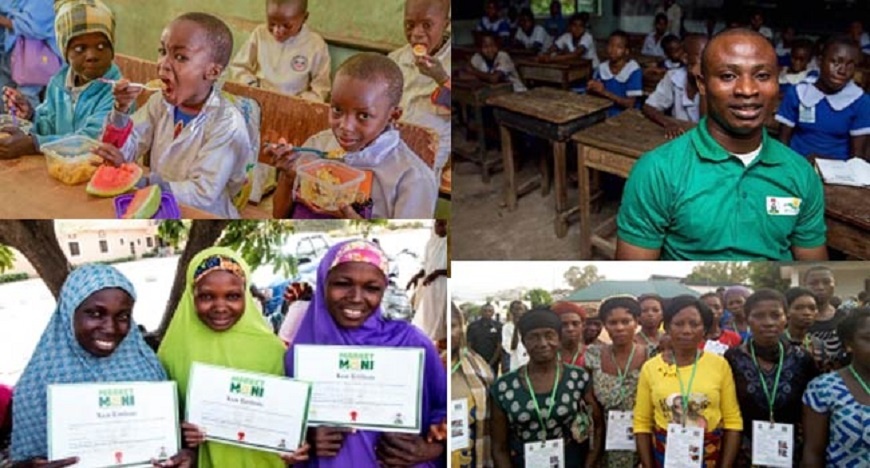
- c) As at September 2019, the funds had been expended as follows, on the: Job Creation programme (549,500 N-Power graduates and non-graduates and 7 Technology Hubs); National Home Grown School Feeding Programme (in 33 States, 9,963,762 pupils to 107,862 cooks in 54,952 primary schools); the National Cash Transfer Programme (including the development of the National Social Register by the National Social Safety Net Coordination Office) 1,491,296 poor and vulnerable households comprising 6,056,872 individuals in 33 States and 620,947 cash transfer beneficiaries; and the Government Enterprise and Empowerment Programme (managed by the Bank of Industry); a total of 2,279,380 TraderMoni, MarketMoni and FarmerMoni beneficiaries.
2.That as part of the conditions for poor and vulnerable beneficiaries to be engaged, they are made to apply online, through the internet and they require a BVN for payment. UNTRUE
a)The National Cash Transfer Programme derives all the cash transfer beneficiaries from a National Social Register (NSR), comprising State Social Registers that are developed and hosted by the State Ministries of Panning of each State. The process for objective identification of poor and vulnerable households is as provided in the Financing Agreement (F.A) signed between Nigeria and the World Bank, for which purpose the World Bank IDA Credit and the recovered funds from the Abacha family are being utlised.
The process involves a poverty mapping of the LGAs in each State, community mobilization, targeting and identification supported by trained enumerators at State and LGA levels, after which each of the households identified by the communities is visited and data collated, which information includes fields such as the size of household, age, gender, persons with disability (if any), assets, vocation of head of household, educational qualifications (if any), dwelling house conditions, etc.
Finally, all the data collated is subjected to a proxy means testing formula to determine those who merit the grants and the accompanying training. Even though each State hosts its own information, all of the data is hosted at the National level as the National Social Register. As at March 31st 2020, the NSR comprised 11,045,537 individuals from 2,644,495 households, collated from 35 States, 453 LGAs, 47,698 communities. Each and every beneficiary has a generated unique number and can be tracked.
- b) Furthermore, payment service providers have been selected in an open procurement process to pay the cash beneficiaries at their locations, as many of them reside in communities where there is a dearth of banking infrastructure. Even though the majority of beneficiaries are not financially literate, the National Social Investment Office (NSIO, then under the Office of the Vice President) commenced the pilot exercise of payment of beneficiaries in 6 States through microfinance banks in September 2019, with a 93% success rate. The exercise was preparatory to full digitization, especially with the impending cashless policy in March 2020.
- c) It is also pertinent to mention that the National Economic Summit Group, (working with Accenture and the Busara Centre for Behavioral Sciences) formed the Policy Intervention Unit for the NSIO. Furthermore, in addition to the World Bank’s strict auditing responsibilities, the African Network of Environmental and Economic Justice has provided over 700 monitors across all the LGAs where the NSIP beneficiaries exist. The link to the Report is to be downloaded at: https://aneej.org/wp-content/uploads/2019/10/Mantra-Field-Report-final-compressed.pdf. Indeed, the ICPC, EFCC & the DSS were also invited to monitor the process to protect the beneficiaries, after they receive the benefits in the field.
- d) It is only in respect of the Job Creation programme that applications are made online. That particular programme was initiated for youth who consist of graduates and non-graduates, as with JAMB candidates who continue to apply for their own admission, online. Indeed, all the LGAs around the country currently have N-Power beneficiaries serving in sundry capacities. The utilization of the BVN for N-Power beneficiary payment is also as a means of identity (since the NIN number can be generated from the BVN) and to facilitate the tracking of payments and further ensure accountability.
- e) The identities of the cash transfer beneficiaries are protected by law (the FOI Act), as the consent of recipients of social grants is a pre-requisite, before disclosure. They can, however, be found and verified through the LGA community facilitators (CTFs) who have been trained to support them by weekly visits to the wards. The names, wards, LGAs, States and phone numbers of the CTFs can be found at http://n-sip.gov.ng/resource-data/, as the data collation continues to grow around the country.
3.The Leadership of the Senate also stated that the NSIP information was not accessible to the National Assembly. UNTRUE
- a) It is, however, on record that all invitations to public hearings and meeting by the NASS were honoured by the myself (as the supervisor of the NSIPs) and the cluster teams, while documents relating to the structure, activities and progress of the NSIPs were routinely shared with them, over the period that the NSIO supervised the NSIPs under the auspices of the Office of the Vice President (OVP). Furthermore, the monthly reports of 3,000 N-Power monitors, spread across the 774 LGAs, are available to both Poverty Alleviation Committees of the NASS.
- b) It should also be noted that the accounting and procurement aspects of the NSIPs were handled by the Ministry of Budget and National Planning on behalf of the NSIO, and not the OVP. All requests for information related thereto were responded to, by that Ministry.
4.It was further asserted, apparently, that because the beneficiaries are not known personally to the NASS members, the National Social Register is a ‘scam’ and needs to be reformed through a process that is ‘more inclusive’ of the NASS. REGRETTABLE & DANGEROUS
- a) The NSR comprises persons selected by the communities directly, within the constituencies of each of the NASS members. No person has been imported from one community to the other. They have been identified as very poor by the communities in which they reside and may not necessarily be known by the lawmakers. Verification of their identity and status is possible, as has been for all investigative journalists and monitors, through the CTFs.
- b) It should be noted that Nigeria has signed a Financing Agreement with the World Bank, in which the process of identification of beneficiaries was set out. Any departure from the process, which would place at risk the accessibility to the IDA Credit and the recovered funds from the Abacha family.
- c) The demand for the inclusion of candidates to the NSR from the NASS has been a recurring issue from the inception of the NSIPs. My role and singular focus has simply been to comply with the terms of Agreement and the MoU entered into by the Federal Government of Nigeria, as well as to establish an objective, efficient and transparent process for uplifting the poor out of poverty through structures and mechanisms that are credible and sustainable. I have consistently reminded both NASS Committee Chairmen on Poverty Alleviation that there is no social protection programme in the world in which politicians are responsible for selecting the beneficiaries of cash transfers. All successful social protection programmes extract their beneficiaries from an objective community platform, if only to ensure that the poorest of the poor are supported out of poverty in an inclusive community driven and timely manner. The data being collated in each household enables the accurate and scientific measurement and tracking, to assure of analysis and research towards resolving poverty. Since poverty knows no ethnicity, religion or political affiliation, the process must be insulated from influences that are likely to deviate from achieving the desired objective of alleviating abject poverty, rather than be used for patronage or as compensation for loyalty.
- d) The tripartite process for identification of cash transfer beneficiaries is in accordance with similar established best practice the world over, as the communities in which the poor reside know who is most in need. The community takes ownership and supports the process, if engaged in the identification of the needy. While not perfect, the process is as near authentic as is possible in the circumstances, as we continue to strive towards improvement. Building the State Social Registers has been a painstaking and continuous collaborative effort, with huge amount of funds expended in striving to achieve the credibility that would be put to waste, if discarded as suggested. Reform is certainly welcome, but not the ‘reform’ that would introduce influence and partisanship into the NSR, thereby making a mockery of the critical data so far collated around the country.
5.The NSIPs have been handed over to the Ministry of Humanitarian Affairs since October 2019, but it has become necessary to respond to the unfortunate allegations made at the National Assembly on the 7th of April 2020, which allegations were made in respect of certain aspects of the NSIPs from inception in November 2015 to September 2019. This response is necessary for the purpose of:
- i) Safeguarding the entitlements of the poorest of Nigerian citizens, whose benefits are likely to cease because they are not known or connected to NASS members or any other person of influence;
- ii) Protecting the integrity of the NSR, which development has been a painstaking process over the past 4 years, along with the huge investment and effort expended on data that is critical for development and poverty analysis; and
iii) Ensuring compliance with the World Bank Financing Agreement (FA) signed by Nigeria and the World Bank, as well as the Memorandum of Understanding signed by Nigeria, the Swiss Government and the World Bank, to facilitate the return of the funds recovered from the Abacha family. Disregarding the process set out in the F.A would risk the suspension of the utilization of the IDA Credit and the recovered funds for the cash transfer beneficiaries. That balance which is currently over $500m, would be placed at risk. In the current Nigerian situation, we cannot afford to lose such a huge amount of resources that have been provided to support the poorest of the poor out of poverty.
6.This Statement is prepared to set the records straight on certain aspects of the processes, structure and activities of the NSIPs between November 2015 and September 2019 when I supervised the NSIO operations. Having handed over the NSIPs in October 2019, I assume no responsibility for the operations thereafter as the Ministry is well positioned to handle the NSIPs and take decisions thereupon. Thank you.



By Modupe Gbadeyanka
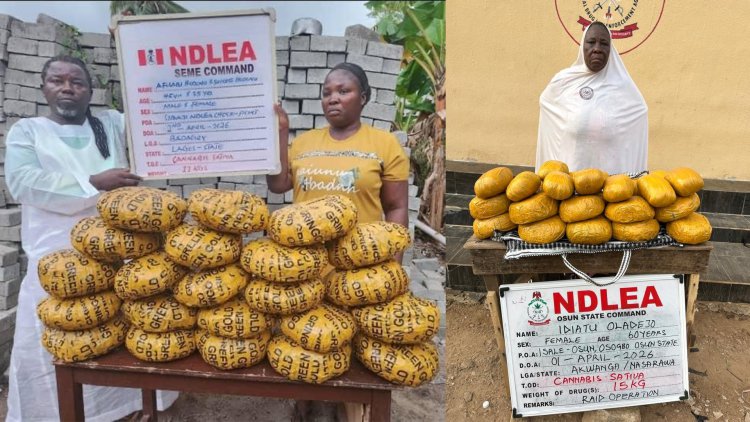
The pastor in charge of the Celestial Church of Christ at Agonvi Sea Beach in the Sakpo area of Seme border, Badagry, Lagos State, Mr Afolabi Hodonu, has been arrested by operatives of the National Drug Law Enforcement Agency (NDLEA).
The 45-year-old cleric was apprehended on Thursday, April 2, 2026, alongside his 35-year-old wife, Mrs Success Hodonu, with blocks of skunk weighing about 11kg.
A statement issued on Sunday by the spokesman of the NDLEA, Mr Femi Babafemi, disclosed that the couple were stopped at the Gbaji checkpoint, and a search of their Honda Pilot SUV led to the recovery of the drugs concealed in hidden parts of their vehicle.
Their arrest followed the apprehension of a fake security agent, Mr Sunday Samuel, 35, at the same checkpoint on Monday, March 30, while conveying 24.5kg of skunk from the Seme border to Lagos.
The statement further disclosed that NDLEA operatives also successfully dismantled a drug trafficking syndicate in high stakes intelligence led operations that lasted three weeks during which cocaine consignments concealed in tins of palm kernel extract heading to the United Kingdom were intercepted and the warehouse where the shipments are packaged raided, while all three layers of the group were unravelled, leading to the arrest of the kingpin.
The breakthrough began on Wednesday, March 11, 2026, when NDLEA officers of the Murtala Muhammed International Airport (MMIA) Strategic Command, Ikeja, Lagos, intercepted 3.10 kilograms of cocaine at the export shed of the airport. The illicit substance was meticulously hidden inside tins of palm kernel extract intended for shipment to the UK.
Two suspects handling the shipment, Idris Olayiwola Amoo and Akinlami Akinsoji Adedoyin, were promptly arrested.
To unravel the sender and the arrowhead of the drug syndicate, a well-coordinated sting operation was carried out on Thursday, April 2, leading to the arrest of Ezemuwo Joel, who operates under a fake identity as Ajayi.
His arrest provided the link to the syndicate’s head, 52-year-old King Arinze, who was flushed out of a hideout in the Isolo area of Lagos.
He was thereafter taken to his warehouse at 11, Ola Ifa Street, Bucknor, Isolo, where NDLEA operatives recovered 886 tins of palm kernel extract prepared for drug concealment; industrial tools, including a sealing machine, tin openers, paint sprays, 52 grams of cannabis sativa and a pack of hand gloves. Arinze has since confessed to personally draining the oil from the tins to conceal the cocaine.
In a separate operation in Borno state, NDLEA operatives on Wednesday, April 1, intercepted a female drug supplier to bandit groups operating between the North East and Chad, 28-year-old Aisha Adamu. She was arrested along the Gamboru Ngala road in possession of 4.3 kilograms of Colorado, a potent synthetic strain of cannabis.
In Adamawa State, NDLEA officers on patrol along Namtari road, Yola South, on Monday, March 30, intercepted a trailer marked RUW 947 XA transporting 48,000 pills of tramadol. The truck driver, Abdulaziz Ismail Korede, was arrested while a follow-up operation led to the arrest of the recipient, Idris Adamu.
While 60-year-old Idiatu Oladejo was arrested with 15kg of skunk in Isale Osun, Osogbo, Osun state, on Wednesday, April 1, NDLEA operatives, acting on credible intelligence, raided the Itaogbolu forest, Akure, Ondo State, where they recovered 351 kilograms of skunk and its seeds. No fewer than 28,600 capsules of tramadol were seized from a 66-year-old Aminu Usman Gembu when he was arrested at Aliade, Benue state, on Wednesday, April 1.
In Edo State, a suspect, Roland Owie, 37, was arrested on Monday, March 30, following the raid of his warehouse at Egbanke community, Orhionmwon LGA, where 1,378 kilograms of skunk were recovered.
A notorious drug dealer, 40-year-old Ayantola Omodunmomi (a.k.a Iya Elle) was on Wednesday, April 1, arrested at Eleta area of Ibadan, the Oyo State capital. Her arrest follows intelligence and surveillance on how she uses her 11-year-old daughter, Anjola, to deliver illicit drugs to her customers. At the time of her arrest, a 45.6kg skunk was recovered from her warehouse.

By Abba Dukawa
A chieftain of the ruling All Progressives Congress (APC), Mr Abdullahi Mahmud Gaya, reaffirmed his commitment to purposeful leadership, declaring he is not given to making empty promises to the electorate.
The politician, who intends to represent the Ajingi, Gaya, and Albasu Federal Constituency in the National Assembly in the 2027 general elections, stressed that his record of performance over two consecutive terms stands as clear evidence of his capacity and credibility, noting that his tenure has consistently delivered beyond expectations.
According to him, governance should be measured by tangible results rather than rhetoric, and his track record reflects a sustained dedication to the welfare and development of his constituency.
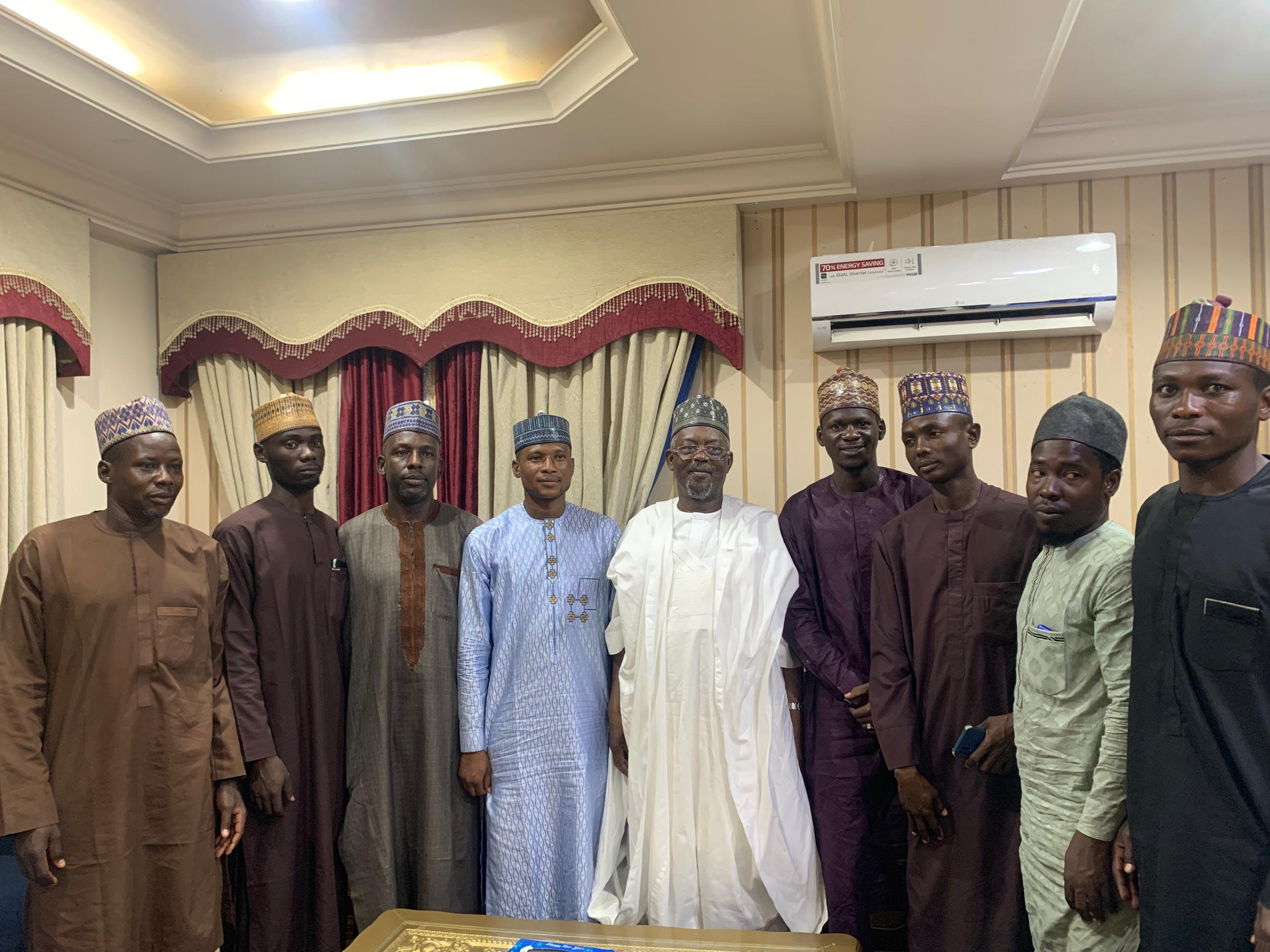
Speaking on Sunday while receiving various support groups at his residence in Kano, Mr Gaya reiterated his resolve to consolidate on past achievements and continue championing policies that will advance the collective interests of his people.
He urged them to return to their respective wards, villages, and towns to enlighten the electorate on the visible developmental strides recorded across the constituency over the past three years under his leadership, emphasising the need for voters to clearly distinguish these achievements from previous representations.
Mr Gaya further stated that there is no retreat in his resolve to contest the seat, stressing that the election is not about personal ambition, but about the collective well-being and continued progress of the people across the three local government areas.
He also urged them to take note that the Electoral Act 2026 outlines two methods through which political parties can nominate candidates, adding that these methods are direct primaries and consensus. Direct primaries involve all registered party members voting to choose their candidates, while the consensus method requires aspirants to voluntarily agree on a single flag bearer.
Speaking on behalf of various support groups, Mr Ismaila Ado, who has benefited from a monthly allowance as a volunteer teacher in one of the schools constructed during his tenure, stated that in addition to the allowance, the politician also facilitated his permanent appointment in the Kano State Ministry of Education.
Also speaking, an elder of the APC in Gaya Local Government Area, Mr Iliyasu Muhammad Gamoji, noted that prior to 2015, the communities of Ajingi, Gaya, and Albasu suffered from years of neglect and slow development.
He explained that when Mr Gaya represented the constituency in the House of Representatives, he did so with a strong commitment and a clear sense of responsibility.
He added that, over time, the lawmaker’s efforts brought tangible progress that positively impacted many lives, noting that roads were constructed, schools were improved, and the communities began to receive renewed attention and meaningful government support during his tenure.


By Aduragbemi Omiyale
The sum of N3.3 trillion has been approved by President Bola Tinubu to finally clear the outstanding debts in the power sector.
A statement issued on Sunday by the Special Adviser to the President on Information and Strategy, Mr Bayo Onanuga, said the “long-standing debts accumulated between February 2015 and March 2025.”
It was stated that the payment plan for the debts under the Presidential Power Sector Financial Reforms Programme should restore reliable electricity to the country.
“Following verification, N3.3 trillion has been agreed as a full and final settlement, ensuring a fair and transparent resolution,” a part of the statement noted.
“Implementation has begun, with 15 power plants signing settlement agreements totalling N2.3 trillion. The federal government has already raised N501 billion to fund these payments. Out of the amount, N223 billion has been disbursed, with further payments underway,” it added.
The statement said, “With payments reaching the power value chain, generation will be more stable. With power plants supported, electricity reliability will improve.”
“This programme is not just about settling legacy debts. It is about restoring confidence across the power sector — ensuring gas suppliers are paid, power plants can keep running, and the system begins to work more reliably,” the Special Adviser to the President on Energy, Ms Olu Arowolo-Verheijen, was quoted as saying in the statement.
“It is part of a broader set of reforms already underway — including better metering and service-based tariffs that link what you pay to the quality of electricity you receive.
“The government is also prioritising power supply to businesses, industries, and small enterprises — because reliable electricity is critical to creating jobs, supporting livelihoods, and growing the economy.
“The goal is simple: more reliable power for homes, stronger support for businesses, and a system that works better for all Nigerians,” she added.
President Tinubu has commended all stakeholders who supported efforts to resolve the legacy issues in the power sector. He has also confirmed that the next phase (Series II) will begin this quarter.
-
 Feature/OPED6 years ago
Davos was Different this year
-
Travel/Tourism10 years ago
Lagos Seals Western Lodge Hotel In Ikorodu
-

 Showbiz3 years ago
Estranged Lover Releases Videos of Empress Njamah Bathing
-
 Banking8 years ago
Sort Codes of GTBank Branches in Nigeria
-

 Economy3 years ago
Subsidy Removal: CNG at N130 Per Litre Cheaper Than Petrol—IPMAN
-

 Banking3 years ago
Sort Codes of UBA Branches in Nigeria
-

 Banking3 years ago
First Bank Announces Planned Downtime
-

 Sports3 years ago
Highest Paid Nigerian Footballer – How Much Do Nigerian Footballers Earn