

General
Why Mobile Platforms Are Drawing Investor Attention

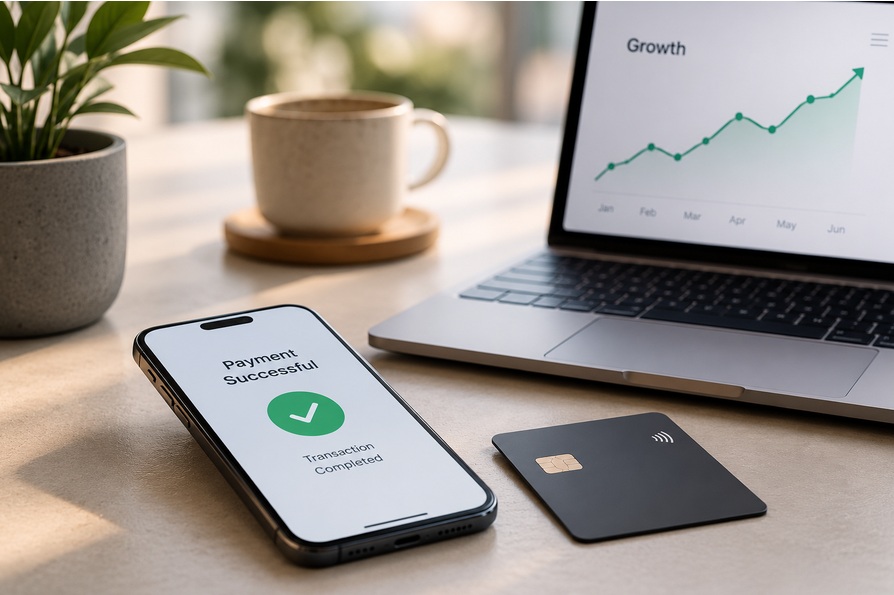
A mobile app can look simple from the outside. Behind the screen sit payments, data, customer acquisition and costly infrastructure. Investors increasingly care about what happens after someone downloads an app. The stronger question is whether users return, transact and generate predictable revenue.
Real-time platforms make that question especially interesting. Payments, trading, entertainment and badminton live betting online all depend on fresh information. Users expect updates without noticeable delays. For investors, the visible product is only the front door.
Transaction Volume Says More Than Download Numbers
Downloads make an easy headline. They reveal much less about the economics behind a digital business.
An app can collect millions of installs and still struggle to turn attention into revenue. Active users and transaction frequency provide a clearer picture. Payment activity tells investors even more because it records an action, rather than a simple app visit.
The scale involved is already huge. NIBSS reported in July 2026 that electronic payments reached N1.07 quadrillion over the preceding year. The figure shows just how much commercial activity now depends on digital payment infrastructure.
Instant payments have expanded sharply too. NIP transaction volumes rose from five billion in 2022 to 11 billion in 2024. That represents 120 percent growth in two years.
There is a business behind every successful transaction. Banks earn fees, processors move funds and technology companies provide software. Data centres, cybersecurity services and networks support the same chain.
Digital payments therefore reach far beyond fintech. They form infrastructure for a much larger mobile economy.
Investors Are Looking Beneath the Interface
Fast user growth can attract attention. Yet downloads alone say little about whether a platform has a durable business model.
Three measurements reveal far more:
- Active users show whether an audience keeps returning after acquisition.
- Transaction frequency shows how deeply a product fits into everyday behaviour.
- Revenue per user separates popular platforms from commercially productive ones.
None tells the whole story alone. High transaction frequency becomes less attractive when customer acquisition costs swallow the resulting revenue.
Retention can expose the same weakness. A company may spend heavily on promotions and quickly attract a large audience. Those users can disappear just as quickly when incentives stop.
Strong mobile models give people a reason to return naturally. Banking apps have balances and transfers. Trading platforms have changing prices. Entertainment services have new content and events.
Live information creates another reason to open an app repeatedly. Each return gives the business another opportunity to process transactions or sell additional services.
Infrastructure then starts affecting valuation. Fast response times and stable service may sound like technical details. For customers, they determine whether an app works when it matters.
Mobile Money Creates New Value Inside Established Businesses
Telecommunications offers a clear example. Mobile money operations can become valuable business units rather than simple additions to network services.
In April 2026, MTN Nigeria announced a restructuring involving MoMo Payment Service Bank and Y’ello Digital Financial Services. Its parent group would acquire 60 percent interests in the businesses. The transaction valued the fintech companies at N95.5 billion.
MoMo PSB provides deposits, transfers, payments and digital wallets through mobile channels. Y’ello Digital provides agency banking services through the wider ecosystem.
A customer can therefore become more than a phone subscriber. The commercial relationship can extend into payments and other financial activity.
That logic appears across digital businesses. Companies want customers to complete more useful actions without leaving their ecosystem.
The attraction is straightforward. An existing customer can cost less to serve with another product than a completely new customer costs to acquire.
Bigger ecosystems still bring bigger technical demands. More transactions require stronger processing, fraud controls and customer support.
Real-Time Platforms Put Infrastructure Under Pressure
Some mobile businesses face an extra challenge. Their products change by the second.
Sports platforms are a good example. Fixtures, scores and live events can create sudden traffic spikes instead of smooth daily demand.
A betting app combines mobile access with live sports information and event markets. Major fixtures can bring large numbers of users into the platform within minutes.
That makes capacity important. A platform must handle demand at its busiest moment, not just during an average hour.
Payments add another layer. Users expect deposits and account actions to work without a long chain of separate steps.
The same problem appears outside sports. Trading apps face traffic spikes around market events. Payment services see peaks around shopping periods and salary dates.
For investors, monthly user totals tell only part of the story. Reliability during peak demand can protect revenue that might otherwise disappear within minutes.
Backend infrastructure deserves attention alongside consumer growth.
Payment Infrastructure Has Become Part of the Investment Story
The network underneath mobile payments is changing as well.
NIBSS introduced its National Payment Stack in 2025. The infrastructure supports instant transactions, real-time settlement information and cross-border compatibility. It also includes open-banking integration and risk-scoring functions.
The system builds on NIBSS Instant Payments, launched in 2011. NIP now handles billions of transactions each year.
Speed matters because mobile businesses increasingly depend on immediate actions. A delayed payment can interrupt a purchase or account transaction at the exact moment a customer wants it completed.
Infrastructure investment therefore sits underneath consumer-facing digital growth. More mobile activity needs processing capacity, connectivity, identity systems and security.
Business Post has documented how companies are connecting these layers. In May 2026, Redtech partnered with MoMo PSB and UBA on a cardless payment integration. Customers can use MoMo wallets at participating merchant locations through RedPay infrastructure. Business Post’s report on the payment partnership
Such integrations reduce barriers between banks, telecom operators and fintech businesses. They can also make each participating network more useful.
For investors, interoperability can matter almost as much as scale. A closed platform must build more functions itself. Connected businesses can reach customers and services through partners.
Capital Is Following Digital Businesses
Funding activity offers another clue about how investors value digital companies.
The Investment in Digital and Creative Enterprises programme launched with $617.7 million in funding. Its Startup Bridge added two funding paths in March 2026.
Idea-stage founders can receive grants of up to N10 million. Qualifying startups with launched minimum viable products can receive $100,000 in equity investment.
The amounts are small beside large corporate transactions. The structure is more interesting than the headline numbers.
Capital can reach businesses before they become established companies. Early funding supports product development. Later investment can finance infrastructure, customer acquisition and expansion.
The difficult part starts after the money arrives.
Digital businesses still need to prove that growth produces durable economics. High user totals mean little when retention collapses. Heavy transaction activity also loses appeal when processing and promotional costs consume revenue.
Investors therefore have good reason to look beyond the app itself.
The Numbers Behind the Screen Matter Most
Mobile-first businesses may be easier to launch than traditional companies, but scale remains expensive. Every additional user creates demands somewhere in the system.
Payments need processing. Accounts need security. Real-time products need reliable data. Large audiences need infrastructure capable of surviving their busiest moments.
The investment case rests on more than popularity. Repeat usage, transaction activity, infrastructure quality and revenue efficiency reveal much more about a platform.
Electronic payment volumes already show the size of the opportunity. The harder question is which companies can build profitable services on top of that infrastructure.
Some platforms will collect millions of downloads and little staying power. Others will quietly turn repeated mobile activity into dependable revenue.
For investors, that difference is where the real story begins.


