Connect with us

General

Zanoplus Gets N3.2bn REA Funding for Solar Projects in Bauchi

Published

on

Zanoplus

By Adedapo Adesanya

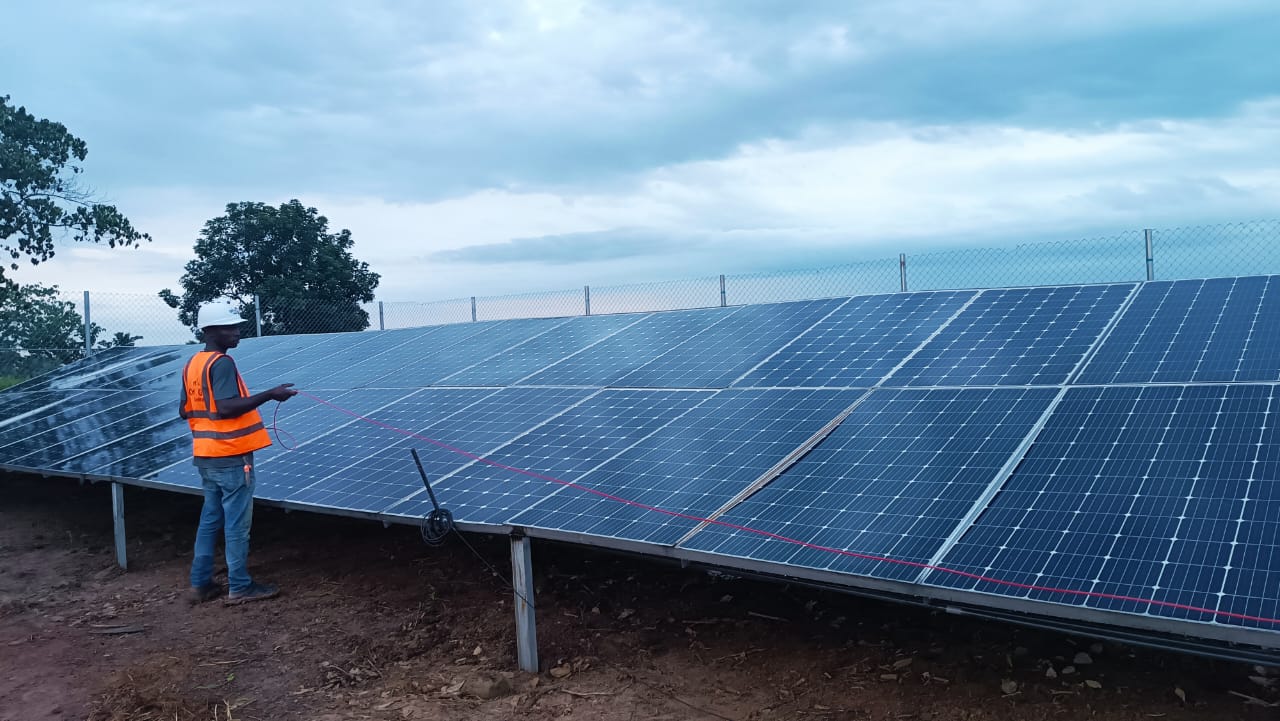
The Rural Electrification Agency (REA) said it has successfully disbursed a fresh N3.2 billion to Zanoplus, to allow the company to deploy solar mini-grid projects across strategic locations in Bauchi State, as part of the agency’s commitment to decentralised energy solutions.

The company noted that this latest disbursement follows closely on the heels of a N7.4 billion disbursement to Ventura Logistics Services for a 7MW mini-grid initiative.

Both interventions were executed under the Distributed Access through Renewable Energy Scale-up (DARES) Programme, a transformative partnership designed to catalyse private-sector participation through support for indigenous financial institutions.

The funding mechanism is rooted in a landmark Memorandum of Understanding signed in February between the REA and Lotus Bank, which established a N100 billion revolving credit facility.

Under this framework, developers can access up to N8 billion in equipment procurement financing with a tenure of 18 months, alongside Lotus Bank, which provides up to 90 per cent counterpart funding for projects approved through result-based financing.

Zanoplus’ deployment is set to transform Bauchi State’s socio-economic landscape by delivering a combined capacity of over 1.2 MWp.

A breakdown showed the specific allocations include 450 kWp for Gabarin East, 400 kWp for Futuk, 200 kWp for Gangalawai, and 150 kWp for Daburai (Gabarin West). These systems operate as integrated local generation and distribution networks with capacities below 1MW, functioning independently of the national grid to provide reliable, clean energy directly to numerous end-users in isolated regions.

Reflecting on the progress of the DARES Programme, the managing director of the REA, Mr Abba Aliyu, emphasised that the true success of these disbursements lies in the efficiency and integrity of the process.

He noted that the speed and transparency of execution demonstrate the vibrancy of the local financing capacity currently being catalysed by the REA.

According to Mr Aliyu, this momentum demonstrates that a performance-based financing framework can effectively channel capital to credible, ready-to-implement projects that are strictly aligned with delivery milestones.

The REA chief further highlighted that this consistent flow of capital sends a powerful signal to the global and local investment community that the Nigerian renewable energy market is active and the underlying structures are working.

He lauded the proactive role of Nigerian financial institutions, which are increasingly transitioning from mere participants to primary drivers of renewable energy infrastructure.

By aligning performance with streamlined financing, the REA and its partners aim to unlock the necessary scale to achieve universal energy access across the federation.


Adedapo Adesanya is a journalist, polymath, and connoisseur of everything art. When he is not writing, he has his nose buried in one of the many books or articles he has bookmarked or simply listening to good music with a bottle of beer or wine. He supports the greatest club in the world, Manchester United F.C.

Click to comment

Leave a Reply

Your email address will not be published. Required fields are marked *

General

Lokpobiri Urges Prioritisation of Domestic Energy Needs Over International Obligations

Published

on

Heineken Lokpobiri oil fields dispute

By Adedapo Adesanya

The Minister of State for Petroleum Resources (Oil), Mr Heineken Lokpobiri, has stressed the need for Nigeria to prioritise its domestic energy needs before fulfilling international obligations, as the federal government intensifies efforts to strengthen energy security and promote greater transparency in the petroleum market.

Mr Lokpobiri stated this in his goodwill message at the West Africa Refined Fuel Market Conference 2026, themed Funding West Africa Infrastructure and Distribution to Create a Transparent Market for Regional Price Benchmarks.

The minister said the country’s energy security strategy must begin with fulfilling its obligations to Nigerians, stressing that the ongoing deregulation of the downstream petroleum sector had created a framework for greater participation and accountability among industry stakeholders.

According to him, energy security starts with fulfilling “our domestic obligations before extending to international obligations.”

He said the conference provided an opportunity not only to discuss sustainable pricing mechanisms but also to showcase investment opportunities and competitive advantages in Nigeria’s and Africa’s midstream and downstream petroleum sectors.

Mr Lokpobiri said the federal government remained committed to creating a conducive environment for investment in the petroleum industry, particularly as Nigeria seeks to increase refining capacity and improve fuel distribution.

“Under President Bola Ahmed Tinubu, Nigeria continues to implement measures and initiatives designed to unlock the full potential of the petroleum sector,” he said.

He identified increased refining capacity, efficient distribution infrastructure, transparent pricing and stronger regional integration as critical to building a competitive West African refined-fuel market.

The minister said improved infrastructure and market transparency would also help establish reliable regional price benchmarks and strengthen confidence among investors and other industry participants.

He added that Nigeria, as a major player in the global energy market, had an important role to play in developing an integrated West African petroleum market and positioning the continent to compete more effectively in global energy trade.

The conference brought together stakeholders in the petroleum industry to examine financing, infrastructure, distribution and pricing mechanisms for the refined-fuel market across West Africa.

Continue Reading

General

FCCPC Warns Bakers Against Unsafe Substitutes, Misleading Consumers

Published

on

FCCPC

By Adedapo Adesanya

The Federal Competition and Consumer Protection Commission (FCCPC) has warned importers, manufacturers, distributors and other operators in the bakery and confectionery business against compromising food safety, using unsafe substitutes and misleading consumers as rising production costs put pressure on their businesses.

The Executive Vice Chairman of the FCCPC, Mr Tunji Bello, gave the warning on Tuesday at a stakeholder engagement with bakery and confectionery operators organised by the South-West Zonal Office of the commission at the Lagos Chamber of Commerce and Industry (LCCI), according to a statement.

Mr Bello, who was represented at the event by the South-West Zonal Coordinator, Mr Olubunmi Otti, explained that the engagement focused on strengthening compliance with consumer protection, product safety, quality and labelling requirements across the sector.

Mr Bello emphasised that bread and other baked products were consumed daily by millions of Nigerians, “making food safety and consumer confidence critical responsibilities for operators.”

“Consumers ordinarily had no way of knowing where ingredients came from, how they were stored or the conditions under which products were manufactured. They rely on producers to maintain proper hygiene, use appropriate ingredients, accurately represent their products and supply the quantity promised,” Mr Bello said.

Mr Bello said effective consumer protection covered the entire production chain, including the sourcing and quality of ingredients, production, hygiene, handling, packaging, labelling, storage, transportation and display.

He said it also covered the information businesses provided to consumers, the quantity promised and supplied, as well as the actions taken when something went wrong.

According to him, food safety cannot be compromised in the pursuit of profit.

He stressed that the Federal Competition and Consumer Protection Act (FCCPA) 2018 gives consumers the right to goods that are reasonably suitable for their intended purposes, such as good quality, free of defects and compliant with applicable standards set by sector regulators.

Mr Bello, however, acknowledged that businesses were operating in an economic environment where the costs of flour, sugar, energy, transportation, packaging, equipment and financing could fluctuate and place pressure on profit margins.

He noted that such commercial realities could not justify practices that endangered consumers.

The official warned that operators must not respond to rising input costs by resorting to unsafe substitutes, harmful or prohibited additives, poor-quality ingredients, compromised hygiene, manipulated expiry information or other shortcuts that transfer commercial risks to consumers.

He also cautioned operators against misleading consumers through product labels, advertisements and other forms of marketing.

Mr Bello explained that information supplied to consumers on products, packaging, accompanying materials, at points of sale, social media or conventional media must be accurate and not misleading.

He added that information on production dates, shelf life, allergens, storage conditions and other material characteristics required under applicable laws, regulations or standards must be provided and must not mislead consumers.

The FCCPC helmsman also pointed out that the FCCPA prohibits false or incorrect representations, materially misleading representations that were erroneous, fraudulent or deceptive in the promotion or marketing of goods and services.

Continue Reading

General

Nigerian Manufacturers Tour Arridex Omnifactory in Lagos

Published

on

MAN Arridex Omnifactory

By Modupe Gbadeyanka

The Manufacturers Association of Nigeria (MAN), under the leadership of Mr Segun Ajayi-Kadir, has visited the Arridex Omnifactory in Lagos.

A few months ago, the facility was commissioned as West Africa’s first multi-technology industrial additive manufacturing facility. A second phase, the Mega

Omnifactory, is programmed for commissioning in 2027, and it is expected to rank among the world’s largest single-site industrial 3D manufacturing facilities.

During the recent tour, Mr Ajayi-Kadir welcomed the innovation additive manufacturing is bringing to Nigeria’s industrial sector.

He said MAN would work with its members to identify areas in which additive manufacturing can have the greatest impact, and committed the association’s continued advocacy and policy support for domestic component manufacturing.

The delegation sight-sawed the Advanced Manufacturing Gallery and the Omnifactory production floor, where they saw the equipment and materials behind the on-demand production of industrial components for Nigerian operators.

During the tour, the chief executive of Arridex, Mr Kayode Adeleke, presented the company’s case for additive manufacturing as infrastructure for Nigeria’s industrialisation drive, setting out three tests of industrial sovereignty: whether a country can make a component, whether it can sustain it, and whether it owns the design, the data and the standard behind it.

Citing figures from MAN and the National Bureau of Statistics (NBS), he said the more serious damage is to planning; a manufacturer whose critical inputs are decided elsewhere must forecast failures that may never happen, buy to a supplier’s minimum, pay in foreign currency at the rate of the day, and tie up working capital in a warehouse.

“Sovereignty is not the same as self-sufficiency. No nation makes everything it needs, but every nation must be able to choose what it depends on and when. That is what the Omnifactory represents: the ability to support the strengthening of operational resilience by manufacturing the critical components that Nigerian industry needs, on demand, at home. This is a capability for the country, and we are glad that MAN’s leadership could see it first-hand,” Mr Adeleke stated.

Continue Reading