
General
Zoho Users Hit 100 Million

By Modupe Gbadeyanka
The number of people using products of Zoho Corporation has reached 100 million across its over 55 business applications, a statement from the firm has confirmed.
This makes Zoho the first bootstrapped SaaS organisation to hit this milestone, coming on the heels of its $1 billion annual revenue in 2022.
“I want to thank all of our customers for trusting us with their business and helping us reach 100 million users worldwide,” the co-founder of the leading global technology firm, Sridhar Vembu, said.
“This is an impressive milestone for any organisation, but it’s particularly sweet for us as a bootstrapped company that has never raised external capital. And we are not done yet.
“We have an impressive innovation pipeline covering the next 10 years, investing in deep technologies to serve billions of users around the world. We’re working towards it, and we want to thank all of you for your continued support,” Vembu, who doubles as the company’s chief executive, added.
Consistently providing accessible technology while promoting sustainable growth, Zoho has steadily increased its traction from 1 million users in 2008 to 100 million 15 years later—with the last 50 million users added within the past five years.
The brand has grown steadily and responsibly without ever taking external funding, allowing it to preserve its long-term vision and culture without outside pressure or influence.
It’s also what keeps the company centred on its values, such as debt-free growth and serving customers closer to where they are—a product of the company’s transnational localism efforts.
After completing 13 Zoholics (user conference) in the first half of the year, which included Zoholics Kenya, the company will host 18 Zoholics across 16 countries in the next eight weeks, totalling 31 user events across 27 countries in 2023.
In Africa, Zoho will host Zoholics Egypt in October, and Zoholics Nigeria is set to take place in November. Zoholics South Africa was held in August in Johannesburg, Durban, and Cape Town.
Zoholics is transnational localism in action. Zoho has always believed that being close to customers allows the company to build useful, trusted, customer-focused solutions.











By Adedapo Adesanya
The Nigerian Ports Authority (NPA) is raising its financial and operational ambitions for 2026, unveiling a revenue target of N1.489 trillion alongside plans to overhaul two of the country’s busiest seaports, Apapa and Tin Can Island, in a push to boost efficiency and global competitiveness.
Speaking during the agency’s 2026 budget defence before the Senate Committee on Marine Transport, the ports regulator’s Managing Director, Mr Abubakar Dantsoho, said the new revenue projection reflects a strategic shift focused on strengthening resilience and driving sustainable growth across Nigeria’s port system.
The proposed figure represents an increase over the N1.468 trillion initially projected for 2025, a benchmark the authority not only met but exceeded, recording approximately N1.97 trillion in revenue collections.
A breakdown of the 2026 proposal shows a strong tilt toward infrastructure development, with N945 billion allocated to capital expenditure. Operating costs are projected at N447.5 billion, while N90.6 billion is expected to be remitted to the federal government’s Consolidated Revenue Fund.
Central to the NPA’s transformation agenda is the planned modernisation of Apapa Port and Tin Can Island Port, two critical gateways for Nigeria’s maritime trade. Dantsoho noted that both facilities, due to their age and outdated capacity, require urgent upgrades to meet the demands of modern shipping and logistics operations.
He disclosed that preliminary work on the projects is set to begin within weeks, marking a significant step toward repositioning Nigeria’s ports within the global maritime value chain.
On financial operations, the NPA boss reiterated that all revenues generated by the authority are remitted directly into the Treasury Single Account managed by the Central Bank of Nigeria, stressing that the agency operates without retaining independent revenue.
In his remarks, Chairman of the Senate Committee on Marine Transport, Mr Wasiu Eshinlokun, underscored the importance of collaboration between lawmakers and agencies. He noted that the committee’s oversight function is designed to improve efficiency, strengthen institutional performance, and ensure responsible use of public funds.
By Adedapo Adesanya
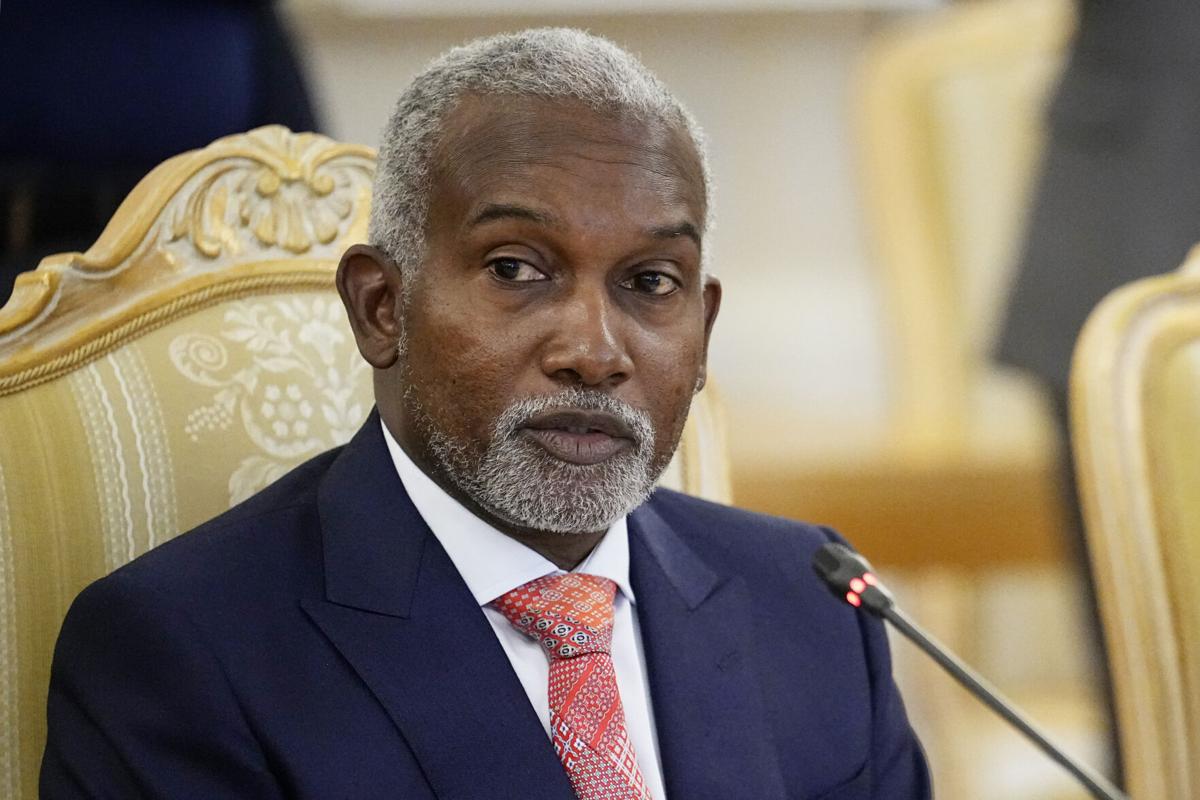
Nigeria’s Minister of Foreign Affairs, Mr Yusuf Tuggar, has resigned from his position, in line with the directive that government appointees seeking political offices must resign before March 31.
Business Post reports that the diplomat is eyeing a governorship ambition in Bauchi State ahead of the 2027 general elections.
Mr Tuggar’s resignation was confirmed in a statement by the ministry’s spokesperson, Mr Kimiebi Ebienfa, on Monday.
Mr Tuggar submitted his resignation letter on Monday, barely 24 hours before the deadline set by President Bola Tinubu, which directs all political appointees under his administration seeking to contest elective offices in the 2027 elections to resign before March 31.
The directive is in line with Section 88(1) of the Electoral Act, 2026, and the timetable released by the Independent National Electoral Commission for party primaries ahead of the 2027 polls.
With this development, more resignations are expected before the March 31 deadline as appointees seeking elective offices move to meet the stipulated deadline.
Earlier today, the Chairman of the Governing Board of the Federal Mortgage Bank of Nigeria (FMBN), Mr Nasiru Gawuna, formally resigned from his position to join the African Democratic Congress (ADC) with his sights on the Kano governorship ticket.
Mr Tuggar’s resignation comes amid the speculation of his interest in contesting the 2027 Bauchi State governorship election on the platform of the All Progressives Congress (APC).
The 59-year-old is a seasoned diplomat, policymaker, and political figure who was appointed as minister by President Bola Tinubu in August 2023.
Born on March 12, 1967, he has built a distinguished career spanning diplomacy, politics, energy, and strategic consulting.
He is widely regarded for his role in shaping Nigeria’s global engagement and advancing its foreign policy priorities.

By Aduragbemi Omiyale
The Lagos State government has promised to sustain its collaboration with private sector players to drive sustainable urban development, create jobs, and position Lagos as a leading hub for commerce and industry in Africa.
This assurance was given by the state governor, Mr Babajide Sanwo-Olu, at the commissioning of Irele Tower last Thursday.
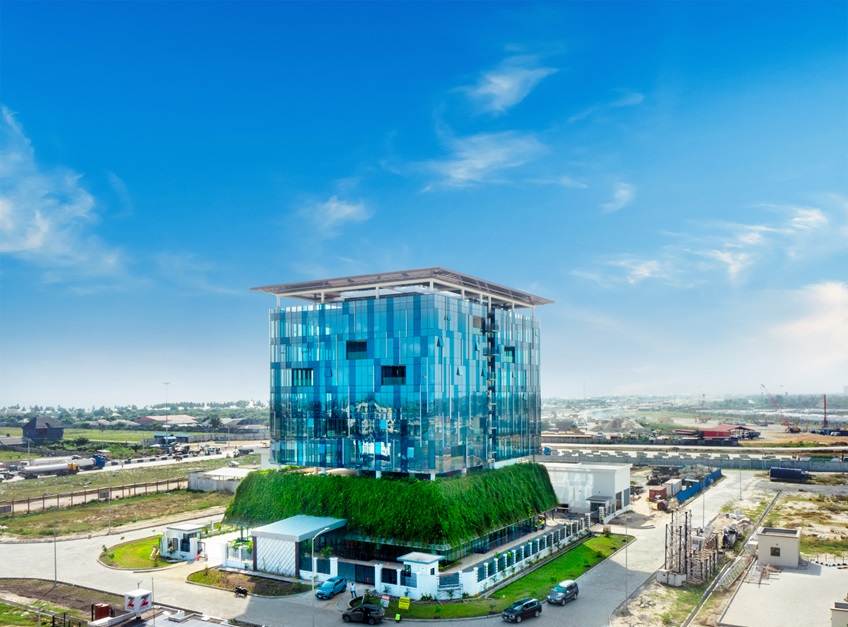
The nine-storey facility is the first commercial building within the Lagos Free Zone (LFZ). It is EDGE-certified, which sets a new standard for sustainable workspace in Lekki, Nigeria’s fastest-growing economic corridor.
Irele Tower is designed to host office and retail activities in the Lekki economic corridor. It was built for efficiency with 26 per cent less energy and 46 per cent less water consumption. It is an eco-friendly building, with the design inspired by maritime architecture, reflecting its proximity to the Lekki Deep Sea Port.
Mr Sanwo-Olu described the delivery of the Irele Tower as a significant milestone in the development of the economic zone in line with the agenda of making Lagos a 21st-century economy by boosting economic growth to support the state’s developmental plans.
According to him, the facility is critical to unlocking the full potential of the Ibeju-Lekki axis of the economic zone, particularly given the presence of the Lekki Deep Sea Port and other major industrial investments within the Lagos Free Zone.
“The commissioning of Irele Tower is a clear demonstration of what can be achieved through strong collaboration between the public and private sectors. This development not only enhances the infrastructure profile of the Lagos Free Zone but also strengthens our vision of making Lagos a premier destination for investment and economic activities.
“We will continue to support initiatives that promote industrial growth, create employment opportunities, and improve the overall business environment in our state,” he said.
In her remarks, the chief executive of LFZ, Ms Adesuwa Ladoja, stated that the development reflects the zone’s commitment to creating an integrated ecosystem where businesses can thrive, supported by modern infrastructure, a strategic location, and efficient logistics.
“The commissioning of Irele Tower represents a defining milestone in our journey to build a world-class industrial and commercial hub. This development reflects our commitment to providing high-quality infrastructure that supports ease of doing business and enhances operational efficiency for our tenants.
“As the first commercial tower within the Lagos Free Zone, Irele Tower, sets a new benchmark for quality workspace in this corridor and reinforces our position as a preferred destination for investment and enterprise,” she added.
Irele Tower sits on a gross floor area of approximately 12,000 square metres. It offers modern workspaces tailored to evolving business needs. The facility also offers premium amenities, including office spaces, retail outlets, parking facilities, shared workspaces, and a rooftop cafeteria, creating a dynamic, integrated business environment.












-
 Feature/OPED6 years ago
Davos was Different this year
-
Travel/Tourism10 years ago
Lagos Seals Western Lodge Hotel In Ikorodu
-

 Showbiz3 years ago
Estranged Lover Releases Videos of Empress Njamah Bathing
-
 Banking8 years ago
Sort Codes of GTBank Branches in Nigeria
-

 Economy3 years ago
Subsidy Removal: CNG at N130 Per Litre Cheaper Than Petrol—IPMAN
-

 Banking3 years ago
Sort Codes of UBA Branches in Nigeria
-

 Banking3 years ago
First Bank Announces Planned Downtime
-

 Sports3 years ago
Highest Paid Nigerian Footballer – How Much Do Nigerian Footballers Earn