

Health
BioVana, NICRAT Partner to Establish National Cancer Biobank Network

By Adedapo Adesanya
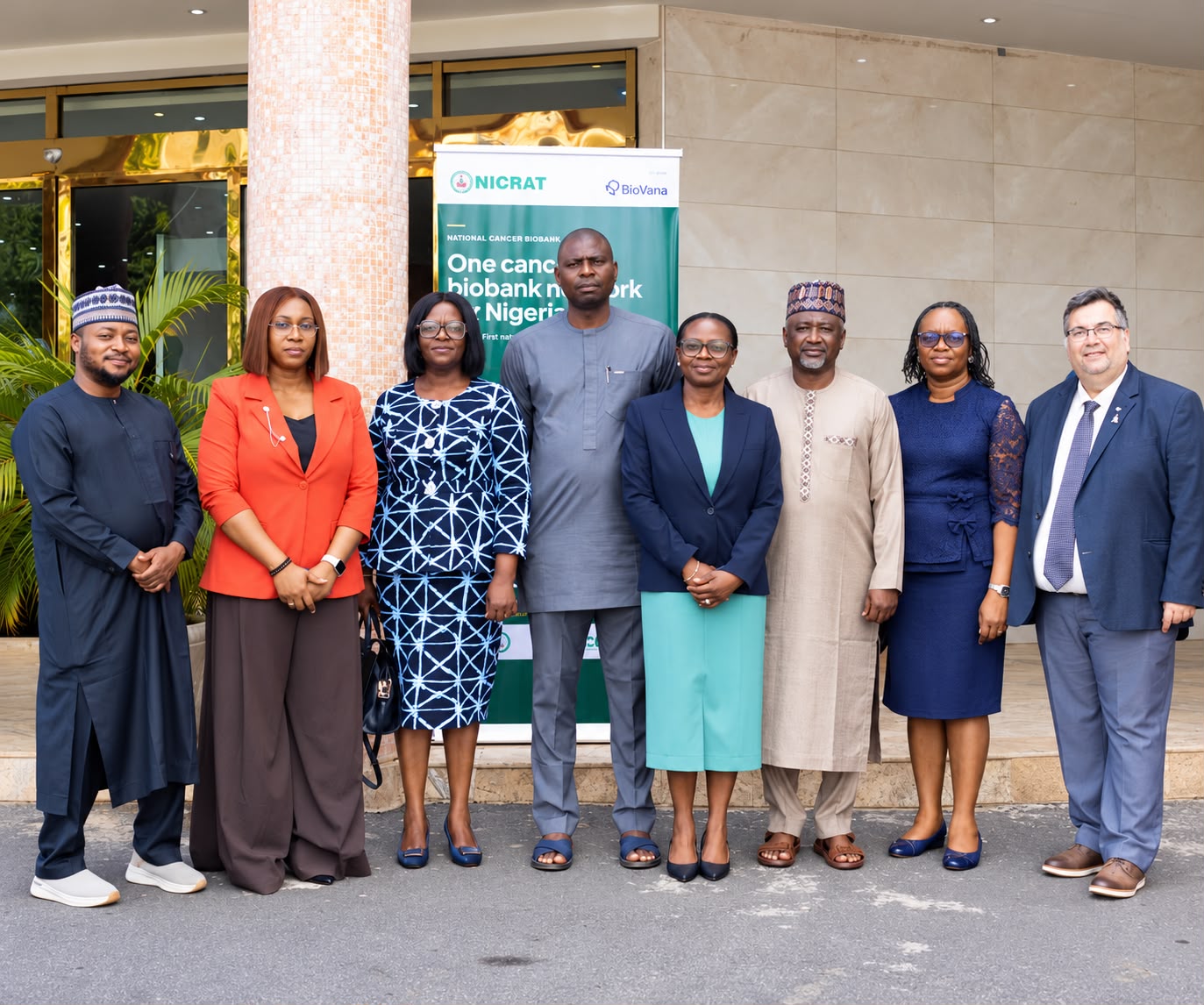
BioVana, a health data infrastructure company, has partnered with the National Institute for Cancer Research and Treatment (NICRAT) to implement Nigeria’s National Cancer Biobank Network (NCBN), an initiative aimed at strengthening cancer research and precision oncology in the country.
The network currently comprises eight federal hospitals across Nigeria’s six geopolitical zones, with an initial target of collecting and cataloguing 10,000 cancer biospecimens and a long-term goal of expanding the number to 100,000 by 2028.
The initiative builds on a memorandum of understanding signed by both organisations in 2025 and seeks to establish a connected and standardised system for collecting, managing and sharing cancer samples and associated clinical data for research.
Under the partnership, NICRAT will provide national leadership, institutional coordination and oversight, while BioVana will handle the technical implementation, including digital infrastructure, standardised sample and data management, capacity building and research systems across participating hospitals.
The organisations said the initiative was progressing towards harmonised biobanking practices and common data and quality standards following initial assessments of participating hospitals and a stakeholders’ workshop attended by representatives of the World Health Organisation (WHO) and the International Society for Biological and Environmental Repositories (ISBER).
According to the Global Cancer Observatory, Nigeria recorded an estimated 152,000 cancer cases and more than 90,000 deaths in 2024, highlighting the need to strengthen the country’s cancer research capacity.
The network is expected to enable researchers to conduct larger, multi-centre studies by connecting cancer samples and clinical data from different institutions. It is also designed to support biomarker discovery, diagnostic development and precision oncology research tailored to Nigerian patients.
Speaking on the partnership, BioVana’s Co-Founder and Chief Executive Officer, Ms Estelle Dogbo, said the initiative would connect existing cancer research resources across institutions through common standards, infrastructure and governance.
“Nigeria already has significant cancer research resources distributed across institutions. The NCBN is about connecting those resources through the standards, infrastructure and governance required to make them more useful for research,” she said.
Ms Dogbo said the network could serve as a model for nationally coordinated biomedical research infrastructure across Africa by strengthening local research capacity and enabling the responsible use of biomedical resources for cancer research.
NICRAT’s Director-General, Professor Aliyu Malami Usman, said the initiative would lay the foundation for a national cancer research infrastructure, including the institute’s longer-term plan to establish a central national cancer biobank supported by institutions across the country.
He said the partnership would help develop the standards, capacity and systems required to position Nigeria as a leader in cancer research and precision oncology in Africa.
The President of ISBER, Dr Stella Somiari, said high-quality biobanking aligned with international standards was essential to reliable research collaboration and ensuring African populations benefited from advances in precision oncology.
She added that the consistent collection and management of local biospecimens and data would enable Nigerian researchers to collaborate with international partners and generate evidence to improve cancer care.
“By collecting local biospecimens and data with care and consistency, Nigerian researchers can collaborate as equal partners worldwide to generate evidence that leads to more precise cancer care for Nigerian patients,” she said.
Similarly, Dr Zisis Kozlakidis, Group Head of Laboratory Support, Biobanking and Services at the International Agency for Research on Cancer (IARC), a specialised agency of WHO, said connected research infrastructure would help ensure that samples and data from African populations contributed to global scientific discoveries.
According to Africa Cancer Control Partners, Africa recorded more than one million new cancer cases in 2020, a figure projected to rise to two million over the following 15 years.
The next phase of the NCBN implementation will focus on capacity building across the eight participating hospitals, harmonisation of biobanking procedures, adoption of common data and quality standards, and recruitment of the first 10,000 cancer samples.