
Health
Coca-Cola Unveils $20m ‘Safe Birth Initiative’ In Nigeria, Ivory Coast

By Dipo Olowookere
The management of Coca-Cola Company has set aside $20 million to support one of its new ideas tagged ‘The Safe Birth Initiative.’
The programme is aimed to support the Ministries of Health in Ivory Coast and Nigeria to tackle the high incidence of maternal and newborn mortalities in the two countries.
At a courtesy visit to the Ivorian President, Mr Alassane Ouattara, the Group President of Coca-Cola Europe, Middle East & Africa (EMEA), Mr Brian Smith, explained that the initiative will focus on strengthening the capacity of maternity and neonatal units in selected public hospitals in Ivory Coast and Nigeria.
He said with $2 million grant from Coca-Cola to Medshare International Inc, the US-based not-for-profit NGO will source essential equipment, kits and supplies worth about $20 million to enable safe deliveries and post-delivery emergency care for both mothers and their newborns.
The programme, he said, will also include the training of biomedical technicians and other appropriate hospital personnel by Medshare International on the operation, repair and maintenance of the donated equipment as well as the reactivation of a huge stock of faulty or abandoned equipment in public hospitals which is a major challenge for the country’s healthcare delivery system.
This intervention comes as Ivory Coast, which has enjoyed stability and one of the fastest economic growth rates since the end of a civil war in 2011, grapples with some of the highest maternal and newborn mortality ratios globally.
According to UNICEF’s 2016 State of the World’s Children report, 38 out of every 1,000 babies die within the first 28 days of birth while 645 out of 100,000 women die during or shortly after child birth due to avoidable conditions. This translates to 31,000 newborns and 5,400 maternal deaths annually in a country with a population of 24 million people.
In Nigeria on the other hand, about 40,000 women and 260,000 newborns (excluding 300,000 stillborn) die during or shortly after childbirth annually.
About 29 percent of the newborn deaths (90,000) occur in the first 24 hours of birth. For this reason, neonatal mortality is considered as one of the worst public health crises in Nigeria and a major priority for the government in its resolve to meet the Sustainable Development Goals (SDGs).
Mr Smith noted that, “The commitment to help promote sustainable development in our communities is a fundamental part of Coca-Cola’s strategy for sustainable business growth.
“This program which demonstrates this commitment will help save the precious lives of many mothers and newborns and also support the remarkable efforts of the Ivorian government at rebuilding this vibrant country.”
In his remarks, President Ouattara welcomed Coca-Cola’s support for the Health Ministry, noting that maternal and child health was an area the country recorded a weak performance under the Millennium Development Goals (MDGs).
“Your new program will translate to improved healthcare and budget savings which will be channelled to other needs” President Ouattara said, adding that his Administration has been able to drive fast growth in the economy at an average rate of 9 percent over the last 5 years. “Our emphasis now is to boost social expenditure with a focus on health, education and youth employment in order reduce the poverty level further from 50 percent to about 25 percent by the end of my current tenure.”
On her part, the Ivorian Minister of Health, Dr Goudou Coffi, noted that improvement of maternal and newborn healthcare is one of the public health priorities of the country and thanked Coca-Cola for the initiative.
“Coca-Cola’s support through the Safe Birth Initiative will significantly strengthen our healthcare capacity and boost our resolve towards achieving the Sustainable Development Goals (SDG) targets in relation to maternal and newborn mortalities,” she said.
President of Coca-Cola West Africa Business Unit, Peter Njonjo, stated that, “Coca-Cola has a special relationship with women who are pillars of our business, especially in Africa where women play a dominant role in our distribution and retail network. Just like our 5by20 Initiative, the Safe Birth Initiative which we will be implementing in Ivory Coast and Nigeria is a platform enabling us to promote the wellbeing of women, in this case, as it relates to the special but vulnerable experience of childbirth.”







By Adedapo Adesanya
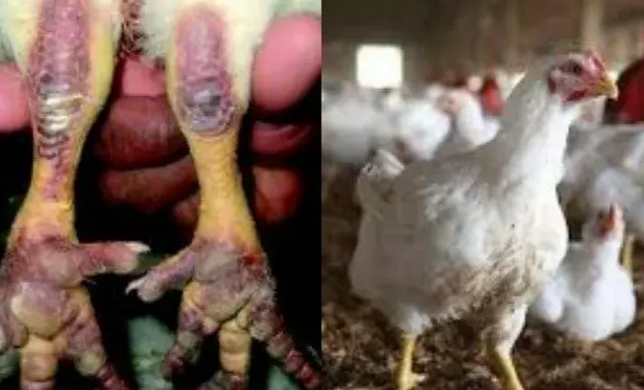
Nigeria will get a $350,000 intervention from the Food and Agriculture Organisation of the United Nations (FAO) to support its response to the ongoing outbreak of Highly Pathogenic Avian Influenza (bird flu) and strengthen the country’s animal health systems.
An agreement was reached on Wednesday during a strategic meeting between the Minister of Livestock Development, Mr Idi Mukhtar Maiha, and the FAO Representative to Nigeria and the Economic Community of West African States, Mr Hussein Gadain, in Abuja.
The intervention, approved under FAO’s Technical Cooperation Programme, will support disease containment efforts in 11 affected states and enhance surveillance, coordination and response mechanisms to prevent further spread of the disease.
Speaking during the meeting, Maiha said effective disease control remains critical to improving livestock productivity and protecting the livelihoods of farmers across the country.
He explained that factors such as drought, scarcity of feed, interaction between livestock and wildlife, as well as cross-border movement of animals have contributed to the spread of diseases in some areas.
“We must continue to strengthen our animal health systems and build the capacity required to respond effectively to disease outbreaks. Our collaboration with FAO will help protect livestock assets, improve productivity and support the broader transformation of the sector,” the minister said.
Mr Gadain commended the federal government’s commitment to the development of the livestock sector and assured that FAO would continue to provide technical support to Nigeria.
He stressed the need to strengthen veterinary services at the state and community levels, improve early detection of diseases and promote biosecurity practices among livestock farmers.
The meeting also reviewed progress on the global campaign to eradicate Peste des Petits Ruminants, a highly contagious disease that affects sheep and goats.
To advance the initiative, the ministry plans to convene a national technical meeting involving veterinary institutions, researchers and practitioners to review Nigeria’s eradication strategy and address gaps in vaccine supply.
As part of preparations, the ministry will engage the National Veterinary Research Institute to assess its vaccine production capacity while exploring other options for vaccine procurement to meet national demand.
Both parties also agreed to accelerate Nigeria’s access to financing under the Pandemic Fund through the One Health approach in collaboration with the Nigeria Centre for Disease Control and the Federal Ministry of Health to strengthen preparedness and response to zoonotic diseases.
Plans are also underway for the Director-General of FAO to participate in the Antimicrobial Resistance Conference scheduled for June 2026 in Abuja, where President Bola Tinubu is expected to be recognised as the African Champion for the eradication of Peste des Petits Ruminants.
The meeting further agreed to inaugurate a Livestock Donor Working Group to coordinate development partner support and advance key initiatives, including the development of a national feed and fodder strategy aimed at improving productivity and sustainability in the livestock sector.

By Aduragbemi Omiyale
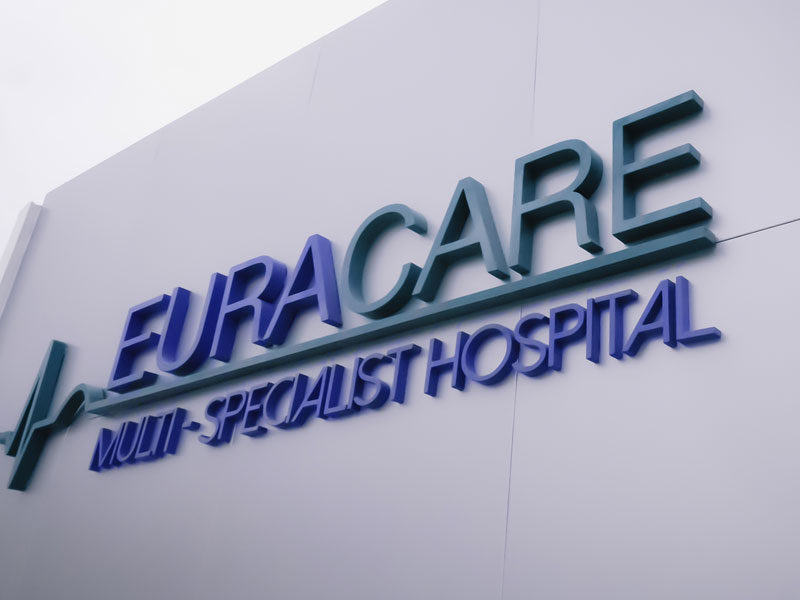
A Lagos-based healthcare facility currently in the limelight, Euracare Multi-Specialist Hospital, has faulted the outcome of the investigation panel of the Medical and Dental Council of Nigeria (MDCN) on the death of a 21-month-old Nkanu Nnamdi Esege, son of a renowned author, Chimamanda Ngozi Adichie.
The toddler died some weeks ago after an alleged overdose of sedative propofol, with the family alleging medical negligence.
This week, the panel suspended the two doctors of Euracare, Dr Tosin Majekodunmi and Dr Titus Ogundare.
Reacting to the development in a statement, the hospital claimed it observed “a number of serious concerns that have arisen in the course of these proceedings.”
In the statement made available to Business Post, Euracare emphasised that it vouches for the “professionalism and integrity of our clinical team,” pointing out that “certain established processes and protocols have not been followed in the manner required” during the probe.
While it empathised “with the family of Master Nkanu Nnamdi Esege” over the unfortunate incident, the healthcare firm said there was a “serious breach” by the investigators that “cannot go unaddressed.”
It identified this breach as the disclosure of “matters covered by patient and institutional confidentiality” outside the appropriate channels.
Below is the full statement from Euracare;
Our attention has been drawn to widespread media reports concerning the interim suspension orders and other findings issued by the Medical and Dental Practitioners Investigation Panel against thirteen doctors, two of whom are our clinical staff members in connection with the ongoing proceedings relating to the death of Master Nkanu Nnamdi Esege. We remain fully committed to cooperating with all relevant regulatory and judicial authorities in the course of their inquiries.
We however wish to place on record our confidence in the professionalism and integrity of our clinical team. Dr. Tosin Majekodunmi and Dr. Titus Ogundare who are experienced professionals whose records of service to patients in Nigeria span many years. Both doctors have, in their respective careers, contributed meaningfully to the delivery of quality healthcare to Nigerian patients at a standard comparable to what is obtainable in the world’s leading medical facilities.
In the interest of transparency, since the commencement of this matter, we have conducted a thorough internal review of the clinical events in question, in line with our clinical governance standards and best practices. We have actively demonstrated our commitment to transparency and will continue to engage openly with all inquiries directed at us.
We are also compelled to draw attention to a number of serious concerns that have arisen in the course of these proceedings. It is our position that certain established processes and protocols have not been followed in the manner required. We have further noted, with deep concern, that matters covered by patient and institutional confidentiality appear to have been disclosed outside the appropriate channels, and we consider this a serious breach that cannot go unaddressed.
We wish to state that we stand by the principles of equality, fairness, and good governance. Every party in this matter, including our institution and our staff, is entitled to a process that is conducted with rigour, impartiality, and respect for the rules that govern it. We will be raising these concerns through the appropriate legal and regulatory channels.
We continue to empathize with the family of Master Nkanu Nnamdi Esege. The loss of a child is a grief without measure, and we carry that awareness in everything we say and do in relation to this matter.
By Adedapo Adesanya
The Medical and Dental Practitioners Investigation Panel of the Medical and Dental Council of Nigeria (MDCN) has invoked its order of suspension against the Medical Director of Euracare Multi-Specialist Hospital, Dr Tosin Majekodunmi, and two others, after establishing a prima facie case of medical negligence against them in the management of the late Nkanu Adichie-Esege.
Nkanu, the son of renowned Nigerian author, Chimamanda Ngozi Adichie and Dr Ivara Esege, died on January 7, 2026, after receiving care at Atlantis Hospital and undergoing medical procedures at Euracare Multi-Specialist Hospital in Lagos. He was 21 months old.
Apart from the Medical Director at Euracare, the panel also suspended the anesthesiologist at the same hospital, Dr Titus Ogundare, as well as the Chief Medical Officer at Atlantis Pediatric Hospital, Dr Atinuke Uwajeh.
The trio were suspended from medical practice in Nigeria pending the determination of their case by the Medical and Dental Practitioners Disciplinary Tribunal.
A statement signed by the committee’s secretary, Dr Enejo Abdu, also disclosed it was determining if there is a prima facie case of professional misconduct against 10 other doctors.
These are Dr Adeseye Akinsete, Dr Chidinma Ohagwu, Dr Anthony Ajeh, Dr Amarachi Bayo, and Dr Nkechi Peji. Others are Dr Olaoye Oludare, Dr Agaja Oyinkansola, Dr Patricia Akintan, Dr Babatunde Bamgboye, and Dr Raji Faidat.
The panel, which also cleared eight other doctors, reached these decisions after considering the complaint against all 21 doctors and reviewing their counter-affidavits, including their oral depositions on oath.
It concluded its investigation at its 25th session held at Excel Hotel & Resort in Abuja on February 17 and 18, 2026.
The 21-month-old child, Nkanu Adichie-Esege, was initially admitted to Atlantis Hospital in Lagos for what was described as a worsening but initially mild illness.
While arrangements were being made to transfer him to Johns Hopkins Hospital in the United States, Atlantis referred him to Euracare for pre-flight diagnostic procedures, including an MRI, lumbar puncture, and insertion of a central line.
However, the child passed following the procedures.
His parents have alleged medical negligence and professional misconduct in connection with his death.
In a legal notice dated January 10, 2026, issued by the law firm led by Kemi Pinheiro (SAN), Ms Adichie and her husband accused Euracare, its anesthesiologist, and other attending medical personnel of breaching the duty of care owed to their son.
The notice stated that the child, born on March 25, 2024, was referred to Euracare on January 6, 2026, for diagnostic and preparatory procedures ahead of an emergency medical evacuation to the United States, where a specialist team was reportedly on standby.
The procedures reportedly included: Echocardiogram, Brain MRI, and insertion of a peripherally inserted central catheter.
Lumbar puncture, Intravenous sedation using propofol was administered.
The parents alleged that the child developed sudden and severe complications while being transported to the cardiac catheterisation laboratory after the MRI.
The development has raised worries and questions about the country’s healthcare.












-
 Feature/OPED6 years ago
Davos was Different this year
-
Travel/Tourism10 years ago
Lagos Seals Western Lodge Hotel In Ikorodu
-

 Showbiz3 years ago
Estranged Lover Releases Videos of Empress Njamah Bathing
-
 Banking8 years ago
Sort Codes of GTBank Branches in Nigeria
-

 Economy3 years ago
Subsidy Removal: CNG at N130 Per Litre Cheaper Than Petrol—IPMAN
-

 Banking3 years ago
Sort Codes of UBA Branches in Nigeria
-

 Banking3 years ago
First Bank Announces Planned Downtime
-

 Sports3 years ago
Highest Paid Nigerian Footballer – How Much Do Nigerian Footballers Earn