Health
Codix Bio Strengthens Nigeria’s Healthcare Manufacturing With New Sagamu Factory
By Aduragbemi Omiyale
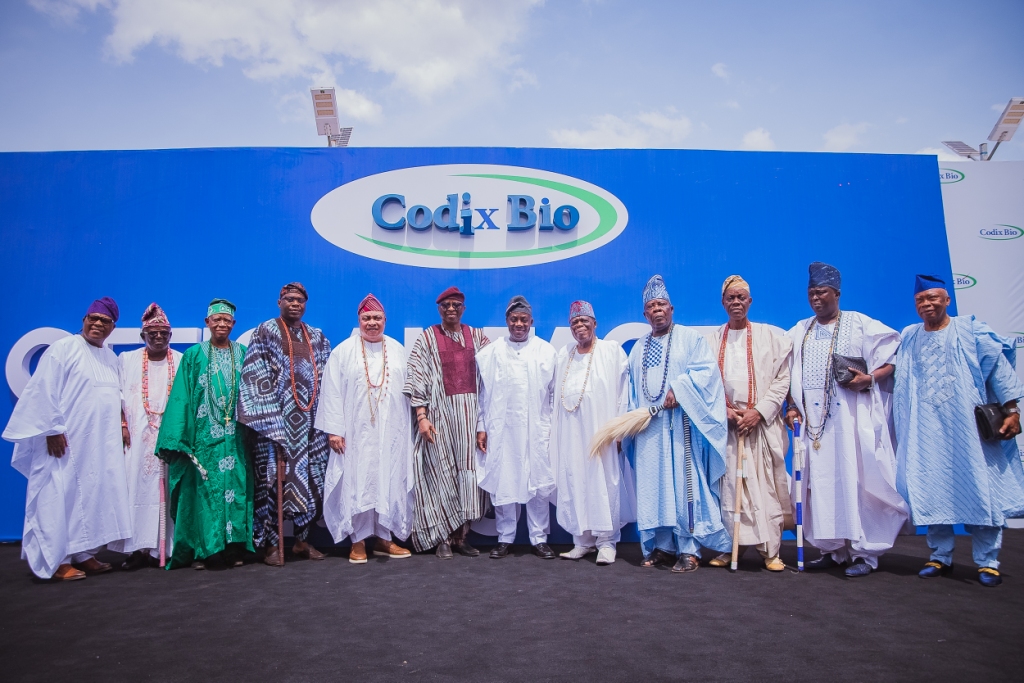
A new rapid diagnostic test (RDT) production plant has been opened in Sagamu, Ogun State by Codix Bio Limited in a bid to strengthen healthcare manufacturing in Nigeria.
The Governor of Ogun State, Mr Dapo Abiodun, commended the company for choosing the state for the factory, which he described as a transformative leap to making the country a big force in the healthcare system.
“We are proud to commission Nigeria’s first large-scale rapid diagnostic test (RDT) production facility—Codix Bio Limited—right here in Ogun State.
“Located along the Sagamu Expressway, this state-of-the-art in-vitro diagnostics factory is only the second of its kind in Sub-Saharan Africa and will produce over 147 million test kits annual for diseases such as HIV, Malaria, and Hepatitis B and C.
“This milestone marks a transformative leap in our journey to strengthen Nigeria’s healthcare system through bold investment, local innovation, strategic partnerships, and local manufacturing,” he stated.
With this facility, Codix Bio is now the first African manufacturing partner selected by the World Health Organization (WHO), SD Biosensor, and the Medicines Patent Pool (MPP) under the WHO Health Technology Access Pool (HTAP) programme.
This landmark designation places Codix Bio at the forefront of regional production for RDTs in Africa—solidifying its role as a key partner in strengthening global health security.
The new plant positions the firm within the scope of WHO’s technical support system, allowing for technology transfer, regulatory assistance, and sustained global collaboration.
Through the sublicensing agreement with SD Biosensor and MPP, Codix Bio will receive proprietary rights, technical know-how, and materials to legally develop and produce rapid diagnostic test kits based on SD Biosensor’s cutting-edge platform.
This technology enables the production of multipurpose rapid diagnostics adaptable to both pandemic and inter-pandemic periods marking a transformative milestone in increasing equitable access to healthcare in low- and middle-income countries (LMICs).
With the commissioning of this facility, Codix Bio is scaling innovation and it has positioned Nigeria and the African continent for self-reliant, sustainable healthcare solutions.
“With over 90 per cent of diagnostic kits used in Africa currently imported, this facility will significantly reduce our reliance on external supply chains, conserve foreign exchange, and create high-value jobs.
“This factory will help to solidify Nigeria’s position as a health hub in the continent and globally. This is a leap forward for our national and continental health security,” he affirmed.
“With this facility, we are not only boosting local production but also saving foreign exchange, creating jobs, and reinforcing our public health response capacity.
“We call on other investors to come onboard by producing other medical consumables needed by the various medical diagnostic groups,” the Coordinating Minister of Health and Social Welfare, Professor Muhammad Ali Pate, said.
On his part, the WHO Representative in Nigeria, Dr Walter Kazadi Mulombo, hailed the facility as a “game-changer” in Africa’s efforts toward disease control, health security, and public health advancement, saying it will improve access to timely and accurate testing and reduce dependence on imported rapid test kits.
The chairman of Codix Pharma Group, Mr. Sammy Ogunjimi, said, “We are delighted to unveil our second manufacturing plant today. But beyond infrastructure, we know that human capital is equally vital.”
He reiterated Codix Pharma’s support for regional integration frameworks, including the Africa CDC, the African Continental Free Trade Area (AfCFTA), and the African Medicines Agency (AMA).
“Once a product is approved by NAFDAC, it should move freely across Africa. Regulatory harmonization is essential to unlocking the potential of intra-African health trade,” he said.
Health
Polaris Bank Sponsors Free Breast, Prostate Cancer Screenings
By Modupe Gbadeyanka
To commemorate World Cancer Day observed on Wednesday, February 4, 2026, Polaris Bank Limited is bankrolling free screenings for breast and prostate cancers across the country.
The financial institution partnered with a non-governmental organization (NGO) known as Care Organization and Public Enlightenment (COPE) for this initiative.
At least 100 women would be screened during the exercise, scheduled for Saturday, February 21, 2026, at the C.O.P.E Centre on 39B, Adeniyi Jones Avenue, Ikeja, Lagos, from 10:00 am to 2:00 pm.
The exercise will be conducted by trained health professionals and volunteers, ensuring participants receive both screening services and educational guidance on cancer prevention, self-examination, and follow-up care.
To participate in the free breast cancer screening programme, the applicants must be women, must be Polaris Bank account holders, and must have registered ahead of the day via bit.ly/BCS2026, with selection based on early and confirmed submissions.
Polaris Bank said the initiative was designed to promote awareness, screening, early detection, and preventive care, reinforcing its belief that access to health services is a critical foundation for individual and economic well-being.
The organization is already supporting an on-going free prostate cancer screening programme for 250 men aged 40 years and above across Nigeria.
The prostate cancer screening is being conducted at the Men’s Clinic, situated at 18, Commercial Avenue, Sabo, Yaba, Lagos, providing accessible, professional medical support for male participants seeking early detection and preventive care for prostate cancer.
Both initiatives (free breast and prostate cancer screenings) directly aligns with the United Nations Sustainable Development Goals, particularly SDG 3 (Good Health and Well-being) through improved access to preventive healthcare and early detection services, SDG 5 (Gender Equality) by prioritizing women’s health and empowerment, and SDG 17 (Partnerships for the Goals) through strategic collaboration with civil society organizations such as C.O.P.E to deliver community-centered impact.
Educational materials, community engagement sessions, and digital awareness campaigns will be deployed to reinforce key messages around early detection, lifestyle choices, and the importance of regular medical check-ups.
The Head of Brand Management and Corporate Communications for Polaris Bank, Mr Rasheed Bolarinwa, emphasised that early detection remains one of the most effective tools in the fight against cancer.
Health
NSIA Gets IFC’s Naira-financing to Scale Oncology, Diagnostic Services
By Adedapo Adesanya
International Finance Corporation (IFC), a subsidiary of the World Bank, and the Nigeria Sovereign Investment Authority (NSIA) have partnered to provide Naira-denominated financing to NSIA Advanced Medical Services Limited (MedServe), a wholly owned healthcare subsidiary of the country’s wealth fund.
Supported by the International Development Association’s Private Sector Window Local Currency Facility, this financing enables MedServe to scale critical healthcare infrastructure while mitigating foreign exchange risks. IFC is a member of the World Bank Group.
The funds will support MedServe’s expansion program to establish diagnostic centers, radiotherapy-enabled cancer care facilities, and cardiac catheterisation laboratories across several Nigerian states.
These centres will feature advanced medical technologies, including CT and MRI imaging, digital pathology labs, linear accelerators, and cardiac catheterisation equipment, thereby enhancing specialised diagnostics and treatment.
MedServe provides sustainable service delivery with pricing that matches local income levels, helping ensure broader access to affordable oncology care for low-income patients.
The initiative will deliver over a dozen modern diagnostic and treatment centers across Nigeria, create 800 direct jobs, and train more than 500 healthcare professionals in oncology and cardiology specialties.
The total project size is $154.1 million, with IFC contributing roughly N14.2 billion ($24.5 million) in long-tenor local currency financing, marking IFC’s first healthcare investment in Nigeria using this structure.
This comes as Nigeria advances its aspirations for Universal Health Coverage. This partnership provides an opportunity to leverage private investment to complement government efforts to expand oncology care and diagnostic services.
IFC’s provision of long-tenor Naira financing addresses a significant market gap and unlocks institutional capital for healthcare infrastructure with strong development upside while MedServe’s co-location strategy with public hospitals maximises capital efficiency and strengthens the public-private ecosystem, establishing a replicable platform for future investment.
“This partnership with IFC represents a significant milestone in NSIA’s commitment to strengthening Nigeria’s healthcare ecosystem through sustainable, locally anchored investment solutions,” said Mr Aminu Umar-Sadiq, managing director & chief executive of NSIA.
He added, “By deploying long-tenor Naira financing, we are addressing critical infrastructure gaps while reducing foreign exchange risk and ensuring that quality diagnostic and cancer care services are accessible to underserved communities. MedServe’s expansion underscores our belief that commercially viable healthcare investments can deliver strong development impact while supporting national health priorities.”
“This ambition is consistent with our broader vision for Africa, one where resilient health systems and inclusive growth reinforce each other to deliver long-term impact across the continent,” said Mr Ethiopis Tafara, IFC Vice President for Africa.
Health
Lagos Steps up Mandatory Health Insurance Drive
By Modupe Gbadeyanka
Efforts to entrench mandatory health insurance through the Ilera Eko Social Health Insurance Scheme in Lagos State have been stepped by the state government.
This was done with the formal investiture of the Commissioner for Health, Professor Akin Abayomi, and the Special Adviser to the Governor on Health, Mrs Kemi Ogunyemi, as Enforcement Leads of the Lagos State Health Scheme Executive Order and ILERA EKO Champions.
The Commissioner described the recognition as both symbolic and strategic, noting that Lagos is deliberately shifting residents away from out-of-pocket healthcare spending to insurance-based financing.
“We have been battling with how to increase enrolment in ILERA EKO and change the culture of cash payment for healthcare. Insurance is a social safety net, and this mindset shift is non-negotiable,” he said.
He recalled that Lagos became the first state to domesticate the 2022 National Health Insurance Authority (NHIA) Act through an Executive Order issued in July 2024, making health insurance mandatory. He stressed that the decision reflected the Governor’s strong commitment to healthcare financing reform, adding, “When Mr. Governor personally edits and re-edits a document, it shows how critical that issue is to the future of Lagosians.”
Mr Abayomi also warned against stigmatisation of insured patients, describing negative attitudes towards Ilera Eko enrolees as a major barrier to uptake. “If someone presents an Ilera Eko card and is treated as inferior, uptake will suffer. That must stop,” he said, pledging to prioritise insurance compliance during facility inspections. “The key question I will keep asking is: ‘Where is the Ilera Eko?’”
In her remarks, Mrs Ogunyemi, said the enforcement role goes beyond a title, stressing that the health insurance scheme is now law.
“This is about Universal Health Coverage and equitable access to quality healthcare for everyone in Lagos State,” she said, noting that ILERA EKO aligns with the state’s THEMES Plus Agenda.
She commended the Lagos State Health Management Agency (LASHMA) for aggressive sensitisation efforts across the state, saying constant visibility was necessary to address persistent gaps in public knowledge. “People are still asking, ‘What is Ilera Eko?’ ‘Where do I enrol?’ Those questions tell us the work must continue,” she said.
She urged all directors and health officials to mainstream Ilera Eko promotion in every programme and engagement, emphasising that responsibility for health insurance advocacy does not rest with LASHMA alone. “When people come with medical bills, the first question should be: are you insured?” she said, adding that early enrolment remains critical as premiums rise over time.
Earlier, the Permanent Secretary of LASHMA, Ms Emmanuella Zamba, said the investiture marked a critical step in positioning leadership to drive enforcement of the Executive Order across the public service.
“What we are undertaking is pioneering in Nigeria. All eyes are on Lagos as we demonstrate how mandatory health insurance can work,” she said.
Ms Zamba disclosed that enforcement nominees across Ministries, Departments and Agencies have been trained, with a structure in place to ensure compliance beyond the health sector.
According to her, “This initiative cuts across the entire public service, particularly public-facing MDAs, in line with the provisions of the Executive Order.”
She explained that the formal designation of the Commissioner and the Special Adviser as Enforcement Leaders was meant to strengthen compliance, alongside the Head of Service, while also recognising their consistent advocacy for universal health coverage. “This decoration is to amplify their roles and appreciate the leadership they have shown,” she said.
-
Feature/OPED6 years agoDavos was Different this year
-
Travel/Tourism9 years ago
Lagos Seals Western Lodge Hotel In Ikorodu
-
Showbiz3 years agoEstranged Lover Releases Videos of Empress Njamah Bathing
-
Banking8 years agoSort Codes of GTBank Branches in Nigeria
-
Economy3 years agoSubsidy Removal: CNG at N130 Per Litre Cheaper Than Petrol—IPMAN
-
Banking3 years agoSort Codes of UBA Branches in Nigeria
-
Banking3 years agoFirst Bank Announces Planned Downtime
-
Sports3 years agoHighest Paid Nigerian Footballer – How Much Do Nigerian Footballers Earn