Connect with us

Health

Counterfeit Drugs: MeCure Unveils Device to Track, Trace Products

Published

on

MeCure Track and Trace

By Dipo Olowookere

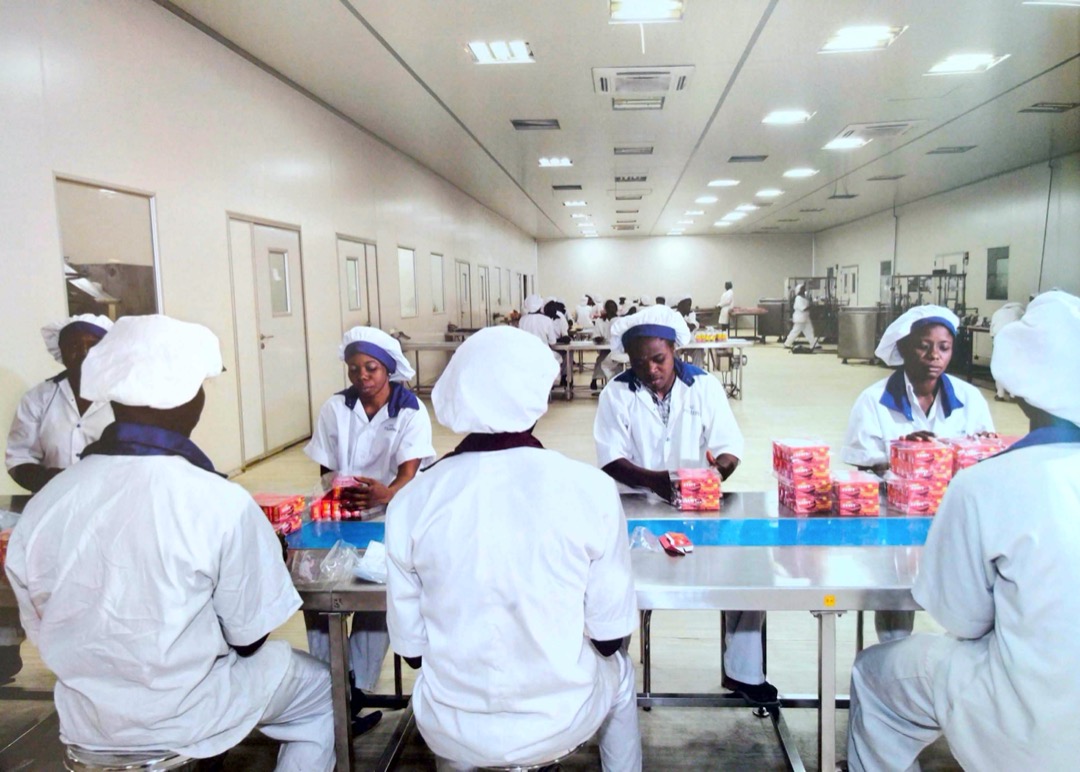
In its efforts to make it impossible to counterfeit its products, MeCure Industries Plc has implemented a cutting-edge technology known as Track and Trace Solution.

A statement issued by the healthcare firm disclosed that this new device, which can be used to monitor the movement of products from its manufacturing facility to the ultimate recipient, was designed to ensure “product safety for our customers.”

According to the disclosure sighted by Business Post, 18 brands within the MeCure portfolio have been enabled with this technology, with the company promising that all of its over 50 brands to be “traceable by the end of the first quarter of 2024.”

The organisation said this new initiative is poised to serve as a beacon for public health, guaranteeing that patients receive authentic and life-saving treatments, noting that the tracking of its products would facilitate the prompt identification of potential issues or discrepancies, thereby enabling timely corrective actions.

“Any suspicious deviation in the supply chain or an unauthorised alteration of product information can be flagged by the Track and Trace programme for the stakeholders to intervene expeditiously, curtailing the dissemination of counterfeit drugs and safeguarding unsuspecting consumers,” a part of the notice said.

The statement boasted that, “MeCure Track and Trace enabled brands are impossible to counterfeit,” as every stage of a drug’s trajectory is traceable and verifiable through this technology it developed with the collaboration of ACG Inspection, with the support of the National Agency for Food and Drug Administration and Control (NAFDAC), especially its Director-General, Mrs Mojisola Adeyeye, for her “visionary leadership in consistently staying at the forefront of innovative solutions such as Track and Trace.”

MeCure said counterfeit drugs pose a “profound risk to public health” in the form of incorrect ingredients, improper dosages, or deleterious substances, stressing that the ramifications of consuming them “span from therapeutic inefficacy to life-threatening complications.”


Health

Nigeria Launch €4.2m Initiative to Boost Capacity Against Outbreaks

Published

on

health financing fg

By Adedapo Adesanya

Nigeria has launched a €4.2 million programme supported by the European Union (EU) and implemented by the World Health Organisation (WHO) to strengthen the country’s capacity to detect and respond to disease outbreaks.

The initiative, known as the EU Support to Public Health Institutes in Nigeria (EU SPIN), will be carried out over four years in partnership with the Federal Ministry of Health and Social Welfare.

It is aimed at improving the performance of selected public health institutions through better coordination, faster information sharing and enhanced workforce capacity.

Speaking at the launch in Abuja on Monday, the Minister of State for Health and Social Welfare, Mr Iziaq Adekunle Salako, described the programme as a significant step towards strengthening Nigeria’s healthcare system.

“This initiative is designed to strengthen our health institutions, and it is truly a welcome development. It will improve the well-being of Nigerians, especially our vulnerable populations,” he said, noting that it aligns with the federal government’s broader health reform agenda.

Nigeria continues to face a dual health burden, with recurring infectious disease outbreaks alongside a growing prevalence of non-communicable diseases such as hypertension and diabetes.

According to the WHO, non-communicable diseases now account for 27 per cent of deaths in the country, while malaria alone contributes about 30 per cent of global malaria fatalities.

Recurrent outbreaks of cholera, diphtheria, Lassa fever, meningitis and Mpox also remain a major public health concern.

The EU SPIN programme is expected to address systemic gaps that slow outbreak response by strengthening collaboration among public health institutions and clarifying roles across federal, state and local levels.

It will also support real-time data systems to enable quicker and more informed decision-making during health emergencies.

A key component of the initiative is workforce development, with plans to train up to 75 per cent of public health staff in leadership, prevention and response strategies, as well as digital skills.

The European Union Ambassador to Nigeria, Mr Gautier Mignon, said the programme reflects a shared commitment to building resilient health systems.

“Through EU SPIN, the European Union is investing in strong, digitally enabled public health institutions in Nigeria. This partnership underscores our commitment to health security and sustainable systems strengthening,” he said.

Also speaking, the WHO Representative in Nigeria, Mr Pavel Ursu, noted that improved coordination and digital tools would enhance the country’s ability to protect lives.

“By improving coordination, skills and digital tools, the project will help protect lives and keep communities healthier,” he said.

Officials said the programme would ultimately strengthen links between public health systems and primary healthcare services, ensuring that communities benefit from faster and more effective responses to health threats.

By 2028, the initiative is expected to deliver more efficient inter-agency coordination, clearer institutional responsibilities and more reliable public health data nationwide, with progress tracked through national monitoring systems and periodic reviews involving government and development partners.

Continue Reading

Health

Malaria: SUNU Health Advocates Wider Adoption of HMO Plans

Published

on

SUNU Health --logo

By Aduragbemi Omiyale

To achieve a malaria-free Nigeria, a leading Health Maintenance Organisation (HMO) with a robust nationwide presence, SUNU Health Nigeria Limited, has called for a wider adoption of HMO packages for citizens.

It stressed that managed care provides a critical safety net, ensuring families can access quality preventive services without the burden of immediate, high costs, adding that this structured approach transforms healthcare from an unpredictable expense into a manageable, guaranteed service.

The company, which officially unveiled a comprehensive strategic roadmap aimed at drastically cutting down on malaria-related deaths, emphasised that the disease can be eradicated if citizens and stakeholders adopt consistent preventive measures.

“Eradication is within our reach if we synchronise our efforts,” the chief operating officer of SUNU Health, Dr Faith Nwachi, said, noting that the tools for victory range from environmental hygiene to the consistent use of treated nets, which are easily accessible to every Nigerian.

The organisation noted that it came up with the latest framework to significantly reduce the disease burden that has historically hindered Nigeria’s productivity and public health stability.

The urgency of this intervention is underscored by concerning data from late 2025, which revealed a sharp upward trend in cases, it stated.

With over 24.5 million confirmed cases reported in the first nine months of last year alone, the 2026 landscape demands aggressive action. Currently, malaria remains a leading cause of mortality, responsible for approximately 30 per cent of child deaths and 11 per cent of maternal deaths annually.

A central pillar of the roadmap is a focus on preventative care. As of early 2026, according to the World Health Organisation, malaria still accounts for nearly 30 per cent of all hospital admissions in Nigeria.

By addressing the root causes and transmission cycles, SUNU Health seeks to drastically lower these statistics, ensuring Nigerians can lead more active lives without the constant threat of infection.

Dr Nwachi further underscored the economic necessity of this shift, stating that “prevention is significantly cheaper than cure.”

The financial toll on the Nigerian economy is staggering, with billions of Naira lost annually to treatments and diminished man-hours. For the average family, frequent bouts of illness lead to catastrophic out-of-pocket expenses that undermine financial security.

Continue Reading

Health

AltBank, Partners Recommend Autism Care Financing Options, Others to Government

Published

on

Autism Care Financing Options

By Aduragbemi Omiyale

Plans are underway by the Alternative Bank (AltBank) to present a policy brief to relevant government ministries, recommending vocational pathways, autism care financing options, and a 12-month Lagos pilot across selected schools and primary healthcare centres.

The recommendations are from the inaugural Autism Stakeholders Roundtable and Policy Dialogue in Lagos, organised by the lender in partnership with the Private Sector Health Alliance of Nigeria (PSHAN), Eliakim Foundation, and Sterling One Foundation under the theme, It is How You Show Up.

The programme served as a critical platform to address the country’s fragmented autism support systems, with leading healthcare professionals, policymakers, and autism advocates in attendance, praising the financial institution’s decisive shift toward early intervention, systemic inclusion, and comprehensive capacity building for parents and caregivers.

The president of the Medical Women’s Association of Nigeria (MWAN) Lagos State Branch, Dr Ime Okon, stressed her group’s alignment with the bank’s initiatives.

“We recognise caregivers and families as central to the success of any intervention. We are showing up, holding their hands, to ensure they are never left to navigate this journey alone.

“For a physician, showing up means ensuring that a parent’s first concern is met with a strengthened, inclusive system rather than a clinical dead-end with no solution. The Alternative Bank has signalled a shift toward a high-level platform for national action,” she stated.

Validating this urgent need for systemic early response, the keynote speaker and founder of the Patrick Speech and Languages Centre (PSLC), Mrs Dotun Akande, advocated the integration of universal developmental screening into primary healthcare, stressing that Nigeria must transition from relying on parallel private centres to building a coordinated national response.

“What Nigeria must now build is a system where intervention happens early, equitably, and at scale, without depending on chance, geography, or privilege,” Mrs Akande noted, outlining the necessity of a caregiver support scheme that addresses both the financial and social needs of families navigating autism.

Answering this call to action, the Executive Director of Commercial and Institutional Banking (Lagos and Southwest) at The Alternative Bank, Mrs Korede Demola-Adeniyi, unveiled the financial institution’s concrete commitments to parent and professional training.

Noting that showing up in Nigeria has “too often meant showing up late,” she announced a robust three-pillar intervention agenda focusing on inclusive education, targeted training for caregivers and health professionals, and behavioural change advocacy.

As an immediate first step, Mrs Demola-Adeniyi announced the launch of a specialised capacity-building programme on Receptive Language Disorder, executed in collaboration with Eliakim Global Resources, which commenced on Sunday, April 26, 2026.

“Early recognition and sustained support depend on a workforce and caregivers who know what to look for, and what to do next,” she explained, emphasising that receptive language is a consequential developmental marker that is frequently missed.

The roundtable fostered dynamic discussions on practically designing and sustainably funding high-impact support programmes.

Continue Reading

Trending