
Health
My Encounter with a Nigerian Healthcare Professional


By Jerome-Mario Utomi
This piece stemmed from an unusual occurrence/event which glaringly did more than anything else to support the claim by well-meaning Nigerians that a healthcare professional does not feel bound to seriously observe basic standards of care or are generally unwilling to accept responsibility for their failure to deliver expected quality services.
It was an extract of a mental account on Saturday, November 6, 2021, at Ketu Lagos, where/when my son Pascal Onyinyechukukwu Utomi (now late) suffered a health crisis. To assist the innocent boy arrest the troubling reality, we (myself, the mother/my wife and a very good neighbour), went to one of the private hospitals in the neighbourhood. The hospital gate was firmly locked and understandable as it was dead in the night.
To get the needed attention, I thus pleaded: please help! Help!! Help!!! Emergency! Emergency!! Emergency!!! Some minutes later, one of the hospital’s personnel walked but leisurely towards us. Without getting close to the gate or enquires what the situation was, he, to our astonishment initiated the following conversation;
It will cost you a certain amount to obtain the hospital card. I responded; no problem. He again fired; you need to pay another Naira as a deposit (this time around mentioning a bigger amount). Yet again, I responded, no problem. And the next statement he uttered was; can I have the money? Looking at the time, to meet this demand, I pleaded that he assists me with the hospital’s account number to make the transfer or better still allow me to pay with my ATM card/POS as I do not have much cash on me.
At this point, I received what met the criteria of unimaginable and unexpected response!
Let’s listen to him; we cannot accept transfer/POS at this time of the night. Besides, our Oga (boss) who will confirm the transaction alert/notification is not here and we don’t have the power to wake him from his sleep.
So, can I pay cash tomorrow morning, I queried? No, he responded. Then, what is the way forward? We cannot help, he declared.
With this concluding statement and without consideration to the dying innocent boy, he slowly left us in the cold to our fate and walked back to the main building where he firmly locked the door.
We were left with no other option than to move to another hospital where he finally got admitted but the experience/services were not too different from the first.
Indeed, while the above accounts typify one out of millions of unavailability of quality services, failure of oversight and the impunity of healthcare professionals in both private and public healthcare sector in Nigeria, using the right to health as thematic focal points, there are ingrained reasons that render such development as not just a crisis but paint the public and private health operators in the country as both inefficient and culprits of poor health care providers.
First, the questions that are as important as the piece itself are; what has happened to the strengthened accountability mechanisms relevant to healthcare delivery in Nigeria? How can the nation ensure greater responsibility and accountability of healthcare facilities and professionals in the country? Which one should come first when considering treatment of patents, monetary gain or burning desire to save lives? If it is a desire to save lives, why are medical operators in the country so insensitive to the plights of Nigerians? Why are governments at all levels in Nigeria reputed for poor funding of the health sector?
Have medical professionals in the country forgotten that maximum/quality services provided with efficiency and under the cost-effective arrangement are more profitable than abnormal or counterfeit services as currently witnessed by Nigerians?
Also troubling is the fact that our nation’s health institutions (both private and public) are still unmindful of the fact that serving the people is a serious responsibility and the people involved must abide by the code of conduct and strive to remain within certain limits. This goal should be achieved in an environment of positive and fair competition. They must provide Nigerians with the opportunity to access quality health services without falling prey to fake or any unlawful service or practices.
Talking about the right to health, it is worth mentioning that Nigeria voluntarily assumed obligations to respect, promote, protect and fulfil the right to health under major regional and international human rights instruments, including the African Charter on Human and People’s Rights and the International Covenant on Economic, Social and Cultural Rights.
As noted elsewhere, by the Revised National Policy on Health (2004), “health and access to quality and affordable healthcare is a human right”.
It declares further that “a high level of efficiency and accountability shall be maintained in the development and management of the national health system.”
In its declaration of commitment, the policy asserts that “the people of this nation have the right to participate individually and collectively in the planning and implementation of their healthcare . . . this is not only their right but also their solemn duty.”
So, why is it that these principles and values are yet to permeate the “development and management” of healthcare planning and delivery systems? It is a lamentable development that many healthcare professionals and institutions lack knowledge of the existence of the policy let alone the ideas, principles, targets and expectations that the policy embodies.
This is not the only concern about the nation’s health sector. There are others that are more government-specific in outlook.
Take, as an illustration, Nigerians are particularly not happy that the capital flight lost to medical tourism in one year by Nigerians is huge enough to build a world-class hospital in this country that can attend to these needs, create employment, bring back the array of Nigerian medical specialists littered the world over and bring foreign earnings to our nation’s coffers.
They are not happy that the same medical tourism which in 2017 alone kept our dear president away for about 150 days is left without anything dramatic done to redress or forestall such future occurrence.
And sadly, Nigerians will continue to ‘cry’ because they are tired of going through this state-sponsored human degradation.
It will, however, be of considerable significance to this discussion if the FG realizes that globally, there is no codified principle for lifting a nation from poverty to prosperity. All that is needed is for the FG to go the extra mile to accelerate economic development, social progress and get deeply committed to developing strategies that will guarantee the protection of lives and property of Nigerians while holding health workers (private and public) accountable for their professional misdeed.
Jerome-Mario Utomi, Programme Coordinator (Media and Public Policy), Social and Economic Justice Advocacy (SEJA), wrote from Lagos. He could be reached via [email protected] or 08032725374.



By Adedapo Adesanya
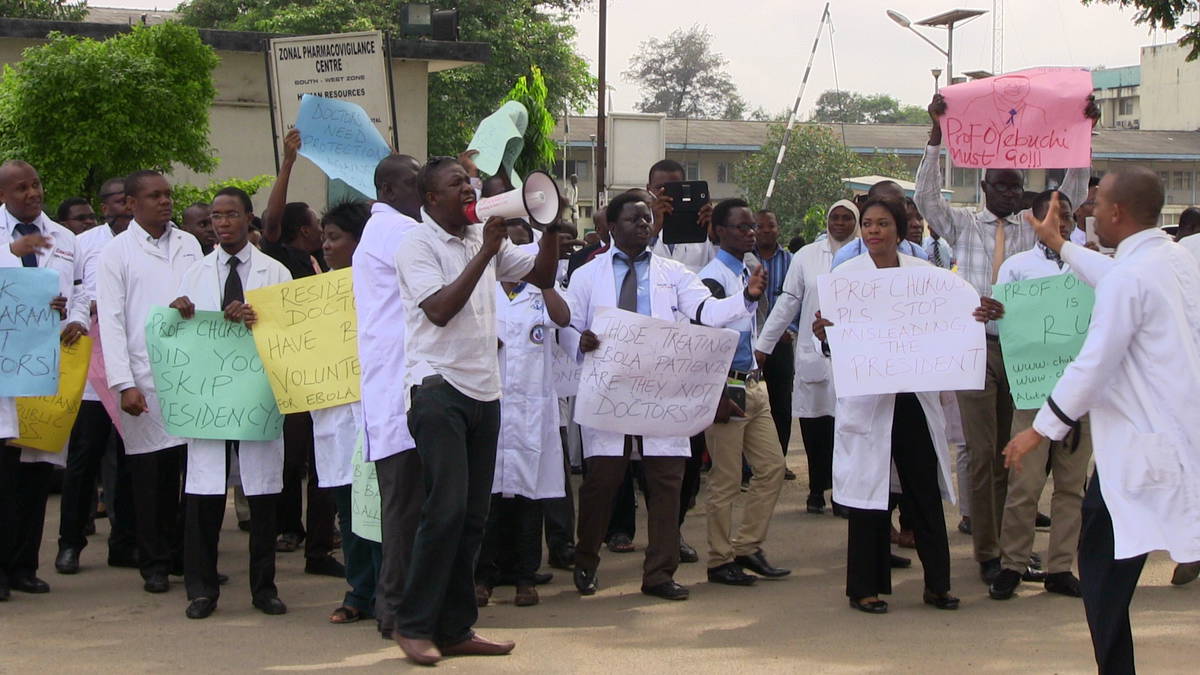
The Nigerian Association of Resident Doctors (NARD) has suspended its planned nationwide indefinite strike, granting the federal government a two-week ultimatum to address lingering welfare issues affecting resident doctors across the country.
The decision was taken after an emergency meeting of the association’s National Executive Council on Tuesday, where members reviewed assurances from government representatives and resolved to give dialogue another chance.
NARD said the suspension was informed by “progress made” in negotiations, particularly commitments on the prompt payment of salary arrears, hazard allowances, and steps toward resolving issues surrounding the Medical Residency Training Fund.
The association did not declare a full resolution of the dispute. It noted that the government had shown “renewed willingness” to address the concerns that triggered the strike threat.
The association noted that while these engagements signalled a willingness by the government to resolve the dispute, several critical issues remain outstanding, particularly the delayed payment of promotion arrears, salary arrears, the 2026 Medical Residency Training Fund (MRTF), and the backlog of 19 months’ professional allowance arrears owed to resident doctors.
It also expressed concern over the Federal Government’s decision to halt the implementation of the reviewed PAT, which had earlier triggered widespread dissatisfaction among its members and raised fears of disruption to healthcare services nationwide.
Despite these unresolved issues, NARD said it opted to suspend the strike as a demonstration of goodwill and commitment to ongoing dialogue, while giving the government a two-week window to take concrete, measurable and verifiable steps to meet its demands.
The association insisted on the immediate reversal of the decision affecting the PAT, payment of all outstanding arrears, prompt disbursement of the MRTF, and full settlement of the accumulated professional allowance backlog.
It warned that it would reconvene at the expiration of the ultimatum to assess the level of compliance and determine its next course of action, adding that failure by the government to meet its demands within the stipulated timeframe would result in the resumption of the suspended strike without further notice.
NARD also called on its members nationwide to remain calm, united and resolute, while urging the Federal Government to act swiftly to prevent a potential crisis in the health sector.
The association further appreciated the interventions of the Vice President and other stakeholders, expressing hope that their involvement would lead to the timely resolution of the dispute and help sustain healthcare delivery across the country.

By Modupe Gbadeyanka
To expand affordable healthcare in Kenya, Swedfund has invested about $600,000 into Jacaranda Health Limited (Jacaranda Maternity) to support innovations in neonatal intensive care and strengthen Jacaranda’s ability to provide life-saving services to underserved populations.
Jacaranda Maternity provides high-quality maternal health care at more affordable pricing than typical private providers, focusing on women in Nairobi’s low- and middle-income communities.
The new funding will support the opening of new hospitals, upgrading of neonatal care, and improvements to existing facilities.
Maternal and newborn health outcomes in Kenya remain a challenge, with maternal mortality still high despite improvements in skilled birth attendance.
Public health facilities play a central role but face capacity constraints, while access to reliable, quality care varies across regions and income groups.
Private healthcare providers offering essential maternity services at accessible price points can complement public provision.
Jacaranda Maternity aims to expand its network to six hospitals to achieve financial sustainability while scaling its impact. The healthcare provider is a recognised leader in promoting women’s health, with 71 percent of its staff being women, and a track record of effective environmental and social management.
“This investment will help Jacaranda Maternity provide life-saving care to more women and families while furthering Swedfund’s mission to promote inclusive and sustainable healthcare,” a Senior Investment Manager at Swedfund, Audrey Obara, said.
By Adedapo Adesanya
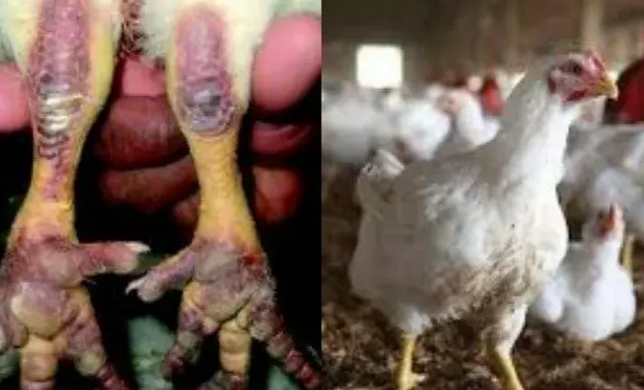
Nigeria will get a $350,000 intervention from the Food and Agriculture Organisation of the United Nations (FAO) to support its response to the ongoing outbreak of Highly Pathogenic Avian Influenza (bird flu) and strengthen the country’s animal health systems.
An agreement was reached on Wednesday during a strategic meeting between the Minister of Livestock Development, Mr Idi Mukhtar Maiha, and the FAO Representative to Nigeria and the Economic Community of West African States, Mr Hussein Gadain, in Abuja.
The intervention, approved under FAO’s Technical Cooperation Programme, will support disease containment efforts in 11 affected states and enhance surveillance, coordination and response mechanisms to prevent further spread of the disease.
Speaking during the meeting, Maiha said effective disease control remains critical to improving livestock productivity and protecting the livelihoods of farmers across the country.
He explained that factors such as drought, scarcity of feed, interaction between livestock and wildlife, as well as cross-border movement of animals have contributed to the spread of diseases in some areas.
“We must continue to strengthen our animal health systems and build the capacity required to respond effectively to disease outbreaks. Our collaboration with FAO will help protect livestock assets, improve productivity and support the broader transformation of the sector,” the minister said.
Mr Gadain commended the federal government’s commitment to the development of the livestock sector and assured that FAO would continue to provide technical support to Nigeria.
He stressed the need to strengthen veterinary services at the state and community levels, improve early detection of diseases and promote biosecurity practices among livestock farmers.
The meeting also reviewed progress on the global campaign to eradicate Peste des Petits Ruminants, a highly contagious disease that affects sheep and goats.
To advance the initiative, the ministry plans to convene a national technical meeting involving veterinary institutions, researchers and practitioners to review Nigeria’s eradication strategy and address gaps in vaccine supply.
As part of preparations, the ministry will engage the National Veterinary Research Institute to assess its vaccine production capacity while exploring other options for vaccine procurement to meet national demand.
Both parties also agreed to accelerate Nigeria’s access to financing under the Pandemic Fund through the One Health approach in collaboration with the Nigeria Centre for Disease Control and the Federal Ministry of Health to strengthen preparedness and response to zoonotic diseases.
Plans are also underway for the Director-General of FAO to participate in the Antimicrobial Resistance Conference scheduled for June 2026 in Abuja, where President Bola Tinubu is expected to be recognised as the African Champion for the eradication of Peste des Petits Ruminants.
The meeting further agreed to inaugurate a Livestock Donor Working Group to coordinate development partner support and advance key initiatives, including the development of a national feed and fodder strategy aimed at improving productivity and sustainability in the livestock sector.
-
 Feature/OPED6 years ago
Davos was Different this year
-
Travel/Tourism10 years ago
Lagos Seals Western Lodge Hotel In Ikorodu
-

 Showbiz3 years ago
Estranged Lover Releases Videos of Empress Njamah Bathing
-
 Banking8 years ago
Sort Codes of GTBank Branches in Nigeria
-

 Economy3 years ago
Subsidy Removal: CNG at N130 Per Litre Cheaper Than Petrol—IPMAN
-

 Banking3 years ago
Sort Codes of UBA Branches in Nigeria
-

 Banking3 years ago
First Bank Announces Planned Downtime
-

 Sports3 years ago
Highest Paid Nigerian Footballer – How Much Do Nigerian Footballers Earn