Connect with us

Health

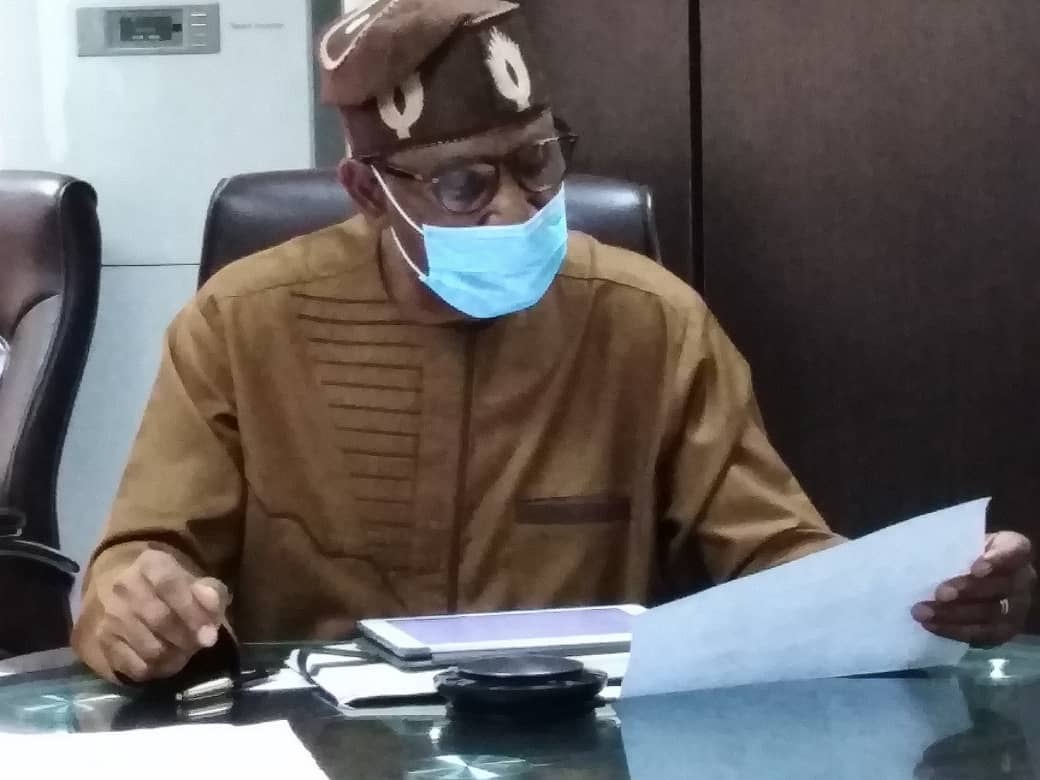
Salako Heads National Health Research Committee

Published

on

National Health Research Committee

By Modupe Gbadeyanka

The Director General of Nigeria Institute of Medical Research (NIMR), Mr Babatunde Salako, has been appointed as Chairman of the National Health Research Committee inaugurated on Friday by Minister of State for Health, Mr Olorunnimbe Mamora.

The renowned Nephrologist is expected to bring his experience and other members on the panel to bear for the benefit of the nation at this time of COVID-19 pandemic.

At the induction, the Minister explained that the committee was constituted because of the lack of synergy among the various research institutions, the academia and policy makers despite the development of the National Health Research Policy and Priorities in 2014, rending health research almost useless in the country.

According to him, health research has often been dictated by the preferences of the researchers and institutions, without recourse to the priority health needs of the country as documented in the National Health Research Policy.

“Excellent research findings are probably gracing the shelves of libraries in the various institutions without having the desired impact on the health system due to this disconnect between the institutions and policy makers,” Mr Mamora lamented.

However, he expressed optimism that with Mr Salako and his team, things should start to get better, urging the committee to quickly develop a COVID-19 Research Agenda for the country, adapting the WHO Research Roadmap to our local situation and commence the aggregation of all COVID-19 researches in the country.

The Minister further charged the panel to swiftly identify and source for funds, within and outside the country to carry out relevant research, pledging that Federal Ministry of Health on its part will give all the necessary support.

He added that even when the expectation from this committee is great, given the calibre of professionals in it, he will be awaiting clear deliverables in the next couple of weeks.

He also charged the body to “collate the researches from the respective institutions and translate the same to policy for evidence-based health interventions.”

“We are counting on your wealth of experience evident in your individual accomplishments at your various research domains over the years,” he further charged.

Mr Mamora also asked the committee to note that, “The World Health Organisation (WHO) is currently supporting the Ministry to develop a National Research for Health Strategic Plan (NRHSP) which should form the basis for the implementation of prioritized research activities to strengthen leadership, coordination and funding for health research in the country.”

“A team comprising stakeholders in health research was constituted to work with WHO and the Ministry to develop the NRHSP and charged the newly inaugurated National Health Research Committee to collaborate with the team to actualise this strategic plan as well as the Operational Plan,” he added.

The Minister declared to the inaugurated committee members that their job is enormous “and this becomes more so now that we are faced with the COVID-19 pandemic.”

He said that the global community is involved in research to find the most effective strategy to slow down and eventually halt the spread of the virus and stressed that, “Nigeria shouldn’t be an exception.”

Chairman of the inaugurated NHRC accepted on behalf of members to serve diligently, thanking the Minister for giving them the opportunity to do so.

Business Post reports that the Director of Health Services in Federal Ministry of Health, Mrs Adebimpe Adebiyi, was appointed as Secretary to the research team.

Members of the committee include Professor Abdulrazak Habib, Department of Medicine; Aminu Kano Teaching Hospital (AKTH); an Infectious Diseases expert; Professor Lawal Bulbis, the Vice Chancellor, Usman Dan Fodio University, Sokoto, a Biological Chemist; Professor Onwujekwe Obinna, Department of  Health Administration/Management & Pharmacology/Therapeutic; University of Nigeria, a renowned Health Economist; Dr Obi Adigwe, the Director-General National Institute of Pharmaceutical Research and Development (NIPRD), a Pharmacist; Associate Professor Peter Oladosu, NIPRD, also a Pharmacist; Professor AMS Oduola,  the Director, University of Ibadan’ Research Foundation, Ibadan, Nigeria, a Public Health practitioner; Dr Reuben A. Ocholi, the Chief Executive of the National Veterinary Research Institute, Vom, Plateau, and Veterinary Medicine expert.

Others are Dr Clement Maseko of the National Veterinary Research Institute, Vom, Plateau State, a Veterinary Medicine Practitioner; Professor Haruna Yusuph of the Department of  Medicine, University of Maiduguri Teaching Hospital, a Clinical Immunology/Infectious Disease; Dr Musa Garba of the Department of Medicine, University of Maiduguri Teaching Hospital, an expert on Infectious Disease; Professor Ogoina Dimie, the Chief Medical Director of the Niger Delta University Teaching Hospital,  Okolobiri, Bayelsa, also an Infectious Disease expert; and Prof. Asogun Danny of the Department of Community Medicine, Irrua Specialist Teaching Hospital, Edo, who is a Public Health expert.


Modupe Gbadeyanka is a fast-rising journalist with Business Post Nigeria. Her passion for journalism is amazing. She is willing to learn more with a view to becoming one of the best pen-pushers in Nigeria. Her role models are the duo of CNN's Richard Quest and Christiane Amanpour.

Click to comment

Leave a Reply

Your email address will not be published. Required fields are marked *

Health

Binance Promises $250,000 for Ebola in DR Congo, Uganda

Published

on

Binance

By Aduragbemi Omiyale

The sum of $250,000 in humanitarian funding is to be provided by Binance to support the frontline response to the ongoing Ebola disease outbreak in the Democratic Republic of Congo (DRC) and Uganda.

The cryptocurrency exchange said the funds would be used to enable rapid response in high-risk and underserved areas, where access to healthcare infrastructure, protective resources, and timely public health information remains limited.

The money will be shared equally between the Uganda Red Cross Society and Doctors Without Borders / Médecins Sans Frontières (MSF), supporting urgent interventions in affected and high-risk communities.

Binance’s contribution will help strengthen emergency medical care and treatment, community awareness and prevention campaigns, contact tracing and containment support, and the provision of sanitation supplies and protective equipment for frontline workers.

By supporting both immediate response activities and preventative education, Binance aims to contribute to reducing transmission and strengthening community resilience.

“Communities across Africa continue to show extraordinary resilience in the face of complex challenges, but frontline responders should not have to face crises like this alone,” the co-chief executive of Binance, Mr Richard Teng, said.

“The teams working to contain the Ebola disease outbreak are delivering vital, life-saving support under incredibly difficult conditions.

“We are proud to support both the Uganda Red Cross Society and Doctors Without Borders as they work to protect vulnerable populations, strengthen local response efforts, and deliver urgent care where it is needed most,” he added.

Also commenting, the Secretary General for the Uganda Red Cross Society, Mr Robert Kwesiga, said, “Strong partnerships are essential during public health emergencies since we are not able to manage the outbreak alone.

“The support from Binance comes in so timely and handy, and will help us respond more rapidly, reach more at-risk communities, and reinforce the frontline services needed to help contain the outbreak and save lives.”

The MSF Emergency Programme Manager, Trish Newport, while speaking on the initiative, said, “The number of cases and deaths we are seeing in such a short timeframe, combined with the spread across several health zones and now across the border, is extremely concerning. In Ituri, many people already struggle to access healthcare and live with ongoing insecurity, making rapid action critical to prevent the outbreak from escalating further.”

Caused by the Bundibugyo virus, for which there is no approved vaccine or treatment, this Ebola disease outbreak has placed acute pressure on already fragile health systems in eastern DRC and the wider region.

Local authorities, international agencies, and humanitarian organisations are racing to contain it and protect affected communities.

Binance’s support is intended to reinforce these efforts at a critical moment. It reflects the company’s broader commitment to supporting communities across Africa through programmes focused on education, financial inclusion, digital skills development, and community empowerment.

In this case, Binance is extending that commitment to urgent humanitarian and public health needs by working alongside trusted organisations with deep frontline expertise.

Continue Reading

Health

Tinubu Sets up Ebola Task Force, Approves N10bn Emergency Funding

Published

on

ebola

By Adedapo Adesanya

President Bola Tinubu has approved the establishment of a Presidential Task Force on Ebola Virus Disease Preparedness and Emerging Public Health Threats and ordered the immediate release of N10 billion as emergency intervention funding.

According to a disclosure by the Special Adviser to the President on Information and Strategy, Mr Bayo Onanuga, the fund will strengthen the operational preparedness of the National Centre for Disease Control and Prevention (NCDC) and support critical national public health emergency response activities.

The team will be chaired by the Chief of Staff to the President, Mr Femi Gbajabiamila, with membership drawn from relevant Ministries, Departments and Agencies (MDAs) and state representatives.

The presidency noted that the approval followed a stakeholder meeting convened under the chairmanship of the Chief of Staff to review Nigeria’s preparedness and develop strategies against the possible importation of Ebola into the country.

Ebola has recently resurfaced in the Democratic Republic of Congo (DRC) and Uganda, both neighbouring countries.

Other key stakeholders at the meeting included representatives of the Ministry of Interior, the Federal Airports Authority of Nigeria (FAAN), the Nigeria Immigration Service (NIS), the Nigerian Civil Aviation Authority (NCAA), the Lagos State Government and others.

Mr Onanuga also disclosed that President Tinubu directed all states hosting international airports and international border corridors, as well as relevant MDAs, to submit their plans, funding requirements and intervention needs for consideration and coordinated implementation.

Additional measures to be implemented by the Task Force include the intensification of passenger screening at all international airports through enhanced temperature checks and crowd-control protocols; enhanced monitoring of passengers arriving through high-risk airline routes, including Air Uganda, Rwanda Air, Air Tanzania, Air Angola, Kenya Airways and Ethiopian Airlines; and the immediate activation of referral and isolation centres at the Lagos and Abuja international airports, with other airports to follow.

Other measures include the mandatory activation of QR code-based pre-arrival health declaration systems for passengers originating from or transiting through designated high-risk countries, as well as the disinfection of departure halls, cargoes, baggage areas and airport facilities as precautionary environmental measures.

The President also directed the advisory group to consult with security, diplomatic and aviation bodies on regulating flights from affected and designated high-risk countries.

The Task Force was further mandated to designate specific airports or terminals for high-risk flights to enable controlled screening and isolation procedures, and to consider adjusting flight schedules to minimise interaction between high-risk passengers and other travellers.

Continue Reading

Health

QPSI Offers Free Healthcare Services, Others to 500 Ajegunle Residents

Published

on

QPSI 500 Ajegunle Residents

By Modupe Gbadeyanka

Over 500 residents of Ajegunle in Lagos enjoyed free healthcare services, comprehensive health education, youth mentorship, and community engagement activities at a one-day event organised by Queens Palm Support Initiative (QPSI).

This is part of the organisation’s Reach 1000 Initiative, deliberately designed to address immediate healthcare needs and empower individuals with the knowledge, resources, and support required to live healthier, more productive, and dignified lives.

QPSI is a non-profit organisation established by Ms Sabrina Ozma dedicated to advancing community development, healthcare advocacy, youth empowerment, leadership education, and social impact interventions across Nigeria. Fou

At the Ajegunle programme held at Bola Ige Millennium School, Tolu Complex, participants received a comprehensive range of healthcare services facilitated by accredited medical professionals, including general medical consultations and health assessments, malaria screening, diagnosis and treatment, blood sugar testing and diabetes awareness, comprehensive eye examinations and vision assessments, as well as specialist neurosurgical consultations provided by medical experts from Dukes Neurosurgery and Specialist Hospital.

Also, Reals Pharmaceutical Limited provided and distributed antimalarial medications to beneficiaries, ensuring continuity of treatment and improved health outcomes beyond the day of the outreach.

Ms Ozma, while speaking at the event, said access to quality healthcare remains one of the most pressing challenges confronting underserved communities across Nigeria.

According to her, interventions such as the Reach 1000 Initiative are deliberately designed to close this gap, not only by addressing immediate healthcare needs but by empowering individuals with the knowledge, resources, and support required to live healthier, more productive, and dignified lives.

Beyond healthcare delivery, the initiative featured structured health education and awareness sessions focused on disease prevention and early symptom recognition, personal hygiene and sanitation best practices, nutrition and food safety, healthy lifestyle habits, and the importance of routine medical check-ups.

In addition, a media personality and youth advocate, Ms Blessing Lopez, led engaging conversations around personal growth, confidence, and purpose-driven living, while entertainer Larry J inspired participants through discussions on resilience, positive decision-making, and the importance of becoming active contributors to societal progress.

The programme also attracted notable participation from government institutions and civil society organisations, highlighting the importance of multi-sector collaboration in addressing community challenges.

The Executive Secretary of the Lagos State Domestic and Sexual Violence Agency (DSVA), Mrs Titilola Vivour-Adeniyi, engaged participants on safeguarding, protection against domestic and sexual violence, and the importance of building safer communities.

Further, representatives of the Cleen Foundation facilitated discussions on crime prevention, community security, and the role of young people in promoting civic responsibility and the rule of law, while the Crime Prevention Partnership (CPP) led discussions on community-led safety strategies and citizen participation in fostering safer neighbourhoods.

Continue Reading

Trending