

Health
What Liposculpture in Dubai Actually Adds to Standard Fat Removal

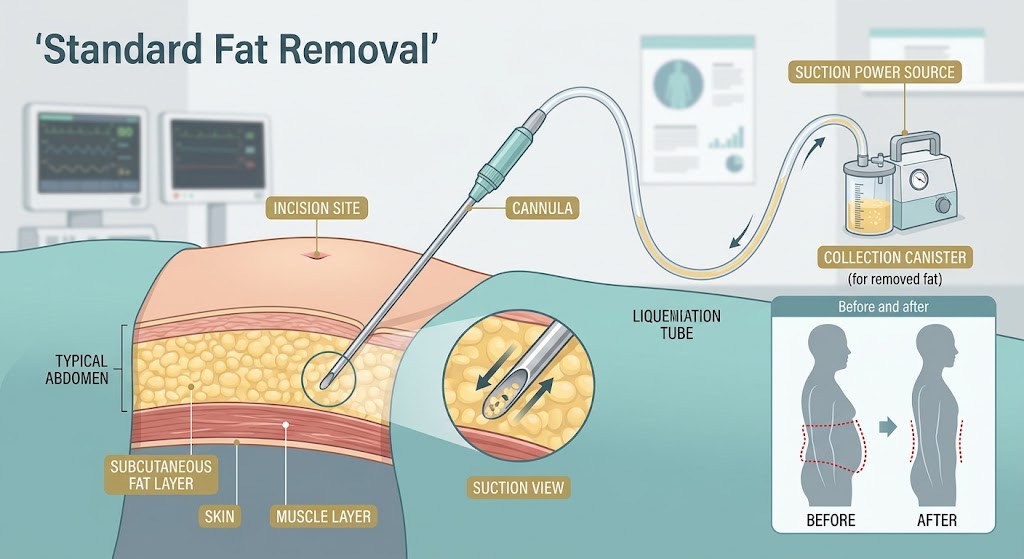
Search for liposculpture Dubai and you’ll find it used almost interchangeably with liposuction on most clinic websites. That’s not quite accurate, and the difference matters if you’re specifically hoping for visible muscle definition rather than just a smaller overall shape. The two procedures share the same basic tool, a thin cannula removing fat, but what they’re built to achieve is genuinely different.
This article explains where that difference actually lies, who tends to get strong results from it, and what the timeline for seeing definition actually looks like. Also check for gynecomastia treatment in Dubai
Liposuction vs Liposculpture: Is There Really a Difference?
Where the Terms Overlap
Liposuction removes unwanted fat from beneath the skin to reduce volume in a specific area, whether that’s the abdomen, thighs, flanks, or another treatment zone. Both liposuction and liposculpture use this same fundamental technique, and in casual conversation, the terms are often used as if they mean exactly the same thing.
What “Sculpture” Actually Implies
The distinction shows up in the goal, not the tool. Where standard liposuction focuses on reducing fat volume, liposculpture is built around an artistic, anatomy-driven approach that shapes the treatment area to reveal underlying muscle contours, rather than simply making the area smaller. The term was originally developed to describe exactly this shift, treating body contouring as something closer to sculpting visible anatomy than removing unwanted tissue. In practice, this means a surgeon performing liposculpture Dubai patients ask for is working with a different endpoint in mind from the outset, planning around muscle lines rather than a flatter silhouette alone. Also check for Breast Reduction in Dubai
High-Definition Contouring and Muscle Etching
How Etching Actually Works
The technique behind this more detailed result is often called etching, and it typically uses ultrasound-assisted technology to carefully thin and feather the superficial layer of fat sitting directly over specific muscle groups, most commonly the abdominals and obliques. Because this fat layer is thinner and closer to the skin than deeper fat deposits, it requires more precision than standard liposuction, since removing too much can create an unnatural or uneven surface rather than a smooth, defined line. This is why etching results depend heavily on a surgeon’s understanding of muscle anatomy specifically, not just general liposuction experience.
Who This Technique Suits
Etching-based liposculpture was originally developed for men already close to a lean body composition, generally somewhere in the range of eight to fifteen percent body fat, since visible muscle definition depends on there being real muscle tone underneath the fat layer being thinned. Modern high-definition techniques have expanded this candidacy somewhat, extending to a broader range of patients including women, by taking a more three-dimensional approach across multiple muscle groups rather than a single narrow abdominal strip. Even so, this remains a procedure for revealing existing muscle tone rather than creating it from nothing, which is why a surgeon should be honest during consultation about whether your current body composition makes this the right fit, rather than promising a dramatic transformation regardless of your starting point.
Why Treating One Area Alone Can Look Unbalanced
A detail many patients don’t consider until it’s raised directly: defining the abdomen alone, without addressing the flanks, lower back, or chest depending on your goals, can leave the results looking disconnected rather than naturally proportioned. A surgeon planning genuine liposculpture typically maps the full torso as a connected shape, considering how the obliques transition into the flanks and how the chest or back contribute to the overall silhouette from multiple angles, not just a front-facing view. This is part of what separates a liposculpture plan from a single-area liposuction request, and it’s worth discussing directly during consultation which areas need to be included together to avoid an uneven result.
3D Mapping and Planning Before Surgery
Surgical planning for detailed contouring work increasingly relies on 3D imaging technology to map existing muscle structure and fat distribution before any incision is made. This lets a surgeon visualize where etching lines will fall relative to your actual anatomy, rather than working from a generic template applied to every patient. For a technique this dependent on precision, this kind of pre-surgical mapping is a meaningful part of getting a natural-looking result rather than a cosmetic add-on to the consultation process.
What Recovery Involves for a More Detailed Contour
Because superficial fat removal near the skin causes more visible swelling initially than deeper liposuction, the first two weeks typically show little to none of the actual definition, with swelling masking the muscle lines being created underneath. Contours generally begin to sharpen around the six-week mark, with a clearer preview of the final shape visible by roughly three months. The fully settled result, once all residual swelling has resolved completely, often takes closer to six months to become fully apparent, which is considerably longer than the timeline most patients expect walking in. Compression garments are typically worn for several weeks to support the treated area, and a return to intense core training is generally cleared around the four to six week mark, depending on individual healing.
The Risks Specific to a More Aggressive Contouring Approach
Because etching works on a thinner, more superficial fat layer than standard liposuction, the margin for error is smaller, and contour irregularities such as unevenness or visible lines that don’t match natural anatomy are a real risk if too much or too little fat is removed in a specific spot. Skin laxity also matters more here than in general liposuction, since the skin needs to lie smoothly over the newly defined muscle lines rather than pooling or creating visible folds. This is another reason candidacy assessment matters so much before booking, since a surgeon experienced specifically in etching techniques is better positioned to judge whether your skin and fat distribution will produce a clean result.
Why Choose Dr. Jaffer Khan
Dr. Jaffer Khan’s approach to liposculpture begins with an honest assessment of your current body composition and skin quality, since etching results depend directly on both rather than surgical skill alone. As a board-certified plastic surgeon and the first regional surgeon to pass the specialty fellowship examination of the Joint Royal Colleges, his surgical planning maps the full treatment area as a connected shape rather than isolating a single zone, avoiding the disconnected look that can come from treating the abdomen without considering how it relates to the flanks and chest. Where a patient’s current body fat or skin elasticity makes dramatic etching results unrealistic, this is discussed directly during consultation rather than left for the patient to discover after surgery. Follow-up appointments continue through the full settling period, since results from this technique take considerably longer to fully appear than standard liposuction.
Questions Patients Ask Before Their Consultation
Is liposculpture the same as regular liposuction? They use the same underlying technique, but liposculpture specifically aims to reveal muscle definition through more precise, superficial fat removal, while standard liposuction focuses primarily on reducing overall volume.
Do I need visible muscle tone already for this to work? Yes, to a meaningful degree. This procedure reveals existing muscle definition by removing the fat layer covering it rather than building muscle that isn’t already there.
How long until I see the actual definition? Initial swelling typically hides results for the first two weeks, with contours sharpening around six weeks and a fuller picture visible by three months. The final, fully settled result generally takes around six months.
Can this be combined with a tummy tuck if I also have loose skin? In some cases, yes, particularly if skin laxity would otherwise prevent a clean-looking result. This is worth discussing directly during consultation based on your specific anatomy.


