
Media OutReach
Ant Group Chairman Eric Jing Outlines Strategy for Inclusive AI, Collaboration on Tokenised Settlement


- AI-as-a-Service applications will make AI virtual CFO and COO for SMEs
- Public-private collaboration in regulatory sandboxes help to provide clarity and certainty when it comes to new technology like tokenisation and AI
SINGAPORE – Media OutReach Newswire – 21 November 2025 – Eric Jing, Chairman of Ant Group, said the company’s focus is on putting new payment and operation tools powered by AI and tokenisation technology in the hands of SMEs, to fully embrace the next wave of global productivity revolution.
“We are passionate about using frontier technology to support SMEs and the use of AI will really uplift inclusion,” Jing said during a panel discussion titled “Steering the Global Future” during the Singapore FinTech Festival on November 14, 2025.
Jing was joined by Agustín Carstens, Former General Manager, Bank for International Settlements (BIS); Ravi Menon, Chairman of the Board of Directors, Global Finance & Technology Network (GFTN); Ambassador (Climate Action), Singapore & Former Managing Director, Monetary Authority of Singapore, GFTN, and Dr. Razeen Sally who moderated the panel.
From Agentic Payment to Agentic Finance: A Virtual CFO, and COO for SMEs
On the consumer front, Jing expects the rise of personalised AI financial managers and advisors. On the business front, “Agentic payment is one of the most important forces driving agentic commerce and agentic systems,” Jing said. Ant will focus on democratising AI for SMEs at a time when small businesses engaged in global trade face increasingly complex payment and risk environments.
“Many SMEs may not have sophisticated digital skills or a large workforce to support them in doing business, and this is where AI agents can really play a role in helping them to navigate the landscape,” Jing said.
Antom, the merchant payment and digitisation services arm of Ant International, is using Antom Copilot to support payment integration, merchant onboarding, risk management settings, and chargeback response. Copilot cuts payment integration time by over 90%, boosts chargeback winning rates by 3 percentage points, and shortens chargeback resolution time by 46 percent.
During the Singapore FinTech Festival 2025, Antom also launched EPOS360, an app that brings point-of-sale (POS) system, payments, banking, lending, and growth support together to help micro, small and medium‑sized enterprises (MSMEs) move from setup to scale efficiently.
“Agentic AI will act like your COO, your CFO. They are stepping in as virtual financial and operational planners and implementers for SMEs, enabling them to compete globally,” Jing said.
He added that the rise of agentic payments and multi-agent systems are already on track, where autonomous AI agents collaborate to execute complex end-to-end transactions.
Collaboration with MAS on AI and Blockchain is an Exemplar of Public-Private Collaboration
“The tokenisation of money that enables global real-time settlement across borders will be particularly beneficial to SMEs and companies doing global trade,” Jing said. “On such important projects, it is necessary to have policy leadership from regulators like the Monetary Authority of Singapore, who provides institutional clarity and brings together an industry ecosystem of collaboration.”
Ant International’s deep collaboration with the Monetary Authority of Singapore (MAS) through key initiatives like Project Guardian and PathFin.ai sets an exemplary model of public-private partnership, especially when blockchain and AI have emerged as global themes.
“We are honoured to participate in the Monetary Authority of Singapore’s regulatory sandboxes. They provide the clarity and certainty needed to responsibly deploy cutting-edge technologies while managing risks,” said Jing. “This new technology is up and coming, we cannot shy away from it. Instead, the right way is to harness the technology to get the benefits while keeping in mind the potential risks and challenges.”
Under Project Guardian, Ant International has contributed to pilot efforts in tokenised money and cross-border settlements, demonstrating how real-time, transparent and credible blockchain-based payments can benefit SMEs engaged in global trade.
Through MAS’ PathFin.ai programme, Ant International is also actively engaging in knowledge exchange on AI implementations. Jing highlighted Ant International’s Falcon Time-Series Transformer (TST) Model — an 8.5-billion-parameter AI model designed for FX and liquidity forecasting. The model has significantly improved accuracy in predicting cash flow and liquidity, helping businesses reduce hedging costs in today’s volatile global economy.
“Through participating in sandboxes, we see benefits and opportunities to improve our products before rolling them out. It has really been a pleasure to be part of that – MAS is taking a very proactive role and it’s enormously valuable,” said Jing.
Ant International, which became independent in 2024, is headquartered in Singapore. The company now collaborates with over 1,400 institutional partners and provides global payment, settlement and digitisation services to 150 million merchants, and a network of global wallets and national QR schemes that together serve over 1.8 billion consumer accounts.
Hashtag: #AntInternational
The issuer is solely responsible for the content of this announcement.
About Ant International
With headquarters in Singapore and main operations across Asia, Europe, the Middle East and Latin America, Ant International is a leading global digital payment, digitisation and financial technology provider. Through collaboration across the private and public sectors, our unified techfin platform supports financial institutions and merchants of all sizes to achieve inclusive growth through a comprehensive range of cutting-edge digital payment and financial services solutions. To learn more, please visit https://www.ant-intl.com/



Media OutReach
AECOM supports CEDD and AFCD of HKSAR Government in launching Hong Kong’s first comprehensive nature-based solutions guidelines to advance sustainable urban development

Developed through multidisciplinary expertise in ecology, landscape architecture, engineering, climate resilience and urban planning, the HKNbSDG provides a practical blueprint for designing, implementing, sustainably managing, and evaluating NbS across diverse environmental contexts — from rivers and wetlands to coastlines and high-density urban districts.
Factoring in the characteristics of Hong Kong’s natural ecology and urban development, the HKNbSDG is built on three core principles that outline a holistic approach to promoting ecosystem diversity at multiple scales, embracing human-nature coexistence for mutual benefits, and improving resilience through NbS. It also includes a performance evaluation framework to support evidence-based decision-making and features local case studies, including Long Valley Nature Park and Tung Chung East Eco-shoreline.
“The HKNbSDG reflects our commitment to advancing nature‑positive design and supporting Hong Kong’s journey toward climate resilience and sustainable growth,” said Dr. Johnny Cheuk, senior vice president and Hong Kong executive leader at AECOM. “By integrating ecological science into design practice, we aim to empower practitioners to harness nature’s potential in building climate-resilient infrastructure.”
The HKNbSDG was officially launched at the Promulgation Ceremony held on March 3, 2026, at Long Valley Nature Park. The event was officiated by Miss. Diane Wong Shuk-han, JP, Under Secretary for Environment and Ecology; Mr. David Lam Chi-man, JP, Under Secretary for Development; Mr. Charles Karangwa, Global Head of Nature-based Solutions Centre of the International Union for Conservation of Nature (IUCN); Ir Michael Fong Hok-shing, JP, Director of Civil Engineering and Development; and Mr. Mickey Lai Kin-ming, JP, Director of Agriculture, Fisheries and Conservation.
The ceremony featured an introduction to the HKNbSDG by Stephen Suen, director of landscape architecture at AECOM, followed by a panel discussion on building cross-sector partnerships to reverse nature and biodiversity loss through NbS.
Panelists included:
- Mr. Charles Karangwa, Global Head, Nature-based Solutions Centre, IUCN
- Ir. Michael Fong Hok‑shing, JP, Director of Civil Engineering and Development
- Mr. Mickey Lai Kin Ming, JP, Director of Agriculture, Fisheries and Conservation
- Ms. Frances Chen, Director, Sustainability & Climate Change, North Asia, HSBC
- Mr. Benny Au, Senior Manager, Sustainable Development, Swire Properties Limited
The release of the HKNbSDG supports Hong Kong’s key policy commitments, including the Climate Action Plan 2050 and its biodiversity conservation targets, by providing a practical roadmap for enhancing urban resilience and expanding green infrastructure. This publication equips practitioners with essential tools — from integrating ecology into early planning to designing for multifunctional benefits — grounded in Hong Kong-specific experience. It also serves as a central resource for advancing the Northern Metropolis development strategy, where NbS is helping to drive urban-rural integration and foster the co-existence of urban development and ecological conservation.
The HKNbSDG forms part of AECOM’s broader mission to help cities adapt to climate risks while enhancing quality of life. By bringing together global best practices and local ecological insights, AECOM aims to strengthen industry-wide capability in implementing NbS at scale.
Learn more about the Hong Kong Nature-based Solutions Design Guidelines here.
Download high-resolution images here.
Hashtag: #AECOM #NatureBasedSolutions #NaturePositive #ClimateResilience #Biodiversity
The issuer is solely responsible for the content of this announcement.
About AECOM
AECOM is the global infrastructure leader, committed to delivering a better world. As a trusted professional services firm powered by deep technical abilities, we solve our clients’ complex challenges in water, environment, energy, transportation and buildings. Our teams partner with public- and private-sector clients to create innovative, sustainable and resilient solutions throughout the project lifecycle – from advisory, planning, design and engineering to program and construction management. AECOM is a Fortune 500 firm that had revenue of US$16.1 billion in fiscal year 2025. Learn more at AECOM.

Media OutReach
Asian Computer Industry Online Exhibition 2026: A Global Hub for Technology Industry Collaboration
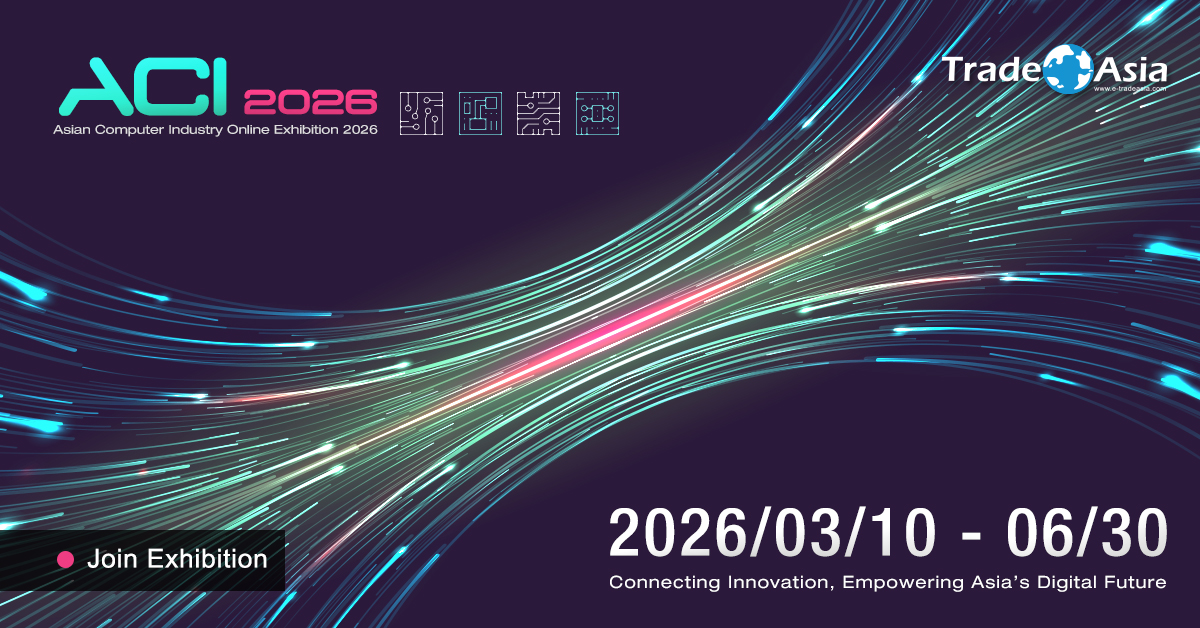
Since its launch in 2022, the exhibition has been jointly organized by AsianNet and TradeAsia (www.e-tradeasia.com). The event has supported numerous companies in expanding into overseas markets and has earned strong industry recognition for high-quality buyers, efficient matchmaking, and measurable order results.
In 2026, ACI 2026 will expand in scale and be held concurrently with leading international technology trade shows, including Embedded World, Display Week (SID), COMPUTEX TAIPEI, and ISC High Performance. By aligning with major global exhibitions, the event creates a strong time-synergy effect, enabling international buyers to efficiently compare products, evaluate suppliers, and complete procurement decisions within a concentrated timeframe. This strategic alignment enhances purchasing efficiency and maximizes cross-exhibition business opportunities.
ACI 2026 features a robust lineup of respected Taiwanese manufacturers, including industry leaders such as HIGHGRADE TECH, OKAYO ELECTRONICS, BIPOLAR ELECTRONIC, YNG WEI, YNG YUH ELECTRONIC, ESMT, GOOD OPPORTUNITY ELECTRONIC, MSTRONIC, SUN RISE EXACT, AIRWAVE TECHNOLOGIES, KING DESGIN INDUSTRIAL, CLEVER INTELLIGENCE UNITY, YO-TRONICS TECHNOLOGY, DORIS INDUSTRIAL, REUEX INDUSTRIAL, ARIOSE ELECTRONICS, UNITEX NUNG LAI BUTTON and many more. These companies will present thousands of the latest computer industry products and technologies, covering a wide array of sectors crucial to modern manufacturing and production.
Comprehensive Coverage Across the Entire Industry Chain
The Asian Computer Industry Online Exhibition 2026 brings together dozens of premium suppliers from the global computer manufacturing and electronic components sectors, showcasing over a thousand innovative products and forward-looking technologies. The exhibits are strategically structured around the core value of the industry supply chain, comprehensively covering key system-level products such as desktop computers, laptops and accessories, tablets and accessories, industrial computers and embedded systems, gaming and e-sports equipment, as well as computer software, IT, and internet services.
The ACI 2026 also highlights critical communications infrastructure, including networking equipment, wireless communication devices, telecommunications and fiber access equipment, landline and VoIP systems, and antennas. In terms of key components and supply chain solutions, the showcased products include computer components, storage and memory devices, active components, power supply units, connectors and terminals, cables and cable assemblies, wiring accessories, transformers, batteries, and charging equipment.
In addition, the ACI 2026 features monitors, computer accessories and peripherals, input devices, point-of-sale (POS) systems, printers, plotters and scanners, printer consumables and parts, as well as broadcast and professional AV equipment, audio and video components, consumer electronics accessories and components, and electronic materials and supplies.
Together, these comprehensive categories fully demonstrate the complete ecosystem of the computer industry, spanning system integration, communications infrastructure, core components, and end-use applications. Combining technological depth with product breadth, the exhibition stands as a premier international trade event for efficient business matchmaking and global market expansion among professional buyers and industry stakeholders worldwide.
ACI 2026 Online Exhibition:
https://www.etradeasia.com/online-show/43/Asian-Computer-Industry-Online-Exhibition-2026.html
Innovative Online Exhibition Model
The Asian Computer Industry Online Exhibition 2026 features dedicated online showrooms, digital catalogs, and virtual exhibition halls fully integrated with the TradeAsia platform. Buyers worldwide can browse exhibitor information, submit quotation requests, and conduct procurement evaluations in real time, thereby facilitating efficient, cost-effective, and results-driven global business connections.
Hashtag: #TradeAsia
The issuer is solely responsible for the content of this announcement.
About TradeAsia
TradeAsia ( www.e-tradeasia.com) is a well-established global B2B trade platform with millions of members and over 600,000 suppliers worldwide. The platform facilitates efficient matchmaking between buyers and sellers and maintains strategic partnerships with hundreds of trade organizations and exhibition entities globally. Through cross-platform marketing and integrated exposure, TradeAsia provides suppliers with expanded international visibility and multi-channel promotion opportunities. For ACI 2026, the organizers will implement a comprehensive global marketing campaign to support exhibitors in expanding overseas markets, enhancing brand presence, and maximizing business opportunities.

Media OutReach
ABP Securite Announces Strategic Partnership With Rapid7 to Enhance Cybersecurity in Asia Pacific

The collaboration marks an important step in enabling enterprises to strengthen their security posture amid the region’s rapidly expanding digital landscape. With evolving hybrid infrastructures, accelerated cloud transformation, and increasing threat complexity, organisations across Asia Pacific are seeking more comprehensive ways to gain visibility, prioritise risk, and streamline response.
Under this partnership, ABP Securite will distribute and support Rapid7’s cybersecurity portfolio across Asia Pacific— including the Rapid7 Command Platform covering exposure management, SIEM and XDR, cloud security, application security, automation, and external threat intelligence.
Closing the Cyber Visibility Gap
“As the cybersecurity threat surface in Asia Pacific continues to grow, visibility and control have become mission critical,” said Joyce Ng, Chief Executive Officer of ABP Securite. “At ABP Securite, our role is to help customers turn complexity into clarity. Partnering with Rapid7 brings a best-in-class platform that empowers security teams to quantify and reduce risk more effectively. Together, we can help organisations operationalise cyber resilience and protect their most valuable assets.”
Jason Heng, Regional Sales Director, ASEAN at Rapid7, added, “ABP Securite has built a strong reputation for enabling regional partners and customers with advanced cybersecurity technologies. Through this collaboration, Rapid7 gains a powerful ally to extend our reach and help organisations in Asia Pacific gain real-time insight into their exposure, simplify operations, and respond faster to emerging threats.”
Hashtag: #ABPSecurite
The issuer is solely responsible for the content of this announcement.
About ABP Securite Pte Ltd
ABP Securite Pte Ltd is a leading cybersecurity and network-performance Value-Added Distributor (VAD), incorporated in 2015 and headquartered in Singapore, with regional offices across Asia Pacific. The company delivers a comprehensive portfolio of advanced security technologies and professional services — including architecture advisory, solution integration, after-sales support, and cloud-managed services. ABP Securite collaborates with a broad ecosystem of partners to help organisations strengthen cyber resilience, secure infrastructure, and protect critical assets across cloud, network, and data environments.
Website: www.abpsecurite.com
About Rapid7
Rapid7, Inc. (NASDAQ: RPD) is a global leader in AI-powered managed cybersecurity operations, trusted to advance organizations’ cyber resilience. Open and extensible, the Rapid7 Command Platform integrates security data, enriching it with AI, threat intelligence, and 25 years of expertise and innovation to reduce risk and disrupt attackers. As a recognized leader in preemptive managed detection and response (MDR), Rapid7 unifies exposure and detection to transform the cybersecurity operations of more than 11,500 customers worldwide. For more information, visit our website, check out our blog, or follow us on  LinkedIn or
  X.
X.











-
 Feature/OPED6 years ago
Davos was Different this year
-
Travel/Tourism10 years ago
Lagos Seals Western Lodge Hotel In Ikorodu
-

 Showbiz3 years ago
Estranged Lover Releases Videos of Empress Njamah Bathing
-
 Banking8 years ago
Sort Codes of GTBank Branches in Nigeria
-

 Economy3 years ago
Subsidy Removal: CNG at N130 Per Litre Cheaper Than Petrol—IPMAN
-

 Banking3 years ago
Sort Codes of UBA Branches in Nigeria
-

 Banking3 years ago
First Bank Announces Planned Downtime
-

 Sports3 years ago
Highest Paid Nigerian Footballer – How Much Do Nigerian Footballers Earn