
Media OutReach
CGTN: Tackling the TB epidemic: From local innovation to global cooperation

In a written statement to a virtual event commemorating the World Health Organization (WHO) World Tuberculosis Day 2026 on Wednesday, Peng Liyuan, wife of Chinese President Xi Jinping and also the WHO goodwill ambassador for tuberculosis (TB) and HIV/AIDS, called for international support and participation in global TB prevention and treatment.
Peng said that the event’s theme, “Led by countries, powered by people,” is of great significance for facilitating joint international action against TB as a public health challenge.
Peng noted that with a firm commitment to protecting people’s health and the goal of ending the TB epidemic, the WHO has done a great deal of effective work and reversed the recent upward trend in global cases. She highlighted that China’s progress is rooted in a multi-sectoral approach, leveraging technological innovation and a comprehensive healthcare network serving over 1.4 billion people.
This year also marks the 15th year of China’s large-scale volunteer campaign for TB prevention and control, involving over 1 million volunteers who have carried out over 80,000 programs.
“I have been joining many of them on visits to local neighborhoods, schools and healthcare facilities,” Peng said, adding that she is a “proud witness” to their compassion and the progress made in China’s fight against TB. She called on people from all walks of life to share warmth and care to “build a community of health for all.”
A proven model for incidence decline
China’s progress is exemplified by the practical efforts in Jiangsu Province, where the reported TB incidence rate fell to 21.17 per 100,000 in 2025. A key factor in this progress is a smart screening system that brings advanced technology to the grassroots level.
“In the past, we had to review every single record manually. Now, AI-assisted screening has drastically improved our diagnostic efficiency,” Wang Yangzhu, deputy chief physician of radiology at a community health center in Nanjing’s Jiangning District, told China Media Group (CMG).
Beyond AI-assisted diagnostics, which now cover over 100 medical institutions in the province, Jiangsu has pioneered a new short-course treatment that slashes the recovery period for drug-resistant TB from 18 months to just six. Complementing this technology is a robust policy safety net: the government provides free drug-resistance screening for all suspected cases and free second-line medications for those in need, ensuring patients can afford the care they require.
This localized practice is a reflection of a broader national achievement. Since 2012, both the incidence and mortality rates of TB in China have dropped by approximately 30%, a decline rate nearly double the global average, according to the National Disease Control and Prevention Administration. With a treatment rate consistently above 90%, China has transitioned into the ranks of countries with moderate-to-low TB prevalence while continuing to refine its integrated prevention and control system.
Global responsibility and humanitarian action
China’s expertise is also being shared through its commitment to international medical aid. Recently, the 23rd Chinese medical team in Zimbabwe successfully treated a 22-year-old patient suffering from TB with pleural effusion. By combining standard protocols with Traditional Chinese Medicine (TCM) to alleviate side effects and boost immunity, the team provided a practical model for TB control in resource-limited settings.
This assistance is part of a long-standing commitment to international humanitarian aid. In 2025, the Chinese government dispatched 1,061 medical personnel to 57 countries, serving over 2.06 million patients, according to China’s National Health Commission.
Since 1963, China has sent a total of 31,000 medical team members to 77 countries and regions, treating an estimated 300 million people. These teams have also helped strengthen local medical capacity, including performing first-of-their-kind laparoscopic procedures in countries such as Equatorial Guinea and Djibouti, enabling access to modern minimally invasive surgical techniques.
Extending their reach beyond hospital walls, Chinese medical teams frequently travel to remote, resource-scarce regions to provide essential care. In Simandou, the team provided health check-ups, hygiene training and medical lectures to thousands of Chinese and Guinean employees. They also visited a local orphanage, performing physical exams for over 70 children and donating essential school supplies.
“We go deep into remote areas, bringing much-needed health knowledge and infectious disease prevention methods to help establish a long-term barrier against illness,” Wang Bin, captain of the 31st Chinese medical team to Guinea, told CMG.
By integrating innovative technology with grassroots volunteerism and international aid, China continues to work alongside the global community to transform the goal of a TB-free world into a tangible reality.
For more information, please click here:
https://news.cgtn.com/news/2026-03-19/Tackling-the-TB-epidemic-From-local-innovation-to-global-cooperation-1LDNzGeLwdO/p.html
Hashtag: #CGTN
The issuer is solely responsible for the content of this announcement.



Media OutReach
iHerb Launches “Heatwave Essentials” Campaign for Singapore Consumers (22% off sitewide)

Despite the sweltering weather, Singaporeans’ passion for an active lifestyle remains strong—from post-work gym sessions to weekend outdoor runs. To help Singaporeans maintain their peak performance, iHerb has curated a “Heatwave Essentials” guide focused on hydration, fatigue resistance, and recovery.
As part of this initiative, iHerb is offering a 22% discount sitewide from April 10 to April 24, with consumers able to apply the promo code “78IHERB” at checkout.
Essentials for Hydration and Recovery
In Singapore’s climate, sweating is constant—but many don’t realise that perspiration depletes both water and essential electrolytes, which is why plain water alone may not be enough to prevent fatigue.
- For Instant Hydration: Nuun Sport Electrolyte Tablets are a top choice for active commuters, offering a balanced blend of sodium, potassium, and magnesium.
- For Natural Purity: Wilderness Poets Evaporated Coconut Water Powder provides a refreshing, sugar-free alternative rich in natural potassium.
- For Long-term Balance: Nutricost Potassium + Magnesium capsules offer high-efficiency support to maintain neuromuscular balance and prevent heat-induced weakness.
Expanded Heatwave Essentials for Daily Wellness and Recovery
As part of its “Heatwave Essentials” guide, iHerb features a curated selection of products that supports broader daily wellness needs during warmer conditions. This includes supplements commonly incorporated into routines for general nutritional support, post-activity recovery, and day-to-day maintenance:
- Swanson Albion Magnesium Glycinate is a popular choice for supporting relaxation and overall daily wellness.
- California Gold Nutrition Brain Health vegetarian capsules provide multi-nutrient support for those requiring prolonged focus.
- Nutricost HMB Capsules have become a favorite among the local fitness community for supporting physical endurance and recovery under high-temperature conditions.
- Doctor’s Best Natural Vision Enhancers – formulated with lutein, zeaxanthin, and omega-3 (DHA/EPA), and included within iHerb’s broader wellness offering.
Shop Smarter, Live Cooler
To support the growing demand for daily health management, iHerb is offering a 22% discount sitewide from April 10 until April 24. Simply enter the promo code “78IHERB” at checkout to access savings across a wide range of health and wellness products, including those featured in the “Heatwave Essentials” selection.
- Free Delivery: Enjoy free shipping on orders over S$60.
- Fast Shipping: Products typically arrive in Singapore within approximately 4 days.
Hashtag: #iHerb
The issuer is solely responsible for the content of this announcement.

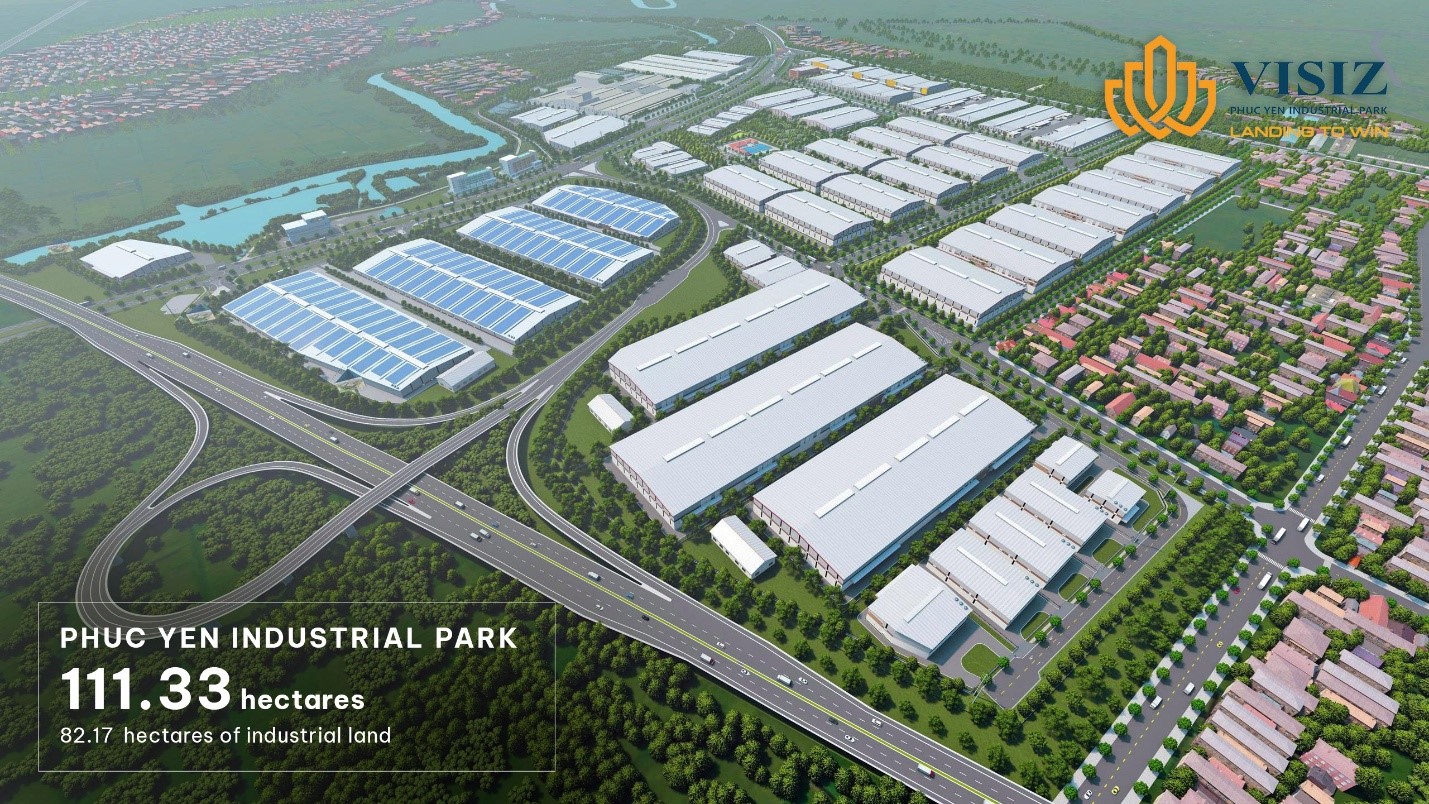
Phuc Yen IP covers 111.3 hectares in Phuc Yen Ward in the northern province of Phú Thọ, with a total investment of approximately VNĐ1.98 trillion and a 50-year operating licence.
Regarded as a key project in the province’s economic development strategy, Phuc Yen IP is expected to become a magnet for high-quality investment, particularly from enterprises in technology and electronics, precision engineering, supporting industries and logistics.
Strategic location and world-class infrastructure
Phuc Yen IP enjoys outstanding connectivity, with direct access to the Noi Bai – Lao Cai Expressway, a location approximately 10 minutes from Noi Bai International Airport and strong links to major economic hubs in Hà Nội, Phú Thọ and neighbouring provinces.
All technical infrastructure is built to international standards, including internal roads, high-capacity power supply, water supply and drainage systems, a centralised wastewater treatment plant and urban landscaping – enabling businesses to begin operations immediately upon land handover.
Development timeline
- Phase 1 (Q1/2024 – Q1/2026): Legal procedures, site clearance, construction commencement
- Phase 2 (Q2/2026 – Q1/2027): Full infrastructure construction – site levelling, internal roads, power and water system, wastewater treatment – culminating in project completion and handover
VISIZ General Director Nguyen Hai Tung said on behalf of the investor consortium: “We are fully committed to mobilising all available resources to deliver this project on schedule, ensuring synchronised, high-quality and modern construction standards.
“Phuc Yen IP is more than a production facility – it is a sustainable industrial ecosystem where investors can build and grow their operations with confidence over the long term.”
Socio-economic impact
At full capacity, Phuc Yen IP is expected to attract dozens of domestic and international investors, generate thousands of stable employment opportunities, and contribute meaningfully to annual State budget revenues. The park will serve as a catalyst for commercial services, urban development and industrial real estate growth across Phuc Yen Ward and surrounding areas.
Media Contact:
Hotline: (+84) 333 699 996
Email: [email protected]
Website: www.visiz.com.vn
Hashtag: #VISIZ #SHINEC
The issuer is solely responsible for the content of this announcement.

Media OutReach
Botanica Luxury Villas Rides Phuket’s Rise as Global Luxury Property Hub with HYTHE by Botanica
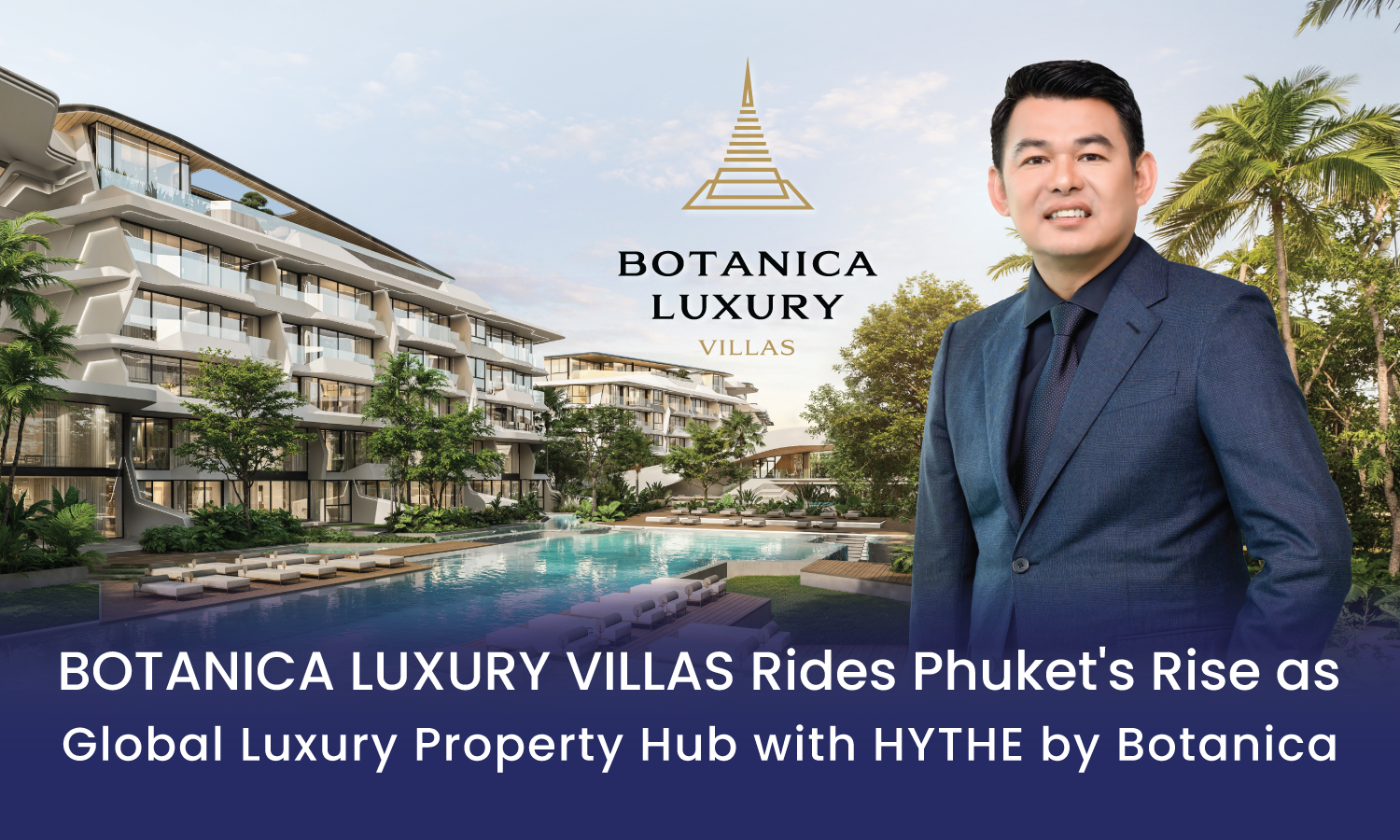
Vertical villa-style condominium positioned to capture surging investor demand
PHUKET, THAILAND – Media OutReach Newswire – 9 April 2026 – Phuket, a world-class tourist destination, is emerging as one of Southeast Asia’s hottest residential and real estate investment hubs. In 2025, over 10 million international tourists visited Phuket, generating nearly 546 billion baht in tourism revenue.
The condominium market has seen significant growth. Colliers Thailand reports that in 2025, 23 new condominium projects launched in Phuket, totaling over 8,372 units worth more than 47.349 billion baht. A key driver keeping Phuket’s rental market buoyant is the attractive yield of 7–11% per year in prime locations.
Botanica Luxury Villas, a leader in Phuket’s luxury property market with over two decades of experience, has grown its portfolio to meet shifting demand, entering the condominium market for the first time with HYTHE by Botanica. Drawing on its pool villa expertise, Botanica has developed the project under the Vertical Villa concept—combining the privacy and generous space of a villa with the convenience of condo living. Prices start at 10.8 million baht*. The project occupies a prime position in the heart of Laguna Phuket, one of the most sought-after areas among investors, just 6 minutes from Layan Beach and 20 minutes from Phuket International Airport.
Mr. Attasit Intarachooti, Chief Executive Officer of Botanica Luxury Phuket Co., Ltd., said: “HYTHE by Botanica is built to meet the growing demand in Phuket as a global destination for long-term living and investment. The Vertical Villa concept delivers a living and investment experience unlike anything currently on the market. We project rental yield of 5–7%* per year in a location with consistent capital appreciation.”
HYTHE by Botanica comprises four six-story residential buildings with 276 units in total, plus a clubhouse, set across over 21 rai of lush greenery. Units start from 57 sq.m., with options ranging from one to three bedrooms, duplexes with pool access, and penthouses. HYTHE by Botanica is part of Botanica Grand Avenue, a mega project offering a full suite of on-site amenities.
For investors, the project comes with comprehensive after-sales support, including Botanica’s service and maintenance programs. Show units are now open for viewing at the sales gallery, Botanica Grand Avenue, Phuket. For more information, visit botanicaluxuryvilla.com, Facebook: BOTANICA Luxury Villa, or call +66 81 324 2999 and +66 94 636 2836.
Hashtag: #BotanicaLuxuryVillas
The issuer is solely responsible for the content of this announcement.

-
 Feature/OPED6 years ago
Davos was Different this year
-
Travel/Tourism10 years ago
Lagos Seals Western Lodge Hotel In Ikorodu
-

 Showbiz3 years ago
Estranged Lover Releases Videos of Empress Njamah Bathing
-
 Banking8 years ago
Sort Codes of GTBank Branches in Nigeria
-

 Economy3 years ago
Subsidy Removal: CNG at N130 Per Litre Cheaper Than Petrol—IPMAN
-

 Banking3 years ago
Sort Codes of UBA Branches in Nigeria
-

 Banking3 years ago
First Bank Announces Planned Downtime
-

 Sports3 years ago
Highest Paid Nigerian Footballer – How Much Do Nigerian Footballers Earn