
Media OutReach
Chiang Mai Design Week’s 10th Anniversary: A Decade of Transforming a Creative City


Far from being a static event, Chiang Mai Design Week (CMDW) has continuously evolved, fostering diverse dynamics that have propelled Chiang Mai toward becoming a global City Branding icon as a hub of creativity. Recognized as a UNESCO Creative City of Crafts and Folk Art under the UNESCO Creative Cities Network (UCCN), Chiang Mai has also emerged as a center for design in Southeast Asia. The festival reflects the transformative power of design in driving societal, cultural, and economic development while promoting environmental sustainability. It has also inspired a significant homecoming movement, encouraging local talents to return and contribute to their hometown’s development. Over the past decade, Chiang Mai Design Week has undergone remarkable changes, creating a lasting impact across various dimensions:
1. From Local Festival to International Stage
Launched in 2014 through collaboration between the Thailand Creative and Design Center, or TCDC and local organizations, Chiang Mai Design Week began as a showcase for the city’s unique blend of traditional art and modern creativity. By 2015-2016, it introduced the creative market, workshops, and seminars, creating tangible networks and market opportunities.
From 2017 to 2019, the festival gained national and international recognition, featuring exhibitions by renowned designers and innovative integrations of technology with traditional craftsmanship. These efforts catered to global markets while preserving local cultural identity.
During the COVID-19 pandemic (2020–2021), the festival adapted its format to emphasize sustainability and environmentally conscious design. Initiatives like the HomeComing Creator project encouraged local talents to return and contribute to their communities. Exhibits such as “En.Light.En” brought together artists with connections to Chiang Mai and northern Thailand, fostering collaborations that revitalized local areas like Chang Moi and the Lanna Folklife Museum.
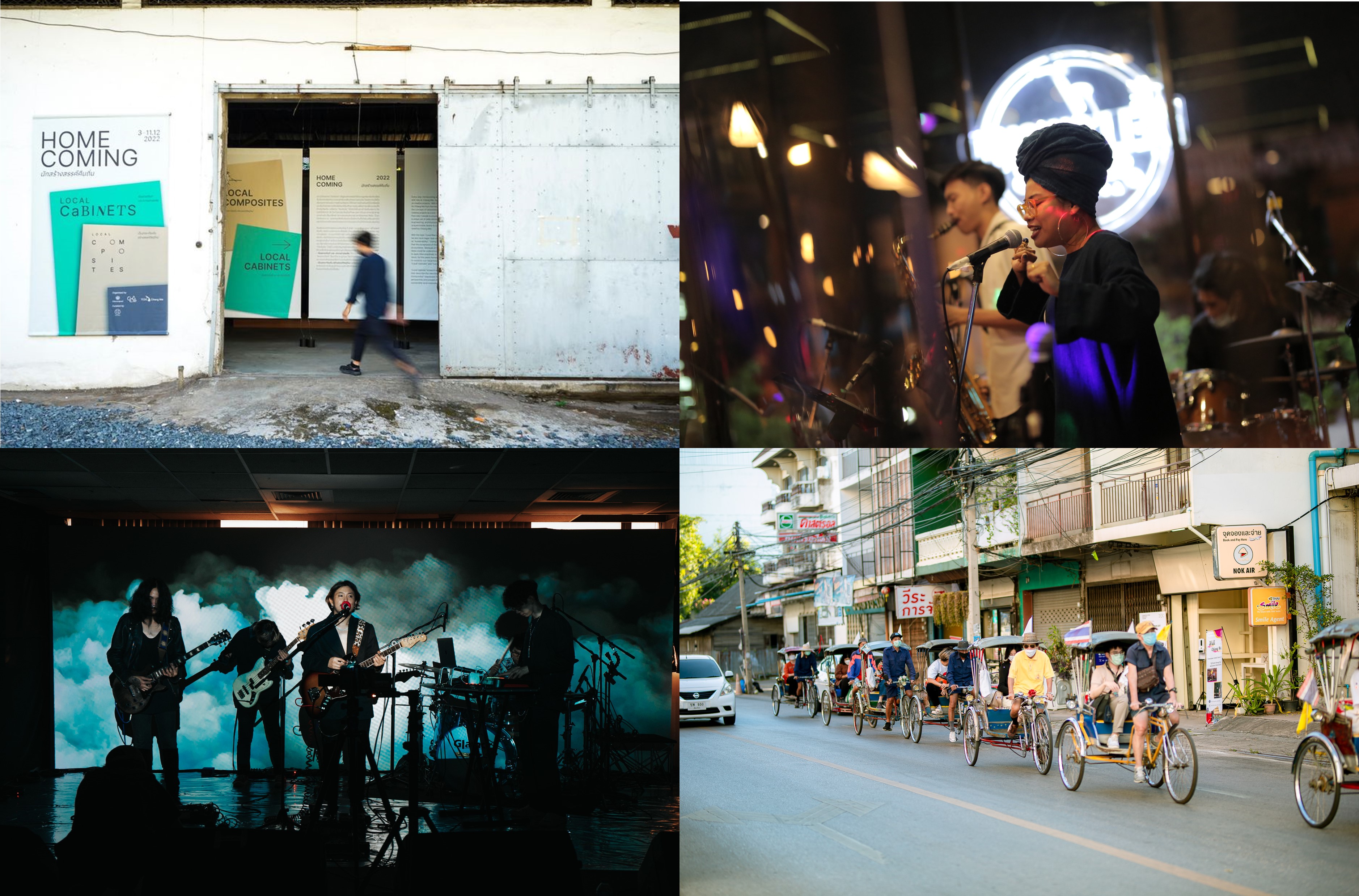
The festival also embraced music and performing arts, as seen in the International Street Music and Performing Arts Festival, which transformed local spaces into vibrant cultural hubs. Other initiatives included the Thai Local Coffee Festival, promoting sustainability in the coffee industry, and LABBfest, a live music event blending art and international cultural exchange.
Since 2022, the festival has aligned its activities with Chiang Mai’s status as a UNESCO Creative City of Crafts and Folk Art, forging partnerships with global creators and organizations. Notable initiatives include projects like “SANDBOX” from Moscow, which used film and animation as a developmental tool for children. The festival also featured lectures and workshops, alongside innovative events such as “MOSCOW EXPERTISE: VR/AR,” festivals and concerts in the Metaverse during and post-pandemic, presented by Russian VR artists, directors, producers, and festival curators. These initiatives underscore the festival’s role as a platform for cross-cultural exchange and innovation.
2. A Catalyst for Social, Economic, and Environmental Impact
Ms. Imhathai Kunjina, Director of the Creative Economy Agency (Chiang Mai Office), highlighted the significant positive impacts that Chiang Mai Design Week has generated across social, economic, and environmental dimensions.
“Over the past decade, Chiang Mai Design Week has driven meaningful change, raising awareness within local communities about the value of creativity and design in enhancing cultural assets. The festival has also established Chiang Mai as a destination for global travelers, showcasing vibrant creative spaces that go beyond traditional attractions. Today, Chiang Mai Design Week serves as the ‘mothership’ for annual creative events, inspiring other festivals to align their schedules, ensuring that the city becomes a hub of creative energy and diverse events during the same period. This synergy not only amplifies the city’s creative atmosphere but also offers tourists a truly unique and immersive experience.”
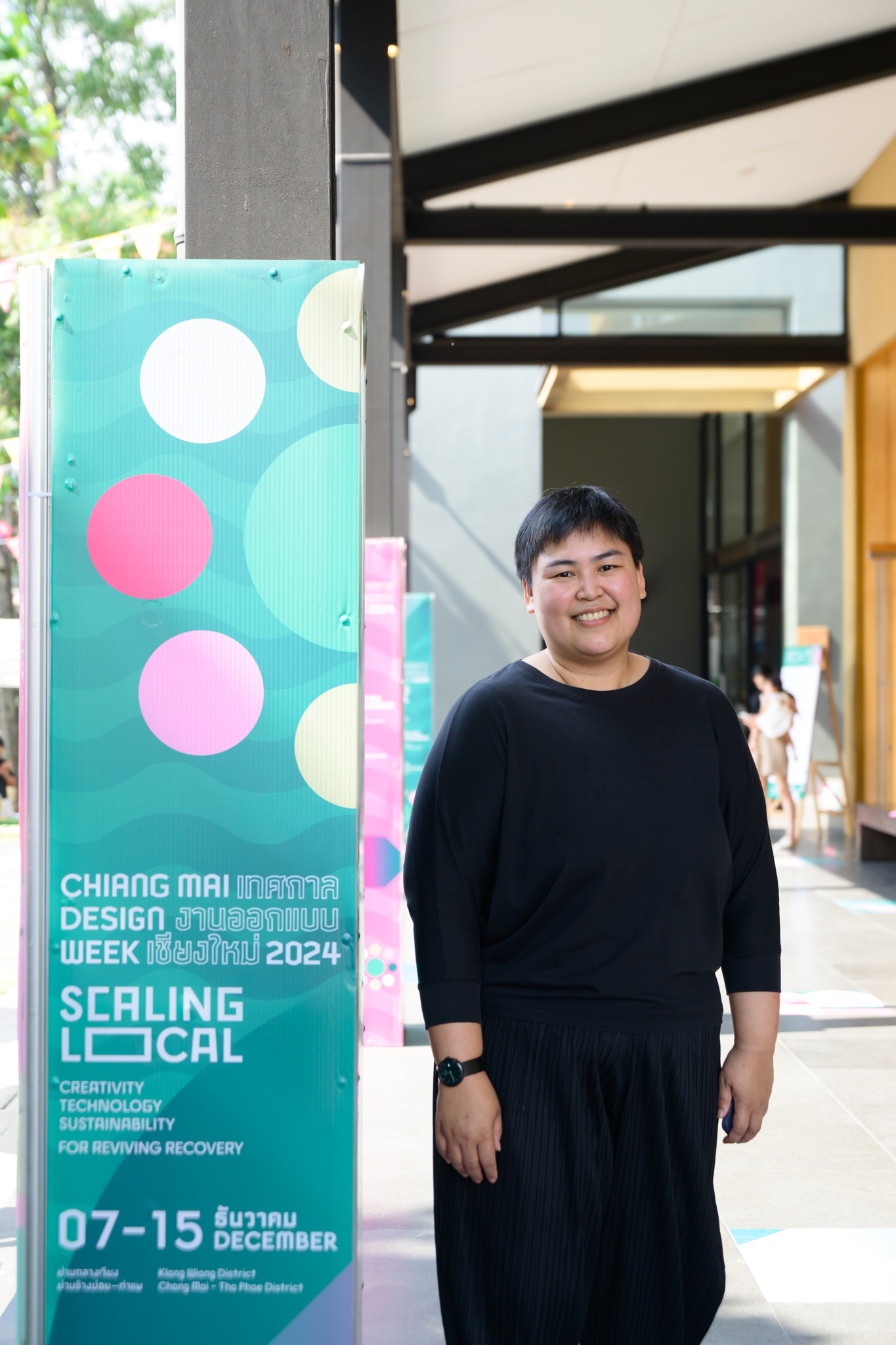
Economic Contributions: The festival’s economic impact has been profound, attracting increasing numbers of visitors from countries such as Taiwan, Japan, China, Singapore, Europe, and America. Over nine years, Chiang Mai Design Week has welcomed more than 1,022,869 attendees and generated over 5.36 billion THB in economic value for Northern Thailand (2018–2023). Additionally, it has revitalized historic buildings by drawing investors to renovate and repurpose them, transforming these spaces into thriving creative hubs and contributing to sustainable urban development.
Interdisciplinary Art Integration: The festival has fostered collaboration across disciplines, such as matching craft designers with emerging chefs to create unique and value-added products. Initiatives like the 2020 Homecoming Creator project have brought talented individuals back to their hometowns, reconnecting them with local communities. Moreover, events like the Chiang Mai Street Jazz Festival, featuring world-class jazz artist Igor Butman, have elevated the city’s reputation as a vibrant jazz hub. These achievements reflect the festival’s holistic approach to creative growth.
Environmental Sustainability: Chiang Mai Design Week has consistently prioritized sustainability, setting an example for eco-conscious practices. As Ms. Imhathai noted:
“The festival emphasizes ‘leading by example’ over ‘mandating actions.’ From the beginning, we encouraged creatives and architects to design reusable exhibition pavilions. In our 10th year, all pavilions are repurposed from the first festival. Informational signs are reused annually, and this year, over 95% of sign materials were replaced with recyclable options like corrugated cardboard instead of foam board, ensuring post-festival recyclability.”
Efforts to minimize environmental impact extend to reducing printed materials, utilizing solar-powered LED screens, and promoting green transportation. Since 2020, printed materials have been reduced by 30%—from 30,000 brochures and 150 booklets to 20,000 brochures in 2024—using eco-friendly paper. The festival also features electric tram shuttles and walkable event spaces, with bicycle services provided by Anywheel Co., encouraging sustainable mobility.
For vendors, we’ve organized training sessions on eco-friendly materials and sustainable practices, encouraging responsibility and adaptability for future sustainable business operations.”
Chiang Mai Design Week 2024, “SCALING LOCAL – Transforming Local to Global through Creativity, Technology, and Sustainability”
This year, Chiang Mai Design Week 2024 is set to take place under the theme “SCALING LOCAL: Creativity, Technology, and Sustainability – For Reviving Recovery.” The festival aims to elevate cultural assets and community resources to achieve global recognition while maintaining a focus on resilient community spaces that have thrived despite the challenges of COVID-19.
“Chiang Mai’s creative industries have grown significantly, showcasing the potential of local assets and talents nurtured over the years. To scale local creativity to the international stage, it is essential to integrate Creativity, Technology, And Sustainability—the three pillars that set the standard for festivals locally and globally. This year, we’re excited to welcome creators from neighboring northern provinces like Phrae, Nan, Lampang, and Sukhothai, demonstrating the festival’s decade-long influence in attracting regional creative talent,” explained Ms. Imhathai.
Chiang Mai Design Week 2024 will feature 6 activity categories with over 150 programs. Key highlights include:
- Lanna Gastronomy Tourism Economy Exhibition: A sustainable culinary tourism showcase exploring Lanna cuisine while creating income opportunities for local communities.
- Ready Set Old Exhibition: Reimagining Chiang Mai becoming the world’s 7th “Blue Zone” city for healthy aging, following in the footsteps of Okinawa (Japan), Sardinia (Italy), Nicoya (Costa Rica), Ikaria (Greece), Loma Linda (USA), and Singapore.
- Super Slow Exhibition: Immerse yourself in the beauty of slowness through innovative art that promotes sustainable and mindful living in a fast-paced world.
- Floral Wonders Exhibition: Showcase the potential of the local floral industry by merging creativity with technology, driving economic growth and job creation.
- LABB.Fest 2024: Enjoy live music performances blending Thai and international artists. This platform facilitates creative exchanges between artists, music entrepreneurs, and promoters from Thailand, Malaysia, Myanmar, Hong Kong, Taiwan, Japan, and South Korea.
The Next Chapter for “Chiang Mai Design Week”: Towards Sustainable Global Recognition
The future vision for Chiang Mai Design Week is to elevate its global prominence by fostering collaboration among designers, artists, entrepreneurs, and local and international networks. The festival aims to maintain high standards while adapting to urban trends and contexts to craft remarkable experiences for attendees and tourists. At the same time, it seeks to sustain interest among investors and sponsors for continued support.
“Chiang Mai Design Week is evolving towards a new standard that prioritizes not just aesthetics but the integration of creativity and environmental responsibility. This approach sets a benchmark for other creative festivals in Thailand, as seen in Chiang Rai and Phitsanulok, which have leveraged knowledge gained from the festival with support from CEA Chiang Mai. Looking ahead, the festival will shift its focus from audience quantity to quality, targeting visitors who actively engage and carry forward ideas inspired by the event,” explained Ms. Imhathai.
The ultimate goal is to establish Chiang Mai Design Week as a globally renowned festival that grows alongside the city’s holistic development. As a member of the World Design Week network, the festival reflects a decade of progress and potential. To secure a lasting global presence, the festival must uphold international standards, strengthen networks, and expand global outreach. Achieving this vision would position Chiang Mai Design Week as a cultural hallmark, akin to Milan Design Week, capable of attracting 100% investor interest.
Experience the transformative power of design at Chiang Mai Design Week 2024 (CMDW2024) under the theme “SCALING LOCAL” from December 7-15, 2024, across Chiang Mai’s old city areas, including the Three Kings Monument, Chang Moi, TCDC Chiang Mai, Thapae, and nearby districts like Hang Dong and San Kamphaeng.
Stay updated with the latest news and activities at: Website: www.chiangmaidesignweek.com Facebook: Chiang Mai Design Week, Instagram: ChiangMaiDesignWeek
Hashtag: #chiangmaidesignweek #CMDW2024 #scalinglocal
The issuer is solely responsible for the content of this announcement.
About Chiang Mai Design Week
Chiang Mai Design Week is an annual design festival hosted in Chiang Mai by the Creative Economy Agency (CEA), celebrating its 10th year (2015–2024). The festival serves as a dynamic platform for exchanging perspectives, experiences, and knowledge in design and creativity. It also fosters engagement through design, offering meaningful experiences to children, youth, communities, tourists, and enthusiasts alike. The festival features diverse activities, including exhibitions, talks, workshops, arts programs, and live performances, aimed at enhancing quality of life while infusing Chiang Mai with a vibrant, creative atmosphere. Events span iconic areas like Klang Wiang, rich in culture and local traditions, and Chang Moi–Tha Phae, home to TCDC Chiang Mai, a modern hub of design knowledge. In addition to these key districts, Chiang Mai Design Week also hosts programs in other significant areas throughout the city, offering visitors a fresh perspective on Chiang Mai and the chance to experience its unique creative spirit up close.
About Creative Economy Agency (Public Organization)
The Creative Economy Agency (Public Organization) or CEA was established on August 14, 2018, as an organization under the supervision of the Prime Minister’s Office to promote and develop the potential of the creative economy as a driving force towards a balanced and sustainable economy in the long term. One of CEA’s key missions is to establish creative economy districts by promoting and developing areas that foster a creative environment and encourage the growth of new businesses as well as aims to strengthen connections with surrounding communities. Additionally, CEA is responsible for promoting the growth of the creative industries by developing capabilities and linking networks, utilizing creativity as a tool to enhance businesses and improve the quality of life for the Thai people.



High-Quality Growth with Improved Gross Profit Margin, increasing R&D Investment and Strategic Focus on Trustworthy Agents Ecosystem
HONG KONG SAR – Media OutReach Newswire – 27 March 2026 – Voicecomm Technology Co., Ltd. (“Voicecomm Technology” or the “Company“, Stock Code: 2495.HK), a core technology provider and ecosystem operator of trustworthy conversational AI in China, announced its annual results for the year ended December 31, 2025. Leveraging its deep technological expertise and forward-looking strategic initiatives in trustworthy conversational AI, the Company achieved steady revenue growth, continuous improvement in profitability, and a significant enhancement in operating cash flow, further strengthening its competitive edge in the enterprise-level trustworthy Agent sector.
Gross Profit Margin Steadily Improves, Operating Cash Flow Turns Strongly Positive
In 2025, the Company’s total revenue successfully exceeded the RMB1 billion mark, reaching RMB1,006.9 million, representing a year-on-year increase of 7.0%. Gross profit amounted to RMB551.2 million, increased by 8.0% from the previous year, while the gross profit margin increased by 0.5 percentage point to 54.7% from 54.2% in the same period last year, reflecting the high-value-added products and technical services of the Company, as well as effective cost control.
Notably, the Company’s net cash generated from operating activities turned strongly positive, reaching a net inflow of RMB212.5 million, compared to a net outflow of RMB129.2 million in the same period last year. This improvement underscores enhanced operational efficiency and reflects strengthened receivables management, which accelerated cash collection.
Profit for the year amounted to RMB140.2 million. The significant increase in net profit compared to the same period last year was mainly attributable to eliminating the impacts of changes in carrying amount of redeemable capital contributions, an accounting adjustment arising from financing agreements entered into with shareholders prior to the Listing and completion of the Global Offering.
Increasing R&D Investment to Strengthen the Trustworthy Agent Technology Foundations
As a technology-centric product company, Voicecomm Technology remains committed to the independent R&D and innovation of underlying technologies. In 2025, the Company’s research and development expenses reached RMB224.3 million, representing a substantial year-on-year increase of 67.7%. The investment was primarily directed towards developing Agents with continuous learning capabilities and a technical framework for Multi-agent collaboration, aiming to enhance technological capabilities and elevate the level of product innovation. This reinforces our trustworthy Agent technical architecture composed of three layers: “Multimodal Perception + Multi-model Thinking + Multi-agent Collaboration”.
This architecture takes the “meta-model” as the core to effectively alleviate the common pain points of in enterprise-level implementation, such as hallucinations, controllability and data security, by integrating the generalization capabilities of large language models with the precision of vertical domain knowledge. On this basis, the Company have formed a deliverable and operable trustworthy Agent product system, to ensure that the Agents are usable, manageable, and controllable in enterprise environments, thereby powering the intelligent upgrade of six core application scenarios: City management and administration, Automotive and transportation, Telecommunications, Finance, Healthcare, and Energy management.
Productization Strategy Drives Deep Application across Six Core Scenarios
Voicecomm Technology focuses on empowering various industries through superior products and technologies. In 2025, leveraging its mature product matrix, the Company successfully established replicable benchmark standards across multiple application scenarios.
City Management and Administration: As a leading solution provider in the smart government sector in China, the Company’s business has covered more than 130 prefecture-level cities. The “Smart Government Agent” deeply integrates the capacities of large language models, enabling more intelligent and automated government services with standardized and intelligent applications in scenarios such as government hotlines and city governance.
Automotive and Transportation: The Company successfully established benchmark autonomous driving projects in cities such as Mianyang, Zibo, and Ezhou, building a successful and replicable “Smart Transportation Agent” solution. For the Mianyang Science and Technology New City project, a total of 96 autonomous vehicles have been deployed, and the project was successfully selected as a National AI Application Pilot Testing Base in the transportation sector. In January 2026, the Company newly won the bid for the “Ezhou Huahu Airport Smart Port” autonomous driving bus procurement and operation project, further expanding its application boundaries.
Healthcare: In January 2026, the Company successfully won the bid for the “Chuannan Smart Valley AI Vertical Large Model Innovation Platform – Silver Economy Construction and Operation Project” in Neijiang City, Sichuan Province, with a total contract value of nearly RMB300 million. This project represents the Company’s first “AI + Elderly Care” city-level benchmark demonstration project. It adopts a closed-loop collaborative model of “online platform + offline service network + home terminals,” integrating Agents capabilities with the Company’s “vertical small model microservices” system in areas such as Health Early Warning, Cognitive Ability Assessment, and emotional companionship into a productized solution, thereby establishing rapidly replicable city-level smart elderly care operational benchmark.
Telecommunications, Finance, and Energy Management: The Company continues to deepen collaborations with leading enterprises in the telecommunications and finance sectors, leveraging the “Telecommunication Service Agent” and “Financial Service Agent” to enhance service efficiency and user service value. Meanwhile, its AI-powered smart charging solution has been progressively integrating charging pile networks in China and across several Southeast Asian countries.
Benefiting from the successful implementation of the Company’s productization strategy and the high level of market recognition for its trustworthy Agent solutions, as of December 31, 2025, the Group’s project pipeline and orders in hand saw significant growth. The number of ongoing projects at year-end increased to 320, representing a year-on-year increase of 41.6%, while the outstanding contract sum at year-end rose to RMB1,048.9 million, a year-on-year increase of 57.4%, reflecting the continued expansion of the Company’s business.
Future Outlook: Focusing on the Trustworthy Agents Ecosystem with Four Strategic Priorities
Looking ahead, the Company will firmly focus on its goal of “building a trustworthy conversational AI ecosystem” and will advance the following strategic priorities:
Overall and Technology Strategy: Continue to focus on R&D and innovation in frontier technologies such as multi-modal fusion and trustworthy intelligence, promoting the deployment of trustworthy agents across more application scenarios. By creating open technology platforms and standards, the Company will attract more developers and partners to jointly build a prosperous and win-win industrial ecosystem.
Market Strategy: Establish benchmarks for quality and innovation within the industry and deepening partnerships with various service channels. At the same time, the Company will actively expand into the C-end market, extending cutting-edge technologies to a wider user base, thereby expanding the influence and commercial value of the ecosystem.
Regional Strategy: Domestically, the Company will continue to deepen its partnerships with major cooperating cities to create smart city benchmark cases. Internationally, the Company will actively respond to the “Belt and Road” initiative, grasp the tremendous potential of emerging markets, and promote the Company’s trustworthy Agent products and services globally to enhance its international brand image.
Investment Strategy: Through prudent strategic investments and M&A, the Company will optimize the layout of the upstream and downstream industry chains and consolidate the stability and competitiveness of the ecosystem.
DR.Tang Jinghua, Chairman ofVoicecomm Technology Co., Ltd., said: ” 2025 was a landmark year for Voicecomm Technology. We not only achieved a strong turnaround in operating cash flow and a steady increase in gross profit margin financially, but we also completed a strategic leap at the technological and business level towards becoming a ‘a core technology provider and ecosystem operator of trustworthy conversational AI.’ We deeply understand that the essence of enterprise-grade AI lies in creating replicable and reliable products and technology foundations. During the year, we significantly increased R&D investment and successfully applied our trustworthy Agents across six core scenarios, particularly in city-level benchmark projects in emerging fields like smart elderly care, showing the strong competitiveness of our productization strategy. Looking to the future, we will continue to pursue the goal of ‘building a trustworthy conversational AI ecosystem,’ leveraging an open platform to gather ecosystem partners and empowering diverse industries with innovative technology, thereby creating long-term sustainable value for our shareholders and society. ”
Hashtag: #Voicecomm
The issuer is solely responsible for the content of this announcement.
Voicecomm Technology Co., Ltd.
Founded in 2005 and headquartered in Wuhan, Voicecomm Technology is one of the leading core technology providers and ecosystem operators of trustworthy conversational AI listed on the Main Board of the Hong Kong Stock Exchange, and obtained the qualification as National-level SRDI, Technology Little Giant and High-Tech Enterprise. Leveraging its proprietary trustworthy Agent,the Company overcomes pain points in the commercialization of large language models, such as hallucinations and compliance issues, ensuring AI is usable, manageable, and controllable in enterprise environments. For enterprise-level customers, the Company provides AI services covering the entire process of “communication –decision – execution”. Its trustworthy Agent solutions have been widely deployed across multiple scenarios, including City management and administration, Automotive and transportation, Telecommunications, Finance, Healthcare, and Energy management, and it is dedicated to empowering the intelligent transformation of diverse industries.
City Chamber Orchestra of Hong Kong
HONG KONG SAR – Media OutReach Newswire – 27 March 2026 – On 21 April 2026 at Hong Kong City Hall Concert Hall, 8:00pm, the City Chamber Orchestra of Hong Kong (CCOHK) presents Bassoon & Baton, a rare showcase of the bassoon’s lyrical voice and virtuosic brilliance. Held as part of the French May Arts Festival 2026, the programme features the Hong Kong debut of Sophie Dervaux, the internationally acclaimed French bassoonist and principal bassoonist of the Vienna Philharmonic Orchestra. She performs bassoon concertos by Vivaldi, Mozart and Hummel and takes up the baton to conduct orchestral works by French composers Lully, Guy Ropartz and Gossec, thereby highlighting her dual artistry as both soloist and conductor.
City Chamber Orchestra of Hong Kong
Bassoon & Baton — French May Arts Festival 2026
Sophie Dervaux bassoon/guest conductor
21 APR 2026 (Tue)
Hong Kong City Hall Concert Hall, 8:00pm
PROGRAMME
Lully I Marche pour la Cérémonie des Turcs, LWV43
VivaldiI Concerto for Bassoon in G major, RV493
Guy Ropartz I Serenade for Strings
Mozart I Concerto for Bassoon in B-flat major, K.191
GossecI Symphony in C minor Op. 6 No. 3, RH24
Hummel I Grand Concerto in F major, S.63, WoO.23
Sophie Dervaux will also contribute to community activities in Hong Kong by holding two Bassoon masterclasses open to the public. On 18 April 2026, 10:30am–1:00pm, at Sing Music Academy, Room 901, On Lok Yuen Building 25-27A Des Voeux Road, Central, Hong Kong, and on 19 April 2026, 2:30pm–5:00pm, at CR2, 7/F Hong Kong Cultural Centre Concert Hall Backstage.
Sophie Dervaux’s outstanding career as a solo bassoonist, orchestral musician, conductor and recording artist includes her engagements with the Vienna Philharmonic Orchestra (since 2015), the Vienna State Opera Orchestra and the Berlin Philharmonic Orchestra. She is a prize-winner of the prestigious ARD International Music Competition Munich (2013) and the Beethoven Ring Bonn (2014). Born in France, Sophie Dervaux studied at the Music Conservatory of Versailles, the Conservatoire de Paris in Lyon, the Hanns Eisler Academy of Music in Berlin and at the Karajan Academy. She has performed at the Philharmonie de Paris, Berlin Philharmonie, Suntory Hall Tokyo, New York’s Carnegie Hall and the Royal Albert Hall in London. Her solo engagements include the Konzerthausorchester Berlin, the Bavarian Radio Orchestra and the Vienna Philharmonic Orchestra. On CD she has collaborated with Daniel Barenboim and Emmanuel Pahud. In 2021 she received the German Record Critics’ Award for her debut solo album on the Berlin Classics label. She is currently working on a project to record all 39 of Vivaldi’s bassoon concertos with La Folia Barockorchester. In addition to performing, Sophie Dervaux works internationally as a guest conductor and has appeared with the Mozarteumorchester Salzburg, the Vienna Chamber Orchestra, the Ensemble Kanazawa, the Prague Philharmonic Orchestra and the KBS Symphony Orchestra in Seoul. She teaches bassoon at the Music and Arts University of The City of Vienna and plays on a Püchner bassoon.
Tickets priced at $450, $300 and $220 (with50% off for full-time students, senior citizens, Comprehensive Social Security Assistance (CSSA) recipients, people with disabilities and their accompanying minder), are available from all URBTIX outlets. For internet booking, visit www.urbtix.hk; for programme or other enquiries, call 2864 2156 or email in**@***hk.com.
BASSOON MASTERCLASS by SOPHIE DERVAUX
18 Apr (Sat) 10:30am-1:00pm, Sing Music Academy, Room 901, On Lok Yuen Building, 25-27A Des Voeux Road, Central, Hong Kong
19 Apr (Sun) 2:30pm-5:00pm, CR2, 7/F Hong Kong Cultural Centre Concert Hall Backstage
The masterclasses are open to observers at $100 per person.
Register Now (in**@***hk.com/2864 2156)
PHOTOS Link to: Sophie Dervaux
MEDIA ENQUIRIES (including artist interviews/photos): in**@***hk.com/2864 2154
WEBSITE:www.ccohk.com
Hashtag: #CityChamberOrchestraofHongKong #Bassoon&Baton
The issuer is solely responsible for the content of this announcement.
City Chamber Orchestra of Hong Kong
City Chamber Orchestra of Hong Kong (CCOHK) holds a unique position as one of Asia’s leading chamber orchestras. Founded by oboist Leanne Nicholls in 1999, CCOHK has performed with many of the world’s most celebrated artists and composers including Sir James Galway, Dame Evelyn Glennie, Dame Emma Kirkby, Sir Thomas Allen, Sir Neville Marriner, Michala Petri, Christian Lindberg, Sarah Chang, Julian Lloyd Webber, Barry Douglas, Edgar Meyer, Branford Marsalis, Sir Karl Jenkins, Ney Rosauro, Richard Galliano and Alma Deutscher. The orchestra has also collaborated with celebrities including Dame Edna Everage, Hayley Westenra, Richard Clayderman, Robin Gibb and Canto-pop stars Sandy Lam, Hacken Lee, Hins Cheung, Ivana Wong and Jacky Cheung. Additional highlights include concerts with the Vienna Boys’ Choir, the Warsaw Boys’ Choir, The American Boychoir, the Swedish Voices Chamber Choir, the King’s Singers and The Swingle Singers. CCOHK’s progressive programming has been internationally recognized with tour invitations to festivals in London, L’Aquila, Taipei, Beijing, Chengdu and Shanghai. At home CCOHK has performed for French May Arts Festival, Hong Kong Ballet, RTHK’s televised Christmas Concerts in the Park, the 2017 World Harp Congress, The Hong Kong Composers’ Guild and The Hong Kong International Piano Competition. Cinema and anime performances include Howard Blake’s The Snowman & The Bear, the Harry Potter series, Final Fantasy, Attack on Titan and One Piece Music Symphony. CCOHK is also a keen supporter of contemporary music and has commissioned works by Mao Yuan, Samson Young, Joyce Tang, Dobrinka Tabakova and Richard Harvey. The orchestra’s CDs include world premiere recordings on the NAXOS, Orchid Classics and OUR Recordings labels with Michala Petri, Dame Evelyn Glennie and bandoneón/piano duo Binelli-Ferman. CCOHK’s passion for building young audiences for music has inspired the creation of several award-winning productions and musicals. Credits include Magnificent Mozart, The Star Bach, The Bonn Man, Haydn & The Prince, Bug Symphony (winner of the Public Choice Award at the YAMawards in Portugal 2017), WILD (The Musical) (winner of the Public Choice Award at the YAMawards in Belgium 2022) and Shark Symphony. In 2023 CCOHK garnered five-star reviews for the London premiere of WILD (The Musical), and in the same year was voted into RTHK Radio 4’s Top Ten Music Headlines. Armenian French piano virtuoso Vahan Mardirossian serves as chief conductor (since 2019), succeeding French conductor Jean Thorel (2008 to 2016). CCOHK is currently a Venue Partner of Tsuen Wan Town Hall (since 2026) and the recipient of HKADC’s Eminent Arts Group Scheme (since 2024).

- Innomotics wins several orders to provide motor and drive technology for turbine replacement projects, totaling a volume in the higher double-digit million EUR range
- Environmental, operational and financial benefits for many industries and industrial applications
- Geographic diversity underlines market potential
NUREMBERG, GERMANY – Newsaktuell – 26 March 2026 – Innomotics, a globally leading supplier of electric motor and large drive systems, has won several major orders for turbine replacement projects on nearly every continent. The total volume for all orders is in the higher double-digit million EUR range.
With increased electrification of industrial applications, significant operational cost efficiency and CO₂ reduction can be gained by changing existing turbines with an electric drive system, the so-called Turbine Replacement Technology. This can be used for high-speed pump applications (centrifugal pumps) as well as for high-power compressor systems in refineries, petrochemicals, or oil and gas.
Especially the need for supplying large-scale turbine driven boiler feed pump applications in power plants with high voltage motors becomes increasingly important, as it significantly saves energy consumption, CO₂ and operational costs.
The transition to electric drive technology for rotating equipment is an important part of the overall plant electrification and decarbonization pathway, reducing the use of costly and environmentally harmful carbon fuels.
By sourcing the power from a renewable source such as wind, solar or hydro, CO₂ emissions can be practically eliminated. This is especially relevant for energy-intensive industries and industrial applications. Beyond ecological aspects, the use of high-speed motor systems offers significant benefits to customers, such as increasing efficiency, reducing operational costs and maintenance requirements as well as easy construction and start-up.
“Replacing existing gas and steam turbines with electrical motor and drive systems is a complex task. Thanks to our highly motivated and skilled team, Innomotics is thought leader and pace setter for turbine replacement technology for more than 25 years now and with more than 70 Turbine Replacement projects globally realized. Our outstanding portfolio sets standards: The reliability and availability of our advanced High-speed High Voltage Motor system technology is unrivaled in the field, due to our unique rotor design. Additionally, our Medium Voltage Drive technology includes extended redundancy measures such as cell by-pass systems for maximum uptime”, says Michael Reichle, CEO of Innomotics.
Operators of turbine-driven systems currently face high operational costs, which can be significantly reduced or even eliminated through turbine replacement technology. For example, in a project with Repsol in Spain, Innomotics helped avoid 68,000 tons of CO₂ emissions per year and reduce energy consumption by around 25 percent.
Recently awarded Turbine Replacement Projects
Electric Drive Upgrade for INA Refinery in Croatia:
INA is modernizing its refinery in Rijeka to improve efficiency and reduce emissions. As part of this transformation, steam turbines used to operate compressors are being replaced with electric drive systems. This reduces reliance on fossil fuels, lowers maintenance requirements, and increases overall energy efficiency.
To implement this upgrade within an operating refinery, INA partnered with Innomotics and Siemens Energy. The project includes four electric drive train systems, combining HV and HS-Modyn motors ranging from 1.8 MW to 6 MW with Innomotics Perfect Harmony GH180 variable frequency drives.
The solution ensures high reliability through redundant system design and enables fast installation on existing foundations with minimal construction effort. As a result, INA reduced significantly CO₂ emissions by 96,000 tons, reduced operating costs, total high-pressure steam production reduced by around 25%, and improved availability.
Turbine Replacement Technology for Repsol Industrial Complex in Spain:
Repsol has electrified a gas compressor at its Puertollano Industrial Complex by replacing a steam turbine with an electric motor solution from Innomotics. This upgrade improves energy efficiency by 25 percent and reduces CO₂ emissions by approximately 68,000 tons per year. The solution includes a High Voltage Motor combined with a Perfect Harmony GH180 Medium Voltage Drive, delivering 8.25 MW at 5,800 rpm. Designed for high reliability and continuous operation, the system enables maintenance intervals of up to five years. With this electrification project, Repsol strengthens its commitment to achieving net zero emissions by 2050 while significantly improving operational efficiency and system availability.
Turbine Replacement Technology for Chemicals Park in the Netherlands:
The owner and operator of a chemicals park in the Netherlands aims to accelerate the energy transition of the Dutch chemical industry. One of their three major goals is to achieve net zero emissions within ten years. Therefore, Innomotics was awarded for a turbine replacement project in a propylene plant. The order amounts a considerable value for Innomotics and includes a 25MW as well as an 8.6MW high-speed induction motor together with two Innomotics Medium Voltage GH150 drives. The order also includes comprehensive services.
Turbine Replacement Technology for Power Plants in Republic of Korea:
A Korean energy producer and provider awarded Innomotics an order to replace the previous turbine technology with a 12.5MW electric Innomotics High-speed High Voltage Motor and Medium Voltage Drives. With that replacement the company benefits from higher energy efficiency of at least 20 percent and the associated energy savings as well as reduced CO₂ emissions. The Innomotics solution therefore contributes directly to the customer’s net zero carbon strategy. The parallel operation of three Medium Voltage Drives ensures a particularly uninterrupted and stable power supply.
Turbine Replacement for a propane dehydrogenation (PDH) plant in Spain:
At the top of its agenda, a German chemicals and plastics giant, has placed the motto: “Net Zero Emissions by 2050”. One measure the company takes accordingly is replacing steam production at co-generation plants with heat pumps and e-driven compressors. Therefore, the Spanish site, has started a turbine replacement project in their propylene production at a propane dehydrogenation (PDH) plant. The order for Innomotics amounts to a double digit million Euros and includes a 23.3MW High-speed High Voltage induction motor, together with a Medium Voltage Drives and a converter transformer.
Turbine Replacement for Indian natural gas company:
Furthermore, Innomotics has won a pilot order to replace one out of eight installed gas turbines for a state-owned energy corporation in the state of Madhya Pradesh (India). This order creates a new benchmark in the gas turbine replacement market to the extent that the proposed solution will consist of an Innomotics High Voltage HV-M Motor, together with a gearbox and an Innomotics Medium Voltage Drive instead of a High-speed High Voltage Motor system.
Additional Turbine Replacement materials:
Whitepaper on Turbine Replacement
Expert Video concerning Turbine Replacement
Operational savings calculator, reference projects and success stories
Podcast episode on Spotify
Explore the 3D visualization in our virtual world: Innomotics Electrosphere
For more information, visit https://www.innomotics.com/hub/en/applications/turbine-replacement
Follow us on LinkedIn: www.linkedin.com/company/innomotics
For more information, visit www.innomotics.com.
Hashtag: #Innomotics
The issuer is solely responsible for the content of this announcement.












-
 Feature/OPED6 years ago
Davos was Different this year
-
Travel/Tourism10 years ago
Lagos Seals Western Lodge Hotel In Ikorodu
-

 Showbiz3 years ago
Estranged Lover Releases Videos of Empress Njamah Bathing
-
 Banking8 years ago
Sort Codes of GTBank Branches in Nigeria
-

 Economy3 years ago
Subsidy Removal: CNG at N130 Per Litre Cheaper Than Petrol—IPMAN
-

 Banking3 years ago
Sort Codes of UBA Branches in Nigeria
-

 Banking3 years ago
First Bank Announces Planned Downtime
-

 Sports3 years ago
Highest Paid Nigerian Footballer – How Much Do Nigerian Footballers Earn