
Media OutReach
Cushman & Wakefield and Corenet Global Release New Survey Results On “What Occupiers Want”


Cost remains king, but talent, flexibility, and service are reshaping real estate strategy globally
HONG KONG SAR – Media OutReach Newswire – 2 July 2025 – Cushman & Wakefield (NYSE: CWK), in partnership with CoreNet Global, the global professional association for corporate real estate, has released new survey results revealing how corporate real estate (CRE) priorities are evolving in response to cost pressures, shifting organizational models, a stabilizing office footprint, and the growing demand for workplace flexibility and service.
Findings from the What Occupiers Want 2025 survey—reflecting the views of CRE decision-makers across the Americas (52%), EMEA (34%) and APAC (14%)—highlight an industry at a strategic crossroads, as companies balance traditional cost control measures with new imperatives around talent, culture, and portfolio agility. The views represent approximately 8.1 million employees globally and approximately 340M square feet of floor area.
“The survey shows that while cost discipline remains essential, organizations are increasingly recognizing that real estate decisions directly impact employee experience, engagement, and overall business performance,” said Despina Katsikakis, Global Lead, Total Workplace Consulting at Cushman & Wakefield. “This marks a critical opportunity for CRE leaders to shape strategies that deliver both financial and workforce value.”
Cost Still Reigns, but Uncertainty Dominates Decision-Making
Cost control remains the top driver of corporate real estate decisions globally, as CRE leaders face continued pressure to reduce or optimize spending. Financial KPIs—particularly cost, efficiency, and space utilization—still dominate strategy.
However, uncertainty looms large. Political instability, changing workplace behaviors, and unclear ROI metrics have left many organizations hesitant to act boldly. Compounding this, environmental, social, and governance (ESG) priorities—once on the rise—have slipped back to pre-2021 levels in global importance, though they remain a top concern in EMEA and APAC regions.
CRE Organizational Models Are Evolving—And Metrics Must Keep Pace
One of the report’s most striking findings: nearly one-third (29%) of companies that recently changed their CRE reporting structure now have real estate teams reporting to Human Resources.
“This shift highlights a growing understanding that corporate real estate is about people, culture, and experience—not just space and cost,” said Katsikakis. “But to make this evolution meaningful, organizations need new performance metrics that link workplace investments to employee experience, engagement, and productivity—not just financial outcomes.”
Despite these organizational changes, most companies continue to rely heavily on traditional financial measures. The report calls for a balanced scorecard approach that bridges the gap between cost control and workforce impact.
Downsizing Has Peaked as Occupiers Stabilize Portfolios
After several years of footprint reduction, the era of mass downsizing appears to be over. Only 32% of companies plan further space cuts, while 1 in 8 occupiers plan to expand their footprint. Meanwhile, average office lease sizes have grown by 13% since 2023.
Office utilization rates are stabilizing as well, with global occupancy levels settling between 51% and 60%—still below pre-pandemic norms but rising steadily as more firms implement structured return-to-office policies.
Landlords Must Step Up as the Office Becomes a Service
Tenants are demanding more from their landlords—85% of occupiers now expect landlords to provide enhanced amenities, services, and workplace experiences, and nearly half (46%) are willing to pay a premium for these upgrades.
Top-tier office space commands a nearly double-digit rental premium as a result. Yet there remains a gap between expectation and delivery: only 60% of employees believe their current workplace fully supports collaboration, relationships, and culture-building—the very elements that draw people back to the office.
Flexible Location Strategies Are the New Talent Imperative
Flexible hiring practices are now standard, with 61% of companies adapting their real estate strategies to access diverse talent pools across multiple geographies. Regional trends show varied approaches:
- In the Americas, hybrid and country-level hiring dominate.
- EMEA firms favor selective global hiring where presence already exists.
- APAC leads in expanding remote hiring options.
Technology talent remains in high demand, particularly in APAC, where growth outpaces that of the Americas and EMEA.
The 2025 What Occupiers Want survey reveals a CRE industry in transition: while cost pressures remain paramount, leading organizations are redefining value beyond financial savings.
“To drive meaningful impact, CRE leaders must champion new, integrated performance frameworks that reflect the true business value of the workplace,” said Katsikakis. “Real estate decisions are no longer just about the bottom line—they’re about workforce performance, culture, and competitive advantage.”
Spotlight: Chinese Mainland
On the Chinese mainland, occupier strategies are aligning with the broader Asia Pacific trends – but with distinct local drivers. Companies continue to prioritize cost optimization and footprint efficiency, but there is a growing shift toward premium office space in core business districts, especially among financial, professional services, and high-tech sectors.
Return-to-office policies are further along compared to other global markets, with hybrid models giving way to more structured, on-site work requirements. Occupiers are seeking environments that enhance collaboration, innovation, and talent retention – particularly in Shanghai, Beijing, and Shenzhen, where talent competition remains intense.
“Occupiers in China are increasingly focused on quality—not just in location and amenities, but in how the workplace supports business strategy and employee wellbeing,” said Jonathan Wei, Head of Project and Occupier Services, China at Cushman & Wakefield. “Landlords who can deliver integrated, experience-driven environments with flexible, tech-enabled solutions are strongly positioned to attract and retain long-term tenants.”
Hashtag: #Cushman&Wakefield
The issuer is solely responsible for the content of this announcement.
About Cushman & Wakefield
Cushman & Wakefield (NYSE: CWK) is a leading global commercial real estate services firm for property owners and occupiers with approximately 52,000 employees in nearly 400 offices and 60 countries. In Greater China, a network of 23 offices serves local markets across the region. In 2024, the firm reported revenue of $9.4 billion across its core services of Valuation, Consulting, Project & Development Services, Capital Markets, Project & Occupier Services, Industrial & Logistics, Retail, and others. Built around the belief that Better never settles, the firm receives numerous industry and business accolades for its award-winning culture. For additional information, visit www.cushmanwakefield.com.hk or follow us on LinkedIn ( https://www.linkedin.com/company/cushman-&-wakefield-greater-china).



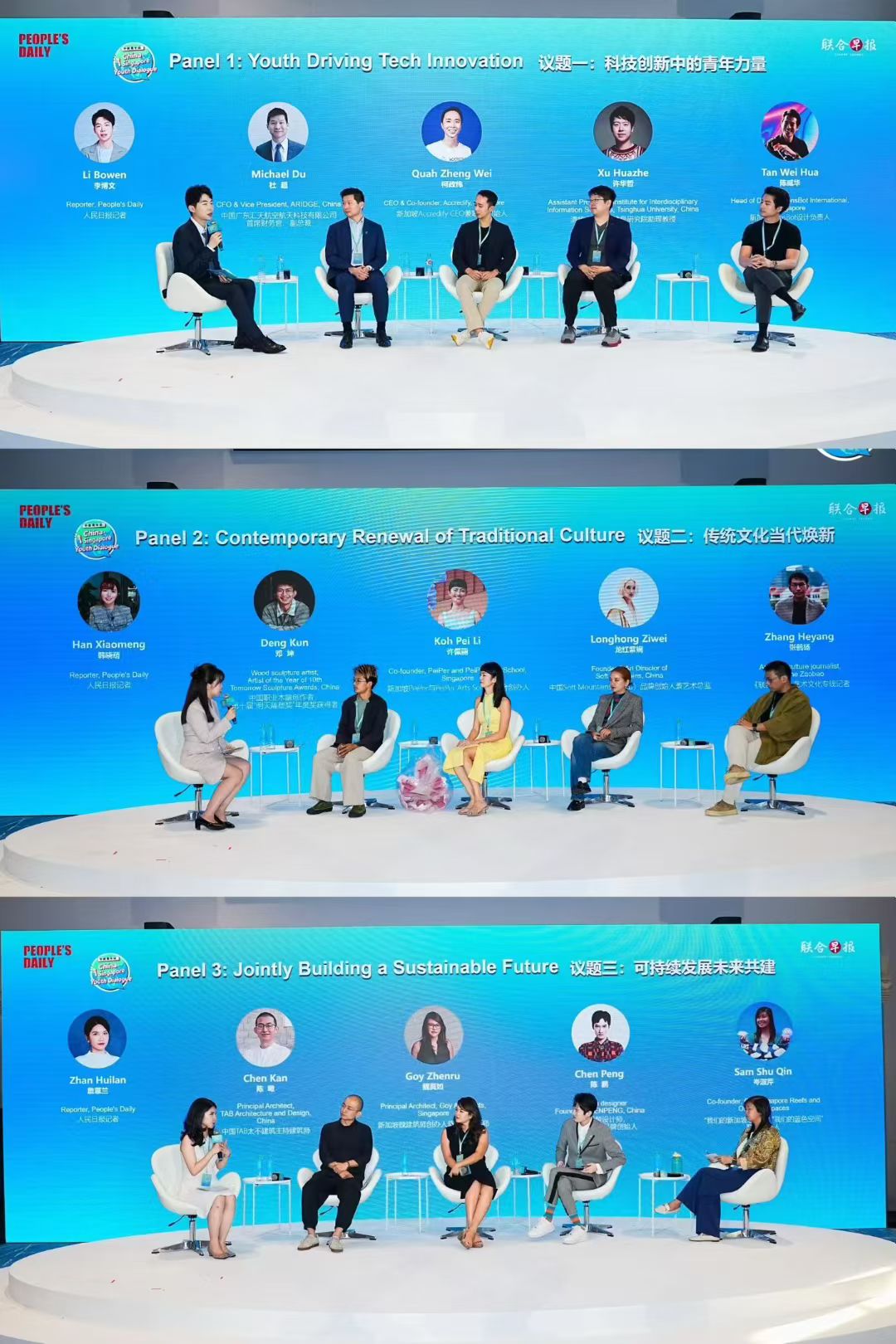
Co-organized by the People’s Daily and Lianhe Zaobao, the two-day event featured 12 young representatives who explored how their generation is shaping the future through innovation, cultural renewal and cross-border collaboration.
In the first panel, “Youth Driving Tech Innovation,” participants working in robotics, flying cars and data verification discussed both the opportunities and challenges of the AI era.
Tan Wei Hua, head of design at Singapore-based LionsBot International, addressed concerns over “AI anxiety” and its impact on jobs. “New jobs are going to be created. The next generation will be doing something entirely different,” he said, pointing to robotics as a growing field of opportunity.
Quah Zheng Wei, CEO and co-founder of Accredify, encouraged aspiring entrepreneurs to take the first step. With the tech industry evolving rapidly, he stressed that “nothing is holding you back.”
From an industry perspective, Michael Du, CFO and vice president of ARIDGE, said emerging technologies are expanding possibilities in everyday life. Meanwhile, Xu Huazhe, assistant professor at the Institute for Interdisciplinary Information Sciences at Tsinghua University, highlighted the strengths of younger generations: “With the correct taste, they will build the most meaningful things.”
The second panel, “Contemporary Renewal of Traditional Culture,” shifted focus from innovation to heritage. Artists and cultural practitioners in wood sculpture, paper art, jewelry design and journalism explored how tradition can be revitalized in modern contexts.

Wood sculpture artist Deng Kun emphasized the importance of cultivating an eye for beauty, while Lianhe Zaobao arts and culture journalist Zhang Heyang described traditional culture as “a place of spiritual haven for today’s youth.”
Designer Longhong Ziwei, founder and art director of the accessory brand Soft Mountains, said engaging with Yi heritage has inspired her work and resonated with international audiences.
Singaporean paper and mixed media artist Koh Pei Li, drawing inspiration from everyday urban life, highlighted the value of noticing overlooked details. Through her work, she hopes to reconnect people with the subtle beauty around them.
In the final panel, “Jointly Building a Sustainable Future,” speakers from architecture, fashion, and marine conservation offered interdisciplinary perspectives on sustainability.
Chen Kan, principal architect of TAB Architecture and Design, spoke about the philosophy of “being-with” as a guiding principle. “We need a deeper capacity to coexist with others,” he said.
Goy Zhenru, principal architect of Goy Architects in Singapore, emphasized designing in harmony with nature. She highlighted the importance of connecting living spaces with natural elements such as breeze and sunlight to create comfort and environmental awareness.
Sam Shu Qin, co-founder of Our Singapore Reefs and Our Blue Spaces, who describes herself as “a gardener underwater,” expressed hope that younger generations will recognize their ability to give back to the ocean.
For fashion designer Chen Peng, founder of brand CHENPENG, sustainability is both cultural and practical. “It should be culture-based and do no harm to the earth. It’s not a choice, but a natural extension of philosophy,” he said.
The dialogue marked a step forward in media cooperation and people-to-people exchanges between China and Singapore. By amplifying youth perspectives, it showcased the innovative energy and collaborative potential of both countries, while helping to build a long-term platform for bilateral engagement and shared progress.
The issuer is solely responsible for the content of this announcement.

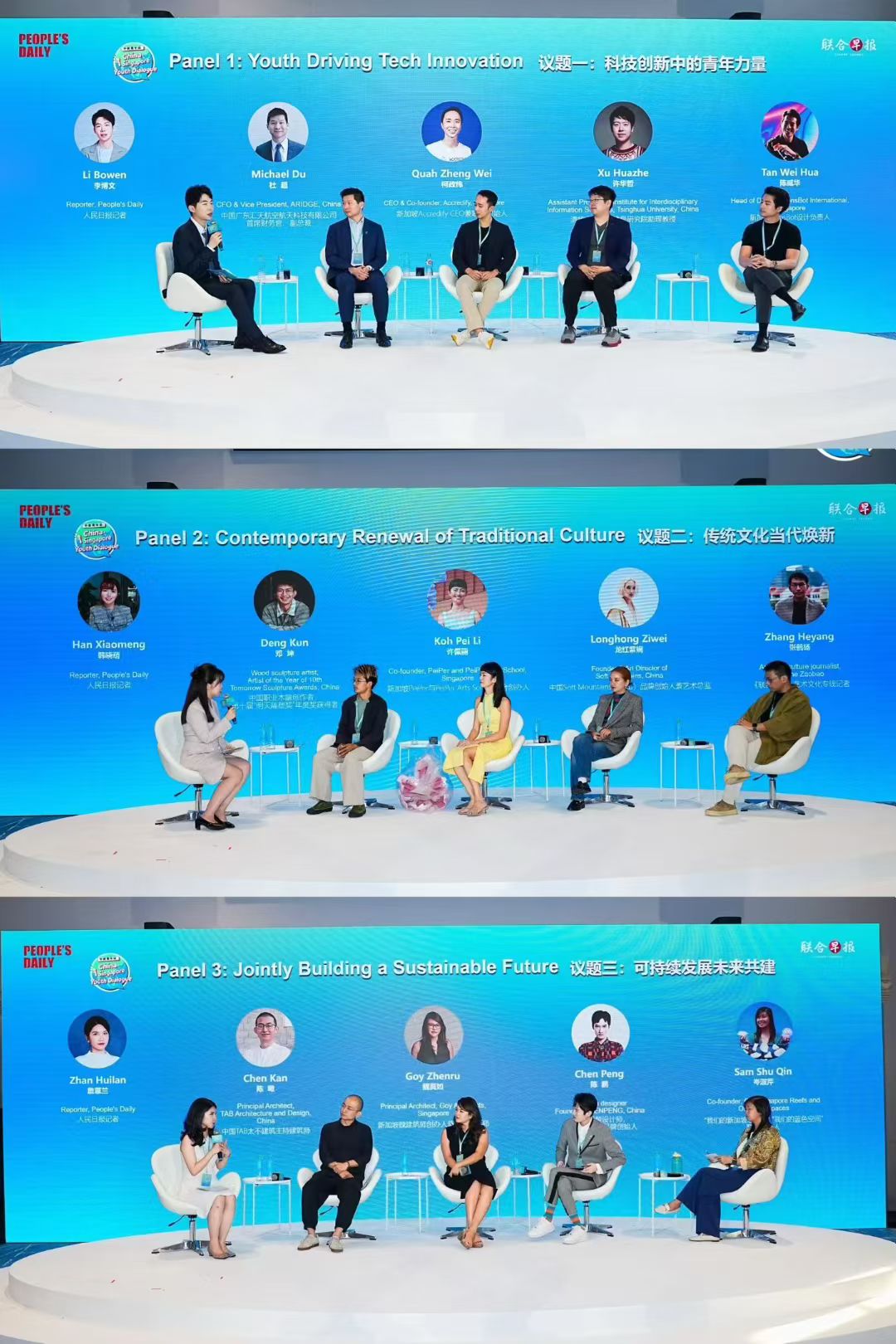
Co-organized by the People’s Daily and Lianhe Zaobao, the two-day event featured 12 young representatives who explored how their generation is shaping the future through innovation, cultural renewal and cross-border collaboration.
In the first panel, “Youth Driving Tech Innovation,” participants working in robotics, flying cars and data verification discussed both the opportunities and challenges of the AI era.
Tan Wei Hua, head of design at Singapore-based LionsBot International, addressed concerns over “AI anxiety” and its impact on jobs. “New jobs are going to be created. The next generation will be doing something entirely different,” he said, pointing to robotics as a growing field of opportunity.
Quah Zheng Wei, CEO and co-founder of Accredify, encouraged aspiring entrepreneurs to take the first step. With the tech industry evolving rapidly, he stressed that “nothing is holding you back.”
From an industry perspective, Michael Du, CFO and vice president of ARIDGE, said emerging technologies are expanding possibilities in everyday life. Meanwhile, Xu Huazhe, assistant professor at the Institute for Interdisciplinary Information Sciences at Tsinghua University, highlighted the strengths of younger generations: “With the correct taste, they will build the most meaningful things.”
The second panel, “Contemporary Renewal of Traditional Culture,” shifted focus from innovation to heritage. Artists and cultural practitioners in wood sculpture, paper art, jewelry design and journalism explored how tradition can be revitalized in modern contexts.

Wood sculpture artist Deng Kun emphasized the importance of cultivating an eye for beauty, while Lianhe Zaobao arts and culture journalist Zhang Heyang described traditional culture as “a place of spiritual haven for today’s youth.”
Designer Longhong Ziwei, founder and art director of the accessory brand Soft Mountains, said engaging with Yi heritage has inspired her work and resonated with international audiences.
Singaporean paper and mixed media artist Koh Pei Li, drawing inspiration from everyday urban life, highlighted the value of noticing overlooked details. Through her work, she hopes to reconnect people with the subtle beauty around them.
In the final panel, “Jointly Building a Sustainable Future,” speakers from architecture, fashion, and marine conservation offered interdisciplinary perspectives on sustainability.
Chen Kan, principal architect of TAB Architecture and Design, spoke about the philosophy of “being-with” as a guiding principle. “We need a deeper capacity to coexist with others,” he said.
Goy Zhenru, principal architect of Goy Architects in Singapore, emphasized designing in harmony with nature. She highlighted the importance of connecting living spaces with natural elements such as breeze and sunlight to create comfort and environmental awareness.
Sam Shu Qin, co-founder of Our Singapore Reefs and Our Blue Spaces, who describes herself as “a gardener underwater,” expressed hope that younger generations will recognize their ability to give back to the ocean.
For fashion designer Chen Peng, founder of brand CHENPENG, sustainability is both cultural and practical. “It should be culture-based and do no harm to the earth. It’s not a choice, but a natural extension of philosophy,” he said.
The dialogue marked a step forward in media cooperation and people-to-people exchanges between China and Singapore. By amplifying youth perspectives, it showcased the innovative energy and collaborative potential of both countries, while helping to build a long-term platform for bilateral engagement and shared progress.
The issuer is solely responsible for the content of this announcement.
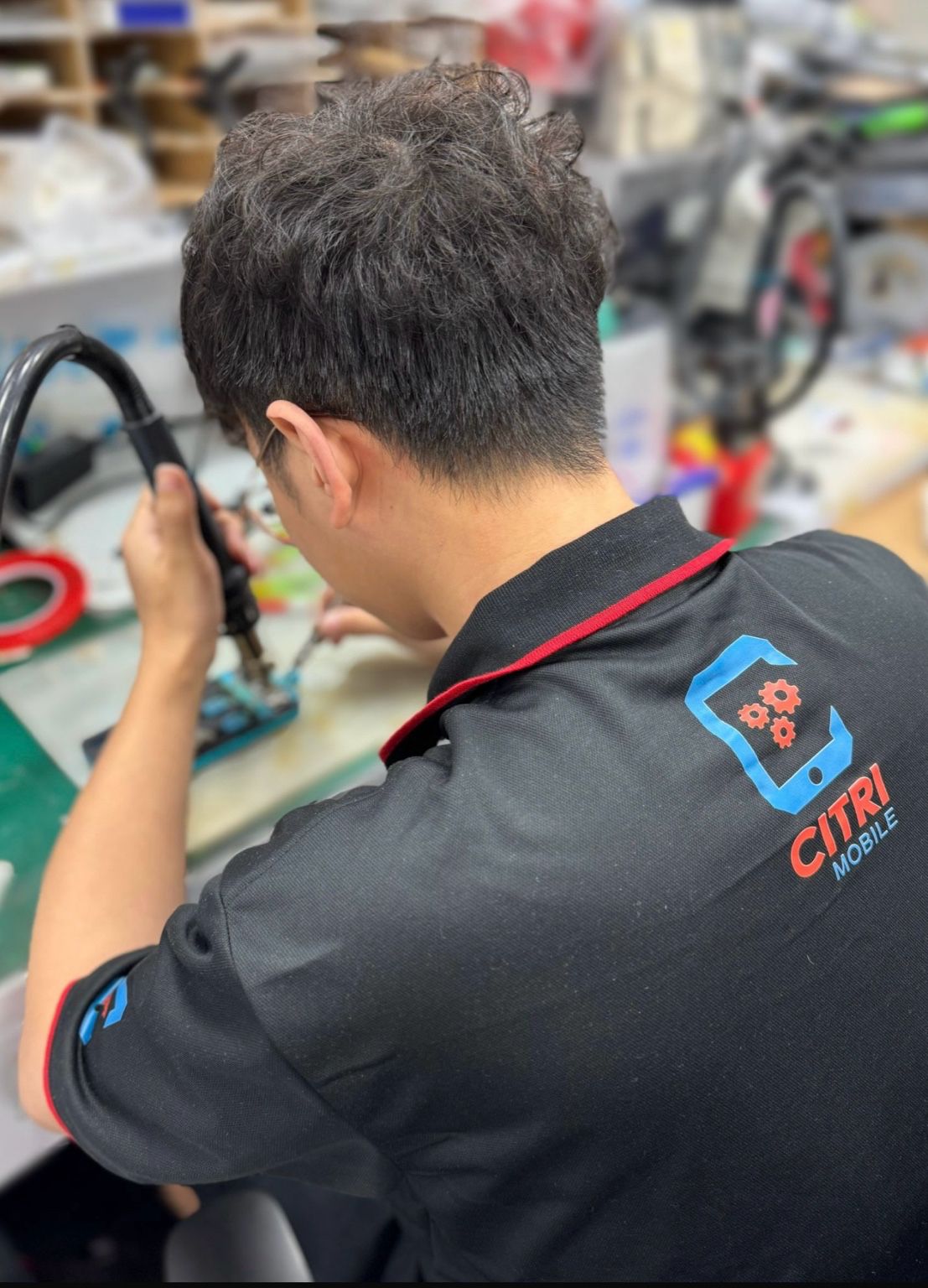
Expansion strengthens access to fast, reliable device repair services across Jurong, Yishun, Tampines and Chinatown as demand for urgent technical support rises
What often begins as a minor inconvenience can quickly escalate. A phone may take longer to charge, a screen may flicker briefly before stabilising, or a laptop may run hotter than usual during routine use. These early signs are often ignored until the device stops functioning at a critical moment.
Hashtag: #CitriMobile #SingaporeRepair #Jurong #Yishun
 https://citrimobile.com/
 https://x.com/CitriMobile
 https://www.facebook.com/CitriSG/
 https://www.instagram.com/citrimobilesghttps://www.carousell.sg/u/citrimobilesg/
The issuer is solely responsible for the content of this announcement.
C3 Smart Repair By Citri Mobile













-
 Feature/OPED6 years ago
Davos was Different this year
-
Travel/Tourism10 years ago
Lagos Seals Western Lodge Hotel In Ikorodu
-

 Showbiz3 years ago
Estranged Lover Releases Videos of Empress Njamah Bathing
-
 Banking8 years ago
Sort Codes of GTBank Branches in Nigeria
-

 Economy3 years ago
Subsidy Removal: CNG at N130 Per Litre Cheaper Than Petrol—IPMAN
-

 Banking3 years ago
Sort Codes of UBA Branches in Nigeria
-

 Banking3 years ago
First Bank Announces Planned Downtime
-

 Sports3 years ago
Highest Paid Nigerian Footballer – How Much Do Nigerian Footballers Earn