
Media OutReach
DFI Retail Group Divests Shares in Robinsons Retail


DFI first became a significant minority shareholder in RRHI in 2018 through the share-for-share swap transaction involving Rustan Supercenters, Inc.
Following this divestment, the Group will review the use of the divestment proceeds to support its capital allocation strategy and long-term growth priorities which include – but not be limited to – expanding digital retail media, advancing own brand innovation, and enhancing omnichannel capabilities across its key markets.
DFI remains confident in RRHI’s long-term prospects and the continued success of their exclusive distribution of Meadows and Guardian brands.
Scott Price, Group Chief Executive of DFI Retail Group, said, “We would like to sincerely thank the Robinsons Retail team for their hard work, partnership, and commitment over the years. Our collaboration has been instrumental in growing our presence in the Philippines, and we look forward to continuing this strong relationship as we each focus on our strategic priorities.”
“This transaction represents a significant step in our evolution as an operating company, enabling us to redeploy capital to support growth and enhance shareholder returns across our subsidiary businesses. We will evaluate the deployment of divestment proceeds to ensure alignment with our capital allocation strategy and long-term growth ambitions.”
The transaction was executed via a special block sale on the Philippine Stock Exchange, with pricing agreed upon based on prevailing market conditions and strategic considerations.
Hashtag: #DFIRetailGroup
https://www.dfiretailgroup.com/
The issuer is solely responsible for the content of this announcement.
DFI Retail Group
DFI Retail Group is a leading Asian retailer, driven by its purpose to ‘Sustainably Serve Asia for Generations with Everyday Moments’.
As at 31 December 2024, the Group, its associates and joint ventures operated over 10,700 outlets, of which more than 5,000 stores were operated by subsidiaries. The Group, together with associates and joint ventures, employed over 190,000 people, with over 45,000 people employed by subsidiaries. The Group had total annual revenue in 2024 of US$24.9 billion and reported revenue of US$8.9 billion.
The Group is dedicated to delivering quality, value and service to Asian consumers through a compelling retail experience, supported by an extensive store network and highly efficient supply chains.
The Group, including associates and joint ventures, operates a portfolio of well-known brands across six key divisions: health and beauty, convenience, food, home furnishings, restaurants and other retailing.
The Group’s parent company, DFI Retail Group Holdings Limited, is incorporated in Bermuda and has a primary listing in the equity shares (transition) category of the London Stock Exchange, with secondary listings in Bermuda and Singapore. The Group’s businesses are managed from Hong Kong. DFI Retail Group is a member of the Jardine Matheson group.



Media OutReach
Robust Demand Ahead: 75% of Consumers Plan Jewellery Purchases, with Natural Diamonds Leading

Self-reward joins birthdays as a key driver of Hong Kong’s natural diamond market, new consumer survey reveals
HONG KONG SAR – Media OutReach Newswire – 8 April 2026 – Coinciding with World Diamond Day on April 8, NielsenIQ released its latest jewellery gifting study. The study offers a practical guide for those who are looking for meaningful gifts for significant gifting occasions such as the forthcoming Mother’s Day. The study reveals that despite an increasingly complex macroeconomic environment, Hong Kong’s natural diamond jewellery market continues to demonstrate remarkable resilience, consumer intent remains strong, with 75% of consumers planning to buy jewellery in the next 12 months and 76% of them specifically considering natural diamonds.
The study also highlights a growing cultural shift towards self‑purchase and the celebration of life’s most personal moments, reaffirming that the impulse to give—to oneself as well as to loved ones—continues to underpin demand.
At the same time, shoppers are placing greater emphasis on assurance and transparency, with traceability and value‑added services becoming increasingly influential in shaping both where—and what—they choose to buy. Together, these shifts highlight a market in which trust, service excellence and authenticity are emerging as powerful drivers of differentiation.
Key insights to understand consumer preferences and behaviour:
- The Rise of the “Self-Reward”: Rewarding oneself has emerged as a key driver of jewellery buying, with 57% of consumers planning to buy for themselves. The primary reason for these self-purchases is to reward oneself (55%), followed by celebrating special occasions (33%) and personal enjoyment or collection (32%). This trend sits alongside traditional romantic gifting for spouse/partner (42%), signaling a broader shift towards personal empowerment and self-celebration.
- Celebratory Moments Top the Gifting Calendar: The most frequent jewellery‑gifting occasions are the annual milestones of everyday life. Birthdays (51%) and anniversaries (42%) remain the primary drivers for both giving and receiving jewellery, while engagements and weddings (31%) as well as Valentine’s Day (31%), continue to hold significant importance.
- Marking Special Occasions Matters Most: When purchasing for others, marking a meaningful occasion is the primary gifting driver (50%), followed by expressing love or care (36%) and the desire to surprise or delight someone (33%).
- The Informed Consumer: Traceability and Added-value Services Take Centre Stage: Price remains a key consideration (55%) when selecting natural diamonds, but consumers weigh this against the 4Cs (38%), design (37%), and certification (36%). Traceability matters to 70% of natural diamond intenders, while 80% say value-added services significantly boost their purchasing confidence.
Intrinsic and Emotional Values
The research reveals that natural diamonds are increasingly woven into the fabric of daily life and personal achievement. Consumers strongly associate natural diamonds with intrinsic, lasting qualities: 75% believe they hold their value better due to their rarity and finite supply, and 73% view each stone as one of a kind. Beyond the investment, however, lies a deep emotional connection. Nearly three-quarters of respondents (72%) expressed that natural diamonds bring them joy to wear and can be worn every day to match their outfits.
These emotional and symbolic associations are reflected in consumers’ natural diamond jewellery purchasing habits: rings (55%), necklaces (49%), earrings (42%), and bracelets (41%) emerge as the most popular categories. Mid‑sized stones (68%), ranging from approximately 0.5 to 1.49 carats, are the preferred choice. Spending tends to concentrate in the mid‑range, particularly between HK$10,000 and HK$20,000 (31%), followed by the HK$20,000 to HK$30,000 range (22%). Most consumers (46%) prefer to choose jewellery based on design rather than a fixed style, with 18K white gold the primary material choice (34%), followed by 18K rose gold (18%).
Online Discovery Meets In-Store Trust
Despite the digital age, the desire for a tangible experience endures. A commanding 75% of consumers prefer to purchase in-store, with 35% insisting on completing their entire transaction offline. Transparency bridges the two worlds—70% of natural diamond intenders cite traceability as important, underscoring the growing expectation for credible and accessible product information that reinforces the confidence of physical retail.
Strong Receiving Intentions Signal Continued Momentum
Looking ahead, consumer expectations for receiving diamond jewellery remain exceptionally high. 74% of respondents anticipate receiving jewellery in the next 12 months, and among them, an overwhelming 85% hope to receive natural diamonds. Special occasions (47%) are the most anticipated reason for receiving, with birthdays (54%), anniversaries (44%), Valentine’s Day (40%) and engagements and weddings (35%) leading the calendar. These figures underscore a confident outlook for the natural diamonds industry.
The consumer survey, conducted by NIQ from 27 January to 11 February 2026, involved a total of 572 participants aged 18-54 through various online channels. Among the respondents, 24% were male and 76% were female, with the majority (77%) being married, engaged, or in a relationship. Commissioned by De Beers Group, NIQ managed the design and data analysis of the survey.
Notes to Editors
Hashtag: #DeBeersGroup #adiamondisforever #naturaldiamonds #diamonds #ConsumerSurvey
http://www.debeersgroup.com https://www.linkedin.com/company/debeersgroup/
 http://www.facebook.com/DeBeersGroupOfCompanies/
 http://www.instagram.com/debeersgroup
The issuer is solely responsible for the content of this announcement.
About De Beers Group
Established in 1888, De Beers Group is the world’s leading diamond company with expertise in the exploration, mining, marketing and retailing of diamonds. Together with its joint venture partners, De Beers Group employs more than 20,000 people across the diamond pipeline and is the world’s largest diamond producer by value, with diamond mining operations in Botswana, Canada, Namibia and South Africa. Innovation sits at the heart of De Beers Group’s strategy as it develops a portfolio of offers that span the diamond value chain, including its jewellery houses, De Beers Jewellers and Forevermark, and other pioneering solutions such as diamond sourcing and traceability initiatives Tracr and GemFair. De Beers Group also provides leading services and technology to the diamond industry in the form of education and laboratory services via De Beers Institute of Diamonds and a wide range of diamond sorting, detection and classification technology systems via De Beers Group Ignite. De Beers Group is committed to ‘Building Forever,’ a holistic and integrated approach for creating a better future – where safety, human rights and ethical integrity continue to be paramount; where communities thrive and the environment is protected; and where there are equal opportunities for all. De Beers Group is a member of the Anglo American PLC group. For further information, visit www.debeersgroup.com.

Media OutReach
Bhutan’s Young Culinary Talent Sharpens Skills in Hong Kong Culinary Exchange Sponsored by Lee Kum Kee


Dasho Tashi Wangyal, an Eminent Member of the National Council of Bhutan and a member of the DSP Steering Committee, said, “Our young chefs are receiving valuable exposure at the Chinese Culinary Institute through immersion in professional Asian cuisine, modern culinary techniques and global kitchen standards. I would like to extend our heartfelt appreciation to Lee Kum Kee for the vision, partnership and commitment to nurturing the next generation of culinary professionals.”
Hashtag: #LeeKumKee #LKK
The issuer is solely responsible for the content of this announcement.
About Lee Kum Kee
Lee Kum Kee is the global gateway to Asian culinary culture, dedicated to promoting Chinese culinary culture worldwide. Since 1888, it has brought people together over joyful reunions, shared traditions and memorable meals. Beloved by consumers and chefs alike, Lee Kum Kee’s range of more than 300 sauces and condiments sparks creativity in kitchens everywhere, inspiring professional and home chefs to experiment, create and delight. Headquartered in Hong Kong, China and serving over 100 countries and regions, Lee Kum Kee’s rich heritage, unwavering commitment to quality, sustainable practices and “Constant Entrepreneurship” combine to enable superior experiences through Asian cuisine for people worldwide. For more information, please visit www.LKK.com.
About De-suung Skilling Programme
The De-suung Skilling Programme (DSP) is a Royal Project initiated by His Majesty The King of Bhutan in 2021. As envisioned by His Majesty, DSP imparts a series of short-term high-quality trainings to unemployed Bhutanese youths who have mostly completed high school and are in their early or mid-20s. These youths have all undergone the De-suung training, which is a valued-based personal development programme intended to encourage active citizenry in the process of nation-building. DSP provides short-term training in various fields to Bhutanese youths entering the job market with varying degrees of educational qualification. For more information, please visit www.dsp.org.bt.
About Chinese Culinary Institute
The Chinese Culinary Institute (CCI) is one of the 14 member institutions of Vocational Training Council (VTC). It was established in 2000 as one of the Millennium Projects of the HKSAR Government. CCI endeavours to provide systematic training in Chinese cuisine for beginners and practicing chefs who wish to obtain or upgrade their professional qualifications. It also aims to elevate the professional standard and status of Chinese Chefs in order to strengthen Hong Kong’s reputation as the “Culinary Capital of Asia”. Furthermore, CCI strives to establish Hong Kong as a regional training and accreditation centre in Chinese cuisine by introducing “One Trade Test Two Certificates” system. To promote the deep-rooted heritage of the Chinese culinary art, CCI offers culinary interest courses for locals and tourists alike. For more information, please visit cci.edu.hk/en.

The ANDPAD service, which was launched in 2016, has grown into a platform for the construction Industry currently used by over 265,000 organizations and 690,000 individual users. In December 2025, ANDPAD initiated “ANDPAD Stellarc,” an AI project dedicated to construction businesses. With data and operational insight as the foundation, the company is also tackling AI development aimed at problem-solving in the construction industry.
Since opening in May 2025, the Hanoi Office at ANDPAD VIETNAM has promoted the enhancement of its development organization and DX in construction in Southeast Asia. This decision to relocate the office, which will be accompanied with an expansion, was made based on the rapid growth of the office’s organization and the expansion of demand for DX in construction in Southeast Asia.
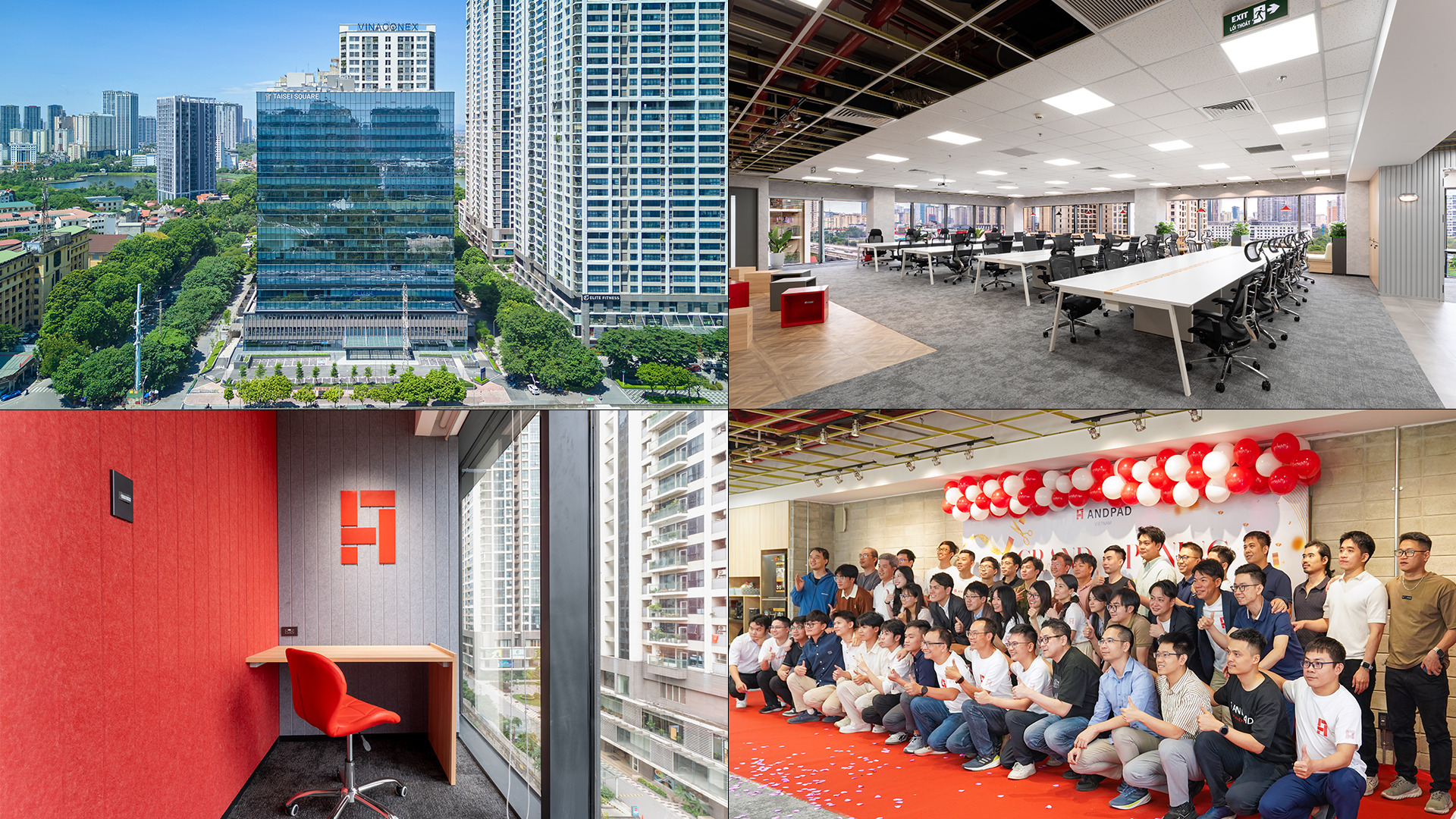
Hanoi Office: Overview
TAISEI SQUARE HANOI
TAISEI SQUARE HANOI is a large-scale office designed and constructed entirely by TAISEI CORPORATION. The first office independently developed in Hanoi by a Japanese company, TAISEI SQUARE HANOI is positioned as a flagship location under ANDPAD’s international operations.
<Address>
7F, Taisei Square Hanoi Building. No.289 Khuat Duy Tien Street, Dai Mo Ward, Ha Noi City
■ Recruitment
Andpad Vietnam is looking for new team members. Please see below for details.
Details:https://andpad.vn/#hotjobs
LinkedIn:https://vn.linkedin.com/company/andpad-vietnam
■ About the ANDPAD Service
The cloud-based construction project management service with the top share of the market in Japan*, ANDPAD makes the central management of everything from enhancing onsite efficiency to improving management possible. Since provision of the service started in 2016, through associated development efforts that emphasize intuitiveness and ease of use and thorough support for implementation and utilization, the service has reached over 265,000 corporate users and 690,000 individual users.
ANDPAD was selected as a “2024 Recommended Technology” under the NETIS (New Technology Information System) by the Ministry of Land, Infrastructure, Transport and Tourism.
Details (Japanese language only): https://andpad.jp/
*”Trends and Vendor Share in the Construction Business Management Cloud Service Market” (December 2024 MIC IT Report)” (According to research by the Deloitte Tohmatsu MIC Economic Research Institute)
Hashtag: #ANDPAD
The issuer is solely responsible for the content of this announcement.
ANDPAD VietNam Overview
Name :ANDPAD VietNam Co., Ltd
Location :3rd Floor, Dong Nhan Building, 90 Nguyen Dinh Chieu St, Tan Dinh Ward, HCMC
Representative :Yusuke Noda
Business Activities:Development of “ANDPAD” cloud-based construction project management service
URL : https://andpad.vn/
■Company Overview
Name : ANDPAD Inc.
Location : Sumitomo Fudosan Tokyo Mita Garden Tower 37F, 5-19 Mita 3 Chome, Minato-ku, Tokyo
Representative : Takeo Inada, CEO
Business Activities : Development, sales and operation of “ANDPAD” cloud-based construction project management service
Company Website (Japanese language only):https://andpad.co.jp/

-
 Feature/OPED6 years ago
Davos was Different this year
-
Travel/Tourism10 years ago
Lagos Seals Western Lodge Hotel In Ikorodu
-

 Showbiz3 years ago
Estranged Lover Releases Videos of Empress Njamah Bathing
-
 Banking8 years ago
Sort Codes of GTBank Branches in Nigeria
-

 Economy3 years ago
Subsidy Removal: CNG at N130 Per Litre Cheaper Than Petrol—IPMAN
-

 Banking3 years ago
Sort Codes of UBA Branches in Nigeria
-

 Banking3 years ago
First Bank Announces Planned Downtime
-

 Sports3 years ago
Highest Paid Nigerian Footballer – How Much Do Nigerian Footballers Earn