
Media OutReach
DHL Group adds new sustainability milestones in Asia Pacific across skies and streets

- Strategic SAF agreements signed with Cathay, Cosmo Energy and Neste
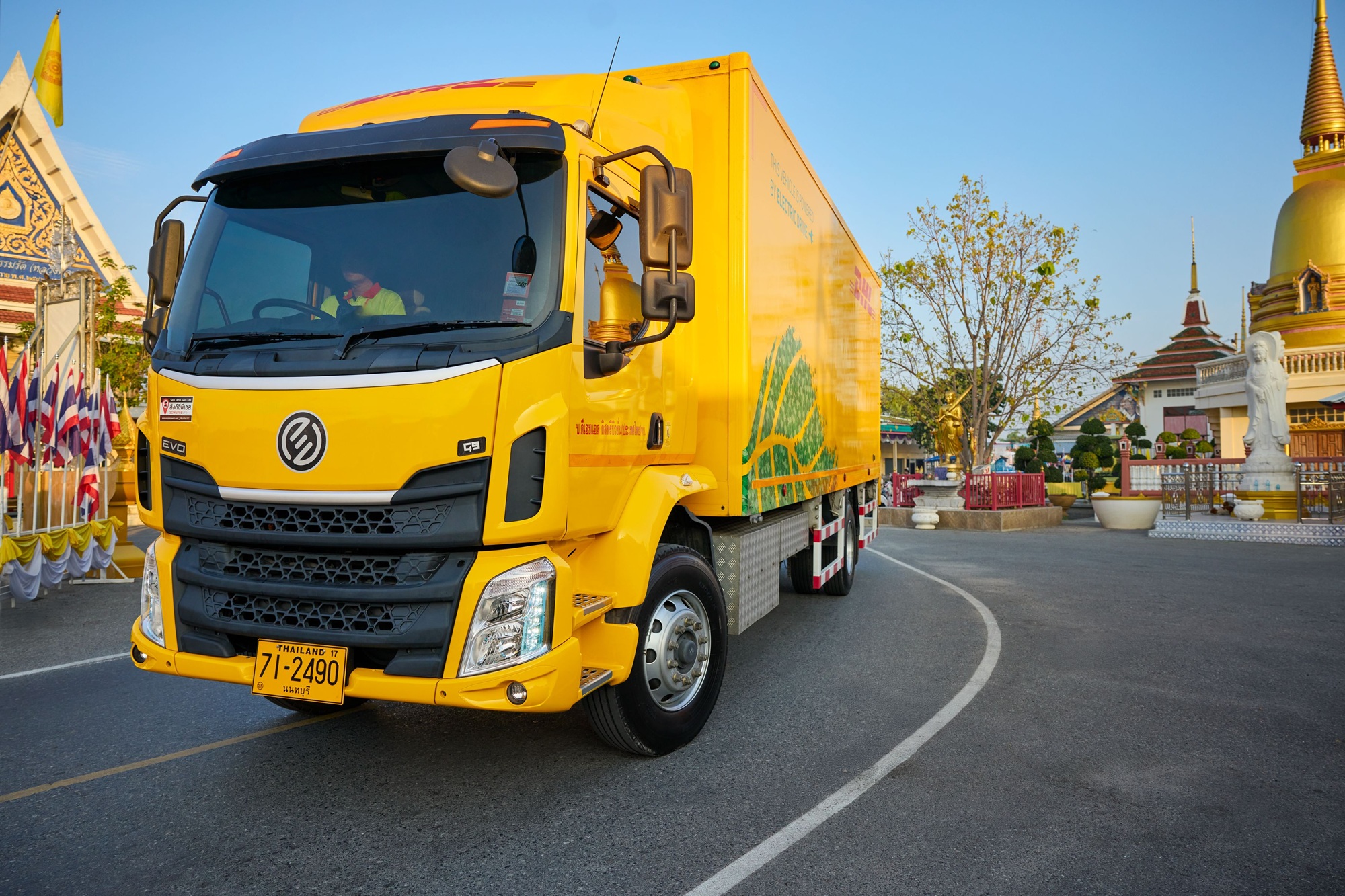
- Currently operates over 1,800 electric vehicles across the region
- Added the first facility globally that is fully powered by renewable energy powered by on-site solar systems
SINGAPORE – Media OutReach Newswire – 2 February 2026 -DHL Group has marked significant milestones in its sustainability journey across Asia Pacific by reinforcing its commitment to decarbonization and readiness to meet the region’s growing demand for emissions-reduced logistics solutions. In 2025, DHL advanced its sustainability roadmap. From this wide range of initiatives, five examples stand out, including sustainable fuel agreements, electric vehicle deployment, and carbon-neutral facilities.
Leading the charge with sustainable fuels
Despite aviation being one of the most challenging sectors to decarbonize, DHL is making steady moves to achieve 30% sustainable aviation fuel (SAF) usage by 2030. 2025 saw DHL Express sign landmark SAF agreements with leading partners across Asia, including Cosmo Energy, Cathay and Neste to boost SAF demand and adoption for air cargo flights. These contracts accounted for close to 20 million liters of SAF to be supplied to DHL Express flights departing Narita, Incheon and Singapore. To date, DHL is one of the leading SAF users in the logistics industry.
Additionally, SAF is also widely adopted by customers in the Asia Pacific region through DHL’s GoGreen Plus service. In 2025, over 153,000 customers shipped using the service to reduce the Scope 3 emissions of their international air shipments via SAF. Through the ‘book and claim’ system, DHL can substitute fossil fuels with sustainable fuels across its network and assign the resulting environmental benefits to customers who invest in GoGreen Plus – even if their shipments are not physically transported using assets powered by these fuels.
Ken Lee, CEO, Asia Pacific, DHL Express said, “Sustainability isn’t just a slogan for us. We lead with action – whereas others follow – to reduce the greenhouse gas emissions from our operations. Together with the right partners, we are setting a benchmark for the logistics industry. We are determined to extend our efforts and scale solutions that can make a real impact for our customers and reduce our impact to the planet.”
Meanwhile, DHL Global Forwarding formed a global partnership with CMA CGM to purchase 8,800 metric tons of UCOME second-generation biofuel with the aim of reducing around 25,000 metric tons of greenhouse gas emissions on a well-to-wake basis. This collaboration reiterates DHL’s commitment to driving the demand for sustainable marine fuel to achieve low-carbon maritime transport.
Niki Frank, CEO, Asia Pacific, DHL Global Forwarding, said, “Our role goes beyond moving goods. We enable global trade to become more sustainable. Customers are increasingly asking for solutions that could help them decarbonize entire supply chains. With our global reach and expertise across air, ocean and road freight, DHL is uniquely positioned to deliver those ambitions through innovation and collaboration.”
Expanding electric vehicle fleet
Beyond the skies and the seas, DHL continues to accelerate the transition to emissions-reduced ground transport through the deployment of hydrogen-powered vehicles and the electrification of its fleet.
Last year saw DHL Supply Chain deploy hydrogen-powered trucks in Japan for long-haul operations. In Thailand, the division supported Boots with the launch of a 100% electric vehicle fleet to service over 250 stores across the country. In the Philippines, DHL Summit Solutions, Inc., the joint venture between DHL Supply Chain Asia Pacific and JG Summit Holdings, Inc., introduced 23 electric vehicles and 22 electric prime movers.
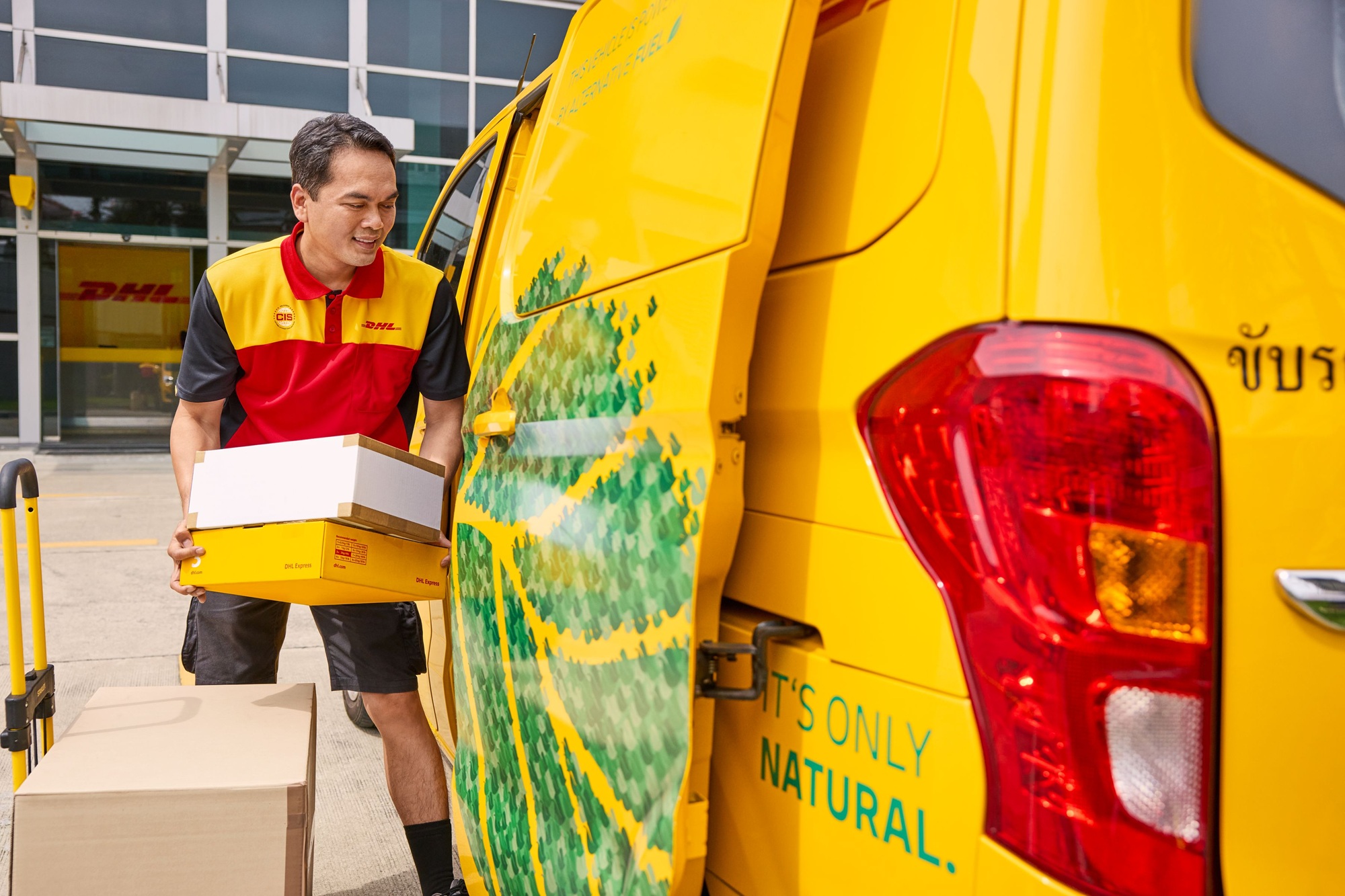
DHL Express also expanded its EV fleet across Asia Pacific by adding over 100 electric vehicles in the Philippines, Korea and China. It currently operates more than 1,400 such vehicles for its last-mile pickup and delivery.
Similarly in Thailand, DHL eCommerce introduced two electric trucks to support its delivery operations.
To date, the Group has over 1,800 electric vehicles in the Asia Pacific region – supporting its target of operating two-thirds of its last-mile fleet with electric vehicles by 2030, contributing carbon emissions reductions in logistics and improvement of air quality in cities.
Reducing emissions at new facilities
To further DHL Group’s ‘Green Logistics of Choice’ agenda, new owned facilities have been built to operate carbon neutral. In Thailand, DHL Supply Chain unveiled its first fully renewable energy warehouse globally that is powered by on-site solar systems – a global milestone for the company. Equipped with a 4.2 MWp solar array and advanced battery storage, the site generates all of its energy on-site, eliminating reliance on fossil-fuel-based grid power. Also launched in Thailand and the Philippines were new DHL Express service centers that were designed and built to reduce energy consumption.
Javier Bilbao, CEO, Asia Pacific, DHL Supply Chain said, “When it comes to sustainability, we don’t wait for mandates – we act now to set new industry standards. Our carbon-neutral buildings and EV fleet developments reflect a long-term vision to reimagine logistics infrastructure for a low-carbon world. By investing early and decisively, we are shaping the future of sustainable and resilient supply chains for our customers and the industry.”
These highlighted initiatives reaffirm DHL’s ambition to achieve net-zero emissions by 2050 by deploying solutions that support customer’s decarbonization agenda as well as signal to suppliers that there is demand.
Hashtag: #DHL
The issuer is solely responsible for the content of this announcement.
DHL – The logistics company for the world
DHL is the leading global brand in the logistics industry. Our DHL divisions offer an unrivalled portfolio of logistics services ranging from national and international parcel delivery, e-commerce shipping and fulfillment solutions, international express, road, air and ocean transport to industrial supply chain management. With approximately 400,000 employees in more than 220 countries and territories worldwide, DHL connects people and businesses securely and reliably, enabling global sustainable trade flows. With specialized solutions for growth markets and industries including technology, life sciences and healthcare, engineering, manufacturing & energy, auto-mobility and retail, DHL is decisively positioned as “The logistics company for the world”.
DHL is part of DHL Group. The Group generated revenues of approximately 84.2 billion euros in 2024. With sustainable business practices and a commitment to society and the environment, the Group makes a positive contribution to the world. DHL Group aims to achieve net-zero emissions logistics by 2050.
On the internet:  group.dhl.com/press
Follow us at:  X.com/DHLglobal




With emotional depth, singer Natalia Sarsgard describes the path to finding oneself again, to gathering one’s thoughts, to remaining silent, to withdrawing—in order to reflect in the silence, in the comfort, and in the seclusion, to feel and reconnect with ourselves and others.
Through her multifaceted voice, Natalia Sarsgard’s interpretation of the song conveys how strength and courage can arise from deep vulnerability. Without even realizing it, one is accompanied by the confidence that what was thought to be lost can be found again.
Youtube: https://youtu.be/CINjhTHtmno
J’ai Du M’arreter – LPS, https://open.spotify.com/intl-de/album/6BvbJ0VAAvMwciCD7q7BC8
https://shop.valle-venia.de/products/different-ways
https://www.amazon.de/Different-Ways-feat-Various-Artist/dp/B0CMJVQV2M
https://valle-venia.de/30S/JaiDuMarreter.mp4
www.valle-venia.com
Hashtag: #ValleVenia
The issuer is solely responsible for the content of this announcement.


Final Dividend Increases by 33.3% to HK10 Cents per Share
Dual Engines, Global Reach: B2C-B2B Synergy Drives Market Expansion
Results Highlights
- Revenue hit a new high of US$501.54 million, representing a strong YoY growth of 45.0%
- Gross profit rose by 40.9% to US$148.50 million; operating profit increased by 28.2% to US$31.90 million
- Net profit grew by 21.5% to US$23.14 million
- The Board has proposed a final dividend of HK10 cents per share, up 33.3% year-on-year
- Business-to-consumer (B2C) platform YesStyle recorded revenue of US$347.48 million, up 30.8%, accounting for 69.3% of the Group’s total revenue
- Revenue of business-to-business (B2B) platform AsianBeautyWholesale (ABW) surged by 91.7% to US$148.89 million, accounting for 29.7% of the Group’s total revenue
- Non-core markets (excluding the US, UK, Canada, Australia) accounted for over 60% of the Group’s total revenue for the first time, with Latin America and the Middle East achieving remarkable growth
- The Group strengthened its global logistics network to improve economies of scale, opened a second AMR warehouse in Hong Kong and a new warehouse in South Korea, reducing freight costs as a percentage of revenue to 18.7%
HONG KONG SAR – Media OutReach Newswire – 27 March 2026 – YesAsia Holdings Limited (“YesAsia Holdings”, together with its subsidiaries, the “Group”) (02209.HK), a leading e-commerce platform operator recognized for its expertise in curating Asian beauty and lifestyle products, announced today its annual results for the year ended 31 December 2025 (the “Year”).
The Group’s revenue rose by 45.0% to US$501.54 million, boosted by the global K-Beauty momentum and the scaled expansion of its B2B platform, which accounted for nearly 30% of the Group’s revenue. Gross profit increased by 40.9% to US$148.50 million, and gross profit margin remained relatively stable at 29.6%. Operating profit also grew by 28.2% to US$31.90 million. Net profit for the Year climbed 21.5% to US$23.14 million, with a net profit margin of 4.6%. Basic earnings per share was US5.62 cents (2024: US4.74 cents).
As at 31 December 2025, the Group maintained a solid financial position with bank and cash balances amounting to US$15.94 million. In the view of YesAsia Holdings’ solid operating performance, healthy cash reserves and future capital requirements, the Board has proposed a final cash dividend of HK10 cents per share (2024: HK7.5 cents per share).
Market diversification pays off as non-core markets lead global growth
Building on stable revenue from its core markets (the US, UK, Canada, and Australia), the Group accelerated its expansion into mainland Europe, Latin America, the Middle East, and other emerging markets. In 2025, non-core markets accounted for over half of the Group’s total revenue, significantly outpacing core markets in growth and becoming the primary catalyst of its business across the globe. Among these regions, Latin America and the Middle East recorded the strongest upward trend, with growth of 224.4% and 75.5% respectively, while Europe and Associated Countries remained the Group’s largest regional market.
Social media marketing and influencer engagement remain core drivers of YesStyle‘s growth strategy. During 2025, the number of YesStyle influencers increased to over 502,000, representing a year-on-year growth rate of approximately 24.6%. Revenue generated from influencer referrals reached approximately US$104.8 million, up approximately 43.0% year‑on‑year, and accounted for approximately 30% of YesStyle‘s total revenue, highlighting the continued strengthening of the YesStyle influencer ecosystem.
Meanwhile,YesStyle bolstered its localization efforts to capture opportunities in non-English-speaking markets. In July 2025, it launched a Polish-language website, expanding its language offerings to nine. Combined with social-media-driven marketing, regional campaigns via a robust network of influencers, and AI-powered solutions, the Group extended K-Beauty’s reach to a broader audience worldwide. This momentum is further amplified by the opening of Yesful Land in Seoul, South Korea, a physical hub where influencers and the K-Beauty community can converge and create authentic content, bridging digital engagement with real-world experience.
B2C-B2B synergy fuels performance with ABW business scaling rapidly
YesAsia Holdings is an authorized distributor for over 475 K-Beauty brands, serving both B2C and B2B channels. The dual-growth-engine strategy continued to bear fruit in 2025, fortifying the Group’s overall market influence and ongoing advancement.
Notably, ABW maintained its vigorous growth trajectory in 2025, with the newly launched ABW Offline business generating almost US$50 million in revenue in its debut year, underscoring the strong international retail demand for K-Beauty products. During the Year, ABW established distribution networks for 56 leading retailers across 26 markets, spanning North America, Europe, Latin America, the Middle East and Asia. Prominent partners include Target, Costco, Primark, Douglas, Sally Beauty, Watsons, and Nykaa. These collaborations have enabled the Group and its K-Beauty brand partners to reach millions of consumers through established offline retail networks, effectively tapping into a market segment that remains significantly larger than its online counterpart.
Mr. Joshua Lau, Founder, Executive Director and Chief Executive Officer, said: “Looking ahead, we are confident that K-Beauty’s global development impetus will only gather steam as it has transitioned from a niche category into a mainstream retail staple. To capture the opportunities that arise, we will deepen engagement in non-core markets through targeted and localized digital initiatives. At the same time, we are accelerating our B2B business by connecting K-Beauty brands with international retailers, and leveraging our logistics network and AI-driven capabilities. With dual growth engines in B2C and B2B, advanced technology, and a dedicated team, YesAsia Holdings is well-positioned to soar to new heights and deliver long-term value to shareholders and stakeholders.”
Hashtag: #YesAsiaHoldings
The issuer is solely responsible for the content of this announcement.
About YesAsia Holdings Limited (02209.HK)
Established in 1997, YesAsia Holdings is a leading e-commerce platform operator recognized for its expertise in identifying and procuring quality Asian beauty, fashion, lifestyle and entertainment products. Headquartered in Hong Kong, the Group deliver products promptly and efficiently to a global audience through its strong ties with over 400 leading Asian beauty brand and supplier partners. The Group operates three major platforms: YesStyle, an e-commerce B2C platform for serving the increasingly popular Asian beauty, fashion and lifestyle products, particularly Korean beauty products; AsianBeautyWholesale, a B2B platform for Asian beauty products; and YesAsia, an e-commerce retail platform for entertainment products. YesAsia Holdings is a constituent of the MSCI Hong Kong Micro Cap Index.
For more information, please visit the Group’s official website: https://www.yesasiaholdings.com/

Recorded Continuous Growth in Revenue, Proposed a final dividend of HK9.0 cents per share
Highlights:
- Revenue increased by 2.2% to approximately HK$2,867.7 million.
- Gross profit increased by 0.7% to approximately HK$1,035.1 million.
- Profit attributable to owners of the Company recorded approximately HK$219.7 million.
- As at 31 December 2025, the Group operated a total of 183 chain retail stores (2024: 176), including 178 retail stores in Hong Kong and 5 retail stores in Macau.
- Basic earnings per share was approximately HK22.0 cents. The Board recommended the payment of final dividend of HK9.0 cents per share.
Financial Highlights:
|
HK$’000 |
Year ended
31 Dec 2025 |
Year ended
31 Dec 2024 (Restated) |
Change |
| Revenue | 2,867,695 | 2,805,146 | +2.2% |
| Gross profit | 1,035,074 | 1,027,997 | +0.7% |
| Gross profit margin | 36.1% | 36.6% | -0.5 p.p. |
| Profit attributable to owners of
the Company |
219,730 |
245,901 |
-10.6% |
HONG KONG SAR – Media OutReach Newswire – 27 March 2026 – Best Mart 360 Holdings Limited (“Best Mart 360” or the “Company”, together with its subsidiaries, the “Group”; stock code: 2360.HK), a leisure food retailer in Hong Kong, announced its results for the year ended 31 December 2025. During the year, the revenue recorded by the Group amounted to approximately HK$2,867,695,000 (2024: HK$2,805,146,000), representing an increase of approximately 2.2%.
During the Financial Year under Review, gross profit was approximately HK$1,035,074,000 (2024: HK$1,027,997,000), representing an increase of 0.7%. The Group’s gross profit margin for the year was approximately 36.1%, compared to approximately 36.6% in 2024. This contraction in margin was primarily attributable to the strategic implementation of enhanced promotional campaigns designed to navigate the ongoing trend of consumption downgrading and intensified market competition.
Profit attributable to owners of the Company for the year was approximately HK$219,730,000 (2024 (Restated): approximately HK$245,901,000), primarily due to a slight reduction in average revenue per store and a contraction in gross profit margin, which collectively impacted overall profitability. The net profit margin (before interest and tax) moderated to approximately 9.8%, down from approximately 11.2% for the year ended 31 December 2024 (Restated).
For the Financial Year under Review, basic earnings per share was approximately HK22.0 cents. The Board recommended the payment of final dividend of HK9.0 cents per share.
BUSINESS REVIEW
Strategy Adjustment & Opened 10New Retail Stores
As at 31 December 2025, the Group operated a total of 183 chain retail stores, including 178 chain retail stores (31 December 2024: 170 stores) in Hong Kong and 5 chain retail stores (31 December 2024: 6 stores) in Macau respectively. During the Financial Year under Review, the Group opened 10 new retail stores and closed 3 stores upon expiration of their respective lease terms in alignment with the Group’s strategy adjustment.
The ratio of rental expense (cash basis) to sales revenue of retail stores for the year ended 31 December 2025 was approximately 9.6%, which was similar to that of approximately 9.6% for the year ended 31 December 2024.
Introduced Popular Brands & Launched on Grocery Delivery Platform
Hong Kong residents’ growing propensity to spend in Mainland China, coupled with inbound visitors’ preference for in-depth experiences, more rational and prudent consumption patterns, as well as the intensified competition in the local market from Mainland China e-commerce players leveraging economies of scale, the Hong Kong retail market is undergoing a structural long-term transformation, with the industry’s competitive landscape and consumption behaviour being reshaped.
In response to the challenging business environment, the Group adopted a series of timely and targeted measures to navigate these difficulties. These included optimizing product mix and strengthening the offering of basic foodstuffs covering cereals, noodles, canned food, milk, chilled and frozen food, daily necessities as well as basic groceries. The Group also introduced popular Mainland brands as well as imported a wide range of specialty food from around the world to meet the needs and expectations of local consumers and visiting tourists. To further strengthen its business, the Group launched on the Foodpanda grocery delivery platform during 2025 to expand its online sales channels, and rolled out a variety of promotional initiatives including shopping vouchers. These initiatives collectively contributed to the Group’s sales growth during the Financial Year under Review.
The Group procured quality products from overseas suppliers as well as brand owners or importers in Hong Kong. For the year ended 31 December 2025, the Group offered a total of approximately 3,425 stock keeping units (“SKU”) of products (for the year ended 31 December 2024: approximately 3,653 SKU) from suppliers principally from (but not limited to) Japan, Mainland China, Europe, Vietnam, Korea, the United States and other Asia-Pacific countries.
The Group sourced the most popular and trendy food products from various regions, striving to provide customers with diverse, multi-brand, and multi-category global product choices.
As at 31 December 2025, the total amount of inventories of the Group amounted to approximately HK$316,841,000 (31 December 2024: approximately HK$339,513,000), representing a decrease of approximately 6.7% year-on-year. The decrease in the Group’s total inventories was mainly attributable to optimised inventory management and the timing shift of the Lunar New Year holiday from January to February.
During the Financial Year under Review, the Group continued to actively develop private label products that on one hand allowed the Group to capture pricing advantages and exercise a higher level of quality control over its products and on the other hand further uplift its brand awareness and strengthen customers’ loyalty. For the Financial Year under Review, sales derived from private label products were approximately HK$520,821,000 (for the year ended 31 December 2024: approximately HK$477,222,000), accounted for approximately 18.2% of the Group’s revenue for the Financial Year under Review (for the year ended 31 December 2024: approximately 17.0%).
Expanded Customer Base & Enhanced Loyalty
To further deepen customer stickiness and broaden customers coverage, the Group used big data analysis and reformulated its marketing strategy to launch a new three-tier membership scheme and a second-generation mobile app in mid-June 2020. The new membership scheme helps to elevate brand positioning and market recognition, and the membership rewards have been fully optimised and enhanced, with more member benefits such as stamp reward for multiple-item purchase, special offers for selected products and access to the latest market information. During the Financial Year under Review, the number of the Group’s members increased from approximately 2,280,418 as at 31 December 2024 to approximately 2,395,862 as at 31 December 2025, representing an increase of approximately 5.1%.
The Group launched various marketing and promotional activities during the Financial Year under Review including the “Best Price” promotional campaign, which provided customers with a series of special offers for selected quality products from time to time to enhance customer loyalty. Meanwhile, the Group continued to advertise through television, newspapers, social media platforms and other media, which successfully attracted new customers encouraged repeat purchases and significantly enhanced market awareness of the Group.
PROSPECTS
Looking ahead, uncertainties in Sino-US relations, geopolitical risks and other factors will introduce further variables to economic recovery, and economic growth in Hong Kong and globally is expected to remain under pressure. The Board anticipates that the retail sector in Hong Kong will remain challenging in the near term. Nevertheless, the Group will continue to operate in a cautiously optimistic manner, closely monitor the development of various adverse factors that may impact the Group’s performance, and timely implement necessary and appropriate measures through refined operations and management to adapt to the ever-changing market environment.
The Group will continue to prioritize the Hong Kong market as its core focus, optimize its product mix and enhance the development of its private label products, with a wider range of staple foods and necessities to better meet consumer demand and enhance the Group’s competitiveness in the retail market.
To maintain sound operational efficiency, the Group will timely review the regional distribution of its brand stores, implement a moderate expansion policy and flexible leasing strategies, and actively pursue suitable opportunities to expand the retail network for its core retail brand “Best Mart 360º” and global gourmet brand “FoodVille” in Hong Kong and Macau, targeting a net increase of 10 retail stores annually under its dual-brand model, catering to the diverse needs of different customer segments for quality food products.
Mr. Hui Chi Kwan, Chief Executive Officer of the Group, said, “Faced with an increasingly complex operating environment, the Group will maintain a prudent and pragmatic approach in its operations and continue to work closely with its employees, customers and other stakeholders, striving to improve business performance and deliver stable returns to shareholders.”
Hashtag: #BestMart360 #優品360 #AnnualResults #業績 #全年業績
The issuer is solely responsible for the content of this announcement.
Best Mart 360 Holdings Limited
Best Mart 360 Holdings Limited operates chain retail stores under the brand “Best Mart 360˚”, offering wide selection of imported and pre-packaged leisure foods and other grocery products principally from overseas. It is the Group’s business objective to offer “Best Quality” and “Best Price” products to customers through continuous efforts on global procurement with a mission to provide comfortable shopping environment and pleasurable shopping experience to customers. As at 31 December 2025, the Group operated a total of 183 chain retail stores, spanning all of the 18 districts in Hong Kong and strategic locations with heavy pedestrian flow in Macau. Among the chain retail stores, the global gourmet brand “FoodVille” launched in September 2021 is also included, targeting the medium-to-high-end-market.










-
 Feature/OPED6 years ago
Davos was Different this year
-
Travel/Tourism10 years ago
Lagos Seals Western Lodge Hotel In Ikorodu
-

 Showbiz3 years ago
Estranged Lover Releases Videos of Empress Njamah Bathing
-
 Banking8 years ago
Sort Codes of GTBank Branches in Nigeria
-

 Economy3 years ago
Subsidy Removal: CNG at N130 Per Litre Cheaper Than Petrol—IPMAN
-

 Banking3 years ago
Sort Codes of UBA Branches in Nigeria
-

 Banking3 years ago
First Bank Announces Planned Downtime
-

 Sports3 years ago
Highest Paid Nigerian Footballer – How Much Do Nigerian Footballers Earn