Feature/OPED
Investing in Women-Led Enterprises Is a Growth Strategy Nigeria Can’t Afford to Delay
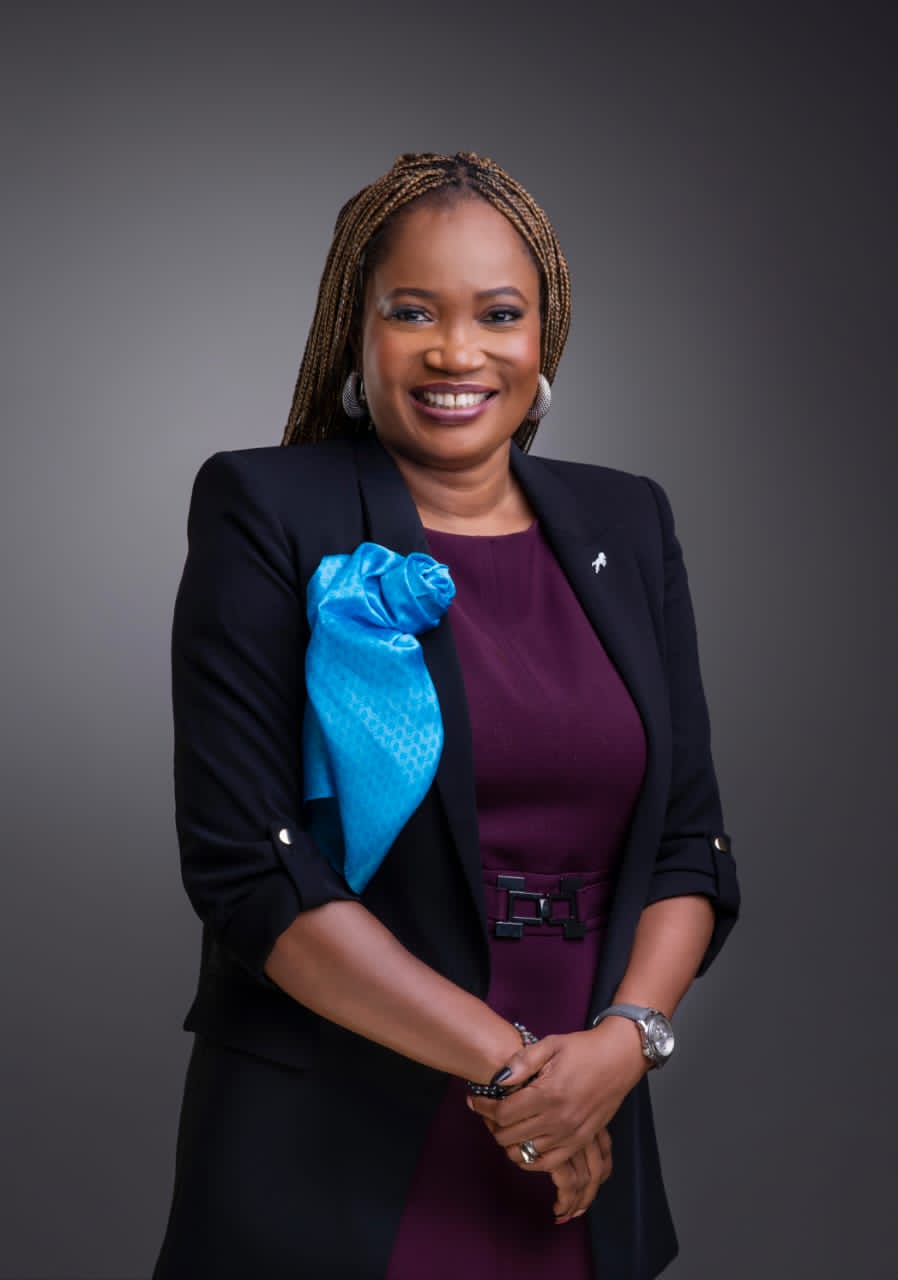
By Vivian Imoh-Ita
Across African banking, the conversation is shifting from “inclusion as intent” to “inclusion as performance.” Margin pressure, recapitalisation conversations, digitisation, and tighter risk expectations are forcing a hard question: where will sustainable, low-volatility growth come from in the next cycle? One answer is hiding in plain sight: women-led enterprises, underfunded, underserved, and consistently productive.
In Nigeria’s informal economy, where cash flow is real but documentation is uneven, the institutions that win will be the ones that price risk with better signals, distribute at scale, and convert trust into long-term financial relationships. Too often, women’s economic participation is framed as a social commitment rather than a commercial imperative.
That framing is expensive: when we fail to design capital, products, and distribution around the realities of women in business, we don’t just exclude customers, we misprice opportunity and leave growth on the table. Women in Nigeria are not waiting to be “empowered” before they build.
They are already trading, employing, and sustaining households at scale. The real constraint is not capability; it is the fit between how finance is structured and how women-owned businesses actually operate: cash-flow patterns, collateral realities, and the need for speed, trust, and advisory alongside capital.
Three practical frictions show up repeatedly: Collateral versus cash-flow: many viable women-run businesses are cash-generative but asset-light, so collateral-heavy underwriting excludes the very segment banks say they want. Information gaps: when transactions happen outside formal rails, banks see “thin files.”
But thin files are not the same as high risk; they are a data problem that better design and alternative signals can solve. Time-to-cash matters: entrepreneurs often need small, fast working-capital decisions, not slow processes built for corporate cycles.
Speed is a risk tool when it is paired with the right controls. Nigeria has roughly 23 million women entrepreneurs in the micro-business segment, one of the highest rates of female entrepreneurship globally.
Women account for 41% of SME ownership, and SMEs contribute nearly half of the national GDP. Yet access to formal finance remains disproportionately low: women receive only about 10% of loans from financial service providers, and an estimated 98% of women entrepreneurs still lack access to formal credit.
An internal strategy analysis drawing on EFInA/Global Findex/SMEDAN data shows a structural gap: 41% of Nigerian women are financially excluded (vs 33% for men), and while 39% of women borrowed from multiple sources, only 4% accessed a bank loan.
Across Africa, the financing gap for women-led businesses is estimated at $42 billion. This is not a “nice-to-have” agenda. McKinsey Global Institute’s The Power of Parity estimates that advancing women’s equality could add up to $12 trillion to global GDP.
The IMF has estimated that equal participation by women could lift GDP by as much as 40% in some countries. For Nigeria, an analysis cited by the Council on Foreign Relations, drawing on McKinsey’s data, projects that closing the gender gap in economic participation could increase GDP by 23%.
For banks, the implication is straight-forward: women-led enterprises are not a niche; they are a mass-market growth opportunity. Unlocking it requires moving from “product availability” to “product usability”: cash-flow-based lending, simpler onboarding, distribution through digital and agent rails, and trust-by-design (clear pricing, consumer protection, and strong data privacy). Usage is what creates the data to lend responsibly at scale.
There is also a practical reason the returns are outsized: women tend to reinvest more of what they earn into their families and communities, often cited as up to 90%, driving a multiplier effect that shows up in education, health outcomes, and local employment.
For financial institutions, that multiplier is not just a story; it is a durable pathway to deposit growth, transaction volume, credit performance, and long-term customer value. I have seen this play out across Nigeria, in every state and market. The woman selling clothes in Balogun Market employs three other women and sends five children to school.
The general merchandise trader in Onitsha Market is the economic anchor of her extended family. Each of these women is a multiplier, and each of them started with someone, somewhere, giving her a loan, a skill, an opportunity, a chance. That is the “Give to Gain” principle made real. Giving is not a subtraction. It is, as this year’s IWD campaign puts it, intentional multiplication.
At Union Bank, we treat women’s financial inclusion as a core product strategy, not CSR, because the commercial logic is clear. When a woman builds financial capability, she doesn’t just open an account. She saves, transacts, borrows responsibly, expands her business footprint, and brings others with her.
We also understand that distribution is a strategy. Union Bank’s UnionDirect agency banking network operates over 58,000 agents across rural and underserved communities, extending access to deposits, withdrawals, and micro-lending where branches cannot cover the economics.
We have also disbursed over N50 billion in micro-lending to smallholder farmers, market women, and informal entrepreneurs, because inclusion only becomes real when it is usable, frequent, and local.
In a market where a large share of working women operates in the informal sector, bringing women into the formal financial system through savings, digital banking, micro-lending, and insurance is a material growth frontier. Multiple studies across emerging markets also show women often have lower default rates than men, reinforcing what many banks observe in practice: disciplined cash management and strong repayment culture when products are designed around real operating conditions.
That is why we created alpher, Union Bank’s women’s banking proposition launched in 2020 and aligned with SDG5 on Gender Equality. Alpher is designed for the Nigerian woman, whether she is an entrepreneur, a working professional, or managing household finances. For women in business, alpher combines tailored loans and savings plans with capacity-building, mentorship, and practical masterclasses, because capital without capability yields fragile outcomes. alpher is built around a simple promise: practical financial solutions, support systems, savings and investment options, discounted loans, personal and professional development, mentorship/coaching/networking, discounted healthcare plans, and lifestyle/business discounts.
Operationally, we segment customers into individuals (professionals and entrepreneurs), women-led organisations, and organisations that support women in their workforce and supply chains. Hence, the service is relevant, not generic.
Practically, that has meant designing access to credit with reduced collateral requirements, recognising that traditional collateral models were not built around women’s asset ownership patterns.
It has also meant investing deliberately in skills, entrepreneurship, bookkeeping, pricing, digital commerce, and personal finance, so that funding translates into resilience, not just activity.
One initiative I am particularly proud of is the alpher Fair. In this marketplace concept, we open our premises (and those of partners) to women entrepreneurs to sell directly to customers, employees, and partner networks.
It creates immediate market access, strengthens visibility, and proves a simple point: scaling women-owned businesses is often about building pipelines of customers, information, and trust, not just issuing loans. Beyond our own programmes, we partner to scale outcomes.
In May 2025, through alpher, Union Bank sponsored the Nigerian British Chamber of Commerce (NBCC) Women and Youth Entrepreneurship Development Centre (WYEDC) Cohort 2 Programme, which graduated 125 entrepreneurs who benefited from entrepreneurship training and business grants. At the graduation, we hosted a pitch segment that awarded funding to standout entrepreneurs. This is the point: capability building is not “soft.”
It is pipeline development for stronger businesses and better credit outcomes. Importantly, alpher sits within Union Bank’s broader retail and SME ecosystem, loan products, business advisory, digital payment infrastructure, and growth workshops, so customers can access funding, learn how to deploy it, connect to mentors and peers, and gain visibility for their businesses.
The objective is straightforward: build businesses that last. The next phase of banking growth in Nigeria will favour institutions that translate insight into design products that reflect customer reality, distribution that meets customers where they are, and risk models that recognise performance beyond legacy collateral. Backing women-led enterprise is not a campaign; it is a competitive advantage.
The forward-looking question is whether we will build the rails, capital, capability, digital trust, and market access fast enough to earn the growth already waiting in plain sight. If we are serious about inclusive growth, we should be equally serious about inclusive balance sheets and about building the underwriting, data, and distribution models that make inclusion commercially sustainable.
Vivian Imoh-Ita is Head, Retail & SME Business at Union Bank of Nigeria, with a focus on building retail and SME propositions that drive inclusion, growth, and long-term customer value
Feature/OPED
Nigerian Opposition: What You Have to Do
By Prince Charles Dickson, PhD
“And Jesus said to Judas… what you are going to do, do quickly.”
There is a hard, almost rude lesson in that line. History does not wait for the timid to finish their committee meeting. Politics, especially Nigerian politics, is not kind to hesitation dressed as strategy. It rewards those who understand timing, nerve, structure, and the brutal arithmetic of power. That is where the Nigerian opposition now stands: not at the edge of impossibility, but at the edge of urgency.
The first truth is the one opposition politicians do not enjoy hearing at rallies where microphones are loud, and introspection is scarce. They are not getting it right. The evidence is not only in Tinubu’s strength, but in their own disorder. INEC said on February 5, 2026, that there were now 21 registered political parties and warned that persistent internal leadership crises within parties pose a serious threat to democratic consolidation. Eight days later, the commission formally released the notice and timetable for the 2027 general elections. In other words, this is no longer the season of abstract grumbling. The whistle has gone. The race is live.
Yet the opposition often behaves like students who entered the examination hall with righteous anger but forgot their pens. Too much of its energy is spent on lamentation, rumours, courtroom oxygen, personality feuds, and that old Nigerian hobby of mistaking noise for architecture. You cannot defeat an incumbent machine by forming a WhatsApp coalition of wounded egos and calling it national salvation. Voters may clap for drama, but they still ask the unromantic question: who is in charge, what is the plan, and why should we trust you with the keys?
Now comes the more uncomfortable truth. The opposition is not facing an ordinary incumbent. It is facing Bola Ahmed Tinubu, a man whose political DNA was forged in opposition. He is not merely benefiting from power; he understands opposition as craft, pressure, infiltration, timing, persistence, and theatre. In his June 12, 2025, Democracy Day speech, he taunted rivals by saying it was “a pleasure to witness” their disarray, while also reminding Nigerians that he once stood almost alone against an overbearing ruling machine. This was not casual banter. It was a warning shot from a politician who knows both the grammar of resistance and the machinery of incumbency.
That is why copying Tinubu’s old template will not be enough. Yes, the coalition instinct is understandable. In July 2025, major opposition figures, including Atiku Abubakar and Peter Obi, aligned under the ADC banner, presenting themselves as a bulwark against one-party drift, with David Mark as interim chairman. But here is the problem: Tinubu’s own coalition history worked not simply because men gathered in one room and glared at the ruling party. It worked because there was a disciplined merger logic, state-level anchoring, message coordination, and a ruthless understanding of elite bargaining. What the present opposition sometimes offers instead is photocopy politics with low toner: a coalition of convenience trying to frighten a man who practically wrote the Nigerian handbook on political accommodation, defection management, and patient conquest.
This is also why the opposition’s moral complaint, though not baseless, cannot be its only language. Yes, concerns about democratic shrinkage are real. Tinubu himself publicly denied that Nigeria is moving toward a one-party state, even as defections from opposition parties to the APC intensified and his own party welcomed them. But to say “democracy is in danger” is not yet the same thing as building a democratic alternative. Nigerians do not eat constitutional anxiety for breakfast. They want a credible opposition that can protect pluralism and still explain food prices, jobs, security, power supply, transport costs, and what exactly it would do on Monday morning after taking office.
On the government’s side, the picture is mixed enough to make both triumphalism and apocalypse look unserious. Reuters reported this week that the World Bank expects Nigeria’s economy to grow by about 4.2% in 2026, with external buffers improving and the debt-to-GDP ratio falling for the first time in a decade. Inflation had eased to 15.06% in February from roughly 33% in late 2024. Those are not imaginary numbers, and any fair-minded analysis must admit that Tinubu’s reforms have altered the macroeconomic conversation. But the same report warned that the Iran war has pushed fuel prices up by more than 50%, with obvious consequences for transport, food, and household pain. Add the continuing insecurity, underscored again this week by the killing of a Nigerian army general in Borno, and the government begins to look like a man who has repaired the roof but left half the house still flooding. That is not a collapse. It is not a command either. It is a meandering reform under political stress.
So, what must the opposition do, and do quickly? First, it must stop making Tinubu the only subject of the campaign. Anti-Tinubu is not a manifesto. It is a mood. Moods trend; structures win. Second, it must settle leadership questions early and publicly, because no voter wants to hire a rescue team still fighting over the steering wheel. Third, it needs an issue coalition, not just an elite coalition. Security, inflation, youth jobs, electricity, federalism, and institutional reform must become a coherent national offer, not a buffet of press conference talking points. Fourth, it must build from the states upward. Presidential romance without subnational organisation is political karaoke: loud, emotional, and usually off-key by the second verse.
Fifth, it must look seriously at the legal terrain. The Electoral Act 2026 has made party organisation even more central. PLAC notes that the new law tightens party registration rules, removes deemed registration, expands INEC’s regulatory discretion, and preserves the fact that candidates still need political parties as the vehicle for contesting most elective offices because independent candidacy is not permitted. In plain language, parties matter even more now. A fragmented opposition is therefore not just aesthetically untidy. It is strategically suicidal.
Still, there are dangers in the opposite direction, too. A desperate anti-Tinubu mega-bloc could become a cargo truck of incompatible ambitions. If all it offers is the promise to defeat one man, it may reproduce the same habits it condemns once power arrives. Nigeria does not need a ruling party so swollen that democracy gasps for air. But it also does not need an opposition whose only ideology is turn-by-turn revenge. The health of democracy lies somewhere between monopoly and mob. It requires competition with content, not merely competition with bitterness. Tinubu himself, in that same June 12 speech, defended multiparty politics even while mocking the opposition’s disorder. That irony should not be wasted. He has thrown them both an insult and an assignment.
So, yes, the opposition is right to worry. But worry is not a strategy. Outrage is not an organisation. The coalition is not coherent. And history is not sentimental. The man they are up against is ruthless, seasoned, and intimate with the dark arts of democratic combat. He knows the game. Some of his opponents are still learning the rules from old newspaper cuttings.
Which brings us back to the scripture. What you are going to do, do quickly. Not recklessly. Not hysterically. Quickly. Settle your house. Name your purpose. Offer something fresher than recycled indignation. Build a machine that is not merely anti-Tinubu but pro-Nigeria in a way ordinary Nigerians can feel in their pockets and in their pulse. Otherwise, the opposition will keep arriving at battle dressed in borrowed armour, only to discover that the tailor works for the man they came to unseat—May Nigeria win!
Feature/OPED
The Digital Imperative for Women-Led Businesses in Nigeria
By Gloria Onosode
Nigeria is targeting an ambitious $1 trillion economy by 2030. To achieve this, women-led businesses must transition from mere passive observers to primary growth drivers at the heart of the economy and strategic participants in their respective industries.
According to the National Bureau of Statistics (NBS), the increased ownership rate of MSMEs by women represents a significant contribution to economic growth and job creation. Digital empowerment for these enterprises must move from being a social responsibility or gender support initiative to contributing to broader economic development.
To reach the $1 trillion GDP milestone, women-led businesses must be positioned to operate at a macroeconomic scale. This requires moving beyond subsistence trading and into the digital value chain. For instance, a fashion designer in Aba, through digital positioning, can access broader markets and commercial networks and thereby facilitate better record-keeping and data-driven decision-making, supporting improved financial record-keeping, which may be considered in credit assessments by financial institutions.
FairMoney Microfinance Bank (MFB), a bank licensed and regulated by the Central Bank of Nigeria, contributes to the digital transitioning of small businesses in Nigeria by providing tools specifically designed for the realities of the Nigerian entrepreneur. For women, whose businesses often fluctuate with seasonal demands or family needs, the ability to protect and grow capital is paramount. FairMoney MFB offers features that empower women to move from informal ‘under-the-mattress’ savings to digitised interest-bearing savings products. By embracing digital transition, tech-based saving platforms can enable business owners to set specific goals, such as purchasing new equipment, saving towards business goals in a disciplined manner, while earning interest at applicable rates.
For that business owner who requires immediate liquidity, our flexible savings feature offers interest while allowing for withdrawal access that is subject to applicable terms and conditions to cover emergency restocks. For longer-term scaling, our fixed-term savings feature allows entrepreneurs to lock away funds for a fixed period and accrue interest based on product terms, subject to terms and conditions. By automating savings and providing interest at applicable rates, FairMoney MFB is designed to support financial planning and resilience over time for women-led SMEs.
Nigerian women are among the most entrepreneurial globally, consistently defying structural barriers to build enterprises from the ground up. According to the Small and Medium Enterprise Development Agency of Nigeria (SMEDAN), Nigeria has approximately 39.6 million nano, micro, small, and medium enterprises. Charles Odii, Director General at SMEDAN in 2024, also recently shared that approximately 72% of these enterprises are now classified as being owned or led by women. This is a significant jump from previous years, which hovered around 40–43%, largely due to the surge in ‘nano’ and ‘micro’ home-based businesses. These female-led enterprises are the primary engines of job creation and community stability.
Despite this drive, women entrepreneurs face a unique set of structural hurdles that stifle their ability to scale. The ‘financing gap’ remains the most formidable obstacle. The World Bank IFC Nigeria2Equal initiative reports that while Nigeria has one of the highest female entrepreneurship rates globally, the credit gap for these women is estimated at over 2.9 trillion Naira, forcing them into the ‘savings and family’ funding model.
The case for supporting these businesses extends beyond equity; it is rooted in the ‘multiplier effect’. Research demonstrates that women reinvest up to 90% of their income into their families and communities, specifically in education, healthcare, and nutrition. Supporting these enterprises is, therefore, a direct investment in Nigeria’s human capital. By bringing these businesses into the formal sector, the accuracy of economic planning will be improved. When a woman-led SME flourishes, the benefits ripple across the entire socioeconomic landscape.
The future of the Nigerian economy is intrinsically tied to the success of its women. When we prioritise women-led businesses, we are not merely fulfilling a gender quota; we can contribute to unlocking economic potential across sectors. By bridging the digital gap and providing robust financial tools for saving and credit to women-led businesses, Nigeria can begin to support the growth of micro-enterprises over time. A $1 trillion Nigeria is not just a dream; it represents a significant opportunity that can be progressively realised by the resilient women entrepreneurs of our nation.
Gloria Onosode is the Director of Enterprise Sales at FairMoney Business
Feature/OPED
Premium Entertainment Without the Premium Price Tag
These days, surviving in Nigeria feels like a full-time job on its own.
Before the month even properly begins, salary has already been divided into transport, fuel, food, bills, subscriptions, and every other expense that somehow keeps increasing. For many 9–5ers, the routine has become painfully familiar: wake up early, battle traffic, survive the stress of work, battle traffic again, and get home completely drained, only to realise even the simple things that help you unwind now have to be carefully budgeted for.
Because in this economy, everybody is cutting costs. People are thinking twice before ordering food. They are postponing shopping plans. They are reducing unnecessary spending. And for many, one of the first things to go has been entertainment.
The same streaming platforms and premium subscriptions people once paid for without thinking have now become part of the “maybe next month” list. Not because people suddenly stopped loving movies, series, football, or reality TV, but because when inflation keeps rising, and fuel costs continue to affect everything, entertainment starts to feel like a luxury.
But that is exactly why affordability in entertainment matters now more than ever and why GOtv continues to stand out as a brand that genuinely keeps everyday Nigerians in mind.
Rather than assuming quality entertainment should only be accessible to people willing to spend heavily, GOtv has consistently positioned itself as a platform built with everyday Nigerians in mind, creating options that allow people to still enjoy premium entertainment without having to break the bank.
Take the GOtv Smallie package, for example.
For as low as ₦1,900 a month, subscribers get access to over 35 channels, including approximately 19 to 21 local channels, sports content, and 15+ channels across news, music, movies, lifestyle, kids, and general entertainment.
And for those who prefer longer payment plans, it is also available in:
-
Quarterly – ₦5,100
-
Annual – ₦15,000
What makes this even better is that, despite being the most affordable package, Smallie still offers something for everyone.
It is not one of those basic plans where you pay less and get almost nothing. Whether you are the family member who loves African movies, the sports enthusiast who never wants to miss a match, the parent looking for kids’ content, or the person who just wants background TV after a stressful day, there is something to watch.
And for viewers who want even more variety, GOtv has other packages across different price points:
-
GOtv Jinja – ₦3,900
-
GOtv Jolli – ₦5,800
-
GOtv Max – ₦8,500
-
GOtv Supa – ₦11,400
-
GOtv Supa Plus – ₦16,800
So, whether you’re going for the most affordable option or something with a more premium feel, there’s always a GOtv package that fits comfortably into different lifestyles and budgets.
At a time when everyday decisions are increasingly shaped by cost, GOtv quietly fills an important gap by keeping quality entertainment within reach for more people, because beyond the hustle, the traffic, the deadlines, and the constant pressure of trying to keep up with life in today’s economy, there is still a need for simple moments of joy and escape. Those small pauses in the day where you can switch off, relax, and just enjoy something light without overthinking it.
And that’s really the point: entertainment shouldn’t feel like another financial burden.
-
Feature/OPED6 years agoDavos was Different this year
-
Travel/Tourism10 years ago
Lagos Seals Western Lodge Hotel In Ikorodu
-
Showbiz3 years agoEstranged Lover Releases Videos of Empress Njamah Bathing
-
Banking8 years agoSort Codes of GTBank Branches in Nigeria
-
Economy3 years agoSubsidy Removal: CNG at N130 Per Litre Cheaper Than Petrol—IPMAN
-
Banking3 years agoSort Codes of UBA Branches in Nigeria
-
Banking3 years agoFirst Bank Announces Planned Downtime
-
Sports3 years agoHighest Paid Nigerian Footballer – How Much Do Nigerian Footballers Earn