
Media OutReach
East China’s trade hub Yuyao taps Central and Eastern European market with passion, innovation

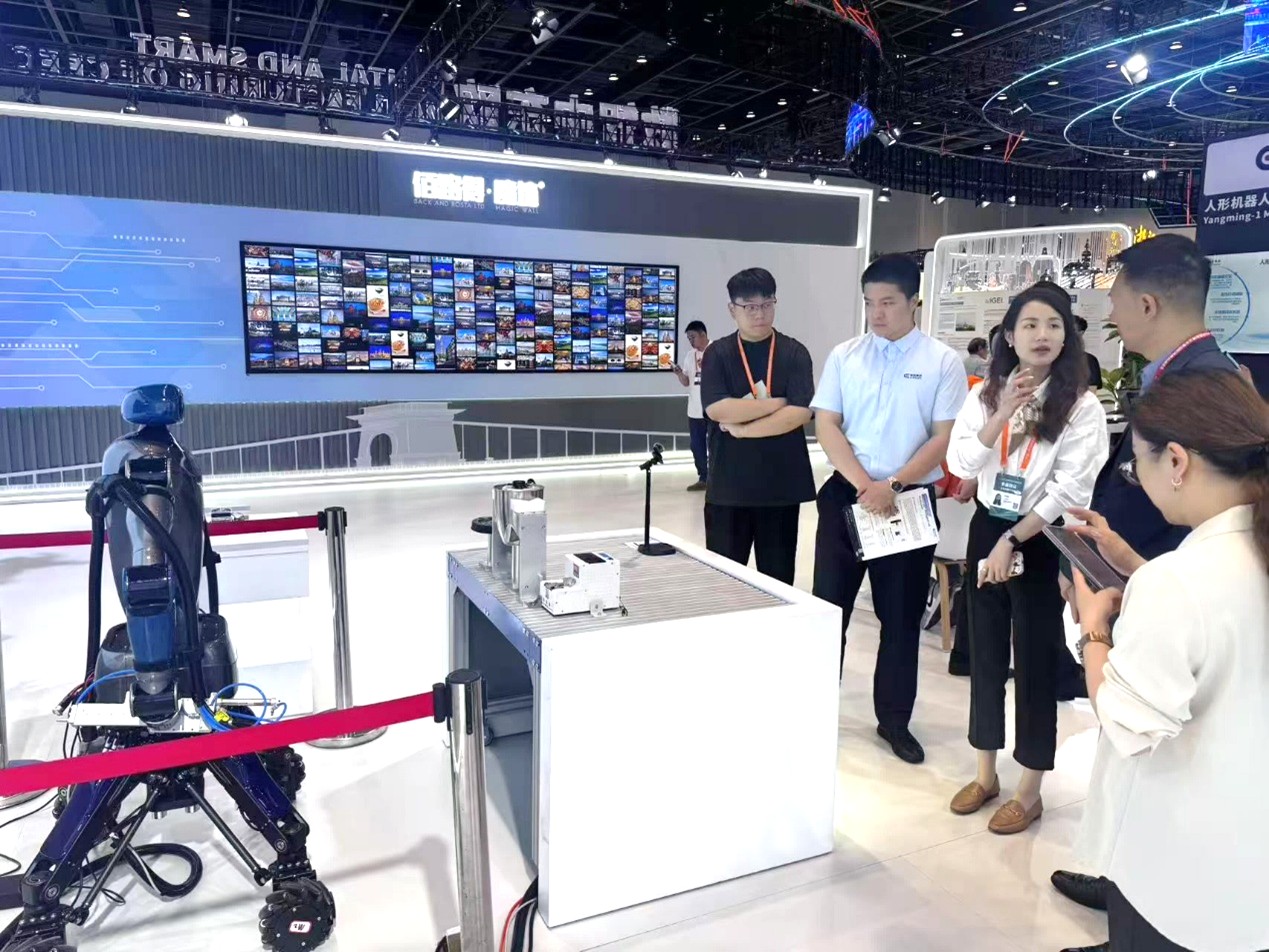
A VR entertainment initiative co-developed by China and Hungary under the China-Central and Eastern European cooperation framework is featured at the expo, offering visitors an immersive experience in a magical forest while wearing VR goggles, allowing them to soar to colorful romantic islands on the back of a fairy’s magic carpet.
Zhang Mingming, general manager of the Ningbo Central and Eastern European Innovation Base, noted the all-encompassing support from the Central and Eastern European International Industrial Cooperation Park and the Yuyao Investment Promotion Center during the project’s development.
“With their assistance, we connected with Ningbo Fantawild, established the project’s operational base, and quickly completed business registration, site decoration, and contract negotiations, which earned us praise from the Hungarian side,” he said.
As a major manufacturing hub and export-driven economy, Yuyao has long been a key player in Ningbo and Zhejiang’s opening up to international markets.
The city is home to the province’s first Sino-Japanese joint venture and the China-Italy (Ningbo) Ecological Park, among other landmark projects. In 2020, the China-Central and Eastern European International Industrial Cooperation Park was officially established, becoming a crucial platform for enhancing economic cooperation with Central and Eastern Europe.
In addition to the industrial cooperation park, numerous private enterprises in Yuyao are actively expanding their operations in Central and Eastern Europe. Several Yuyao-made products have already become part of consumers’ lives in the region.
For example, products developed by Zhejiang Biyi Electric Appliance Co., Ltd., including coffee machines and air fryers, have entered the markets of eight Central and Eastern European countries, with exports to the region up by nearly 90% in 2024. From January to April this year, the company’s exports to the region increased by over 50% year on year.
Similarly, Ningbo Fuda Intelligent Technology, has seen significant success in the Central and Eastern European market since entering Poland five years ago. The company has exported mobile air conditioners and dehumidifiers to five Central and Eastern European countries.
“Thanks to our years of dedicated development in the Central and Eastern European market, we have seen a surge in shipments since 2025, with sales increasing nearly 180% from January to April 2025,” said Fang Zhihao, deputy general manager of Fuda, emphasizing the market’s vast potential.
In late March, Ningbo organized a delegation of over 40 companies, including Biyi Electric Appliance and a local hot spring resort, to explore opportunities in Central and Eastern Europe. They attended the China-Hungary trade and investment matchmaking conference and visited various enterprises and institutions in Central and Eastern Europe to generate interest for the upcoming expo, according to the information office of Yuyao.
Statistics from Yuyao customs showed that from January to April this year, the total value of imports and exports by private enterprises in Yuyao reached 30.27 billion yuan, a year-on-year increase of 18.3%, accounting for 80.3% of the city’s foreign trade. More than 900 Yuyao businesses export to Central and Eastern Europe, with an export value of 1.88 billion yuan, up 24.1% from last year.
The continued expansion of Yuyao enterprises in the Central and Eastern European markets is supported by a series of facilitative government measures.
To assist local businesses in accelerating exports to Central and Eastern European countries, Yuyao customs has promoted self-printed certificates of origin, ensuring quick access for businesses. From January to April this year, Yuyao customs issued 539 certificates of origin for exported goods to Central and Eastern Europe, valued at 143 million yuan, representing year-on-year increases of 10% and 35.92%, respectively.
Recognizing the region’s abundance of specialized, innovative small- and medium-sized enterprises, Yuyao customs has leveraged its customs credit accreditation policies to establish a target list of 46 specialized “little giant” enterprises, providing advanced certification policy guidance to five firms, successfully nurturing Fengmao Technology into a customs AEO (Authorized Economic Operator) certified enterprise.
In March this year, Yuyao announced plans for 2025 to implement initiatives to nurture industrial leaders, facilitate industry upgrading, promote enterprise going-global and encourage private firms to lead overseas venture along Belt and Road countries, among others.
Hashtag: #Yuyao
The issuer is solely responsible for the content of this announcement.




Launched in 2015, SkillsFuture is a national movement that supports Singaporeans in developing skills throughout different stages of their careers. Through subsidies administered by SkillsFuture Singapore (SSG), individuals may receive government funding when enrolling in approved courses offered by recognised training providers and Continuing Education and Training centres. Eligible Singapore Citizens and Permanent Residents may receive subsidies of up to 70 per cent of course fees. These subsidies are applied directly to the course fees, allowing learners to pay the nett amount after government funding has been deducted. This significantly lowers the overall cost of professional training.
Additional support is available for mid-career Singaporeans. Under the SkillsFuture Mid-Career Enhanced Subsidy (MCES), Singapore Citizens aged 40 and above may receive subsidies of up to 90 per cent of course fees for approved courses offered by recognised training providers and Continuing Education and Training centres. For illustration, a professional development course priced at S$3,000 before GST may cost approximately S$900 after a subsidy of up to 70 per cent is applied. Eligible Singapore Citizens aged 40 and above who qualify for the MCES could pay about S$300 for the same course after government funding.
Learners may further offset remaining fees through SkillsFuture Credit, which is available to Singapore Citizens aged 25 and above and can be used for eligible courses listed on the MySkillsFuture portal. Employer-sponsored training programmes may also benefit from workforce development schemes that further reduce training costs.
Institutions such as SIM Academy provide professional development programmes that support working professionals in upgrading their capabilities. SIM Academy offers a range of short courses aligned with industry needs, including programmes in leadership, AI, sustainability, project management, organisation design and soft skills. Several of these programmes are eligible for SkillsFuture funding and SkillsFuture Credit.
SkillsFuture funding schemes continue to support Singapore’s workforce transformation by making training more accessible. With government support and industry-aligned programmes offered by training providers such as SIM Academy, working professionals have greater opportunities to strengthen their capabilities and adapt to evolving job demands.
References:
- SkillsFuture Singapore. Funding for Individuals – https://www.ssg.gov.sg/funding-and-levy/funding-for-individuals/
- SkillsFuture Singapore. About SkillsFuture – https://www.skillsfuture.gov.sg/aboutskillsfuture
- SkillsFuture Course Fee Funding and Subsidies – https://www.myskillsfuture.gov.sg/content/portal/en/career-resources/career-resources/education-career-personal-development/SkillsFuture_Funding.html
- MySkillsFuture. SkillsFuture Credit – https://www.myskillsfuture.gov.sg/content/portal/en/header/credit.html
- SIM Academy. SkillsFuture Courses Offered by SIM Academy – https://www.sim.edu.sg/professional-development/courses/skillsfuture-courses
Hashtag: #SIMAcademy #SIMA
The issuer is solely responsible for the content of this announcement.
About SIM Academy
SIM Academy provides leading-edge professional development and enterprise solutions. SIM Academy offers over 300 executive and business programmes that help almost 10,000 professionals annually on average hone their competencies to drive business value and achieve peak personal and enterprise performance.
Our programmes encompass a comprehensive range of lifelong learning opportunities designed to empower professionals with the knowledge, skills, and competencies necessary to become effective change-makers and leaders in today’s volatile and uncertain business landscape.
For more information on SIM Academy, visit sim.edu.sg


Launched in 2015, SkillsFuture is a national movement that supports Singaporeans in developing skills throughout different stages of their careers. Through subsidies administered by SkillsFuture Singapore (SSG), individuals may receive government funding when enrolling in approved courses offered by recognised training providers and Continuing Education and Training centres. Eligible Singapore Citizens and Permanent Residents may receive subsidies of up to 70 per cent of course fees. These subsidies are applied directly to the course fees, allowing learners to pay the nett amount after government funding has been deducted. This significantly lowers the overall cost of professional training.
Additional support is available for mid-career Singaporeans. Under the SkillsFuture Mid-Career Enhanced Subsidy (MCES), Singapore Citizens aged 40 and above may receive subsidies of up to 90 per cent of course fees for approved courses offered by recognised training providers and Continuing Education and Training centres. For illustration, a professional development course priced at S$3,000 before GST may cost approximately S$900 after a subsidy of up to 70 per cent is applied. Eligible Singapore Citizens aged 40 and above who qualify for the MCES could pay about S$300 for the same course after government funding.
Learners may further offset remaining fees through SkillsFuture Credit, which is available to Singapore Citizens aged 25 and above and can be used for eligible courses listed on the MySkillsFuture portal. Employer-sponsored training programmes may also benefit from workforce development schemes that further reduce training costs.
Institutions such as SIM Academy provide professional development programmes that support working professionals in upgrading their capabilities. SIM Academy offers a range of short courses aligned with industry needs, including programmes in leadership, AI, sustainability, project management, organisation design and soft skills. Several of these programmes are eligible for SkillsFuture funding and SkillsFuture Credit.
SkillsFuture funding schemes continue to support Singapore’s workforce transformation by making training more accessible. With government support and industry-aligned programmes offered by training providers such as SIM Academy, working professionals have greater opportunities to strengthen their capabilities and adapt to evolving job demands.
References:
- SkillsFuture Singapore. Funding for Individuals – https://www.ssg.gov.sg/funding-and-levy/funding-for-individuals/
- SkillsFuture Singapore. About SkillsFuture – https://www.skillsfuture.gov.sg/aboutskillsfuture
- SkillsFuture Course Fee Funding and Subsidies – https://www.myskillsfuture.gov.sg/content/portal/en/career-resources/career-resources/education-career-personal-development/SkillsFuture_Funding.html
- MySkillsFuture. SkillsFuture Credit – https://www.myskillsfuture.gov.sg/content/portal/en/header/credit.html
- SIM Academy. SkillsFuture Courses Offered by SIM Academy – https://www.sim.edu.sg/professional-development/courses/skillsfuture-courses
Hashtag: #SIMAcademy #SIMA
The issuer is solely responsible for the content of this announcement.
About SIM Academy
SIM Academy provides leading-edge professional development and enterprise solutions. SIM Academy offers over 300 executive and business programmes that help almost 10,000 professionals annually on average hone their competencies to drive business value and achieve peak personal and enterprise performance.
Our programmes encompass a comprehensive range of lifelong learning opportunities designed to empower professionals with the knowledge, skills, and competencies necessary to become effective change-makers and leaders in today’s volatile and uncertain business landscape.
For more information on SIM Academy, visit sim.edu.sg
Media OutReach
Comprehensive Support for International Students to Bolster Hong Kong’s Talent Attraction and Retention
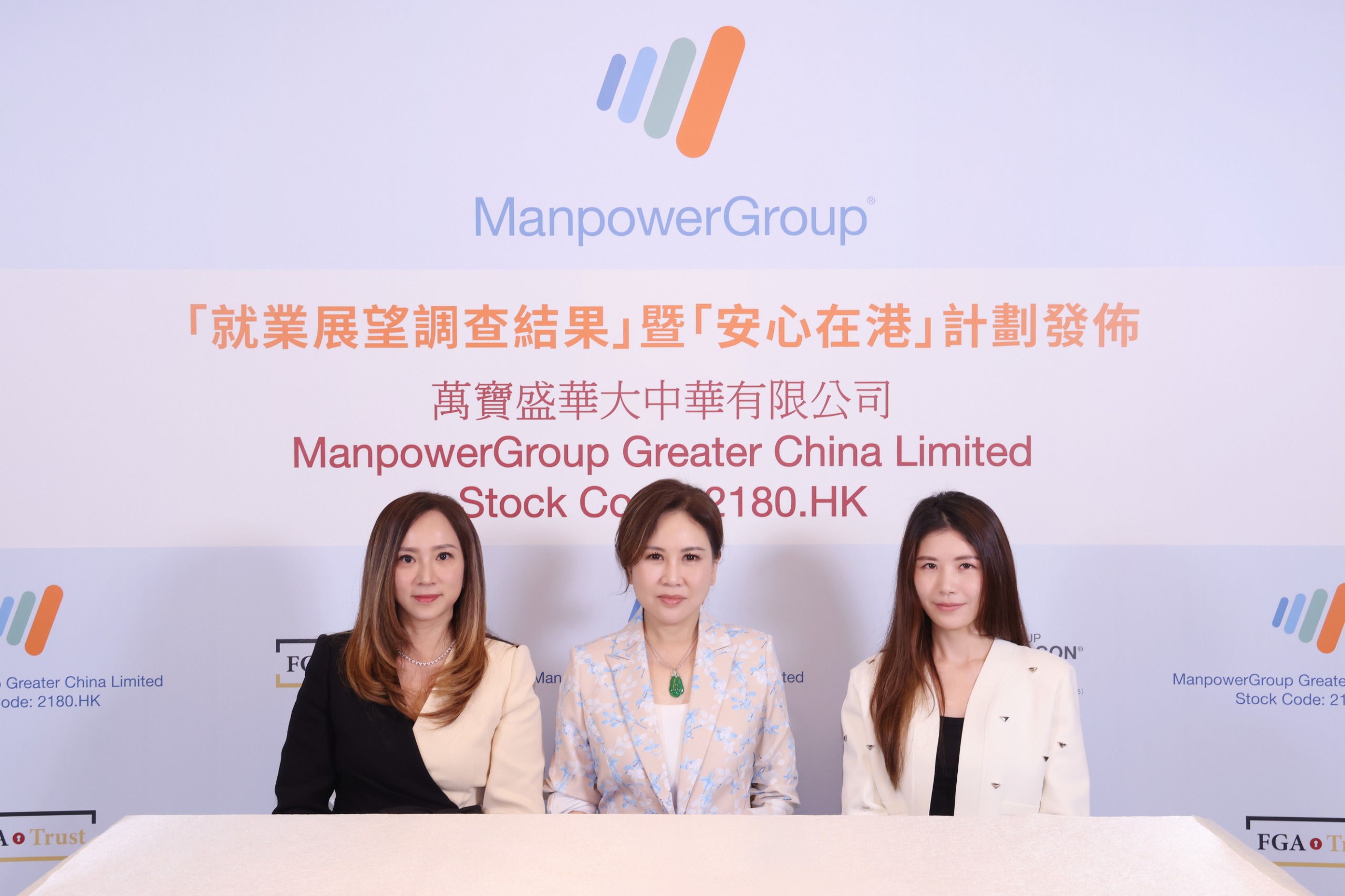
ManpowerGroup Greater China and Beacon Group Partner with FGA Trust and Payment Asia to Launch “Talent in HK” Program
HONG KONG SAR – Media OutReach Newswire – 25 March 2026 – ManpowerGroup Greater China Limited (Stock Code: 2180.HK), a leading global workforce solutions provider, and Beacon Group (parent company BExcellent Group Holdings Limited, listed on the Main Board of the HKEX, Stock Code: 1775.HK), a renowned Hong Kong educational institution, today announced the joint launch of the “Talent in HK” Youth and Family Life Service Security Program.
This forward-looking initiative is supported by Payment Asia, a leading payment platform in Hong Kong, providing streamlined payment channels. FGA Trust will serve as the third-party custodian. The program aims to establish an institutionalized, transparent, and collaborative ecosystem, providing end-to-end protection from education and academic support to life services and career consultancy, while injecting long-term momentum into Hong Kong’s strategy to attract and retain international talent.
As Hong Kong continues to attract top-tier students globally, many non-local students face challenges adapting to a new cultural environment upon arrival. Recently, there has been a rising trend in crimes targeting this demographic, including scams involving impersonation of government or academic institutions, as well as telecommunications and online fraud. These incidents pose substantial threats to talents’ personal and financial security, causing significant concern for their families.
In response to these social concerns and to reinforce the comprehensive security net for international students, ManpowerGroup, Beacon Group, and FGA Trust have initiated this program to provide stable, orderly support and ensure the long-term residency of talent in Hong Kong.
Holistic Talent Services: Strengthening Hong Kong’s Foundation as an International Hub
The “Talent in HK” program offers comprehensive life services for students and their families. Beacon Group will provide a long-term study plan spanning three to five years, including customized education, admissions services, profile enhancement, and application support. Simultaneously, ManpowerGroup will facilitate internships, visa arrangements, and long-term career development services.
Once a student receives an admission offer, parents can inject tuition and living expenses through Payment Asia’s official channels into a dedicated project account monitored by FGA Trust. This ensures financial security and the precise disbursement of funds. The entire process will be followed by an audit report, ensuring a smooth transition from campus to the workplace. The program’s website is expected to go live around mid-April this year, with official applications opening in May.
In an era of intensifying global competition for higher education and talent, Hong Kong remains a pivotal international financial and educational hub. Non-local students are not only a vital component of the education system but also a driving force for cross-cultural exchange and future professional talent. They are estimated to contribute over HK$10 billion in tuition fees annually, serving as a significant pillar of the local economy.
Multi-Party Collaboration: A New Paradigm for Talent Services
The core strength of the program lies in its innovative collaborative model, bringing together industry leaders:
- ManpowerGroup Greater China (2180.HK): As the exclusive career development partner of the project, ManpowerGroup will leverage its extensive network and expertise to provide career planning, internship matching, and employment guidance, bridging the gap between graduation and professional life, and help students to have a smooth transition from academies to careers.
- Beacon Group (parent company BExcellent Group Holdings Limited 1775.HK): As one of the initiators of the project with 37 years of experience in the education sector, Beacon Group will provide personalized academic consulting and profile enhancement, provide better guidance and adaptation for candidates to pursuit their study in Hong Kong. Its deep roots in the education sector help families navigate educational choices and avoid scams or unnecessary hurdles.
- FGA Trust (TCSP license: TC008341): As the structural architect and asset trustee, FGA Trust will establish a specialized trust framework with individual sub-accounts for each student. This ensures funds for tuition, housing, and living expenses are managed with clear traceability, mitigating risks of fraud or improper spending.
- Payment Asia: As the primary channel partner, Payment Asia provides secure and compliant collection channels, ensuring the seamless transfer of funds into the program’s dedicated accounts.
Long-Term Vision: Supporting Urban Competitiveness
Studying abroad is the starting point for talent development in Hong Kong. Proactive financial arrangements reduce uncertainty during status transitions and life settlement, increasing the willingness of talent to remain in the city long-term. Data suggests that initiatives like the Top Talent Pass Scheme (TTPS) continue to drive local consumption, with rents for small-to-medium residential units expected to rise by 5% this year.
Ms. Lancy Chui, Senior Vice President of ManpowerGroup Greater China, stated: “We understand the strong desire of non-local graduates to work in Hong Kong. By providing proactive career planning and internship arrangements, we can reduce uncertainty during their transition into the local workforce, helping them settle and contribute to Hong Kong’s market.”
Ms. June Leung, Founder of Beacon Group, noted: “Talent cultivation requires long-term education. We are delighted to initiate this program, integrating academic support with life security and career development to provide a comprehensive, forward-looking environment for talent growth.”
Ms. Helen Chen, Chief Strategy Officer of FGA Trust, added: “Protecting the financial security and well-being of international students is both a social responsibility and a key to consolidating Hong Kong’s status as an international education hub. This program ensures a seamless transition from study to employment, transforming international talent into a long-term driver for Hong Kong’s development.”
The launch of “Talent in HK” marks a significant step from fragmented support to a comprehensive ecosystem. Through institutional innovation and cross-sector collaboration, the program aims to provide a safe harbor for international students and their families, contributing to Hong Kong’s goal of becoming a global talent hub.
Hashtag: #FGA #Trust #Talent #Career
 https://www.linkedin.com/company/fga-trust/
The issuer is solely responsible for the content of this announcement.
FGA Trust
FGA Trust (TCSP License No. TC008341) is a premier trust and fiduciary services provider headquartered in Hong Kong, offering comprehensive wealth solutions to an international clientele. We specialize in trustee services, all-asset custody, and strategic financial planning. This core expertise is uniquely enhanced by our integrated lifestyle management, delivering a truly holistic approach to wealth preservation and growth.












-
 Feature/OPED6 years ago
Davos was Different this year
-
Travel/Tourism10 years ago
Lagos Seals Western Lodge Hotel In Ikorodu
-

 Showbiz3 years ago
Estranged Lover Releases Videos of Empress Njamah Bathing
-
 Banking8 years ago
Sort Codes of GTBank Branches in Nigeria
-

 Economy3 years ago
Subsidy Removal: CNG at N130 Per Litre Cheaper Than Petrol—IPMAN
-

 Banking3 years ago
Sort Codes of UBA Branches in Nigeria
-

 Banking3 years ago
First Bank Announces Planned Downtime
-

 Sports3 years ago
Highest Paid Nigerian Footballer – How Much Do Nigerian Footballers Earn