

Connect with us

Feature/OPED

Refining Without Relief: How Global Oil Wars, Market Structure, and Monopoly Risks Still Drive Fuel Prices in Nigeria

Published

on

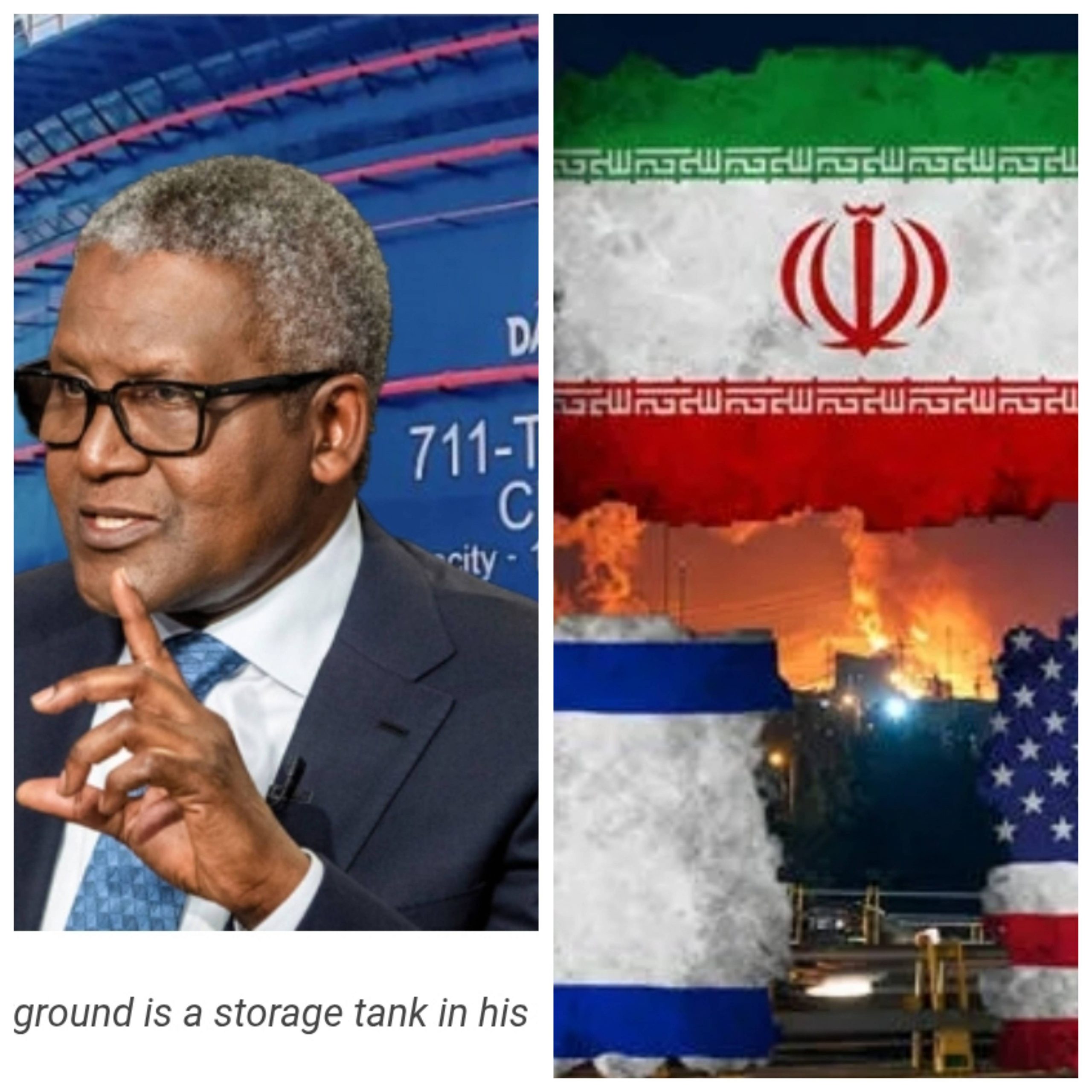
Dangote, Iran, Israel Fuel Prices in Nigeria

By Blaise Udunze

The vision was bold. The expectation was clear. And the promise was powerful. When the Dangote Refinery began operations, it was hailed as Nigeria’s long-awaited escape from decades of energy contradiction, which involves exporting crude oil while importing refined fuel at high costs. It was meant to guarantee supply, stabilise prices, conserve foreign exchange, and most importantly, deliver relief to ordinary Nigerians.

What appears to be a distinct contradiction is that, despite months into its operation, a different reality is emerging, with fuel prices rising sharply. Inflationary pressures are intensifying. This occurrence has forced Nigerians to ask a difficult question once again, one that calls for an urgent answer. Why does a country that produces and refines crude oil still suffer the consequences of global oil shocks?

Looking at the trend, it is clear that the answer lies not just in geopolitics, but in the deeper structure of Nigeria’s oil economy, where global pricing, policy gaps, and now the looming risk of monopoly intersect.

With the recent development, the latest alarming surge in petrol prices has been driven largely by escalating tensions in the Middle East. This is particularly the U.S-Israel strikes on Iran and retaliatory measures from Tehran. A well-known fact is that at the centre of the crisis is the Strait of Hormuz, a vital oil transit route through which a significant portion of global supply flows. Any disruption, even a speculative one, triggers immediate spikes in crude prices.

Within a week, oil prices jumped from the mid-$60 range to nearly $120 per barrel. For global markets, this is expected. For Nigeria, it is devastatingly ironic. Because, despite having crude oil in abundance and despite refining it locally, Nigeria remains fully exposed, and this has continued to re-echo the same ironic question.

In a rare moment of corporate candour, the refinery’s leadership acknowledged this reality. The plant is deeply affected by global shocks. Crude oil, even when sourced locally, is priced at international benchmarks. Shipping costs have surged dramatically, from about $800,000 per tanker to as high as $3.5 million. Insurance premiums have climbed, and logistics have become significantly more expensive, with total costs further driving higher.

Even more revealing is the refinery’s sourcing structure. Only about 30 per cent – 35 per cent of crude comes from the Nigerian government supply under the crude-for-naira framework. A significant portion is still purchased in U.S. dollars on the open market, while another 30 per cent – 40 per cent is sourced internationally, including from the United States and other regions. This means the refinery is not insulated; it is integrated into the global oil system. The implication is unavoidable as local refining has not translated into local pricing control.

The impact on Nigerians has been immediate and severe, as petrol prices have surged from under N800 earlier in the year to over N1,200, and in some regions, it is even more alarming when the prices skyrocketed close to N1,400 per litre. Within weeks, multiple price increases have been recorded, driven largely by global crude price spikes and rising logistics costs. Doubtless, the country has witnessed the consequences ripple across the economy as transport fares rise, food prices increase, businesses struggle with higher operating costs, and inflation accelerates.

The development has attracted the attention of the labour unions and the organised private sector, prompting them to raise concerns and alarm about the consequences of job losses, business closures, and worsening hardship if the trend continues with each passing day, witnessing a daily increase and causing possible artificial scarcity.

Nigeria remains trapped in a painful contradiction. It produces crude oil. It refines crude oil. Yet it cannot protect its citizens from global oil volatility. As Aliko Dangote himself acknowledged, Nigeria has no direct role in the conflict driving these price increases, yet it bears the consequences due to global economic interdependence.

In a real sense, this is the deeper tragedy, as Nigeria has achieved capacity without control.

At the heart of the issue is a structural reality: crude oil is priced globally, not locally. Even under the crude-for-naira arrangement, pricing is benchmarked against international rates. This means refineries pay global crude prices, fuel prices reflect global market conditions, and domestic consumers absorb international shocks. In essence, Nigeria has moved refining home without bringing pricing sovereignty with it.

To be fair, the Dangote Refinery has played a stabilising role. Nigeria still enjoys relatively lower petrol prices compared to many global markets. In several countries, supply disruptions have led to panic buying and rationing, while Nigeria has maintained a consistent supply. As the refinery’s CEO aptly noted, what is worse than $120 oil is no oil. The refinery has prevented scarcity, but it has not prevented high prices. Availability, in this case, has not equated to affordability, which is the painful part for the citizens.

While much of the current debate focuses on pricing, another critical issue is quietly taking shape, which is the risk of market concentration. Dangote Refinery deserves credit for its scale and ambition, but scale brings power, and power demands oversight. If fuel importers are gradually pushed out and no competing refineries emerge at scale, Nigeria could find itself transitioning from a public sector monopoly to a private sector dominance led by a single player.

Nigeria has seen this pattern before. In the cement industry, increased domestic production did not necessarily translate into lower prices. Limited competition allowed prices to remain elevated despite local capacity. The same risk now looms in the downstream oil sector. Without competition, price-setting power becomes concentrated, supply risks increase, and consumer protection weakens. In a country with fragile regulatory institutions, this is not a theoretical concern; it is a real and present danger.

No one should perceive this wrongly, because it is important, however, not to misplace blame. It should be made known that the Dangote Refinery is not a charity; it is a private enterprise operating within market realities. It must recover its investment, manage costs, and deliver returns. Its exposure to global pricing is not a failure of intent but a function of the system within which it operates.

The real issue lies in the structure of the market and the absence of sufficient competition.

It is no longer news that Nigeria’s downstream sector is now largely deregulated following the removal of fuel subsidies. While deregulation has reduced government fiscal burden and encouraged private investment, it has also exposed consumers to price volatility and limited the scope for intervention, as this has continued to cause pain. Markets, in theory, deliver efficiency, but in practice, they require competition and effective regulation to function properly. Without these, deregulation can simply replace one form of inefficiency with another.

Nigeria does not need to weaken Dangote Refinery; it needs to multiply it. The goal should be to build a competitive refining ecosystem to replace one dominant structure with another. The truth is not far from this, as part of a lasting solution, it requires encouraging new refinery investments, removing bottlenecks for players such as BUA and modular refineries, ensuring transparent crude allocation, providing open access to pipelines and storage infrastructure, and enforcing strong antitrust regulations.

Competition remains the most effective regulator of price, which is sacrosanct, and it protects consumers, strengthens supply security, and reduces systemic risk.

This must also be perceived beyond competition, which calls for the government to act strategically. The fact is that when supplying crude to local refineries at discounted or stabilised rates, expanding naira-based transactions, and introducing temporary relief measures during global crises are all viable options that must be put into consideration. Energy is too critical to be left entirely to market forces, especially in a developing economy where millions are highly vulnerable to economic shocks.

It is time that Nigerians understood that the nation’s refining crisis has been decades in the making, and it cannot be solved by a single refinery, no matter how large. If asked, it will be said that this is a fact that can’t be argued. The Dangote Refinery is undoubtedly a turning point, but it will only remain so if it is embedded within broader systemic reform. Otherwise, Nigeria risks replacing one form of dependency with another, from import dependence to domestic concentration.

The question is no longer whether Nigeria can refine crude oil. It can. The real question is whether Nigeria can build a system that ensures fair pricing, competitive markets, consumer protection, and economic resilience, as these are exactly the core answers.

If global conflicts continue to dictate local fuel prices, if monopoly risks go unchecked, and if citizens remain vulnerable despite abundant resources, then the promise of local refining will remain unfulfilled, as it will bring no expected relief.

What is playing out is the well-known fact that in refining, as in democracy, concentration of power is dangerous. And in both, the strongest safeguard remains the same: competition, transparency, and institutions that serve the public interest.

Blaise, a journalist and PR professional, writes from Lagos and can be reached via: [email protected]

Feature/OPED

Nigeria’s Booming Banks And A Collapsing Economy

Published

on

CBN Gov & new Bank logo(1)

By Blaise Udunze

Nigeria’s banking industry appears to be booming, largely driven by the policies of the Central Bank of Nigeria (CBN), under Governor Olayemi Cardoso, while the real economy continues to suffocate.

At a time when millions of Nigerians are sinking deeper into poverty, when inflation continues to erode household incomes, when businesses are collapsing under unbearable operating costs, and when migration has become a survival strategy for many young professionals, Nigerian banks are announcing staggering profits, stronger capital positions and unprecedented liquidity growth.

According to the bank’s financial statements, the financial system appears healthy. In reality, the economy where citizens work, trade and survive is gasping for breath.

This growing disconnect between financial sector prosperity and economic suffering now represents one of the gravest threats to Nigeria’s long-term economic stability and its ambition of building a $1 trillion economy.

The numbers are indeed impressive. Nigerian banks’ shareholders’ funds reportedly surged to about N27 trillion following the recapitalisation exercise. The top five banks now command balance sheets estimated at over N164 trillion. Tier-1 banks collectively generated trillions in profits within the first quarter of 2026 alone, while the sector-wide recapitalisation exercise raised over N4.56 trillion.

Ordinarily, such figures should inspire confidence about the future of the economy. Stronger banks are expected to translate into stronger businesses, more jobs, industrial expansion and wider economic opportunities. But Nigeria’s experience is proving otherwise.

Instead of serving as engines of productive growth, banks are increasingly becoming custodians of liquidity trapped within the financial system itself. That is the real danger.

Even as banking liquidity expands sharply, lending to the productive economy remains weak and constrained. Reports indicate that banks parked a record N24.13 trillion with the CBN, while simultaneously increasing investments in government securities and treasury bills because these avenues are safer, more profitable and less risky than lending to businesses operating within Nigeria’s harsh economic climate. This reality exposes a dangerous contradiction.

A developing economy desperately in need of industrialisation, manufacturing growth, infrastructure expansion and job creation cannot afford a banking system that prefers financial safety over productive economic risk.

A sustainable economy cannot thrive where the real sector is starved of funds. Yet this is exactly where Nigeria now stands.

Despite the massive liquidity in the banking system, growth in lending to the private sector continues to lag behind the pace of liquidity expansion. The implication is clear. Financial sector strength is no longer translating into real economic development. This is not how healthy economies function.

Ordinarily, banks in developing economies are expected to operate as catalysts for economic transformation. Across successful economies, commercial banks finance manufacturing, agriculture, innovation, infrastructure and entrepreneurship because those sectors generate jobs, productivity and national wealth.

Small and Medium Enterprises (SMEs), especially, are globally recognised as the backbone of grassroots economic development. Nigeria is no exception.

SMEs account for over 70 per cent of registered businesses, contribute nearly half of Nigeria’s GDP and generate between 84 and 90 per cent of employment opportunities. Yet despite their overwhelming importance, SMEs reportedly receive barely between 0.5 per cent and one per cent of total commercial bank lending. That is not merely a policy failure. It is an economic tragedy.

Every denied SME loan is a denied employment opportunity. Every failed business represents another frustrated entrepreneur. Every frustrated entrepreneur becomes another Nigerian contemplating migration.

This is how economic dysfunction transforms into human displacement. The so-called “Japa” phenomenon did not emerge in isolation. It is deeply connected to economic hopelessness. When productive citizens lose faith in their country’s economic future, migration stops being a lifestyle choice and becomes a survival mechanism.

Unbeknownst to the policymakers is that Nigeria cannot realistically build a $1 trillion economy while productive sectors remain financially suffocated.

A closer glance at the trend of events helps to reveal that the danger becomes even more severe when viewed against the backdrop of the recent outcome of the 305th Monetary Policy Committee (MPC) meeting, where the CBN retained the Monetary Policy Rate (MPR) at 26.5 per cent in its bid to sustain disinflation and macroeconomic stability.

It is understandable and certain that inflation control is important, but the fact is that at 15.69 per cent, inflation remains painfully high and continues to weaken purchasing power. Food prices remain elevated. Transportation costs remain unbearable. Consumer demand is weakening. The middle class is shrinking rapidly.

But maintaining elevated interest rates also comes with painful consequences. Simple arithmetic tells us that higher interest rates mean higher lending costs. Higher lending costs mean higher production costs. Higher production costs worsen inflationary pressures and weaken business survival rates.

Invariably, this also tells us that for Nigerian manufacturers and corporates already battling a weak naira, volatile exchange rates, expensive diesel, energy insecurity and declining consumer demand, access to affordable credit is becoming almost impossible.

Many businesses are no longer borrowing to expand production or employ workers. They are borrowing merely to survive. This is economic suffocation.

Meanwhile, banks continue to profit massively from high-yield government securities and treasury investments. Reports indicate that major Nigerian banks generated over N6.68 trillion from investment securities and treasury bills instead of financing productive enterprises capable of stimulating growth and employment.

The government’s appetite for borrowing itself shows no sign of slowing down. Public borrowing reportedly climbed above N39 trillion. Historically, excessive government borrowing crowds out private sector investment because banks naturally prefer lending to the government rather than exposing themselves to risks associated with businesses operating in unstable economic conditions.

The result is predictable. The real sector weakens while speculative and non-productive financial activities flourish. This explains why Nigeria increasingly resembles a financial system disconnected from the realities of ordinary citizens.

While banks celebrate rising profits, poverty and hunger worsen visibly across the country. Unemployment continues to rise. Small businesses are dying quietly. Household purchasing power is collapsing under inflationary pressure.

Yet the financial system appears more liquid than ever. That contradiction should alarm policymakers. The recapitalisation exercise itself now raises difficult questions.

What exactly is the purpose of stronger banks if stronger banks do not strengthen national productivity?

If recapitalisation merely empowers banks to deepen investments in government debt instruments while manufacturers, farmers, exporters and SMEs remain starved of affordable credit, then the exercise risks becoming financially impressive but economically hollow.

Indeed, the current monetary environment appears to reward financial conservatism over productive risk-taking.

The stringent Cash Reserve Requirement (CRR), elevated interest rates and broader macroeconomic uncertainty continue to discourage aggressive lending to the private sector. Banks understandably seek safety. But nations do not industrialise through excessive financial caution.

No economy develops when capital circulates primarily within treasury bills and government securities instead of flowing into factories, farms, logistics, housing, innovation and production.

This is the larger danger confronting Nigeria today. Economic crises rarely begin with recession statistics alone. Sometimes, they begin when financial institutions become detached from the suffering realities of the wider economy. They begin when growth exists only within banking balance sheets but disappears from households, factories and streets.

Without productive credit expansion, economic growth becomes artificial and exclusionary. Without affordable financing, businesses cannot scale. Without business expansion, jobs cannot emerge. Also, it must be noted that without jobs, insecurity, poverty and migration inevitably worsen. The implications for social stability are enormous.

One painful fact is that citizens already burdened by inflation, debt pressures and widespread distrust now face a system where economic opportunities continue shrinking despite apparent financial sector prosperity. One of the lurking dangers is that this deepens resentment, weakens confidence in institutions and threatens long-term economic cohesion.

The CBN’s inflation fight may be necessary, but monetary stability alone cannot substitute for productive economic expansion. Financial stability without inclusive growth eventually becomes unsustainable.

The real economy matters more than banking optics. Nigeria urgently needs policies that incentivise real sector lending, reduce structural risks facing manufacturers and SMEs, strengthen credit infrastructure, lower production bottlenecks and redirect liquidity toward productive economic activity.

As a matter of fact, it is high time for Nigeria to start rethinking the growing dependence on debt-driven fiscal management that continues to crowd out private investment. Development cannot occur when government borrowing consumes the financial oxygen needed by businesses.

Ultimately, banking profitability should not become an isolated island of prosperity surrounded by a collapsing productive economy.

A nation cannot celebrate trillion-naira banking profits while millions of citizens sink deeper into economic despair. No society sustains such a contradiction indefinitely.

If Nigeria truly hopes to build a resilient and inclusive economy, then the banking sector must once again become a vehicle for national development rather than merely a beneficiary of government debt and monetary tightening.

Otherwise, the country risks creating a contradictory economy where banks grow richer while citizens grow poorer and where financial prosperity exists only on paper while economic hardship defines everyday life.

Blaise, a journalist and PR professional, writes from Lagos and can be reached via: [email protected]

Continue Reading

Feature/OPED

Beyond the vibe: Bridging Africa’s Build Divide with Intelligent Infrastructure

Published

on

Kehinde Ogundare 2025

By Kehinde Ogundare

Africa has always found its own way around barriers. When fixed-line banking proved too slow and too exclusionary, Kenya did not wait for the infrastructure to catch up. It built M-Pesa instead, a mobile payments platform that by 2022 had 50 million customers across seven African countries and processed nearly 20 billion individual transactions annually.

That story is now so well-worn that it risks becoming a cliché. But it contains a genuinely instructive logic: constrained circumstances, properly understood, can become a design brief.

Today, Africa faces a new set of constraints, around software development capacity, technical talent, and the cost of building digital tools, which demands exactly the same creative leap. Meeting these challenges will require the same kind of practical innovation that previously reshaped financial inclusion across the continent.

The numbers make the challenge plain. Africa’s internet economy was projected to contribute $180 billion, or 5.2% of aggregate GDP, by 2025. Meanwhile, cloud adoption is expanding at 25 to 30% annually, outpacing Europe and North America, while thousands of African companies are already experimenting with AI-enabled operations. Yet, the human infrastructure required to sustain this momentum is not keeping pace.

Unless the continent finds smarter and more scalable ways to build digital systems, Africa risks becoming the world’s largest consumer of a digital future it did not help design.

The build gap is structural, not incidental

Africa’s AI challenge is not a lack of ambition or demand, but the widening gap between the pace of technological change and the availability of skills needed to support it. Across the continent, organisations are under growing pressure to build AI capability quickly, as shortages in specialised talent increasingly affect innovation, competitiveness, and the ability to fully participate in the global digital economy.

A 2024 ICT Skills Survey found that more than 28,000 high-end developer and cybersecurity roles in South Africa had to be outsourced because local talent was simply unavailable, with enterprises poaching the same scarce professionals from one another in a cycle that drives up costs and squeezes out the SMEs that form the backbone of most African economies. Nigeria and Kenya, despite recording developer population growth of 28% and 33% respectively between 2023 and 2024, still represent only a fraction of the global developer community.

The challenge is further intensified by the continued loss of skilled talent to more developed markets, limiting the continent’s ability to build and retain the expertise needed for long-term digital growth. However, this is not simply a pipeline issue that can be solved through education alone. It reflects deeper structural constraints, from uneven investment in technical infrastructure and digital training to the high cost of reliable connectivity and power instability. Across African markets, many businesses and communities are still forced to operate within systems that make full participation in the digital economy significantly harder. These are not isolated operational challenges. They are systemic barriers that risk slowing Africa’s ability to fully realise the opportunities of the AI era.

Intelligent tools as strategic infrastructure

This is precisely why the emergence of AI-assisted low-code and vibe coding approaches represents something more than a developer trend. It represents a potential structural response to a structural challenge.

Vibe coding, a term popularised by AI researcher Andrej Karpathy in 2025, refers to building functional applications through natural language descriptions rather than conventional code. You describe what you want; the system generates the structure, logic, and connections required to make it work.

For the continent’s millions of entrepreneurs operating without a developer on staff, this creates a genuine shortcut to working software, whether it is a South African small business looking to digitise operations, a Kenyan agritech startup building supply chain tools, or a Nigerian SME trying to automate customer approvals and customer service workflows.

Consider a small logistics company trying to manage deliveries across multiple regions without the resources to hire a full development team. AI-assisted low-code tools can help build routing dashboards, automate customer notifications, and digitise inventory tracking in days rather than months.

AI-assisted low-code development goes further still, bringing machine learning, predictive analytics, and self-learning algorithms into the development process, making it suitable not merely for quick prototypes but for the scalable, data-intensive applications that banking, healthcare, and logistics at a continental scale genuinely require.

Recent research found that Kenya’s approach to digital adoption, characterised by grassroots digital literacy programmes and simplified onboarding, demonstrates that informality need not be a barrier to digital innovation. That finding points toward something important: the tools that matter most in Africa are not necessarily the most sophisticated ones. They are the ones who meet builders where they actually are. A fast-moving startup operating out of a co-working space in Lagos’s Yabacon Valley has different needs from an established financial services firm in Cape Town navigating compliance requirements, and both have different needs from the first-time builder in a smaller city with no developer network at all.

What connects all three contexts is the principle that lowering the cost and complexity of building software expands who gets to shape Africa’s digital future. Africa requires massive scaling of its digital workforce, with reports indicating that 650 million training opportunities will be needed to meet the demand for digital skills across the continent by 2030. Traditional pipelines cannot close that gap at the required speed. Tools that extend the productive capacity of existing builders and draw non-technical entrepreneurs into the act of building are critical.

Leapfrogging requires foundations, not just shortcuts

The risk, and it is a real one, is mistaking these tools for a substitute for the deeper investments Africa still needs to make. As analysts have argued, mobile money dramatically increased financial inclusion but did not replace the need for a stable, well-regulated banking sector, a tension that Nigeria’s rapidly maturing fintech ecosystem is navigating in real time as it moves beyond its breakout years.

The same logic applies here. Vibe coding and AI-assisted development cannot paper over the infrastructure deficits that still constrain the continent. Across many parts of Africa, inconsistent access to reliable electricity and high-quality connectivity continues to shape who can fully participate in the digital economy. While AI-powered tools may lower technical barriers to innovation, their impact will ultimately depend on broader progress in digital infrastructure, energy reliability, and equitable access to technology and stronger governance frameworks around cybersecurity and data sovereignty.

McKinsey has observed that Africa has a proven track record of leapfrogging traditional development pathways, from mobile payments to cloud adoption, often outpacing what established markets achieved through slower, incremental routes.

What Africa needs, then, is not a choice between vibe coding and AI-assisted development, nor between either of those and conventional software engineering. It needs an intelligent layering of all three: accessible, prompt-driven tools for the entrepreneurs and administrators who need working solutions now; robust AI-assisted platforms for the developers and institutions building systems that must scale across borders and regulatory environments; and sustained investment in producing and retaining the senior technical talent that no tool, however intelligent, can fully substitute.

Africa’s AI market will be worth $16.5 billion by 2030. Whether African organisations are building that future or merely consuming it will depend on whether the means to build it are genuinely within reach, across the continent’s established tech hubs and deep into the cities and towns that sit beyond them.

Kehinde Ogundare is the Country Head of Zoho Nigeria

Continue Reading

Feature/OPED

Nigeria’s Economy May Not Survive on Statistical Manipulation

Published

on

Nigeria's economy Statistical Manipulation

By Blaise Udunze

Nigerians should gear up to start seeking accountability from those in power because the country is gradually entering one of the most dangerous phases in its economic history, not merely because inflation is high, unemployment is worsening, or public debt is rising, but because the institutions responsible for telling them the truth about the economy are either failing, compromised, silent or increasingly non-transparent.

At the centre of this deepening crisis are two disturbing realities. First is the National Bureau of Statistics’ failure to publish credible and updated labour force data for more than 14 months, despite unemployment being identified globally as Nigeria’s biggest economic threat. Second is the Budget Office of the Federation’s refusal or inability to publish statutory budget implementation reports for three consecutive quarters in violation of the Fiscal Responsibility Act.

Together, these failures represent something far more dangerous than administrative delay. They expose a governance culture increasingly defined by selective transparency, institutional opacity and economic manipulation. Nigeria is now dangerously close to governing itself without verifiable facts.

A nation cannot plan effectively when it cannot measure unemployment honestly. Neither can it fight corruption or fiscal leakages when it refuses to disclose how public funds are being spent. This is not merely an economic problem. It is a crisis of national credibility.

The irony is painful. While the World Economic Forum’s Global Risks Report identified unemployment and lack of economic opportunity as Nigeria’s leading economic threat for 2026, Nigeria itself has failed to publish official labour statistics capable of accurately measuring that threat since the second quarter of 2024.

That silence speaks volumes and could keep everyone wondering what the problem might be. At a period when millions of Nigerian youths are trapped between hopelessness, with an inflation rate currently 15.69 per cent, collapsing purchasing power and shrinking job opportunities, the absence of current labour data creates an economic blind spot of dangerous proportions. Policymakers are formulating reforms without clear visibility into labour realities.

Investors are assessing risks using outdated or disputed figures. With the apparent lack of clear direction, citizens are left with no choice but to wonder whether economic statistics are now instruments of propaganda rather than reflections of reality.

The controversy surrounding the infamous 4.3 per cent unemployment figure released by the NBS in 2024 only deepened this distrust. It is both laughable and amazing for millions of Nigerians struggling daily to survive. The claim that unemployment had magically crashed from over 33 per cent in 2020 to about 3.06 per cent rate for 2025 felt detached from reality, which is based on March 2026 reports. Factories were shutting down. Multinationals were exiting Nigeria. Manufacturing firms were downsizing. Informal labour was exploding. Youth migration was accelerating. Yet official statistics suggested Nigeria was suddenly approaching near-full employment.

The explanation lay in the controversial redesign of the unemployment methodology. Under the revised framework, anybody who worked even minimal hours weekly could be classified as employed. While the NBS argued that the changes aligned with international best practices, critics insisted that the methodology ignored Nigeria’s peculiar economic conditions, dominated by underemployment, survival jobs, disguised unemployment and casual labour.

The backlash was immediate and fierce. The Nigeria Labour Congress described the report as “fraudulent” and a “voodoo document”. Labour leaders warned that rebasing employment definitions merely to produce lower unemployment figures would destroy public trust in national statistics. Trade unions, manufacturers and employers’ associations openly rejected the figures.

The reality confronting businesses contradicted the official optimism. Textile factories were closing. Manufacturers were rationalising staff due to unbearable energy costs, foreign exchange instability and multiple taxation. Labour unions lamented rising casualisation as permanent jobs disappeared. The National Union of Chemical, Footwear, Rubber, Leather and Non-Metallic Products Employees revealed it had lost over 20,000 workers within one year because companies could no longer survive Nigeria’s harsh operating environment.

Yet official figures suggested unemployment was falling. This contradiction is dangerous because economic data is not supposed to comfort governments; it is supposed to guide policy.

When data becomes politically convenient rather than economically truthful, governance itself becomes distorted.

The problem is not merely methodological. It is institutional credibility. Why did the unemployment rate collapse statistically while poverty, inflation and hunger worsened visibly? Why has the NBS failed to publish updated labour force statistics for over 14 months if confidence in the methodology remains intact? Why are citizens increasingly suspicious of official numbers?

Unarguably, these questions matter because trust in national statistics is foundational to economic governance, but it appears that policymakers place less importance on this fact.

One thing that is missing is that they have yet to take into cognisance that countries cannot attract sustainable investments when investors doubt the credibility of official data. This is to say that international lenders, development institutions, and private investors depend on reliable statistics to evaluate risks, forecast growth and allocate resources. Once statistical integrity becomes questionable, economic credibility suffers.

Unfortunately, the non-transparency surrounding labour data is now being mirrored in Nigeria’s fiscal management architecture. The Budget Office of the Federation has failed to publish statutory budget implementation reports for three consecutive quarters despite explicit provisions of the Fiscal Responsibility Act requiring quarterly disclosure.

This failure is profound. Budget implementation reports are not ceremonial publications.  But they have failed to acknowledge that these are among the few mechanisms citizens possess to independently evaluate whether public funds are being used responsibly. The simple fact is that these reports reveal actual revenue generated, expenditures incurred, projects executed and budget performance levels. Without them, public finance enters dangerous darkness.

According to findings, reports for the third and fourth quarters of 2025 and the first quarter of 2026 remain unpublished. This marks the first time in 15 years that Nigeria’s Budget Office has failed to release quarterly budget performance reports.

More concerning is that this comes at a time when Nigeria is implementing one of the largest budgets in its history. The National Assembly recently approved a staggering N68.3 trillion 2026 budget, significantly higher than the original N58.4 trillion proposal. While government officials describe it as a “legacy budget” aimed at infrastructure development and capital investment, Nigerians still do not know how previous budgets were substantially implemented.

This creates a dangerous accountability vacuum. How can citizens assess whether previous allocations achieved measurable outcomes when implementation reports are hidden? How can lawmakers exercise oversight without timely disclosures? How can anti-corruption agencies track leakages effectively? How can development partners verify fiscal discipline?

The truth is simple because unpublished budgets create fertile grounds for corruption, waste and fiscal manipulation.

More troubling are recent revelations from the World Bank exposing structural leakages within Nigeria’s fiscal system. According to the institution, over N34.53 trillion was diverted through pre-distribution deductions between 2023 and 2025 before revenues reached the Federation Account.

That figure is staggering. The World Bank warned that approximately 41 per cent of government revenues never reached distributable pools because they were deducted as “first-line charges” by agencies operating outside conventional budgetary scrutiny.

Reports indicating that over $214 billion in public funds may have been lost, diverted, or trapped in non-transparent fiscal systems over the last decade capture the scale of Nigeria’s accountability crisis. More recently, it’s the shenanigans on the FAAC allocations of N800billion funds from States’ statutory shares meant to pay civil servants and improve on social amenities were channelled into private accounts linked to the Governor of Imo State, Hope Uzodinma, Chairman of the Progressive Governors Forum, to fund Tinubu’s 2027 re-election campaign.

With these intolerable developments, it becomes glaring that this is precisely why transparency without secrecy matters. The challenge is that when billions and trillions of funds move through non-transparent structures without rigorous disclosure, accountability collapses, whilst the citizens lose visibility over public finances and institutions responsible for oversight become weakened or compromised, which remains a litmus test for trust.

ActionAid Nigeria rightly described the development as “institutionalised revenue erosion” and warned that continued impenetrability undermines fiscal stability, public trust and development.

Truly and without an iota of doubt, its warning deserves more serious attention at this time. At a period when Nigerians are enduring painful economic reforms, rising transport costs, collapsing purchasing power, worsening insecurity and deepening hunger, every missing naira has human consequences. Every hidden expenditure weakens healthcare delivery, education, infrastructure and social protection.

One painful and unbearable approach is that instead of increasing transparency to reassure citizens, government institutions appear increasingly hard to understand, just to continue in their criminal and wasteful acts.

The consequences extend beyond economics into democratic legitimacy itself. Public trust erodes when citizens believe governments manipulate data, conceal budget performance and evade accountability. Eventually, institutions lose moral authority. Official figures become objects of suspicion rather than instruments of governance.

This is the larger danger confronting Nigeria today. Economic suffocation rarely begins with recession alone. It begins when institutions stop telling the truth.

It begins when governments prioritise narrative management over measurable realities. It deepens when citizens can no longer independently verify claims about unemployment, inflation, debt, revenue or budget performance.

Nigeria now risks entering that dangerous territory. Even more concerning is the growing culture of overlapping budgets, delayed implementation cycles and weak fiscal discipline. The government is reportedly still implementing components of previous budgets while simultaneously introducing new appropriations worth tens of trillions of naira.

This raises serious questions about planning efficiency, execution capacity and fiscal sustainability. If only about a quarter of approved capital expenditure is being effectively implemented, as recent reports suggest, then Nigeria’s challenge is not merely budget size but governance quality. Large budgets without transparency become monuments of waste.

The Fiscal Responsibility Commission, established to enforce compliance, has also appeared largely ineffective. Although the Fiscal Responsibility Act outlines numerous offences, enforcement remains weak while violations attract little or no consequences.

This culture of impunity emboldens institutional noncompliance. The implications for Nigeria’s economy are severe.

In every functional business atmosphere, foreign investors seek predictable and transparent environments. Credit rating agencies evaluate governance credibility alongside macroeconomic indicators. Development institutions increasingly emphasise fiscal accountability and data reliability, but this does not apply to Nigeria.

An economy governed through disputed statistics and unpublished fiscal reports cannot inspire long-term confidence. The Tinubu administration must take cognisance of the fact that credibility itself is now an economic asset.

Understandably, reforms may initially be painful, but the irresistible fact is that citizens tolerate sacrifice better when governance appears transparent, honest and accountable. What destroys confidence is the perception that institutions are concealing realities while citizens bear the burden of economic hardship.

Nigeria does not merely need economic reforms. It needs truth-based governance. The National Bureau of Statistics must urgently restore credibility by publishing updated labour force statistics transparently and consistently. Methodological frameworks should be openly explained, while stakeholder engagement must be strengthened to rebuild public confidence.

Similarly, the Budget Office must immediately release all outstanding budget implementation reports as required by law. Judging from the trend of events, it is a well-known fact that fiscal transparency cannot remain optional in a struggling economy already burdened by debt, inflation and widespread distrust.

Beyond publication, enforcement mechanisms must become stronger. Institutions that violate statutory disclosure obligations should face consequences. Accountability cannot survive where compliance is selective.

Nigeria’s future depends not only on how much revenue it generates or how large its budgets become, but on whether institutions remain credible enough to manage public trust.

Because no economy can thrive sustainably and more importantly, Nigeria cannot build its $1 trllion economy on invisible budgets, missing labour data, manufactured statistics and selective transparency. And no nation survives for long when truth itself becomes negotiable.

Blaise, a journalist and PR professional, writes from Lagos and can be reached via: [email protected]

Continue Reading

Trending