Media OutReach
FDI Momentum positions Vietnam’s Real Estate as a resilient hub
By the end of October 2025, Vietnam’s real estate sector accounted for the second-highest volume of new FDI registrations, totaling $2.75 billion. With $1.5 billion successfully disbursed, the sector’s performance aligns with steady capital inflows into the manufacturing and technology fields, reflecting a stable investment environment.
Driven by policy consistency and an open economic framework, Vietnam continues to attract significant international investment. This trend is further supported by the country’s rapid urbanization and stable macroeconomic fundamentals. Additionally, ongoing improvements in infrastructure and public services are contributing to a shift in how international investors evaluate the market’s long-term growth potential.
Assessing Stability in Vietnam’s Real Estate
Recent legislative updates, Amendments to the Housing Law, specifically amendments to the Housing Law, the Real Estate Business Law, and the Land Law, have standardized the regulatory framework and increased market transparency. Consequently, investors are increasingly prioritizing projects with verified legal compliance. This shift, coupled with a stable monetary environment and average lending rates of 7–9%, has lowered barriers to financing and led to a rise in sector-wide acquisitions.
Vietnam’s infrastructure landscape is being reshaped by a $49 billion investment involving 250 projects. Notable projects include the development of Ring Roads 3 and 4, and Long Thanh International Airport. As transport links improve between northern and southern regions, new urban centers are emerging, leading to increased real estate activity in newly accessible corridors.
Yet in an emerging market, macro indicators alone are not enough. For cross-border capital, the ultimate differentiator lies in a developer’s ability to translate master planning into real-world execution and sustainable operations.
The Impact of Developer Credibility on Market Stability
Vinhomes has maintained its top position in Vietnam Report’s domestic developer rankings for the third year in a row. The company also recently received a “Corporate Excellence” award at the 2025 Asia-Pacific Enterprise Awards, marking a period of consistent recognition both within Vietnam and across the region.
The company has established a track record in large-scale urban development, managing projects that encompass hundreds of hectares. These developments are structured as integrated urban ecosystems, incorporating residential housing alongside dedicated infrastructure for commerce, education, healthcare, and recreation within a unified management framework.
Vinhomes’ large-scale urban developments reflect the company’s significant market share and operational scale. As a dominant player in Vietnam’s real estate sector, the company has established a consistent track record for the execution of complex, high-capacity infrastructure projects.
The developer’s existing portfolio features several large-scale developments, including Smart City (280+ ha), Ocean Park 1 (420 ha), and Grand Park (272 ha). Future expansion plans center on a 9,000-hectare sports-oriented urban area in Hanoi, projected to house 1.1 million residents and the 135,000-seat Trong Dong Stadium. Additional upcoming projects include Ha Long Xanh (4,100 ha), the Cam Ranh Bay development (1,250 ha), and the Lang Van resort in Da Nang.
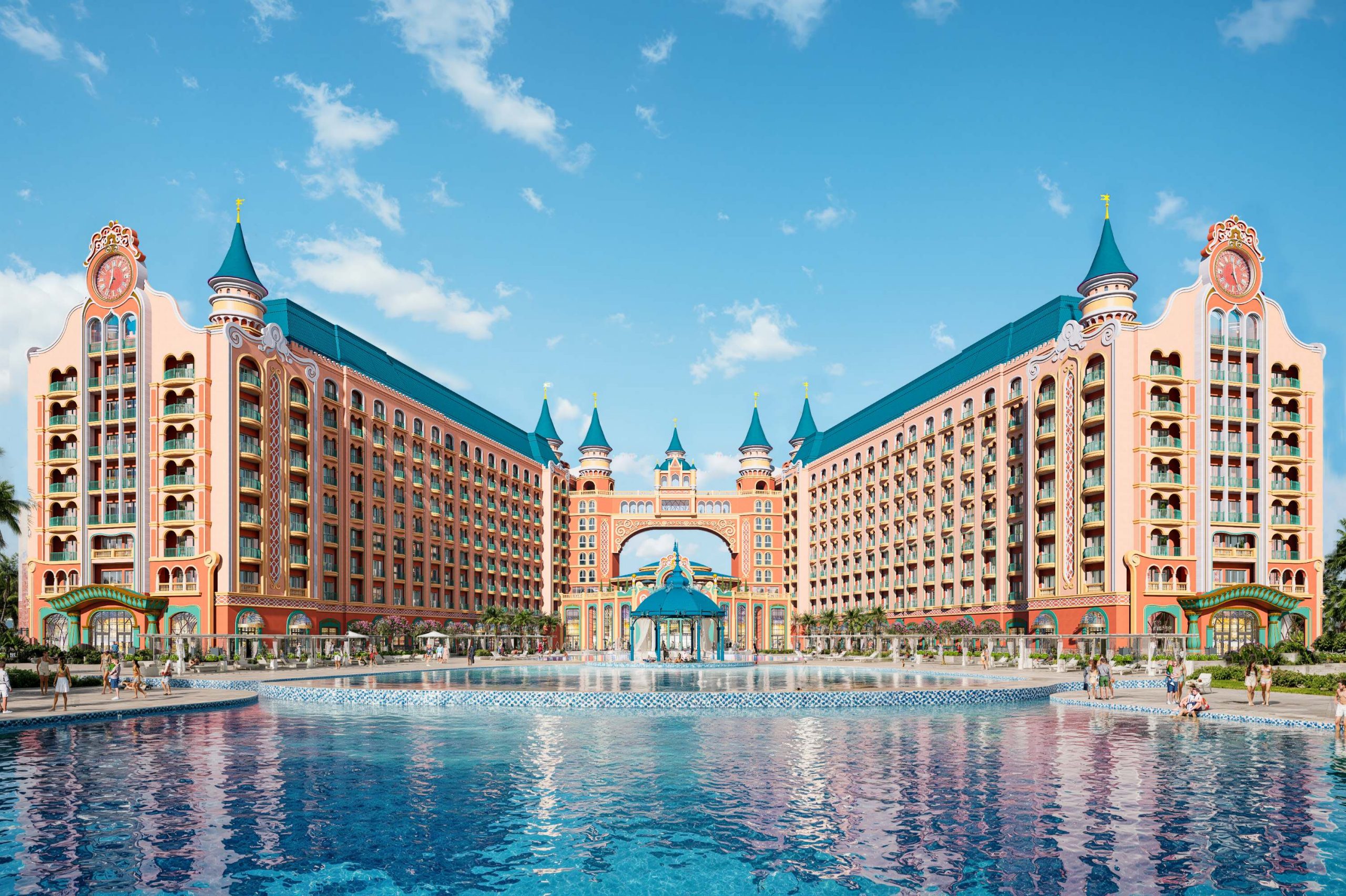
Real estate accounts for USD 28.5 billion of total registered foreign direct investment (FDI) in Ho Chi Minh City. Within this sector, Vinhomes is developing the 2,870-hectare Vinhomes Green Paradise in Can Gio, a project that signals a strategic shift in the city’s urban expansion toward the coast.
The Role of Sustainable Design
Built on ESG++ principles, the development integrates environmental and social governance with a focus on long-term sustainability and climate resilience.
By aligning with BREEAM and ISO 37122 benchmarks, Vinhomes Green Paradise seeks to demonstrate the link between sustainable urban development and long-term economic performance.
The development centers on Vin New Horizon, a specialized urban project designed for retirement, nursing, and wellness. Industry observers expect the city to attract significant foreign direct investment and remittances from the overseas Vietnamese community. Industry observers expect the city to attract significant foreign direct investment and remittances from the overseas Vietnamese community. With a population of over five million, many in this demographic are reaching retirement age and increasingly looking toward Vietnam for long-term residency and specialized healthcare infrastructure.
The project includes a 122-hectare tourism and entertainment zone, centered around the Blue Waves Theatre. This 7-hectare facility features a 5,000-seat indoor arena and an outdoor plaza with a capacity for 60,000 people. Additional infrastructure within the complex includes: 800-hectare Paradise Lagoon saltwater lake, Landmark Harbour yacht marina, Sea Festival Square, a safari, a hybrid water-festival park, and a 30,000-square-meter Winter Wonderland ice park.
The development integrates hospitality and healthcare as core components of its master plan. Approximately 7,000 rooms will be managed by 20 international hotel brands across a range of five-star resorts. Healthcare infrastructure will be centered around the Vinmec Can Gio International Hospital, which is being built to Cleveland Clinic standards, supported by a network of wellness, spa, and dining facilities.
The development features two international-standard 18-hole golf courses, designed by Tiger Woods and Robert Trent Jones II. These facilities are central to a master plan projected to draw 40 million annual visitors, which officials expect will drive a new economic growth cycle for Ho Chi Minh City and the surrounding region.
Infrastructure development is set to transform connectivity in the region through several large-scale projects. Plans include a 48.5-kilometer high-speed urban railway linking Phu My Hung to Can Gio, alongside the construction of the Can Gio Bridge, which has a projected investment of VND 11 trillion.
Complementing these transport links is the proposed VND 50 trillion Can Gio International Transshipment Port, designed to be Vietnam’s first green port facility. Additionally, local authorities are conducting feasibility studies for a sea-crossing route between Can Gio and Vung Tau to improve regional integration.
In a global investment climate increasingly focused on transparency and long-term stability, Vinhomes has positioned itself as a primary entry point into the Vietnamese real estate market. The developer currently manages 30 operational urban projects, utilizing a ‘city-within-a-city’ model. With 17 years of market presence, the company’s value proposition to international investors rests on its track record of legal compliance and its ability to meet global operational standards in large-scale developments.
Vinhomes Green Paradise serves as a benchmark for Vietnam’s urban development and a focal point for international investors targeting long-term assets in Southeast Asia.
Hashtag: #Vinhomes
The issuer is solely responsible for the content of this announcement.
Media OutReach
4,680 young Chinese volunteers called “Little Deer” ready for Asian Beach Games
Recruited from 12 universities, including Hainan University and Hainan Normal University, as well as other local organizations, the volunteers share the common nickname “Little Deer.” The name is derived from Sanya’s nickname, “Deer City,” and is meant to reflect the volunteers’ lively, warm, and friendly spirit.
“See ya in Sanya” is both the slogan of the Asian Beach Games and the guiding principle for its volunteers. Liang Zihan, a student from Hainan Tropical Ocean University, said: “Since the launch of the volunteer recruitment drive, whether it is learning about the Games, mastering multilingual communication, or taking part in scenario-based drills and emergency exercises, I have given it my all. I hope to convey Sanya’s warmth, openness, and inclusiveness to every friend who comes from afar.”
Alongside local students, the volunteer team also includes many young people from across China brought together by the Games. Wu Yujia, a sophomore at the Hospitality Institute of Sanya, is one of them. “I want to show a warm, caring, and energetic Sanya,” she said. When asked about her future plans, she did not hesitate: “I want to stay in Sanya.” In her eyes, the city’s pleasant climate and beautiful scenery have deepened her affection for it and strengthened her commitment to volunteering.
The 6th Asian Beach Games will be held in Sanya, Hainan, from April 22 to 30, 2026. Delegations from all 45 member countries and regions of the Olympic Council of Asia (OCA) will take part in what is the largest and most influential beach sports event in Asia. As the first major international sporting event to be held in Hainan after the independent customs operations of the Hainan Free Trade Port, the Games are not only a celebration of Asian sport but also an important opportunity for Hainan to present an open and welcoming face to the world.
The issuer is solely responsible for the content of this announcement.
Media OutReach
SERES’ Clifford Kang Highlights AI-Enabled Smart Mobility at the 2026 World Internet Conference Asia-Pacific Summit
The summit, hosted by the World Internet Conference and organised by the Government of the Hong Kong Special Administrative Region, brought together global industry leaders to explore developments in digital and intelligent transformation.
Against this backdrop, Kang noted that artificial intelligence is accelerating a fundamental shift across industries, with mobility among the most significantly transformed sectors. AI is moving from merely functional to truly frictionless, becoming deeply embedded in every part of our lives and emerging as an inclusive force that enhances mobility, living and consumption experiences.
As this transformation accelerates, SERES continues to embed intelligence across its full value chain, from product development to manufacturing and user services, using continuous innovation to enhance user experience and strengthen its long-term competitiveness as a technology-driven new energy vehicle company.
A key milestone of SERES came in 2021, when SERES entered a cross-industry partnership with Huawei to launch the AITO brand, its premium new energy vehicle brand. At the time, the industry was facing a clear disconnect, where intelligent cars were not luxurious, while luxury cars were not intelligent. In response, AITO introduced the brand philosophy of “Intelligence Redefining Luxury”, positioning intelligence as the foundation of its premium mobility experience. The brand name itself, derived from “adding intelligence to auto”, reflects this core DNA.
Today, that strategy has translated into scale and adoption. AITO has built a user base of more than 880,000 active users of its smart driving assistance system, with total journeys surpassing 6.6 billion kilometres.
Clifford Kang further emphasised that a great product alone is not enough, and that company need to focus on the entire lifecycle user experience. Guided by this principle, SERES has extended intelligent technologies at scale across both manufacturing and customer service to improve every touchpoint.
In manufacturing, the SERES Super Factory, operates with more than 5,000 robots, enabling 100% automation of critical processes. AI vision inspection technology ensures strict quality control of key components, ensuring high quality standards across production.
On the customer service end, SERES has built a 24/7 cloud-based safety service system powered by AI and big data, enabling a shift from reactive support to intelligent predictive service. In 2025 alone, the system delivered approximately 250,000 proactive alerts to customers. One notable example came in July last year, when AITO M9 completed the industry’s first satellite-enabled rescue operation in a remote region of China, highlighting both the practical value and human warmth of intelligent connected technologies in real-world scenarios.
Looking ahead, Clifford Kang stated that new energy vehicles are evolving into the mobile intelligent space, requiring further robust investment in research and development. In 2025 alone, SERES invested RMB 12.5 billion in R&D, representing a 77% year-on-year increase. This investment has enabled the company to develop a suite of core technologies, including the SERES MF Platform, Super Range Extender and Intelligent Safety systems. These innovations are continuously applied across SERES’ products to enhance performance and deliver better mobility experiences for users.
“Bringing eruptive technology from the laboratory to the road requires more than one company’s efforts”, Kang said. “Open collaboration is the most efficient path forward. SERES has always embraced openness and partnership. We want to work with industry partners around the world to advance the mobility sector together. Let’s build up the future where technology has the vision to lead, the precision to excel, and the warmth to care.”
Hashtag: #SERESGroup
The issuer is solely responsible for the content of this announcement.

About Seres Group
Seres Group is one of China’s leading luxury new energy vehicle companies. Its premium brand AITO has surpassed one million cumulative users. In 2025 AITO became the best-selling Chinese luxury car brand in the domestic market. With strong capabilities in areas such as intelligent driving, SERES is bringing its vision of “Intelligence Redefining Luxury” to global markets and delivering a smarter mobility experience to more users around the world.
Media OutReach
Taicang Day in Munich: Celebrating 18 Years of Sino-German Industrial Innovation
The event featured a distinguished lineup of speakers who shared their insights on deepening cooperation. Gudrun Weidmann, Director for Internationalization at the Bavarian Ministry of Economic Affairs; Zhai Qian, Minister Counselor of the Chinese Embassy in Germany; Chen Xiaodong, Deputy Director of the Jiangsu Provincial Department of Commerce; Dr. Christian Scharpf, Deputy Mayor of Munich and Head of the Department of Labor and Economic Affairs, and Michaela Schenk, Chair of the Foreign Trade Committee of the Chamber of Commerce and Industry for Munich and Upper Bavaria, delivered opening remarks. The proceedings were moderated by Stefan Geiger, Chairman of the China-Western Bavaria Business and Cultural Association.

Chen Gao, Secretary of the CPC Taicang Municipal Committee, delivered a keynote address titled “Green, Innovation, and Integration: Establishing a Model for Sino-German Cooperation.” In his speech, Chen drew a poetic parallel between Munich and Taicang’s home region of Suzhou, describing both as paragons of the perfect fusion between tradition and modernity where cutting-edge technology and modern industry coexist harmoniously with rich cultural heritage.
Reflecting on 33 years of deep engagement with Germany, Chen emphasized that Taicang’s bilateral cooperation has reached a historic turning point, transitioning from merely attracting foreign capital to fostering two-way investment, and from industrial supply-chain support to the co-creation of a complete industrial ecosystem. The Secretary highlighted three flagship Taicang projects recently included in the official achievement list of the high-level Sino-German summit—the Schaeffler Humanoid Robot Digital Factory, the Sino-German Taicang Zero-Carbon Park, and the Taicang Rhine-Neckar Innovation Center. These milestones vividly demonstrate Taicang’s momentum in pivoting toward green transformation, collaborative innovation, and deep bilateral integration. Taicang’s strategy remains built on the philosophy of long-termism, with Chen reaffirming the city’s dedication to optimizing a market-oriented, law-based, and internationalized business environment while reinforcing its brand identity as a “home away from home” for German community.
Following these addresses, the event yielded several milestone agreements aimed at facilitating practical cooperation, including the official inauguration of the VDE China representative office in Taicang and the signing of a new batch of German scientific innovation projects. To further support the internationalization of local firms, the Taicang Enterprise Overseas Service Center was officially unveiled, alongside a dedicated matchmaking session for Chinese companies expanding into global markets. Furthermore, State Grid Taicang Power Supply Company presented its latest initiatives in Green Compliance and Environmental Sustainability, a presentation that received widespread acclaim for aligning industrial power solutions with international ESG standards.
Taicang’s strategic appeal is rooted in its premier location adjacent to Shanghai and its world-class infrastructure. Situated within a 30-minute commuting radius of central Shanghai, the city offers rapid access to Hongqiao Airport in 20 minutes and Pudong International Airport in just over an hour. Its maritime gateway, the Port of Taicang, features a 12.5-meter deep-water channel and ranks 8th in China and 20th globally, with an annual throughput exceeding 10 million TEUs. This logistics network supports a robust industrial ecosystem of over 5,000 enterprises, where 70% of vehicle components can be sourced locally.
Widely recognized as the “Home of German Enterprises” in China, Taicang now hosts over 560 German firms, including 60 “hidden champion” companies. This specialized cluster represents more than 10% of all German manufacturing enterprises in China. The city’s collaborative success is further evidenced by projects mentioned above in Chen Gao’s speech such as the Schaeffler Humanoid Robot Digital Factory and the Sino-German Taicang Zero-Carbon Park, and the Taicang Rhine-Neckar Innovation Center, all of which were included in the official achievement list of the German Chancellor’s visit to China.
To support its growing international community, Taicang has developed a sophisticated service ecosystem. The city’s Foreigner Service Center integrates 73 specialized services, supported by the “Hi Taicang” card which provides foreign residents with enhanced convenience in healthcare, education, and transportation. Complemented by cultural landmarks like the Rothenburg-themed street and authentic German bakeries, Taicang has created an environment where international partners can truly root themselves for long-term success.
Hashtag: #TIZ
The issuer is solely responsible for the content of this announcement.

-
Feature/OPED6 years agoDavos was Different this year
-
Travel/Tourism10 years ago
Lagos Seals Western Lodge Hotel In Ikorodu
-
Showbiz3 years agoEstranged Lover Releases Videos of Empress Njamah Bathing
-
Banking8 years agoSort Codes of GTBank Branches in Nigeria
-
Economy3 years agoSubsidy Removal: CNG at N130 Per Litre Cheaper Than Petrol—IPMAN
-
Banking3 years agoSort Codes of UBA Branches in Nigeria
-
Banking3 years agoFirst Bank Announces Planned Downtime
-
Sports3 years agoHighest Paid Nigerian Footballer – How Much Do Nigerian Footballers Earn