

Media OutReach
Hong Kong Chinese Women’s Club College Wins Gold Award at the 2025 Hang Lung Mathematics Awards
Hang Lung’s Vision for Academic Excellence Drives Hong Kong’s Global Competitiveness
HONG KONG SAR & SHANGHAI, CHINA – Media OutReach Newswire – 17 December 2025 – The winners of the 2025 Hang Lung Mathematics Awards (“HLMA”), co-organized by Hang Lung Properties Limited (SEHK Stock Code: 00101) (“Hang Lung” or the “Company”) and the Hong Kong University of Science and Technology (“HKUST”), have been announced. Siu Man Li from the Hong Kong Chinese Women’s Club College received the Gold Award for his research report titled “Markov Chains Associated with Ultraspherical Polynomials: An Analysis of Weak Convergence and First Passage Time Functionals”.
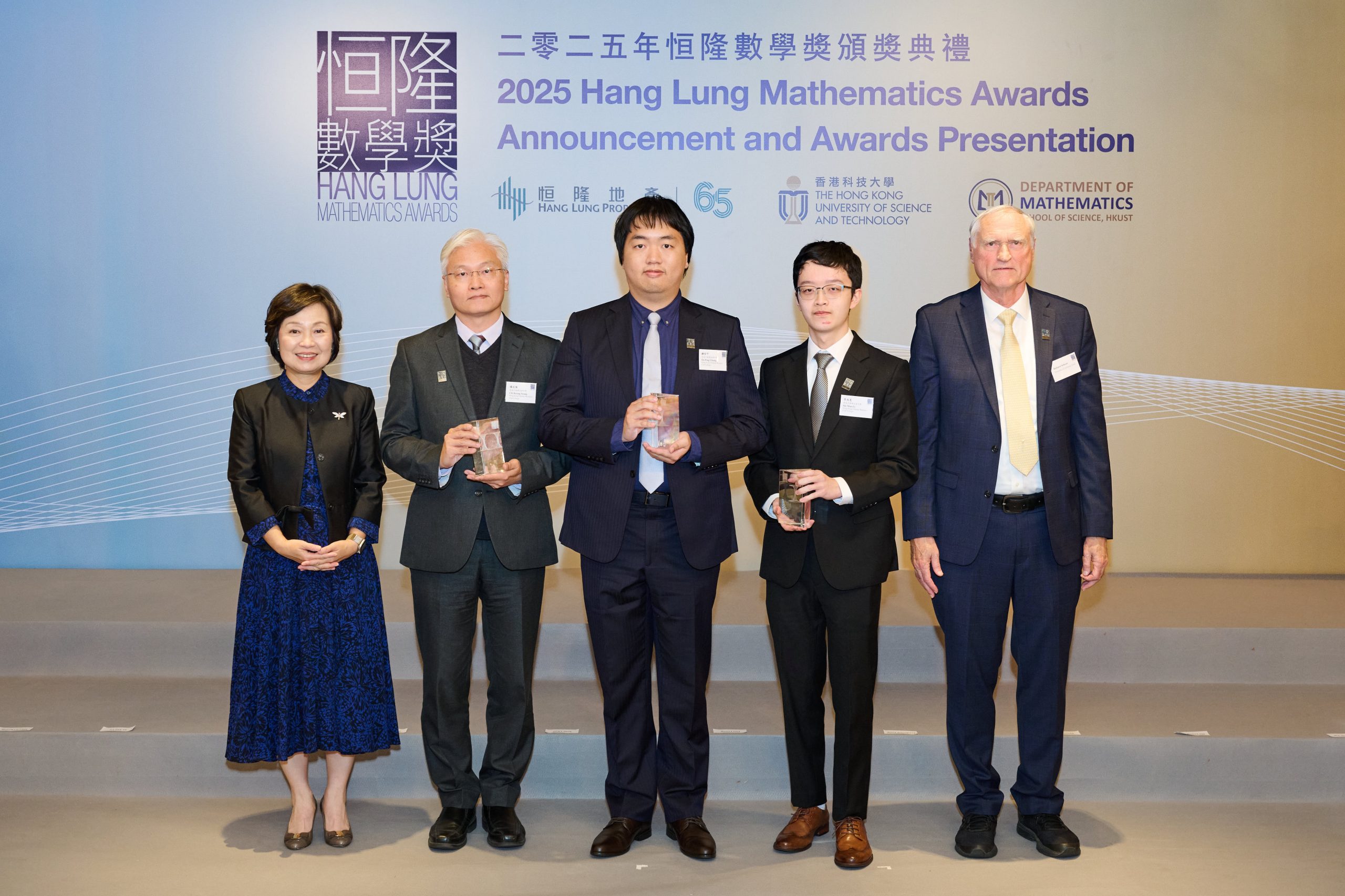
The Silver Award and the Bronze Award were won by Augus Kui Lam Huang, Inna Belle Lee, Chun Lam Lo, Lok Hei Qiao, and Cheuk Lok Wong from St. Paul’s Co-educational College, and Edison Sze Ho Fu, Yun Tung Ko, Hoi Chun Puk, and Wai Kwan Yeung from Queen’s College, respectively. All winning teams demonstrated exceptional problem-solving abilities, creativity, and academic rigor evident in their work on challenging mathematical topics.
The awards were presented at tonight’s ceremony, celebrating the remarkable achievements of the student finalists and reaffirming HLMA’s sustained contribution to advancing STEM education in Hong Kong. In her opening remarks, Dr. Choi Yuk-lin, JP, Secretary for Education of the Hong Kong Special Administrative Region, said, “The Hang Lung Mathematics Awards not only honours mathematical endeavours, but also reflects its enduring commitment to inspiring a continued passion for mathematics among our students and nurturing Hong Kong’s young talents. This aligns well with the promotion of self-directed learning, problem solving and creativity in Hong Kong’s school education. I hope all of us in the society can join hands in the promotion of digital education and mathematical modelling for the benefit of our students.”
Mr. Adriel Chan, Chair of Hang Lung Properties, also addressed the audience, stating, “As we celebrate the winners of the Hang Lung Mathematics Awards, we are reminded that talent development is a long-term investment. HLMA embodies our commitment to nurturing the next generation of thinkers and leaders who will navigate an increasingly complex world. We are heartened by the strong support from students, schools, and the academic community, which reinforces our shared mission to advance mathematics education and push the boundaries of excellence. Together, we are empowering young minds to pursue their passion and unlock their potential in mathematics, science, and technology.”
Professor Nancy Ip, President of HKUST, said, “HKUST is pleased to continue our partnership with Hang Lung in this biennial competition. Hang Lung Mathematics Awards is more than an academic contest; it is a platform that challenges students to push the boundaries of their knowledge and apply rigorous methodology to original research. By cultivating a community of aspiring mathematicians and providing them with access to world-class training, we are advancing our shared vision of transforming Hong Kong into a global hub for innovation and technology.”
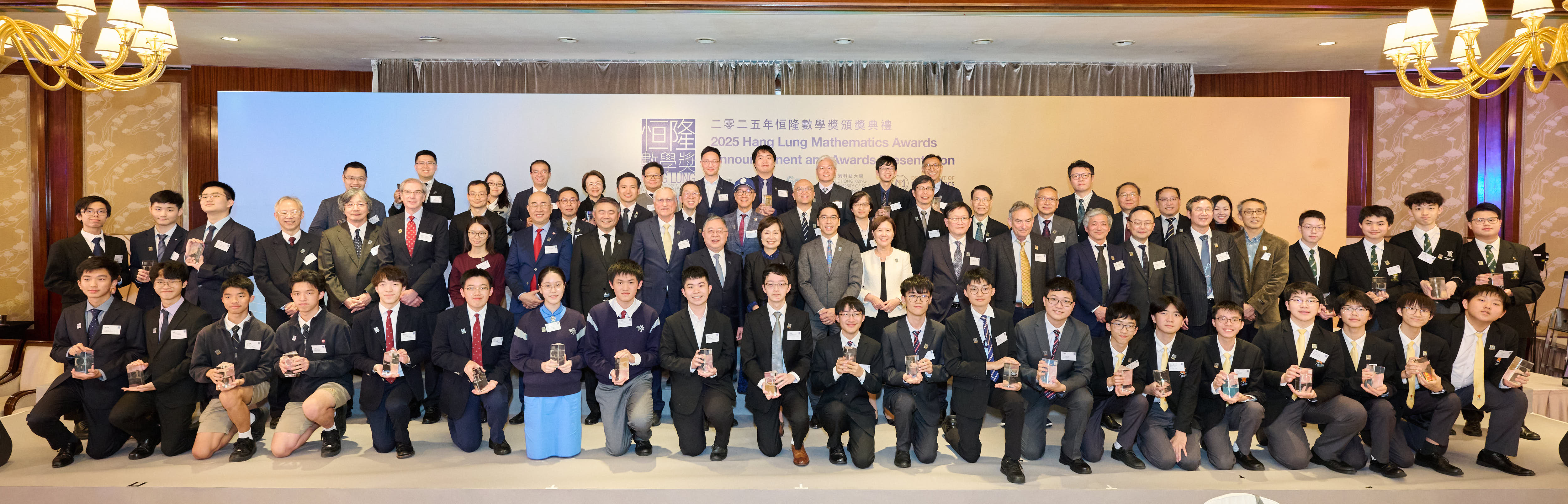
During the ceremony, a lively Panel Discussion was held on the theme of “Ubiquity of Mathematics: the Language of Discovery.” The discussion featured Professor Richard Schoen, 2017 Wolf Prize Laureate in Mathematics and Chair of the 2025 HLMA Scientific Committee, and Professor Ngaiming Mok, 2022 Future Science Prize Laureate, Chair of the HLMA Steering Committee and member of the Scientific Committee. Moderated by Ms. Jennifer Zhu Scott, Co-founder and Chief Executive Officer of Power Dynamics, the distinguished speakers shared their insights on the evolving landscape of mathematics education and the essential skills required for the next generation to thrive in a technology-driven era.
The 2025 Hang Lung Mathematics Awards attracted the participation of close to 100 teams from over 50 secondary schools in Hong Kong. Under the guidance of a supervising teacher, each team decided on a mathematics topic, designed and conducted research, and compiled their findings into a research report. This impactful initiative is pivotal in the cultivation of future mathematical and scientific minds.
Appendix
Founded in 2004, the Hang Lung Mathematics Awards is a biennial competition that inspires secondary school students to formulate their own research journey and realize their creative potential in mathematics. Throughout its illustrious history, 2,800 students from over 200 schools have participated, submitting more than 500 research reports. Hang Lung donates HK$2.5 million for each competition—HK$1 million is allocated as prize money with the remainder supporting HKUST in providing vital initiatives including academic consultation, assessment, administration, and educational outreach activities. HKUST also offers scholarships for teachers nominated by the winning schools to further their studies through the Master of Science Program in Mathematics for Educators.
Over the past two decades, the HLMA has made a profound impact on cultivating young mathematical talent, with many past winners having gone on to graduate from top universities worldwide and now contributing significantly to society through work in academia and professional fields. HLMA plays an important role in recognizing and fostering a lasting love of mathematical inquiry that extends far beyond secondary school.
This year, the Hang Lung Mathematics Awards drew participation from nearly 100 teams across over 50 secondary schools in Hong Kong. A total of 15 teams were shortlisted for the Oral Defense stage, where a Scientific Committee comprising internationally renowned scholars and educators evaluated the research reports through a rigorous, multi-step review process. The teams were invited to present and defend their findings before the Scientific Committee in a formal setting, an experience that closely resembles the oral defense process required for a postgraduate degree.
For a detailed list of winners of the 2025 Hang Lung Mathematics Awards, please refer to the attachment.
Attachment
List of Winners of the 2025 Hang Lung Mathematics Awards
|
Award
|
Research Title
|
Team Member(s)
|
Teacher
|
School Name
|
|
|
Gold
|
Markov Chains Associated with Ultraspherical Polynomials:
an Analysis of Weak Convergence and First Passage Time Functionals |
Siu Man Li
|
Mr. On Ping Chung
|
Hong Kong Chinese Women’s Club College
|
|
|
Silver
|
Incentric Subdivisions of Triangles and Iterated Function Systems
|
Augus Kui Lam Huang
Inna Belle Lee
Chun Lam Lo Lok Hei Qiao Cheuk Lok Wong |
Mr. Pak Leong Cheung
|
St. Paul’s Co-educational College
|
|
|
Bronze
|
On the Generalisations of the No-Three-in-Line Problem
|
Edison Sze Ho Fu
Yun Tung Ko Hoi Chun Puk Wai Kwan Yeung |
Mr. Hang Chun Chan
|
Queen’s College
|
|
|
Honorable Mentions (listed by school name in alphabetical order)
|
|||||
|
Research Title
|
Team Member(s)
|
Teacher
|
School Name
|
||
|
On the Number of Multiplicative Type En Friezes
|
Lok Him Chan
David Kai Hei Gu Sui Ping Tang Ho Wong |
Mr. Yuk Lun Fong
|
HKUGA College
|
||
|
What Can You Split and Draw?
|
Triton Cheuk Lok Kho
Eron Ching Long Kwok Man Hei Tung |
Mr. Yuk Lun Fong
|
HKUGA College
|
||
|
The Mathematics of Riffle Shuffling from Single to Multi-Deck Card Games
|
Daniel Haifeng Wang
Justin Haisong Wang |
Ms. Alexandra Streeter
|
King George V School
|
||
|
On the Images of Rational Numbers under a Certain Type of Fractal Interpolation Function
|
Tsz Hei Chiu
Alex Sheung Fai Lam Hin Chun Lee Jamie Chun Hin Ng Ka Lam Tang |
Dr. Wai Shan Cheung
|
St. Joseph’s College
|
||
|
Producing Annoying Sounds with Chalk by Varying Angle of Contact
|
Joshua Cheung
Haoyang Dong Jizheng Li Ming Ze Li Maximilian Ng |
Mr. David Bian
|
Victoria Shanghai Academy
|
||
Hashtag: #HangLungProperties
The issuer is solely responsible for the content of this announcement.
About Hang Lung Properties
Hang Lung Properties Limited (SEHK stock code: 00101) creates compelling spaces that enrich lives. Headquartered in Hong Kong, Hang Lung Properties develops and manages a diversified portfolio of world-class properties in Hong Kong and the nine Mainland cities of Shanghai, Shenyang, Jinan, Wuxi, Tianjin, Dalian, Kunming, Wuhan and Hangzhou. With its luxury positioning under the “66” brand, the company’s Mainland portfolio has established its leading position as the “Pulse of the City”. Hang Lung Properties is also recognized for leading the way in enhancing sustainability initiatives in the real estate industry, all the while pursuing sustainable growth by connecting customers and communities.
At Hang Lung Properties – We Do It Well.
For more information, please visit
www.hanglung.com.
About The Hong Kong University of Science and Technology
The Hong Kong University of Science and Technology (HKUST) (
https://hkust.edu.hk/) is a world-class university known for its innovative education, research excellence, and impactful knowledge transfer. With a holistic and interdisciplinary pedagogy approach, HKUST was ranked 6th in the QS Asia University Rankings 2026, 3rd in the Times Higher Education’s Young University Rankings 2024, and 19th globally and 1st in Hong Kong in the Times Higher Education’s Impact Rankings 2025. Thirteen HKUST subjects were ranked among the world’s top 50 in the QS World University Rankings by Subject 2025, with “Data Science and Artificial Intelligence” coming in 17th worldwide and first in Hong Kong. Our graduates are highly competitive, consistently ranking among the world’s top 30 most sought-after employees. In terms of research and entrepreneurship, over 80% of our work was rated “internationally excellent” or “world leading” in the Research Assessment Exercise 2020 of the Hong Kong’s University Grants Committee. As of July 2025, HKUST members have founded over 1,900 active start-ups, including 10 Unicorns and 17 exits (IPO or M&A).
Media OutReach
Global Wellness Forum 2026 Set for June 23 in Kuala Lumpur as Malaysia’s Nutraceutical Industry Embarks on Next-Gen Transformation
As a core component, James Pereira, general manager of MADSA, will share insights on Malaysian health industry regulations. Adrian Toh, CEO & Executive Director of R Pharmacy, will provide frontline retail channel observations regarding shifting consumer demands. Alex Liao, General Manager of Welbloom Bio-Tech, will represent Taiwan to share how format innovation effectively responds to brand differentiation, consumption experiences, and market compliance needs.
Faced with brands’ attention toward differentiated experiences, Welbloom Bio-Tech will showcase its proprietary, Halal-certified FRESH-Jelly® technology on-site, demonstrating the innovative application to make supplements more food-like. Through ingredient payload capacities, zero- or low-sugar designs, and customized flavor development, FRESH-Jelly® allows supplements to maintain functionality while becoming more enjoyable to consume regularly, providing Malaysian brands with a distinctive option beyond capsules and tablets.
With the rapid rise of Malaysia’s wellness consumer market, its mature distribution channels and exceptional potential for regional expansion are accelerating the country’s growth as a critical hub for the Southeast Asian health industry. Welbloom Bio-Tech states that this forum is a bridging platform connecting Taiwan’s manufacturing capabilities with Malaysian market insights, aiming to unlock commercially viable partnerships for both regions.
The event is organized by The PAGE, co-organized by Welbloom Bio-Tech and SEAbizs, and supported by NTBSA, MATRADE, R Pharmacy, and MADSA.
【Event Information】
Time: June 23, 2026, 09:30 – 14:00
Venue: The Zenith – Connexion Conference & Event Centre, Kuala Lumpur
Hashtag: #WelbloomBioTech
The issuer is solely responsible for the content of this announcement.
About Welbloom Bio-Tech
Welbloom Bio-Tech focuses on health supplement R&D, manufacturing, and dosage form innovation. Through forward-looking market foresight and robust R&D technologies, it provides one-stop services from formulation design and flavor development to manufacturing, assisting clients in Malaysia and Singapore to build highly competitive health supplements.
To learn more, please search “Welbloom” or click the link:
https://welbloom.com/malaysiaforum2026/
Media OutReach
Doing Good Index 2026: Asia’s US$753 Billion Philanthropic Potential Remains Unrealized
- Asia’s social sector is under strain: 78% of the 2,166 social delivery organizations (SDOs) surveyed report insufficient domestic funding.
- Asia is one of the fastest-growing regions for wealth creation, yet the policies and incentives needed to channel it toward social good are not keeping pace.
- Singapore has become the first economy to enter the “Doing Excellent” category, demonstrating what alignment across regulations, tax incentives, government partnerships and efforts to create a culture of giving can achieve.
- 84% of Asian SDOs surveyed apply the UN Sustainable Development Goals (SDGs) in their operations, pointing to their enduring value as a shared framework for coordination and collective action beyond 2030.
HONG KONG SAR – Media OutReach Newswire – 16 June 2026 – Asia’s social needs are intensifying, and official development assistance is declining. Yet, while the region’s wealth is growing dramatically, the policies, incentives and partnerships needed to channel private capital toward social good are not keeping pace. That is a key finding of the Doing Good Index 2026, the fifth edition of CAPS’s flagship policy report, which assesses the enabling environment for private social investment across 17 Asian economies.
The report finds that while the enabling environment for private social investment is in place across much of the region, its effectiveness remains uneven. Improvements in registration processes and accountability mechanisms have been accompanied by persistent barriers, including restrictions on foreign funding, regulatory complexity, and inconsistent government engagement. In many cases, policies exist on paper but are not fully implemented in practice, limiting their impact.
At the same time, although trust in SDOs remains high across the region, broader ecosystem conditions, such as media sentiment, talent pipelines, and institutional support, are showing signs of strain. 81% of SDOs struggle to secure unrestricted funds for their work, while 73% report difficulty recruiting staff, constraining the sector’s ability to turn trust into impact.
“Asia has the wealth, the will, and in many economies, the foundations of a strong enabling environment. What is needed now is concerted, aligned effort to bring them together. The potential is enormous,” said Ruth Shapiro, Co-Founder and CEO, Centre for Asian Philanthropy and Society.
Even as Asia’s wealth continues to grow, the region faces significant and intensifying challenges across climate, education and health. Official development assistance is declining, and there is increasing pressure on domestic resources at precisely the moment demand for social services is rising.
If Asian economies were to contribute just 2% of GDP to philanthropy, as the United States does, it could generate an estimated US$753 billion annually for social good. That represents 15 times the official development assistance flowing into the region, and almost half the financing needed to hit the UN’s SDGs in Asia. But realizing that potential depends on strengthening the policies, incentives and partnerships that enable private capital to flow toward social good. The Doing Good Index 2026 finds that across much of Asia, those conditions are not yet in place.
“The world has changed dramatically, and Asia can no longer rely on others to address its social challenges. The Doing Good Index 2026 shows the region has the potential to meet this moment, but only if governments and philanthropists act together to build the conditions that make it possible,” said Ronnie Chan, Chairman, Centre for Asian Philanthropy and Society.
Singapore Shows What Alignment Can Achieve
Singapore has, for the first time, entered the top “Doing Excellent” category in the Doing Good Index 2026, reflecting years of deliberate effort to build a strong culture of philanthropy and civic engagement. Clear regulations, generous tax incentives, openness to foreign funding, and close collaboration between government and the social sector have created a strong enabling environment.
Singapore’s achievement demonstrates that when regulations, fiscal policy, ecosystem conditions and procurement work in concert, the outcomes are stronger. While no two economies will follow the same path, Singapore’s experience highlights the conditions that matter, such as the active promotion and alignment of philanthropy and giving across the whole of society.
The SDGs: Falling Short but Still Relevant in Asia
In the run-up to 2030, global progress toward the SDGs has fallen short of ambition, and Asia is no exception. Yet the Doing Good Index 2026 finds that 84% of SDOs continue to apply the SDGs in their work. Further, the rise of Environmental, Social and Governance (ESG) reporting has not displaced them, because most SDOs see the two frameworks as complementary rather than competing.
As the deadline approaches, the Index points to their enduring value not as a target but as a shared framework for strategy, coordination and collective action in the years ahead.
Other Findings from the Report
- Talent shortages persist for Asia’s social sector: more than 70% of SDOs face difficulty recruiting and retaining staff across Asia.
- AI adoption is happening, but usage remains limited: only 13% of surveyed SDOs report using AI regularly.
- 39% of SDOs say claiming tax benefits is difficult, suggesting administrative barriers may be limiting the impact of existing incentives for giving.
Hashtag: #CAPS #DoingGood #PrivateCapital #PublicGood #Philanthropy #Impact
The issuer is solely responsible for the content of this announcement.
About the Doing Good Index
Released biennially and now in its fifth edition, the Doing Good Index is CAPS’s flagship policy research that assesses the enabling environment for doing good in Asia: the systems, policies and practices that facilitate or constrain philanthropic giving and the deployment of this capital.
CAPS’s research team surveyed 2,166 social delivery organizations (SDOs) and conducted 132 interviews with sector experts across 17 Asian economies to provide a comparative, evidence-based view of where environments are supportive, where gaps persist, and how systems can be strengthened to better mobilize private resources for public good.
The Index looks at indicators under four sub-indexes: regulations, tax and fiscal policy, ecosystem, and government procurement, which provide an understanding of the specific measures economies have taken to catalyze philanthropic giving and promote social sector development.
Since its inception, the Index has been an essential resource for policymakers, philanthropists, and nonprofit leaders seeking to understand and improve the conditions for giving across the region.
For more information,
download the report and visit
the Doing Good Index 2026 dedicated microsite.
About the Centre for Asian Philanthropy and Society (CAPS)
Established in 2013 and working across more than 17 economies in Asia, the Centre for Asian Philanthropy and Society (CAPS) is a nonprofit organization committed to improving the quantity and quality of philanthropic and private giving throughout Asia. Our mission is to maximize private capital for public good, conducting research, advisory, convening and capacity building to engage philanthropists, foundations, family offices, corporates, government bodies, social sector organizations and experts on best practices, models, policies and strategies to facilitate private giving and social investment in the region. For more information, visit
www.caps.org and
LinkedIn.
Media OutReach
Frost & Sullivan White Paper Names Phancy Rise vGPU a Tier 1 Leading Platform
Rise vGPU + ModelHub Power China’s AI into the Heterogeneous Orchestration Era
HONG KONG SAR – Media OutReach Newswire – 15 June 2026 – Frost & Sullivan, a globally renowned growth consulting firm, has released its “2026 AI Infrastructure Orchestration Platform White Paper”. The report recognizes Phancy Group’s Rise vGPU as a Tier 1 Leading Platform, the highest maturity tier in heterogeneous GPU orchestration. Phancy’s ModelHub also achieved the highest Overall Score in the enterprise-grade model management platform evaluation. This marks a significant endorsement of Phancy’s technological capability in heterogeneous AI infrastructure.
According to the white paper, as large model applications scale rapidly, China’s AI industry is facing structural challenges stemming from multi-chip coexistence. These include hardware heterogeneity, fragmented software stacks, persistently low GPU utilization (generally below 30%), and rising model adaptation complexity — all of which have become major bottlenecks for enterprise-scale AI deployment.
The report highlights a fundamental shift in AI infrastructure competitiveness – moving away from “single-chip performance” toward “cluster-scale system coordination.” At this critical juncture, Phancy has positioned itself as a leader in advanced orchestration through its full-stack AI infrastructure platform, offering a proven solution to heterogeneous compute challenges and helping drive China’s AI industry from “compute accumulation” into a new era of “compute orchestration.”
Phancy Rise vGPU: Tier 1 Leading Platform
In its assessment of mainstream AI infrastructure platforms, Frost & Sullivan defined Tier 1 criteria across three core dimensions: heterogeneous support, fine-grained control, and production-grade execution. Phancy Rise vGPU meets all three standards and has been recognized as a Tier 1 Leading Platform.
Rise vGPU transforms AI infrastructure from fragmented, low-efficiency device-level management to a unified software-defined control plane. Its key technology breakthroughs include:
- Comprehensive Heterogeneous Management: Unified onboarding and management across more than 10 mainstream GPU/NPU vendors, including NVIDIA, Ascend, Cambricon, Hygon, and others.
- Ultra-Fine Resource Partitioning: Industry-leading sub-GPU level compute and MB-level memory granularity slicing.
- Significant Utilization Improvement: Through safe oversubscription and time/space multiplexing, GPU utilization is increased from industry averages below 30% to 70%-90%.
- Intelligent Precision Scheduling: Multi-dimensional scheduling algorithms based on priority, topology, load, and resource awareness to achieve optimal compute allocation.
- Production-Grade SLA Assurance: The Deterministic Execution Layer delivers committed and auditable SLA guarantees for critical inference workloads.
- Full Lifecycle Operability: Comprehensive monitoring, metering, and cost allocation capabilities that turn GPU resources into truly operable digital assets.
Model Hub: Highest Overall Score in Model Management Platform Evaluation
Beyond compute orchestration, the report underscores the strategic importance of enterprise-grade model management platforms. As a powerful complement to Rise vGPU, Phancy ModelHub enables enterprises to build a complete full-stack AI infrastructure — from compute to models and from resource scheduling to business delivery.
The white paper notes that Phancy ModelHub delivers leading performance in key areas such as Model & Chip Compatibility, Execution Stability & Performance, and Model-GPU Coordination & Scheduling, achieving the highest Overall Score. Through its unified model management and execution platform, ModelHub creates a seamless closed-loop process covering model onboarding, deployment optimization, inference services, and version governance — significantly lowering the barrier to model deployment and accelerating AI innovation.
Dr. Dai Wenyuan, Founder & CEO of Phancy, said: “The Frost & Sullivan white paper accurately captures the inflection point in AI infrastructure development. The recognition of Rise vGPU as a Tier 1 Leading Platform and ModelHub’s top Overall Score provide important authoritative validation of Phancy’s technology strategy and product strength. As a full-stack AI cloud service platform, Phancy believes the next wave of competitiveness in the AI industry will come from systematic improvements in compute orchestration efficiency. We will continue to focus on heterogeneous compute unified scheduling and model ecosystem operations, working closely with customers and industry partners to advance China’s AI industry from ‘compute accumulation’ to a true ‘compute orchestration’ era.”
Hashtag: #PhancyGroup
The issuer is solely responsible for the content of this announcement.
About Phancy Group
Phancy Group (6682.HK) is a leading full-stack AI cloud services platform, providing comprehensive solutions for the AI 2.0 era. Our offerings include Rise vGPU, ModelHub and SageAIOS, delivering efficient and scalable AI infrastructure with end-to-end capabilities. We provide a complete solution from heterogeneous compute resource management and optimization to the deployment of intelligent agent models. These solutions empower digital transformation across a wide range of industries, supporting our vision of building a large-scale and efficient “Token Factory.”
Guided by the mission of “AI for Everyone” and positioned as the “Navigator of AI,” Phancy Group is committed to becoming a global leader in Artificial General Intelligence.
-
Feature/OPED6 years agoDavos was Different this year
-
Travel/Tourism10 years ago
Lagos Seals Western Lodge Hotel In Ikorodu
-
Showbiz3 years agoEstranged Lover Releases Videos of Empress Njamah Bathing
-
Banking8 years agoSort Codes of GTBank Branches in Nigeria
-
Economy3 years agoSubsidy Removal: CNG at N130 Per Litre Cheaper Than Petrol—IPMAN
-
Banking3 years agoSort Codes of UBA Branches in Nigeria
-
Banking3 years agoFirst Bank Announces Planned Downtime
-
Sports3 years agoHighest Paid Nigerian Footballer – How Much Do Nigerian Footballers Earn

