

Media OutReach
KGI: 2025 Market Outlook

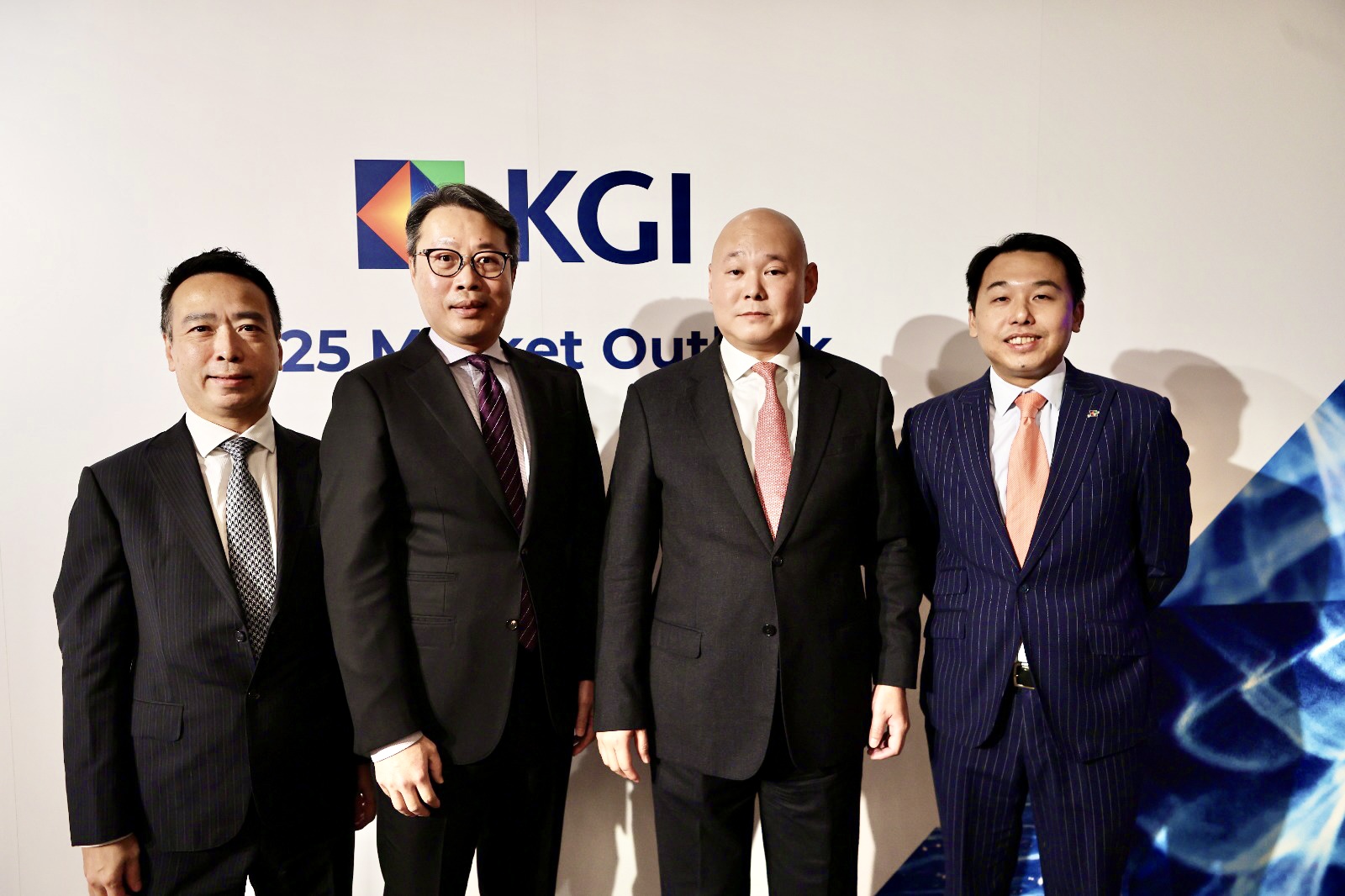
Balancing Global Dynamics
HONG KONG SAR – Media OutReach Newswire – 4 December 2024 – Today, KGI has released its 2025 Market Outlook, covering regions including Mainland China, Hong Kong, Taiwan, the U.S., Singapore, and Indonesia.
Reflecting on this year, the cooling of inflation and the labor market in the United States has brought the economy to a roughly balanced risk between employment and inflation. With Trump re-entering the White House, his policy propositions are poised to impact global economic development and shape the trend of medium and long-term interest rates. In China, domestic investment confidence remains weak. With the potential risk of the United States significantly increasing tariffs, Chinese exports may be affected. In response, China will introduce relevant measures to address these challenges.
Under this backdrop, we recommend the “ACE” strategy for 2025:
- Alternatives: Gold and cryptocurrencies — assets with lower correlation to traditional stocks and bonds.
- Credit Selection: Prioritize high-rated bonds, focusing on opportunities in corporate bonds.
- Elite Stocks: Prefer U.S. and Japanese stocks, maintain a preference for large-cap over small-cap, and pay attention to sector rotation.
Kenny Wen, Head of Investment Strategy at KGI, says: “Regarding asset allocation, based on our assessment of the global economy and geopolitical factors for 2025, investors can consider the ACE strategy: A is for Alternatives, which refers to diversifying into alternative assets to reduce portfolio volatility, with gold being a viable option. C is for Credit Selection, meaning carefully selecting investment-grade bonds to enhance potential income. Lastly, E is for Elite Stocks, where we prefer large-cap stocks, particularly from the U.S. and Japan.”
Macro and the U.S. Market
Within developed markets, the U.S. economy may slow down more significantly than the current market consensus estimate. In other regions, the recovery in the Eurozone and the UK was weaker than expected, but the trend of year-on-year growth is still improving. It is expected that the overall performance will still lag behind the U.S., but the gap is narrowing. In China, the market is currently focused on whether the Central Economic Work Conference in December can propose effective fiscal “stimulus” policies; otherwise, achieving 5% economic growth in the future remains challenging.
In the U.S., the manufacturing recovery has been weak, mainly due to overall weak capital expenditure. On the other hand, for the service sector, has shown unexpectedly strong performance, which has been key to the U.S. economy outperforming other mature markets over the past six months. However, with declining savings rates and increasing financial burdens, credit consumption momentum will weaken, potentially dragging on the U.S. economy in 2025.
Trump’s four major policies—tax cuts, increased tariffs, immigration restrictions, and financial deregulation—have an uncertain execution order, which may adversely affect inflation. Starting with restrictions on immigration and the implementation of tariffs, these policies are visible. Therefore, throughout the year, the four policies mentioned above may be announced in the first half, increasing the volatility of financial markets. However, higher economic risk for the United States is still in the second half of the year, and whether there will be improvement in the fourth quarter depends on the policy changes at that time.
The U.S. has returned to a roughly balanced dual-risk target of employment and inflation, with core inflation expected to continue declining in 2025. However, Trump’s increased tariffs and anti-immigration policies could lead to a resurgence in goods and services inflation, posing a risk of rising inflation again in 2026. The U.S. has returned to a state of full employment, with the unemployment rate for non-temporary jobs slowly rising, which may negatively affect the consumer spending.
In terms of U.S. stock investment, after two consecutive years driven by the AI wave, the overall U.S. stock market is no longer cheap. However, we see opportunities for sector rotation in the future, mainly reflected in estimated earnings improvements, particularly in finance, materials, industrial, and healthcare sectors. From a timing perspective, we believe the positive post-election stance can be maintained in the first quarter, but starting in the second quarter, the risks of Trump’s policies and economic downturn expectations will be reflected; risks will further increase in the second half, with the first half overall better than the second half.
As for bond investment, under Republican full control, bond investment may be adversely affected. For example, worsening fiscal deficits will increase bond issuance costs, rising inflation will lead to higher yields on medium- and long-term bonds, and poor fiscal discipline and long-term inflation risks will push up neutral interest rates and bond term premiums. Therefore, medium- and long-term government bonds are less favored in 2025, while some short-term government bonds or high-credit-quality corporate bonds, with relatively higher yields, can provide good interest income. Overall, 2025, with increased inflation risk and potential monetary policy reversal, is not favorable for bond investment.
James Chu, Chairman at KGI Securities Investment Advisory, says: “The global economy’s overall growth in 2025 is expected to be similar to that of 2024. Although the U.S. economy is showing a downward trend, it remains relatively strong among developed markets. The biggest variable for economic performance in 2025 remains the implementation of policies following Trump’s return to office; the impact of these policies on the economy might be difficult to assess immediately, but they are certainly unfavorable for inflation. The Federal Reserve is expected to cut interest rates by 75-100 basis points, potentially reaching a low of 3.75-4.0% in 2025, with rate hikes possibly resuming in 2026. In terms of investment, after being driven by the AI wave for two consecutive years, U.S. stocks are no longer cheaply valued, but there are opportunities for sector rotation. It is expected that in 2025, the S&P 500 will still see mid to high single-digit profit growth, with annual returns estimated between 6-12%, which is a decline compared to the previous two years. In terms of timing, we believe the first quarter should maintain the current post-election bullish trend. Starting in the second quarter, the market is expected to reflect the risks associated with Trump’s policies and the anticipated economic downturn, which may lead to market volatility. Risks are expected to increase further in the second half of the year, with overall performance anticipated to be better in the first half than in the second half.”
Mainland China and Hong Kong Markets
Looking back at the first three quarters of the year, the Chinese economy grew 5.3% YoY in Q1, beating the expected 4.8%, but the momentum slowed down afterwards. In Q2 and Q3, the growth rates came in at 4.7% and 4.6% respectively. This brought GDP growth for the first three quarters to 4.8%, below the government’s target of around 5%. China’s economic growth has been trending down quarter by quarter, indicating strong downward pressure on its economy. Hence the Chinese government has introduced a package of counter-cyclical policies in recent months, which include not only monetary policies such as reducing reserve requirement ratios (RRRs) and interest rates cut, but also a relatively large-scale debt-swap program to ease the stress on local governments’ budgets, to release the resources for supporting the economy.
5% GDP growth for 2025 facing lingering challenges
In fact, although the debt relief program looks sizable, but fiscal “stimulus” is lacking. China needs fiscal policy along with stimulus measures that are large and direct enough to make a difference in the medium to long term. We are expecting that China will continue to advance its medium-term policy stimulus (more rate cuts and other individual measures are possible by year-end; any large-scale incremental fiscal program might have to wait until after next year’s Two Sessions). Moreover, the upcoming focus will be December’s Central Economic Work Conference (CEWC), at which the policy setting for next year will be determined. Investors are more concerned about the impact of Donald Trump’s retaking the White House on China-U.S. relations and the Mainland economy. Tariffs have moved to the center stage while foreign affairs, finance and technology, etc. have receded slightly. If Trump insists on raising tariffs on all Chinese imports to 60%, the impact on China’s trade and economy will be significant. In short, China’s economy next year will be driven by two opposing forces: U.S. policy and stimulus efforts of the Central Government.
Overall, as confidence is yet to be restored, might have to do with China’s not-yet-returned animal spirits. In addition, the continued sluggish employment performance has led to the limited growth in wages (especially for new employees). All this is making people reluctant to spend like they did in the past. Given such stubborn structural problems, we believe that achieving a 5% economic growth rate in China in 2025 will be challenging.
Target price for the HSI in 2025: 23,200 points
Looking ahead to 2025, While the China-U.S. relationship is poised to be the primary risk factor for the Hong Kong stock market in 2025, from an optimistic perspective, the declaration by President Trump regarding a potential 60% tariff on Chinese imports may serve as a part of bargaining strategy, leaving the final tariff rates and their scope uncertain. Additionally, considering that the Ministry of Finance has indicated that further economic stimulus measures are yet to be introduced, our outlook for the market remains cautiously positive. Considering the unusually exuberant market sentiment during the HSI’s recent decline from the peak, when daily trading turnover exceeded HK$600bn at once, we believe that the index has the potential to return to the 23,200 points in 2025. In terms of market valuation, the market forecasts EPS of HK$2,210 for 2025, reflecting a YoY growth of 5.1%. Thus, the forwarded P/E corresponding to the 23,200-point level would be 10.50x, slightly above the 10-year average of 10.26x. Should the index close at 19,700 points by year-end, this would indicate a potential upside of approximately 17.8%.
This scenario is based on the following key assumptions: (1) the scale of economic stimulus measures aligns with expectations and focuses on private consumption, (2) EPS growth for the HSI maintains above 5%, and (3) the China-U.S. conflict is confined to trade-related issues only.
Three investment themes for 2025
- Benefiting from new policies
- Low geopolitical sensitivity
- Actively expanding business overseas
Top Picks
| Name | Target Price |
| Benefiting from new policies | |
| CMB (3968) | 43.0 |
| PAI (2318) | 57.5 |
| Low geopolitical sensitivity | |
| CSCI (3311) | 11.9 |
| Tencent (700) | 507.0 |
| China Mobile (941) | 80.9 |
| Actively expanding business overseas | |
| Trip.com (9961) | 625.3 |
| BYD (1211) | 319.1 |
Prepared by KGI
Kenny Wen, Head of Investment Strategy at KGI, says: “In light of various external uncertainties, such as the recent escalation in the Russia-Ukraine situation and Trump’s threats to significantly increase tariffs, there are potential negative impacts on China’s economy. Coupled with insufficient domestic demand, achieving a 5% economic growth rate next year may be challenging. We should closely monitor the Central Economic Work Conference in December and the Two Sessions in March next year, by then to gain more insights on, how would central government’s assess economic performance and the timeline for introducing stimulus policies. Regarding the Hong Kong stock market, while the economic and corporate earnings growth prospects in mainland China remain conversative, the Hang Seng Index’s attractive valuation and the underweight positions of foreign institutional investors suggest that the market may continue to experience significant fluctuations. Once investor confidence returns and capital flows into the market, the Hang Seng Index could potentially break through the 23,200 level seen in October this year. We recommend focusing on three main themes: (1) benefiting from new policies, (2) low geopolitical sensitivity, and (3) actively expanding business overseas.”
Taiwan Market
We are optimistic that Taiwan’s stock market in 2025 will continue the bullish trend observed in 2023 and 2024. This optimism is primarily based on the steady global economic expansion and the AI arms race, which is expected to sustain strong momentum in technology stock earnings.
While we remain optimistic about the continuation of the bullish trend in Taiwan’s stock market in 2025, the annual gains may not surpass the impressive performances of the past two years. The current AI-driven surge has already resulted in a significant increase of over 90% for the TAIEX, with the forward price-to-earnings ratio reaching as high as 21 times. Compared to previous bull markets driven by technological paradigm shifts, the current gains and valuations are approaching historical peaks. Following a 28% increase in 2023, Taiwan’s stock market once reached a maximum gain of nearly 30% so far in 2024.
We expect Taiwan’s stock market in 2025 to generally follow a U-shaped trend, with a bullish bias in the first and fourth quarters and potential corrections in the second and third quarters.
James Chu, Chairman at KGI Securities Investment Advisory, says: “Under a scenario where the U.S. economy achieves a soft landing, interest rate cuts are expected to boost risk assets. This, combined with China’s economic stimulus measures and the steady trend of artificial intelligence, supports a bullish outlook for Taiwan’s stock market in 2025. The tech industry continues to thrive, primarily driven by AI, with Taiwan maintaining its leading position in the global semiconductor sector and a comprehensive AI supply chain, which is expected to drive significant earnings growth in 2025. However, following Taiwan’s stock market with a maximum gain of nearly 30% in 2023 and 2024, and with earnings growth projected to slow from 36% in 2024 to 18% in 2025, the potential for sustained index gains may be limited. Instead, the focus may shift to individual stock performance. Domestic investors have effectively countered foreign selling pressure in recent years, providing continued support against downside risks in 2025. Meanwhile, the Trump administration’s aggressive economic and trade policies could increase market volatility but also present strategic buying opportunities.”
Singapore Market
Looking ahead to 2025, significant changes are anticipated in the global macroeconomic landscape, with the U.S. expected to overhaul key policies related to international trade, foreign affairs, immigration, and more under Trump’s administration. Rising tensions among major economies are likely. However, Singapore, with its strategic position as a trade, logistics, and wealth hub, is well-positioned to navigate these shifts. Since the onset of the trade war in 2017, Singapore has leveraged its strengths and geographical advantages to achieve consistent growth. As we move into the coming year, Singapore is poised to face both new challenges and fresh opportunities. Chen Guangzhi, Head of Research at KGI Singapore, says: “We believe Singapore will capture growth opportunities amidst the backdrop of the new round of global trade tensions and ensuing rising geopolitical risks in 2025”
Indonesia Market
We are optimistic about 2025, targeting higher economic growth of 5.5%, which is above the 10-year average of 5.1%. This growth will be driven by increased consumption and investment, a rise in civil servant salaries, infrastructure development in the Nusantara Capital City (IKN), and downstream exports, contingent on robust global commodity prices. Yuganur Wijanarko, Senior Analyst at KGI Indonesia, says: “We maintain a positive outlook for 2025, and despite upcoming challenges, anticipate significant improvements in consumer confidence and domestic demand.”
DISCLAIMER
All the information contained in this document is not intended for use by persons or entities located in or residing in jurisdictions which restrict the distribution of this document by KGI Asia Limited (“KGI”), or any other affiliates of KGI. Such information shall not constitute investment advice, or an offer to sell, or an invitation, solicitation or recommendation to subscribe for or invest in any securities, insurance or other investment products or services nor a distribution of information for any such purpose in any jurisdiction. In particular, the information herein is not for distribution and does not constitute an offer to sell or the solicitation of any offer to buy any securities in the United States of America, or to or for the benefit of United States persons (being residents of the United States of America or partnerships or corporations organised under the laws of the United States of America or any state, territory or possession thereof). All the information contained in this document is for general information and reference purpose only without taking into account of any particular investor’s objectives, financial situation or needs and may not be redistributed, reproduced or published (in whole or in part) by any means or for any purpose without the prior written consent of KGI. Such information is not intended to provide any legal, financial, tax or other professional advice and should not be relied upon in that regard.
All investments involve risks. The prices of securities fluctuate, sometimes dramatically. The price of a security may move up or down, and may become valueless. It is as likely that losses will be incurred rather than profit made as a result of buying and selling securities.
Bond investment is NOT equivalent to a time deposit. It is NOT protected under the Hong Kong Deposit Protection Scheme. Bondholders are exposed to a variety of risks, including but not limited to: (i) Credit risk – The issuer is responsible for payment of interest and repayment of principal of bonds. If the issuer defaults, the holder of bonds may not be able to receive interest and get back the principal. It should also be noted that credit ratings assigned by credit rating agencies do not guarantee the creditworthiness of the issuer; (ii) Liquidity risk – some bonds may not have active secondary markets and it would be difficult or impossible for investors to sell the bond before its maturity; (iii) Interest rate risk – When the interest rate rises, the price of a fixed rate bond will normally drop, and vice versa. If you want to sell your bond before it matures, you may get less than your purchase price. Do not invest in bond unless you fully understand and are willing to assume the risks associated with it. Please seek independent advice if you are unsure.
You are advised to exercise caution and undertake your own independent review, and you should seek independent professional advice before making any investment decision. You should carefully consider whether investment is suitable in light of your own risk tolerance, financial situation, investment experience, investment objectives, investment horizon and investment knowledge.
No representation or warranty is given, whether express or implied, on the accuracy, adequacy or completeness of information provided herein. In all cases, anyone proposing to rely on or use the information contained herein should independently verify and check the accuracy, completeness, reliability and suitability of the information. Simulations, past and projected performance may not necessarily be indicative of future results.
Information including the figures stated herein may not necessarily have been independently verified, and such information should not be relied upon in making investment decisions. None of KGI, its affiliates or their respective directors, officers, employees and representatives will be liable for any loss or damage of any kind (whether direct, indirect or consequential losses or other economic loss of any kind) suffered or incurred by any person or entity due to any omission, error, inaccuracy, incompleteness or otherwise, or any reliance on such information. Furthermore, none of KGI, its affiliates or their respective directors, officers, employees and representatives shall be liable for the content of information provided by or quoted from third parties.
Members of the KGI group and their affiliates may provide services to any companies and affiliates of such companies mentioned herein. Members of the KGI group, their affiliates and their directors, officers, employees and representatives may from time to time have a position in any securities mentioned herein.
Hashtag: #KGI #MarketOutlook
The issuer is solely responsible for the content of this announcement.
KGI
KGI is one of the region’s leading financial institutions since 1997. Our scope of business encompasses wealth management, brokerage, fixed income, and asset management. We are committed to offering a broad range of financial products and services to corporate, institutional, and individual clients throughout Asia. Backed by KGI Financial Group, we have a robust Asia footprint covering Taiwan, Hong Kong, Singapore, Indonesia, and Thailand.



